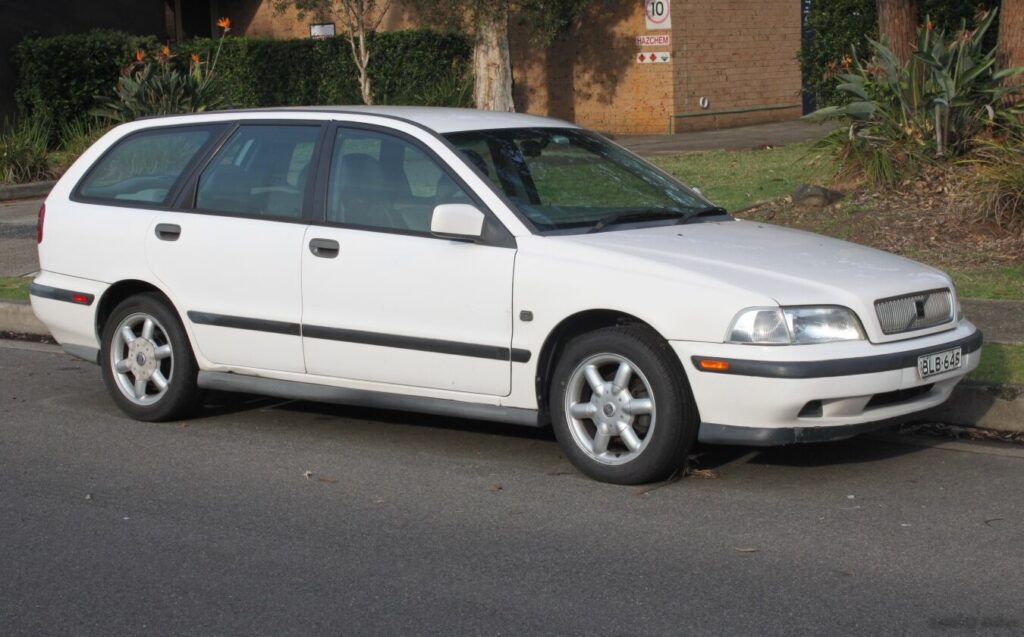
The Volvo V40 Combi, specifically the 1.6 16V variant producing 105 horsepower, was a popular European station wagon produced between 1995 and 1999. This model represented a unique collaboration between Volvo and Volkswagen, utilizing the Volkswagen Golf Mk3 platform (1HX0/A3). The V40 Combi aimed to offer a practical and affordable family vehicle, slotting into Volvo’s lineup as an entry-level option, appealing to buyers prioritizing space and economy over outright performance. It was positioned below the larger and more luxurious Volvo 850 and S70 models.
The 1.6 16V Engine and Powertrain
The heart of this V40 Combi variant is the Volvo B4164S engine, a 1.6-liter inline four-cylinder gasoline engine. This engine, while sharing some design elements with Volkswagen units due to the platform sharing, was a Volvo-designed and manufactured powerplant. It featured a multi-port fuel injection system, providing a balance between fuel efficiency and acceptable performance for its intended market segment. The engine utilizes a double overhead camshaft (DOHC) valvetrain, operating four valves per cylinder, contributing to improved breathing and power output compared to older two-valve designs.
The 1.6L engine produced 105 horsepower at 5500 rpm and 143 Nm (105.47 lb-ft) of torque at 4200 rpm. The compression ratio was set at 10.5:1. The engine’s bore and stroke measured 81mm x 77mm respectively, resulting in a displacement of 1588 cm³ (96.91 cubic inches). Engine oil capacity was 5.4 liters (5.71 US quarts / 4.75 UK quarts), and the coolant capacity was 6.3 liters (6.66 US quarts / 5.54 UK quarts).
This particular V40 Combi was typically paired with a five-speed manual transmission. While an automatic transmission was offered in some markets, it was less common and generally resulted in slightly reduced performance and fuel economy. The manual transmission provided a more engaging driving experience and allowed drivers to better utilize the engine’s available power.
Comparison with Other V40 Variants
Compared to other engine options available in the V40 range, the 1.6 16V was the entry-level choice. The 1.8-liter and 2.0-liter engines offered significantly more power and performance, catering to drivers who prioritized acceleration and highway cruising ability. Diesel variants, such as the 1.9 TDI, provided superior fuel economy but lacked the refinement and responsiveness of the gasoline engines. The 1.6L engine was favored by those seeking a balance between affordability, fuel efficiency, and practicality. Maintenance costs for the 1.6L engine were generally lower than those associated with the larger displacement or diesel engines, making it an attractive option for budget-conscious buyers.
Driving Characteristics
The 1.6 16V-equipped V40 Combi offered a comfortable, if not particularly sporty, driving experience. Acceleration from 0-100 km/h (0-62 mph) took approximately 13 seconds, and 0-60 mph was achieved in around 12.4 seconds. The top speed was rated at 185 km/h (114.95 mph). The engine’s torque delivery was relatively linear, providing adequate power for everyday driving situations. However, overtaking maneuvers required careful planning, and the engine could feel strained when fully loaded or climbing steep hills. The five-speed manual transmission was well-matched to the engine’s characteristics, offering smooth gear changes and a reasonable spread of ratios. The front-wheel-drive configuration provided predictable handling, although it lacked the all-weather capability of all-wheel-drive systems found in some other Volvo models.
Equipment & Trim Levels
The V40 Combi 1.6 16V typically came with a modest level of standard equipment. This included power steering, central locking, and an adjustable steering column. Interior upholstery was typically cloth, with a functional and durable design. Dashboard configuration was relatively simple, prioritizing practicality over luxury. Optional extras included air conditioning, power windows, a sunroof, and upgraded audio systems. Higher trim levels, often denoted by suffixes like “SE” or “LE”, added additional features such as alloy wheels, upgraded interior trim, and more sophisticated audio systems. Safety features, a hallmark of Volvo, were generally well-represented, even in the base models, including ABS anti-lock brakes and a robust safety cage construction.
Chassis & Braking
The V40 Combi 1.6 16V utilized a front-wheel-drive chassis with independent wishbone suspension at the front and a coil spring rear suspension. This setup provided a comfortable ride quality, absorbing bumps and imperfections in the road surface effectively. The front brakes were ventilated discs, offering good stopping power, while the rear brakes were typically solid discs. ABS (Anti-lock Braking System) was standard, enhancing braking performance and stability, particularly on slippery surfaces. The steering system employed a hydraulic power steering rack and pinion, providing light and precise steering feel. The standard tire size was 195/55 R15, mounted on 15-inch steel or alloy wheels.
Market Reception & Comparison
The Volvo V40 Combi 1.6 16V was generally well-received by automotive critics as a practical and affordable family vehicle. It was praised for its spacious interior, comfortable ride, and Volvo’s reputation for safety. However, some critics noted its relatively modest performance and somewhat bland styling. Fuel economy was considered reasonable for its class, with combined fuel consumption figures of around 8.5 l/100 km (27.7 US mpg / 33.2 UK mpg). Compared to other station wagons in its segment, such as the Ford Focus Estate and Opel/Vauxhall Astra Estate, the V40 Combi offered a more refined interior and a stronger emphasis on safety. Reliability was generally good, although some owners reported minor issues with the fuel injection system and electrical components.
Technical Specifications
| Brand | Volvo |
| Model | V40 Combi |
| Generation | V40 Combi (VW) |
| Type (Engine) | 1.6 16V (105 Hp) |
| Start of production | 1995 |
| End of production | 1999 |
| Body type | Station wagon (estate) |
| Seats | 5 |
| Doors | 5 |
| Fuel consumption (urban) | 11.8 l/100 km (19.9 US mpg / 23.9 UK mpg) |
| Fuel consumption (extra urban) | 6.6 l/100 km (35.6 US mpg / 42.8 UK mpg) |
| Fuel consumption (combined) | 8.5 l/100 km (27.7 US mpg / 33.2 UK mpg) |
| Fuel Type | Petrol (Gasoline) |
| Acceleration 0 – 100 km/h | 13 sec |
| Acceleration 0 – 62 mph | 13 sec |
| Acceleration 0 – 60 mph | 12.4 sec |
| Maximum speed | 185 km/h (114.95 mph) |
| Kerb Weight | 1250 kg (2755.78 lbs) |
| Max. weight | 1770 kg (3902.18 lbs) |
| Trunk (boot) space – minimum | 471 l (16.63 cu. ft) |
| Trunk (boot) space – maximum | 1421 l (50.18 cu. ft) |
| Fuel tank capacity | 60 l (15.85 US gal / 13.2 UK gal) |
| Engine displacement | 1588 cm3 (96.91 cu. in) |
| Power | 105 Hp @ 5500 rpm |
| Torque | 143 Nm @ 4200 rpm (105.47 lb.-ft. @ 4200 rpm) |
Legacy
The Volvo V40 Combi 1.6 16V remains a relatively common sight on European roads today, testament to its durability and practicality. The B4164S engine, while not known for being particularly high-performance, is generally considered reliable and relatively easy to maintain. In the used car market, these V40 Combis are often sought after as affordable and dependable family vehicles. Parts availability is generally good, thanks to the widespread use of Volkswagen components. However, potential buyers should be aware of potential issues with rust, particularly on older examples. Overall, the V40 Combi 1.6 16V represents a solid and sensible choice for those seeking a practical and affordable station wagon with Volvo’s renowned safety credentials.