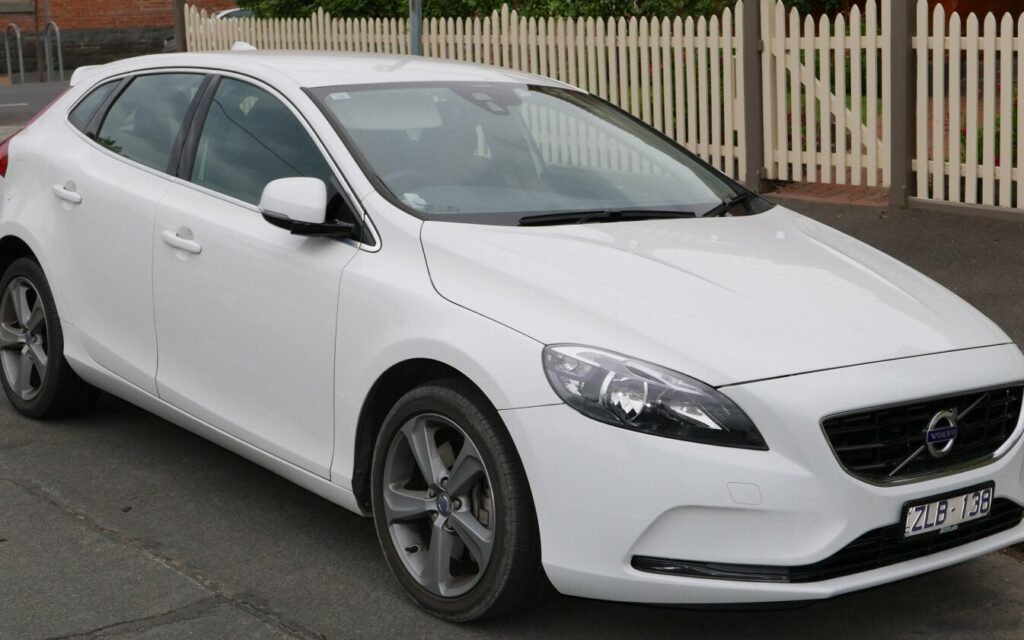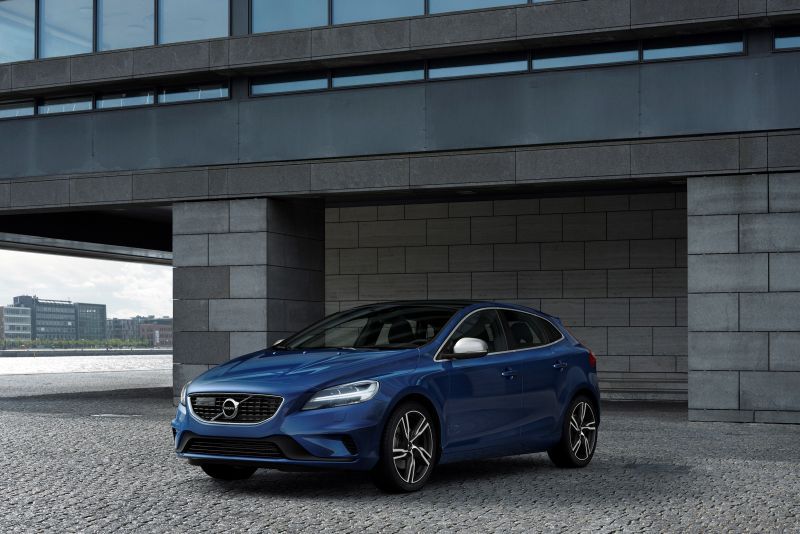
The Volvo V40 (facelift 2016) represents a significant refresh for Volvo’s premium compact hatchback, a model primarily targeted at and sold within the highly competitive European market. Introduced for the 2016 model year, this updated V40 carried on the tradition of Scandinavian design and advanced safety features, embodying Volvo’s commitment to both style and occupant protection. While never officially sold in the United States, the V40 played a crucial role in Volvo’s global strategy, serving as an entry point into the brand for many European consumers looking for a sophisticated, safe, and efficient compact vehicle. This particular variant, the 2.0 D2 (120 Hp) Geartronic, was positioned as an economical yet capable option within the V40 lineup, offering a compelling blend of fuel efficiency and smooth automatic transmission for daily driving.
The V40, which debuted in 2012, was Volvo’s answer to established premium compacts like the Audi A3, BMW 1 Series, and Mercedes-Benz A-Class. The 2016 facelift brought a series of aesthetic and technological enhancements, aligning its design language more closely with the brand’s larger, newer models like the XC90 and S90. It maintained its five-door hatchback body style, offering practical versatility alongside its upscale appeal. The V40’s production run for this generation extended from 2016 to 2018, marking it as a mature and refined product within its lifecycle before Volvo shifted its focus to a new generation of compact vehicles built on its CMA (Compact Modular Architecture) platform.
The 2.0 D2 (120 Hp) Geartronic: Positioning and Overview
The 2.0 D2 Geartronic trim level occupied the entry-level position within the post-facelift V40 range. It was designed to appeal to buyers prioritizing fuel economy and low running costs, rather than outright performance. This made it a popular choice for urban commuters and those seeking a comfortable, refined driving experience without the higher price tag associated with more powerful engine options. Compared to the higher-spec D3 and D4 diesel variants, the D2 offered a noticeable reduction in horsepower and torque, resulting in slower acceleration. However, this trade-off was offset by significantly improved fuel efficiency and lower emissions. It also differed from the petrol-powered T2, T3, and T5 models, offering the benefits of diesel’s superior fuel economy and low-end torque.
Powertrain & Engine Architecture
At the heart of this particular Volvo V40 (facelift 2016) model is Volvo’s Drive-E family 2.0-liter (1969 cm³ or 120.16 cu. in.) D2 diesel engine. This inline-four, turbocharged, and intercooled powerplant was designed with a strong emphasis on efficiency and reduced emissions, meeting the stringent Euro 6 emission standard. It generates a respectable 120 horsepower at 3750 rpm, paired with a robust 206.52 lb.-ft. (280 Nm) of torque available across a broad band from 1500 to 2250 rpm. This low-end torque is characteristic of modern diesel engines and contributes significantly to the V40’s responsive feel in everyday driving conditions.
The D2 engine utilizes a common-rail direct fuel injection system, delivering fuel directly into the combustion chamber at extremely high pressure for optimized combustion. The engine also features a single turbocharger with variable geometry, allowing for efficient boost across a wide range of engine speeds. The valvetrain employs four valves per cylinder (DOHC – Double Overhead Camshaft), contributing to improved breathing and overall engine efficiency. Power is delivered to the front wheels via a smooth-shifting 6-speed Geartronic automatic transmission. This transmission is a conventional torque-converter automatic, known for its smoothness and reliability. It features adaptive shift logic, adjusting shift points based on driving style and conditions.
Driving Characteristics
The 2.0 D2 Geartronic powertrain delivers a comfortable and refined driving experience, prioritizing fuel efficiency over outright performance. Acceleration from 0 to 60 mph is computed at approximately 10 seconds (0-100 km/h in 10.5 seconds), with a maximum speed of 118.06 mph (190 km/h). While not particularly quick, the engine’s strong low-end torque provides adequate power for everyday driving situations, including overtaking and merging onto highways. The Geartronic transmission shifts smoothly and predictably, contributing to a relaxed driving experience. Compared to the manual transmission versions of the D2, the automatic offers greater convenience, particularly in urban traffic. However, the manual transmission generally provides slightly better fuel economy and a more engaging driving experience. Compared to the more powerful D3 and D4 variants, the D2 feels noticeably less responsive, especially at higher speeds. The gear ratios are optimized for fuel efficiency, meaning the engine may feel slightly strained when accelerating hard.
Equipment & Trim Levels
The V40 (facelift 2016) 2.0 D2 Geartronic typically came equipped with a respectable level of standard features. Interior upholstery generally consisted of cloth seats, although leather options were available as upgrades. The dashboard featured a clean and minimalist design, characteristic of Scandinavian aesthetics. Standard equipment often included air conditioning, a multi-function steering wheel, power windows and mirrors, and a basic audio system with Bluetooth connectivity. Higher trim levels, such as Momentum and Inscription, added features like leather upholstery, upgraded audio systems, navigation, parking sensors, and automatic climate control. Optional extras available for the D2 Geartronic included a sunroof, heated seats, and various driver-assistance systems like lane departure warning and collision avoidance.
Chassis & Braking
The V40 D2 Geartronic utilizes an independent McPherson strut suspension at the front and an independent coil spring suspension at the rear. This setup provides a good balance between ride comfort and handling. The suspension is tuned for comfort, absorbing bumps and imperfections in the road effectively. The front brakes are ventilated discs, providing strong stopping power. The rear brakes are typically solid discs. The car is equipped with ABS (Anti-lock braking system) and electronic brake-force distribution (EBD) for enhanced safety. Electric power steering provides a responsive and comfortable steering experience. Stabilizer bars are fitted to both the front and rear axles to reduce body roll during cornering. The thickness of these stabilizer bars is typically smaller than those found on higher-performance V40 variants, reflecting the D2’s focus on comfort rather than sporty handling.
Market Reception & Comparison
Critics generally praised the Volvo V40 (facelift 2016) 2.0 D2 Geartronic for its fuel efficiency, comfortable ride, and stylish design. However, some reviewers noted that the engine lacked the punch of its more powerful siblings. The D2 was often seen as a sensible and practical choice for buyers prioritizing economy and refinement. Compared to its rivals, such as the Audi A3 Sportback and BMW 1 Series, the V40 offered a more relaxed and comfortable driving experience, but it didn’t quite match their level of dynamic performance. In terms of fuel economy, the D2 consistently outperformed its petrol-powered competitors and offered comparable or slightly better fuel economy than other diesel-powered models in its class. Reliability was generally good, with the D2 engine proving to be a durable and dependable unit. However, like all modern diesel engines, it is susceptible to issues with the diesel particulate filter (DPF) if not driven on longer journeys regularly.
Technical Specifications
| Category | Specification |
| General Information | |
| Brand | Volvo |
| Model | V40 (facelift 2016) |
| Type (Engine) | 2.0 D2 (120 Hp) Geartronic |
| Production Start | 2016 |
| Production End | 2018 |
| Body Type | Hatchback |
| Powertrain Architecture | Internal Combustion engine |
| Performance Specifications | |
| Fuel Consumption (Urban) | 4.4 l/100 km (53.5 US mpg) |
| Fuel Consumption (Extra Urban) | 3.5 l/100 km (67.2 US mpg) |
| Fuel Consumption (Combined) | 3.8 l/100 km (61.9 US mpg) |
| CO2 Emissions | 101 g/km |
| Fuel Type | Diesel |
| Acceleration 0-60 mph | 10 seconds (Calculated) |
| Maximum Speed | 190 km/h (118.06 mph) |
| Engine Specifications | |
| Power | 120 Hp @ 3750 rpm |
| Torque | 280 Nm @ 1500-2250 rpm (206.52 lb.-ft. @ 1500-2250 rpm) |
| Engine Displacement | 1969 cm³ (2.0 liters / 120.16 cu. in.) |
| Number of Cylinders | 4 (Inline configuration) |
| Fuel Injection System | Diesel Commonrail |
| Engine Aspiration | Turbocharger, Intercooler |
| Space, Volume, and Weights | |
| Kerb Weight | 1486 kg (3276.07 lbs.) |
| Trunk (Boot) Space – Minimum | 335 l (11.83 cu. ft.) |
| Trunk (Boot) Space – Maximum | 1500 l (52.97 cu. ft.) |
| Dimensions | |
| Length | 4369 mm (172.01 in.) |
| Width | 1783 mm (70.2 in.) |
Legacy
The Volvo V40 2.0 D2 Geartronic has proven to be a reliable and economical used car option. The Drive-E engine is generally considered durable, although regular maintenance is crucial, particularly regarding the diesel particulate filter. On the used market, these models are often sought after by buyers looking for a comfortable, safe, and fuel-efficient compact hatchback. While not a performance icon, the D2 Geartronic represents a well-rounded and practical choice that embodies Volvo’s commitment to Scandinavian design and engineering. Its enduring appeal lies in its ability to provide a refined and comfortable driving experience without compromising on safety or fuel economy.