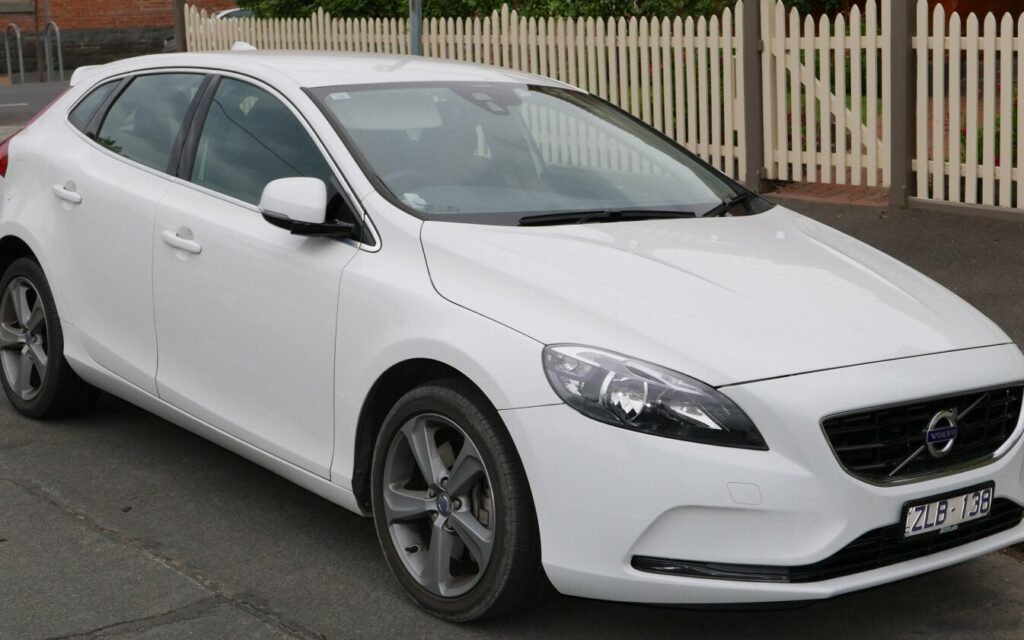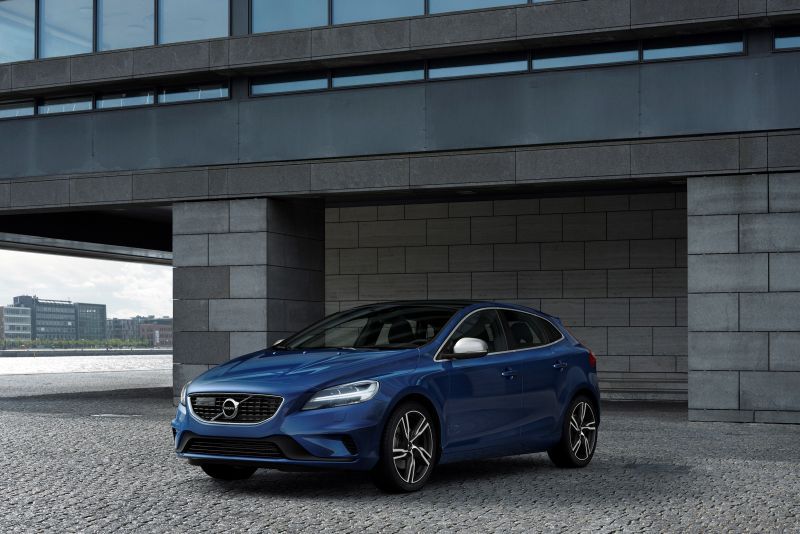
The Volvo V40, specifically the model introduced with the 2016 facelift, represents Volvo’s strong contender in the highly competitive European premium compact segment. This specific iteration, the Volvo V40 (facelift 2016) 2.0 D2 (120 Hp) Geartronic Restricted, offered a compelling blend of Scandinavian design, renowned safety features, and efficient diesel powertrain technology. Positioned as a sophisticated five-door hatchback, the V40 aimed to attract buyers looking for an alternative to the dominant German luxury brands, emphasizing understated elegance and practical functionality. While the V40 was never officially sold in the United States, it carved out a significant niche for Volvo in its primary European and Asian markets, showcasing the brand’s commitment to modern design and powertrain efficiency within a compact footprint. Produced from 2016 to 2018, this facelifted generation continued the V40’s legacy as a stylish and safe choice for urban and highway driving.
Powertrain & Engine Architecture
At the heart of the Volvo V40 (facelift 2016) 2.0 D2 (120 Hp) Geartronic Restricted lies a robust and efficient 2.0-liter (1969 cm³) inline four-cylinder diesel engine, designated with the model code D4204T8. This powertrain architecture, featuring a front, transverse engine layout, was meticulously engineered to deliver a balance of usable power and impressive fuel economy. Equipped with a turbocharger and intercooler, the engine produces a respectable 120 horsepower at 3750 revolutions per minute (rpm), translating to a power output of 60.9 horsepower per liter. More significantly for daily driving, the engine generates a substantial 206.52 lb.-ft. (280 Nm) of torque, available across a broad and accessible rev range from 1500 to 2250 rpm. This low-end torque ensures strong pulling power and effortless acceleration in various driving conditions.
The D2 engine is paired with a smooth and responsive 6-speed Geartronic automatic transmission. This transmission, developed in-house by Volvo, is a conventional torque-converter automatic, prioritizing smooth shifts and ease of use over outright performance. It features adaptive shift logic, adjusting shift points based on driving style and conditions. The Geartronic transmission also offers a manual shift mode, allowing drivers to select gears for more control, although it’s primarily geared towards comfortable, automatic operation. The fuel injection system is a diesel common rail system, delivering precise fuel metering for optimal combustion and reduced emissions. The engine utilizes a standard particulate filter to further minimize harmful emissions, complying with stringent Euro 6 regulations.
Driving Characteristics
The 120 hp / Automatic setup of the V40 D2 delivers a driving experience focused on efficiency and comfort rather than outright performance. Acceleration from 0 to 60 mph takes approximately 10 seconds, and top speed is around 118 mph. Compared to higher-output V40 variants, such as those equipped with the D4 engine, the D2 feels noticeably less powerful, particularly during overtaking maneuvers or when climbing hills. However, the readily available low-end torque mitigates this somewhat, providing adequate pulling power for everyday driving situations. The Geartronic transmission contributes to a relaxed driving experience, with smooth and seamless gear changes. The gear ratios are tuned for fuel efficiency, meaning the engine operates at lower rpm during cruising, further enhancing economy. Compared to a manual transmission version of the same engine, the automatic offers greater convenience, especially in urban traffic, but sacrifices some driver engagement and control.
Equipment & Trim Levels
The Volvo V40 (facelift 2016) 2.0 D2 Geartronic Restricted typically came equipped with a generous level of standard features, reflecting its positioning as a premium compact. Standard interior features included comfortable cloth upholstery, a leather-wrapped steering wheel, and a user-friendly infotainment system with a 5-inch color display. Air conditioning, power windows, and power door locks were also standard. Safety features were comprehensive, including ABS, Electronic Stability Control (ESC), and multiple airbags. The “Restricted” designation often indicated market-specific trim levels or standard equipment packages. Optional extras available for this trim included leather upholstery, a larger infotainment screen with navigation, a sunroof, parking sensors, and a premium audio system. Higher trim levels, such as the Momentum and Inscription, offered even more luxurious features and customization options.
Chassis & Braking
The V40’s chassis was designed to provide a comfortable and composed ride. The front suspension utilizes independent McPherson struts with coil springs and an anti-roll bar, while the rear suspension employs an independent multi-link setup with coil springs. This configuration delivers a good balance between ride comfort and handling precision. The steering is electric power-assisted, providing light and responsive steering feel. Braking duties are handled by ventilated discs at the front and solid discs at the rear. ABS (Anti-lock Braking System) is standard, along with Electronic Brakeforce Distribution (EBD). The V40’s relatively low weight, thanks to its compact size and efficient engine, contributes to its braking performance. Stabilizer bars are fitted to both the front and rear axles to reduce body roll during cornering, enhancing handling stability.
Market Reception & Comparison
Critics generally viewed the Volvo V40 (facelift 2016) 2.0 D2 Geartronic Restricted favorably, praising its stylish design, comfortable interior, and excellent fuel economy. However, some reviewers noted that the 120 hp engine felt underpowered compared to some of its rivals, particularly when fully loaded or driving on challenging terrain. Fuel economy was a major selling point, with the V40 achieving impressive figures of around 63.6 US mpg. In terms of reliability, the V40 generally proved to be a dependable vehicle, although some owners reported minor issues with the infotainment system and electrical components. Compared to other trims in the V40 lineup, the D2 offered the most affordable entry point into the range, making it an attractive option for budget-conscious buyers. The higher-output D4 and petrol variants offered more performance but came at a higher price. Against its German rivals, the V40 offered a more understated and Scandinavian aesthetic, appealing to buyers who preferred a less ostentatious image.
Technical Specifications: Volvo V40 (facelift 2016) 2.0 D2 (120 Hp) Geartronic Restricted
| Brand | Volvo |
| Model | V40 |
| Generation | V40 (facelift 2016) |
| Type (Engine) | 2.0 D2 (120 Hp) Geartronic Restricted |
| Production Start | 2016 |
| Production End | 2018 |
| Powertrain Architecture | Internal Combustion engine |
| Body Type | Hatchback |
| Performance Specifications | |
| Fuel Consumption (Combined) | 63.6 US mpg (3.7 l/100 km) |
| CO2 Emissions | 97 g/km |
| Fuel Type | Diesel |
| Acceleration 0-60 mph | 10 seconds |
| Acceleration 0-100 km/h | 10.5 seconds |
| Maximum Speed | 118.06 mph (190 km/h) |
| Emission Standard | Euro 6 |
| Engine Specifications | |
| Power | 120 Hp @ 3750 rpm |
| Power per liter | 60.9 Hp/l |
| Torque | 206.52 lb.-ft. (280 Nm) @ 1500-2250 rpm |
| Engine Layout | Front, Transverse |
| Engine Model/Code | D4204T8 |
| Engine Displacement | 120.16 cu. in. (1969 cm³) |
| Number of Cylinders | 4 |
| Engine Configuration | Inline |
| Cylinder Bore | 3.23 in. (82 mm) |
| Piston Stroke | 3.67 in. (93.2 mm) |
| Compression Ratio | 16:1 |
| Valves per Cylinder | 4 |
| Fuel Injection System | Diesel Commonrail |
| Engine Aspiration | Turbocharger, Intercooler |
| Engine Oil Capacity | 5.49 US qt (5.2 l) |
| Coolant Capacity | 8.45 US qt (8 l) |
| Engine Systems | Particulate filter |
| Space, Volume, and Weights | |
| Trunk Space (Minimum) | 11.83 cu. ft. (335 l) |
| Trunk Space (Maximum) | 52.97 cu. ft. (1500 l) |
| Fuel Tank Capacity | 10.57 US gal (40 l) |
| Max. Roof Load | 165.35 lbs. (75 kg) |
| Permitted Trailer Load (with brakes 12%) | 3306.93 lbs. (1500 kg) |
| Dimensions | |
| Length | 172.01 in. (4369 mm) |
| Width | 70.2 in. (1783 mm) |
| Width (including mirrors) | 80.35 in. (2041 mm) |
| Height | 56.65 in. (1439 mm) |
| Wheelbase | 104.21 in. (2647 mm) |
| Front Track | 61.38 in. (1559 mm) |
| Rear Track | 60.87 in. (1546 mm) |
| Ride Height (Ground Clearance) | 5.24 – 5.67 in. (133-144 mm) |
| Drag Coefficient (Cd) | 0.32 |
| Minimum Turning Circle | 35.43 ft. (10.8 m) |
| Drivetrain, Brakes, and Suspension | |
| Drivetrain Architecture | Front-wheel drive, Internal Combustion Engine |
| Drive Wheel | Front-wheel drive |
| Gearbox Type | 6 gears, automatic transmission Geartronic |
| Front Suspension | Independent, McPherson type with coil spring and anti-roll bar |
| Rear Suspension | Independent coil spring |
| Front Brakes | Ventilated discs |
| Rear Brakes | Disc |
| Assisting Systems | ABS (Anti-lock braking system) |
| Steering Type | Steering rack and pinion |
| Power Steering | Electric Steering |
Legacy
The Volvo V40, particularly this facelifted 2016 model with the 2.0 D2 Geartronic Restricted powertrain, played a crucial role in Volvo’s strategy to compete in the fiercely contested European premium compact segment. It faced formidable rivals such as the Audi A3 Sportback, BMW 1 Series, Mercedes-Benz A-Class, and even the Volkswagen Golf in its higher trims. Despite not having the same performance-oriented image as some of its German competitors, the V40 distinguished itself through its unique Scandinavian design aesthetic, a strong emphasis on comfort, and, above all, Volvo’s unwavering commitment to safety. Its legacy is largely defined by its ability to offer a sophisticated and efficient package to a discerning European audience. The 2.0 D2 engine, with its excellent fuel economy and low CO2 emissions, resonated with buyers increasingly concerned with running costs and environmental impact, especially in markets with favorable tax incentives for efficient diesels. The Geartronic automatic transmission further enhanced its appeal as a refined daily driver. While the “Restricted” designation in its name might suggest certain market-specific limitations or tuning, the core offering remained consistent: a premium, safe, and efficient compact vehicle. The V40 helped solidify Volvo’s presence in a segment where it had previously struggled to gain significant traction. It demonstrated that Volvo could produce a stylish and competitive compact car that upheld the brand’s core values. Although the V40 concluded its production run in 2019 without a direct successor (as Volvo shifted focus towards SUVs and electric vehicles), its impact was significant. It paved the way for future Volvo models by introducing design cues and technological advancements that would be seen across the brand’s lineup. For many European consumers, the V40 represented an intelligent, understated, and responsible choice in the premium compact market, reinforcing Volvo’s reputation for quality, safety, and thoughtful engineering.