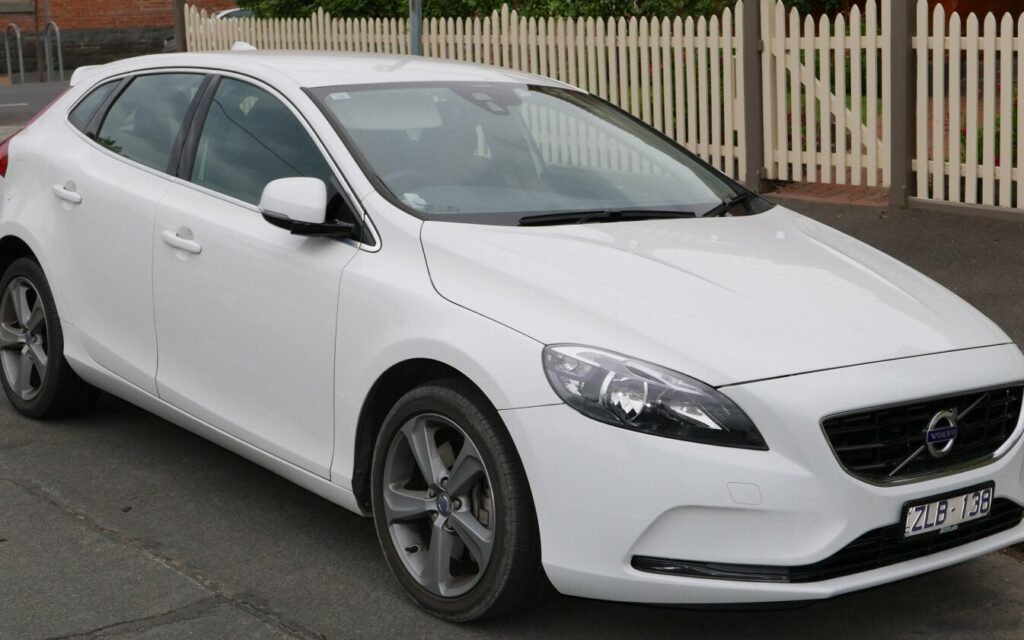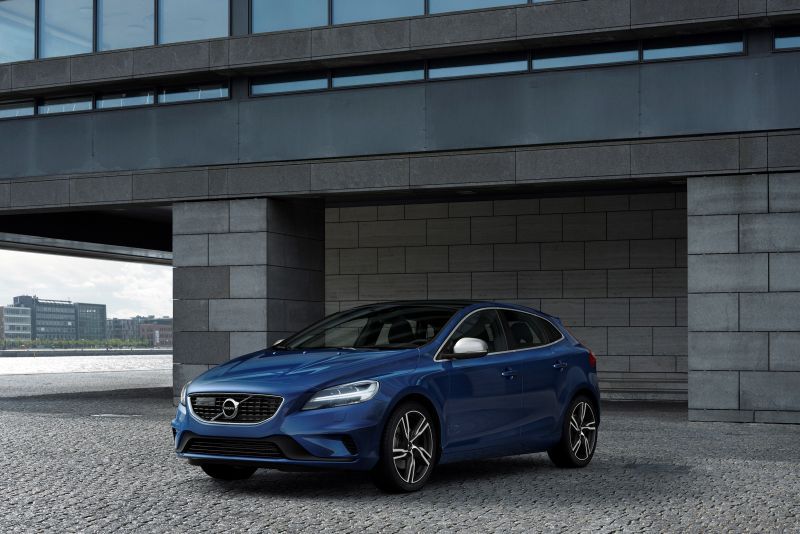
The Volvo V40 (facelift 2016) 2.0 D2 (120 Hp) Restricted represents the refreshed iteration of Volvo’s second-generation premium compact hatchback, primarily aimed at the European market. Introduced in 2016 and produced through 2018, this updated V40 continued Volvo’s tradition of blending sophisticated Scandinavian design with robust safety features and impressive efficiency. Positioned in the competitive C-segment, it sought to challenge established German rivals with its understated luxury, practical five-door hatchback utility, and a strong emphasis on environmental performance, particularly with its diesel powertrain options. Notably, the V40 was never officially sold in the United States, a strategic decision reflecting the American market’s preference for larger vehicles like sedans and SUVs, and a general disinterest in compact hatchbacks, especially those powered by diesel engines.
The 2016 Facelift and Variant Positioning
The 2016 facelift brought subtle but impactful enhancements, aligning the V40’s exterior styling with Volvo’s then-new design language, first seen on the larger XC90. Key changes included the distinctive “Thor’s Hammer” LED daytime running lights, a refreshed grille, and new alloy wheel designs, contributing to a more contemporary and premium aesthetic. The 2.0 D2 (120 Hp) Restricted variant occupied the entry-level position within the V40 lineup. It was designed to appeal to buyers prioritizing fuel economy and lower running costs, making it an attractive option for urban commuters and those seeking a practical, yet refined, vehicle. It served as the most affordable route into the V40 range, offering a balance between equipment and price.
Powertrain & Engine Architecture
The Volvo V40 (facelift 2016) 2.0 D2 (120 Hp) Restricted was powered by a 2.0-liter, four-cylinder D4204T8 diesel engine, part of Volvo’s Drive-E family. This engine featured an inline configuration, common rail direct fuel injection, a turbocharger, and an intercooler. The direct fuel injection system, operating at very high pressures, ensured efficient combustion and reduced emissions. The valvetrain employed a single overhead camshaft (SOHC) design, optimizing engine breathing for both power and efficiency. The engine’s turbocharger was a wastegate type, providing controlled boost pressure across the engine’s operating range.
The D2 variant produced 120 horsepower at 3750 rpm and a more substantial 206.52 lb-ft (280 Nm) of torque between 1500 and 2250 rpm. This torque band was particularly advantageous for everyday driving, providing strong pulling power at lower engine speeds. The engine was paired with a six-speed automatic transmission, a popular choice for drivers seeking convenience and ease of use. This transmission was a conventional torque converter automatic, known for its smooth shifting characteristics. The drivetrain was front-wheel drive, a common configuration for vehicles in this class.
Driving Characteristics
The V40 2.0 D2 Automatic offered a comfortable and refined driving experience, prioritizing fuel efficiency over outright performance. While not a sporty vehicle, the ample low-end torque provided sufficient acceleration for most driving situations. The automatic transmission was programmed for smooth shifts and optimized fuel economy, rather than aggressive gear changes. Compared to the more powerful D4 or petrol variants of the V40, the D2 felt noticeably less responsive, particularly during overtaking maneuvers. However, the broad torque band minimized the need for frequent downshifts. The gear ratios were tuned to maximize fuel efficiency, with a relatively tall final drive. The automatic transmission contributed to a relaxed driving experience, especially in urban traffic, where the need for constant gear changes was eliminated.
Equipment & Trim Levels
The 2.0 D2 Restricted trim level typically included standard features such as air conditioning, power windows, power mirrors, a basic audio system with USB connectivity, and steel wheels with wheel covers. Safety features were a strong point, even in the base trim, including City Safety (Volvo’s automatic braking system), ABS, and multiple airbags. Optional extras available for the D2 included alloy wheels, a more advanced infotainment system with a larger touchscreen display, navigation, parking sensors, leather upholstery, and heated front seats. Interior upholstery was typically cloth, with a dark color scheme. The dashboard layout was characterized by Volvo’s minimalist Scandinavian design, with a focus on ergonomics and ease of use. Higher trim levels offered more premium materials and additional features, but the D2 Restricted provided a solid base level of equipment.
Chassis & Braking
The V40 2.0 D2 utilized an independent McPherson strut suspension at the front, providing a comfortable ride and predictable handling. The rear suspension employed a semi-independent multi-link setup, designed to minimize body roll and enhance stability. Stabilizer bars were fitted to both the front and rear axles, further improving handling characteristics. The braking system consisted of ventilated discs at the front and solid discs at the rear. ABS (Anti-lock Braking System) was standard, along with Electronic Brake-force Distribution (EBD). The V40’s chassis was designed to balance comfort and handling, providing a stable and predictable driving experience. The relatively low weight of the D2 variant, compared to higher-spec models, contributed to its agility and fuel efficiency.
Market Reception & Comparison
Critics generally praised the V40 2.0 D2 Automatic for its fuel economy, comfortable ride, and strong safety credentials. However, some reviewers noted its relatively modest performance compared to rivals. Compared to the more powerful D4 or petrol-powered V40 variants, the D2 offered significantly lower running costs but lacked the same level of performance. Against competitors like the Audi A3, BMW 1 Series, and Mercedes-Benz A-Class, the V40 distinguished itself with its unique Scandinavian design and focus on safety. Fuel economy was a key strength, with the D2 consistently achieving impressive MPG figures. Reliability was generally good, although some owners reported minor issues with the automatic transmission. The D2’s lower price point made it an attractive option for budget-conscious buyers.
Technical Specifications: Volvo V40 (facelift 2016) 2.0 D2 (120 Hp) Restricted
| Brand | Volvo |
| Model | V40 (facelift 2016) |
| Type (Engine) | 2.0 D2 (120 Hp) Restricted |
| Production Years | 2016 – 2018 |
| Body Type | Hatchback |
| Seats | 5 |
| Doors | 5 |
| Fuel Consumption (Urban) | 3.7 l/100 km (63.6 US mpg) |
| Fuel Consumption (Extra Urban) | 2.9 l/100 km (81.1 US mpg) |
| Fuel Consumption (Combined) | 3.2 l/100 km (73.5 US mpg) |
| CO2 Emissions | 82 g/km |
| Fuel Type | Diesel |
| Acceleration 0-60 mph | 10.2 sec |
| Maximum Speed | 118.06 mph (190 km/h) |
| Emission Standard | Euro 6 |
| Weight-to-Power Ratio | 12.1 kg/Hp |
| Power | 120 Hp @ 3750 rpm |
| Torque | 206.52 lb.-ft. (280 Nm) @ 1500-2250 rpm |
| Engine Displacement | 2.0 Liters (1969 cm3 / 120.16 cu. in.) |
| Number of Cylinders | 4, Inline |
| Gearbox Type | 6-speed automatic transmission |
| Kerb Weight | 3212.14 lbs. (1457 kg) |
| Trunk (Boot) Space – Minimum | 11.83 cu. ft. (335 l) |
Legacy
The Volvo V40 2.0 D2 Automatic, while not a performance icon, established a reputation for reliability and fuel efficiency. The D4204T8 engine, when properly maintained, proved to be a durable and long-lasting unit. On the used car market, these models are generally sought after for their low running costs and practicality. Common issues, such as those related to the automatic transmission, are well-documented and can be addressed with preventative maintenance. The V40’s strong safety record continues to be a selling point, appealing to buyers prioritizing occupant protection. While the V40 has been discontinued, its influence can be seen in subsequent Volvo models, particularly in the XC40, which carries forward the brand’s commitment to Scandinavian design, safety, and efficiency. The D2 variant represents a practical and economical entry point into the Volvo ownership experience, offering a compelling blend of value and refinement.