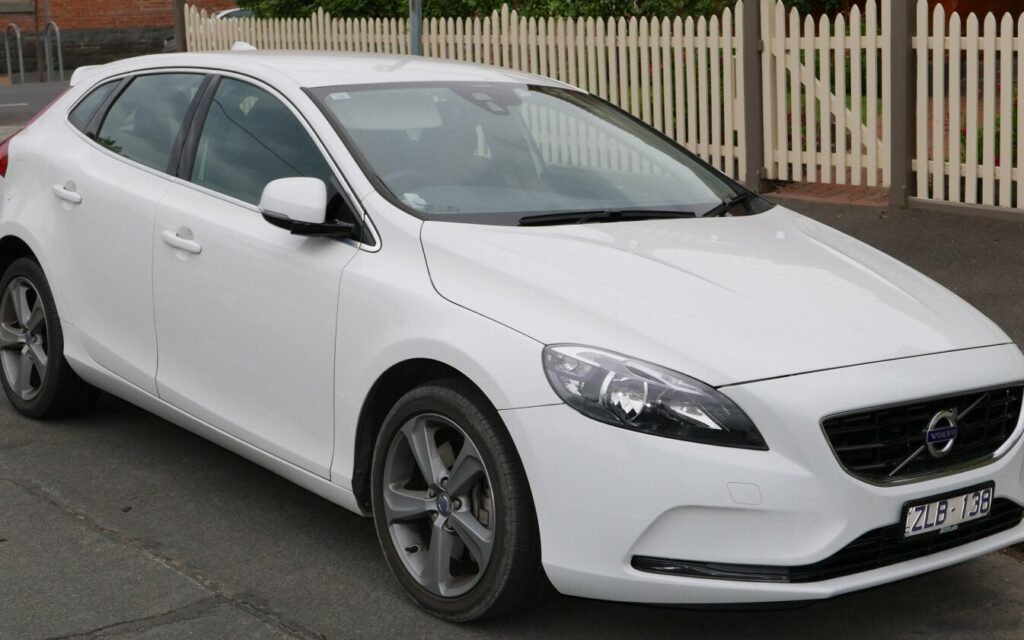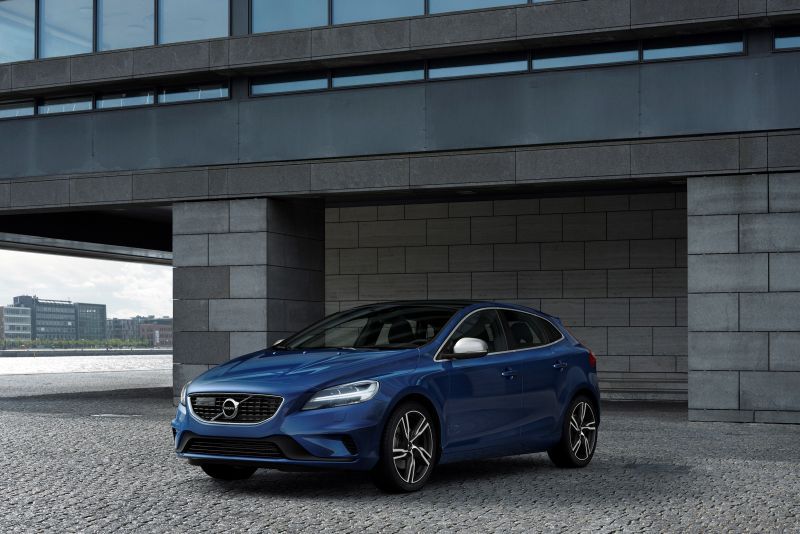
The Volvo V40 (facelift 2016) 2.0 D3 (150 Hp) represents a significant evolution of Volvo’s premium compact hatchback, a model primarily aimed at and highly successful within the European market. Introduced in 2012, the V40 was Volvo’s response to established competitors in the competitive C-segment, offering a blend of Scandinavian design, renowned safety features, and efficient powertrains. The 2016 facelift brought a series of aesthetic and technological updates, maintaining the V40’s competitiveness until its discontinuation in 2019. This specific variant, the 2.0 D3 (150 Hp), showcased Volvo’s expertise in diesel engine technology, delivering a compelling combination of performance and exceptional fuel economy – qualities highly valued by European consumers. It positioned itself as a sophisticated alternative to German rivals, emphasizing understated luxury and a strong commitment to environmental responsibility through its Euro 6 compliant diesel engine.
Powertrain & Engine Architecture
At the heart of the Volvo V40 (facelift 2016) 2.0 D3 (150 Hp) lies Volvo’s D4204T9 engine, a modern 2.0-liter (120.16 cubic inches) inline four-cylinder diesel powerplant. This unit is transversely mounted at the front, driving the front wheels, a common configuration for compact vehicles prioritizing interior space and packaging efficiency. The engine features a sophisticated common rail fuel injection system, paired with a turbocharger and intercooler, ensuring both robust power delivery and impressive fuel efficiency. It generates 150 horsepower at 3750 rpm, providing ample thrust for daily driving and highway cruising.
More critically for a diesel, it produces a substantial 236.02 lb-ft of torque, available across a broad range from 1750 to 3000 rpm. This wide torque band translates into excellent responsiveness and effortless acceleration, making the car feel potent even with its modest horsepower figure. The D4204T9 utilizes a four-valve per cylinder configuration, contributing to its efficient combustion process. The fuel injection system is a high-pressure common rail system, allowing for precise fuel metering and optimized combustion. The turbocharger, a Garrett GT14 unit, provides a boost to increase power output, while the intercooler cools the intake air, further enhancing efficiency. The engine is constructed with a cast iron block and an aluminum cylinder head, balancing durability with weight reduction.
The V40 D3 is equipped with a six-speed manual transmission. This transmission was chosen to maximize fuel efficiency and provide a more engaging driving experience. The gear ratios are optimized to keep the engine within its peak torque band as much as possible, contributing to the car’s responsive feel. The transmission features a relatively short throw, enhancing shift quality and driver control.
Driving Characteristics
The Volvo V40 D3 offers a refined and comfortable driving experience. The 150 hp engine, coupled with the six-speed manual transmission, provides adequate performance for everyday driving. Acceleration from 0 to 60 mph takes approximately 8 seconds, and the top speed is 130.49 mph. While not a sports car, the V40 D3 feels surprisingly agile and responsive, particularly in the mid-range. The wide torque band allows for effortless overtaking and confident acceleration in various driving situations.
Compared to higher-output versions of the V40, such as those equipped with the D4 engine, the D3 feels less urgent in its acceleration. However, the D3’s more relaxed power delivery makes it a more comfortable and fuel-efficient option for daily commuting and long-distance driving. Compared to automatic transmission variants, the manual transmission provides greater driver control and a more engaging driving experience. The gear ratios are well-matched to the engine’s characteristics, allowing for smooth and efficient gear changes. The V40 D3’s suspension is tuned for comfort, providing a smooth and controlled ride even on uneven surfaces. The steering is precise and well-weighted, offering good feedback to the driver.
Equipment & Trim Levels
The Volvo V40 (facelift 2016) 2.0 D3 was available in several trim levels, each offering a different level of equipment and luxury. Standard features typically included climate control, power windows and mirrors, a multi-function steering wheel, and a basic audio system. Safety features were a particular strength of the V40, with all models equipped with City Safety – Volvo’s autonomous emergency braking system – as standard. Other standard safety features included ABS, EBD, and traction control.
Higher trim levels added features such as leather upholstery, heated front seats, a premium audio system, a navigation system, and parking sensors. Optional extras included a sunroof, a rear-view camera, and adaptive cruise control. Interior upholstery options ranged from cloth to leather, with a variety of color choices available. The dashboard configuration was typically clean and minimalist, reflecting Volvo’s Scandinavian design philosophy. The infotainment system was controlled via a central touchscreen display, providing access to various functions such as navigation, audio, and climate control.
Chassis & Braking
The Volvo V40 D3 utilizes an independent McPherson strut front suspension and an independent coil spring rear suspension. This suspension setup provides a good balance between comfort and handling. The front suspension features a stabilizer bar to reduce body roll during cornering. The rear suspension is designed to maximize space efficiency and provide a comfortable ride. The V40 D3’s steering system is an electric power steering (EPS) system, which provides precise and responsive steering feel while also contributing to fuel efficiency.
The braking system consists of ventilated discs on the front wheels and solid discs on the rear wheels. ABS (Anti-lock Braking System) and EBD (Electronic Brakeforce Distribution) are standard features, enhancing braking performance and stability. The brake calipers are typically single-piston calipers, providing adequate stopping power for the car’s weight and performance. The V40 D3’s relatively lightweight construction (3276.07 lbs) contributes to its good braking performance.
Market Reception & Comparison
Critics generally praised the Volvo V40 D3 for its stylish design, comfortable ride, and exceptional fuel economy. The car’s understated luxury and strong safety credentials were also well-received. However, some critics noted that the interior space was somewhat limited compared to some of its rivals. The V40 D3’s fuel economy was a particular highlight, with combined fuel consumption of 61.9 US mpg being among the best in its class.
Compared to other trims in the V40 lineup, the D3 offered a more affordable entry point into the model range. It was positioned as a sensible and practical option for buyers who prioritized fuel efficiency and comfort over outright performance. Compared to the D4 and D5 variants, the D3 had lower power output and torque, but it also had lower running costs. Compared to the petrol-powered versions of the V40, the D3 offered significantly better fuel economy and lower CO2 emissions. In terms of reliability, the V40 D3 generally proved to be a dependable car, with few major issues reported. However, like all diesel engines, it is important to ensure that the DPF (Diesel Particulate Filter) is properly maintained.
Technical Specifications
| Category | Specification |
| Brand | Volvo |
| Model | V40 (facelift 2016) |
| Type (Engine) | 2.0 D3 (150 Hp) |
| Start of Production | 2016 |
| End of Production | 2018 |
| Powertrain Architecture | Internal Combustion Engine |
| Body Type | Hatchback |
| Seats | 5 |
| Doors | 5 |
| Fuel Type | Diesel |
| Fuel Consumption (Urban) | 4.4 l/100 km (53.5 US mpg) |
| Fuel Consumption (Extra Urban) | 3.5 l/100 km (67.2 US mpg) |
| Fuel Consumption (Combined) | 3.8 l/100 km (61.9 US mpg) |
| CO2 Emissions | 99 g/km |
| Acceleration 0-60 mph | 8 seconds |
| Maximum Speed | 210 km/h (130.49 mph) |
| Emission Standard | Euro 6 |
| Power | 150 Hp @ 3750 rpm |
| Power per liter | 76.2 Hp/l |
| Torque | 320 Nm (236.02 lb.-ft.) @ 1750-3000 rpm |
| Engine Layout | Front, Transverse |
| Engine Model/Code | D4204T9 |
| Engine Displacement | 1969 cm3 (120.16 cu. in.) |
| Number of Cylinders | 4 |
| Engine Configuration | Inline |
| Cylinder Bore | 82 mm (3.23 in.) |
| Piston Stroke | 93.2 mm (3.67 in.) |
| Compression Ratio | 16:1 |
| Valves per Cylinder | 4 |
| Fuel Injection System | Diesel Commonrail |
| Engine Aspiration | Turbocharger, Intercooler |
| Engine Oil Capacity | 5.2 l (5.49 US qt) |
| Coolant Capacity | 8 l (8.45 US qt) |
| Engine Systems | Particulate filter |
| Kerb Weight | 1486 kg (3276.07 lbs.) |
| Maximum Weight | 1980 kg (4365.15 lbs.) |
| Maximum Load | 494 kg (1089.08 lbs.) |
| Trunk Space (Minimum) | 335 l (11.83 cu. ft.) |
| Trunk Space (Maximum) | 1500 l (52.97 cu. ft.) |
| Fuel Tank Capacity | 62 l (16.38 US gal) |
| Maximum Roof Load | 75 kg (165.35 lbs.) |
| Permitted Trailer Load (with brakes) | 1500 kg (3306.93 lbs.) |
| Length | 4369 mm (172.01 in.) |
| Width | 1783 mm (70.2 in.) |
| Width (including mirrors) | 2041 mm (80.35 in.) |
| Height | 1439 mm (56.65 in.) |
| Wheelbase | 2647 mm (104.21 in.) |
| Front Track | 1559 mm (61.38 in.) |
| Rear Track | 1546 mm (60.87 in.) |
| Ride Height (Ground Clearance) | 133-144 mm (5.24 – 5.67 in.) |
| Drag Coefficient (Cd) | 0.32 |
| Minimum Turning Circle | 10.8 m (35.43 ft.) |
| Drivetrain Architecture | Front-wheel drive, Internal Combustion Engine |
| Drive Wheel | Front-wheel drive |
| Gearbox | 6-speed manual transmission |
| Front Suspension | Independent, McPherson with coil spring and anti-roll bar |
| Rear Suspension | Independent coil spring |
| Front Brakes | Ventilated discs |
| Rear Brakes | Disc |
| Assisting Systems | ABS (Anti-lock braking system) |
| Steering Type | Steering rack and pinion |
| Power Steering | Electric Steering |
Legacy
The Volvo V40, and particularly its facelifted 2016 version with the 2.0 D3 engine, played a crucial role in Volvo’s strategy to compete in the highly contested European premium compact segment. In a market dominated by the likes of the Audi A3, BMW 1 Series, and Mercedes-Benz A-Class, the V40 offered a distinct Scandinavian flavor. It appealed to buyers looking for something different from the German establishment, prioritizing understated elegance, unparalleled safety, and a strong commitment to environmental efficiency, particularly with its advanced diesel powertrains. While diesel engines have faced increasing scrutiny in recent years, during the V40 D3’s production run (2016-2018), they were still a highly favored option in Europe due to their superior fuel economy and torque characteristics.
The V40 D3’s low CO2 emissions and excellent fuel consumption made it a popular choice for both private buyers and fleet operators across Europe. Its Euro 6 compliance ensured it met the then-current environmental regulations, an important factor for market acceptance. The car’s reputation for robustness and reliability, combined with Volvo’s strong brand image for safety and quality, contributed to its solid market performance. For Volvo, the V40 served as an important entry point into the brand for many customers, often acting as a stepping stone to larger Volvo models. While never officially sold in the United States, where the compact premium segment is dominated by gasoline engines and SUVs, its legacy in Europe is one of a stylish, safe, and remarkably efficient hatchback that upheld Volvo’s core values in a compact package. The V40 platform ultimately paved the way for newer, more global compact models built on Volvo’s CMA (Compact Modular Architecture), ensuring its influence extended beyond its direct production years.