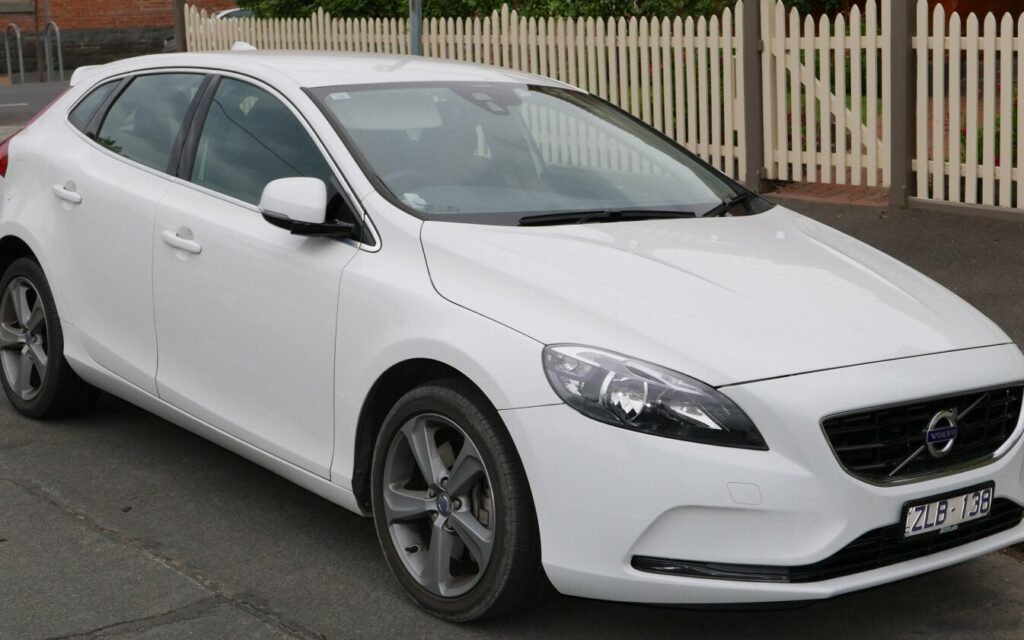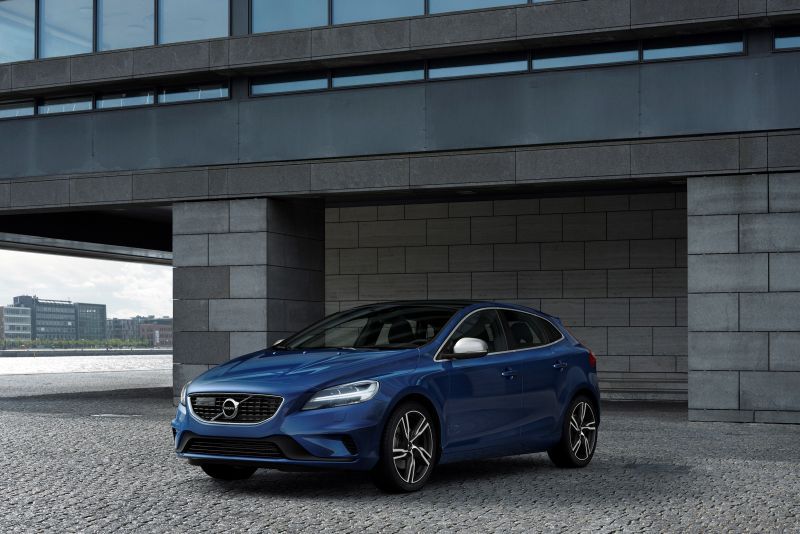
The Volvo V40 (facelift 2016) 2.0 D3 (150 Hp) Automatic represents a refined iteration of Volvo’s compact premium hatchback, primarily designed for the European market and other international regions. Produced from 2018 to 2020 in this facelifted form, the V40 served as Volvo’s contender in the competitive C-segment, challenging established German rivals with its Scandinavian design, safety features, and efficient powertrain. This specific variant, the 2.0 D3 (150 Hp) Automatic, combined diesel performance with fuel economy, tailored to European preferences. Positioned as a sophisticated alternative to mainstream hatchbacks, the V40 offered five-door practicality with a premium interior and a comfortable driving experience. While not sold in North America, the V40 was crucial to Volvo’s global portfolio, enhancing its brand image during a period of significant transformation.
Powertrain & Engine Architecture
The Volvo V40 (facelift 2016) 2.0 D3 (150 Hp) Automatic is powered by a 2.0-liter (1969 cc) D4204T16 inline-four diesel engine. This engine delivers 150 horsepower at 3750 rpm and 236.02 lb-ft of torque between 1740 and 3000 rpm. The engine utilizes a Diesel Commonrail fuel injection system, a turbocharger with an intercooler, and a double overhead camshaft (DOHC) valvetrain. This configuration provides strong low-end torque, characteristic of modern diesel engines, making it responsive in both urban and highway driving. The engine also incorporates a particulate filter and meets Euro 6d-Temp emission standards, with CO2 emissions ranging from 118-124 g/km.
Power is transferred to the front wheels via a smooth and responsive 6-speed automatic transmission. This transmission was chosen for its refinement and ease of use, complementing the diesel engine’s torque characteristics. The automatic transmission contributes to the V40 D3’s overall focus on comfortable and effortless driving.
Driving Characteristics
The V40 2.0 D3 Automatic offers a composed and refined driving experience. Acceleration from 0 to 60 mph takes approximately 8.1 seconds, with a top speed of 127.38 mph. While not a performance-oriented variant, the engine’s torque provides ample power for everyday driving and overtaking maneuvers. Compared to higher-output versions of the V40, such as those with more powerful diesel engines or the gasoline-powered T5, the D3 Automatic prioritizes fuel efficiency and relaxed cruising over outright speed. The 6-speed automatic transmission is well-tuned, providing smooth gear changes and contributing to a comfortable ride. The gear ratios are optimized for fuel economy and mid-range acceleration, rather than aggressive performance. Compared to a manual transmission version, the automatic offers greater convenience, particularly in congested urban environments.
Equipment & Trim Levels
The V40 (facelift 2016) 2.0 D3 Automatic typically came equipped with a comprehensive set of standard features. Interior upholstery generally consisted of comfortable cloth or leatherette seating, with higher trim levels offering full leather options. The dashboard featured a clean, Scandinavian design with intuitive controls. Standard equipment included air conditioning, power windows, power mirrors, a multi-function steering wheel, and an infotainment system with Bluetooth connectivity. Safety features were a hallmark of the V40, with standard inclusions like ABS, multiple airbags, and Volvo’s City Safety system (autonomous emergency braking). Optional extras included a sunroof, premium audio system, navigation system, parking sensors, and various driver assistance technologies. Trim levels varied by market, but generally offered progressive upgrades in terms of interior materials, exterior styling, and available technology.
Chassis & Braking
The V40 D3 Automatic features a robust chassis designed for stability and comfort. The front suspension utilizes independent McPherson struts with a coil spring and anti-roll bar, while the rear suspension employs an independent coil spring setup with a transverse stabilizer. This configuration provides a balanced ride, minimizing body roll and maximizing comfort. The braking system consists of disc brakes on all four wheels, with the rear discs measuring 280mm. ABS (Anti-lock Braking System) is standard, enhancing braking performance and stability. The V40’s weight of approximately 3476.69 lbs (1577 kg) is well-managed by the suspension and braking systems, providing confident handling and stopping power.
Market Reception & Comparison
The Volvo V40 (facelift 2016) 2.0 D3 Automatic received generally positive reviews from automotive critics. It was praised for its stylish design, comfortable interior, and strong safety credentials. The diesel engine was recognized for its fuel efficiency and ample torque, making it well-suited for long-distance driving. Compared to other trims in the V40 lineup, the D3 Automatic offered a compelling balance of performance and economy. The higher-output diesel variants (D4, D5) provided more power but at the expense of fuel efficiency, while the gasoline-powered T3 and T5 models offered different driving characteristics. The V40 D3 Automatic’s fuel economy of 50-52.3 US mpg (combined) was competitive within its segment. Reliability was generally good, with typical Volvo build quality. Compared to rivals like the Audi A3, BMW 1 Series, and Mercedes-Benz A-Class, the V40 offered a distinctive Scandinavian alternative, prioritizing comfort and safety over outright sportiness.
Technical Specifications
| Brand | Volvo |
| Model | V40 |
| Generation | V40 (facelift 2016) |
| Type (Engine) | 2.0 D3 (150 Hp) Automatic |
| Start of Production | 2018 year |
| End of Production | 2020 year |
| Powertrain Architecture | Internal Combustion Engine |
| Body type | Hatchback |
| Seats | 5 |
| Doors | 5 |
| Fuel Consumption (Urban) | 5.2-5.5 l/100 km (42.8-45.2 US mpg) |
| Fuel Consumption (Extra Urban) | 4.0-4.3 l/100 km (54.7-58.8 US mpg) |
| Fuel Consumption (Combined) | 4.5-4.7 l/100 km (50-52.3 US mpg) |
| CO2 Emissions | 118-124 g/km |
| Fuel Type | Diesel |
| Acceleration 0 – 60 mph | 8.1 sec |
| Maximum Speed | 205 km/h (127.38 mph) |
| Braking 100 km/h – 0 | 37 m |
| Emission Standard | Euro 6d-Temp |
| Weight-to-Power Ratio | 10.5 kg/Hp (95.1 Hp/tonne) |
| Weight-to-Torque Ratio | 4.9 kg/Nm (202.9 Nm/tonne) |
| Power | 150 Hp @ 3750 rpm |
| Power per liter | 76.2 Hp/l |
| Torque | 320 Nm (236.02 lb.-ft.) @ 1740-3000 rpm |
| Maximum Engine Speed | 4500 rpm |
| Engine Layout | Front, Transverse |
| Engine Model/Code | D4204T16 |
| Engine Displacement | 1969 cm3 (2.0 l / 120.16 cu. in.) |
| Number of Cylinders | 4 |
| Engine Configuration | Inline |
| Cylinder Bore | 82 mm (3.23 in.) |
| Piston Stroke | 93.2 mm (3.67 in.) |
| Compression Ratio | 16:1 |
| Number of Valves per Cylinder | 4 |
| Fuel Injection System | Diesel Commonrail |
| Engine Aspiration | Turbocharger, Intercooler |
| Valvetrain | DOHC |
| Engine Oil Capacity | 5.2 l (5.49 US qt) |
| Coolant Capacity | 8 l (8.45 US qt) |
| Engine Systems | Particulate filter |
| Kerb Weight | 1577 kg (3476.69 lbs.) |
| Trunk (boot) space – minimum | 236 l (8.33 cu. ft.) |
| Fuel Tank Capacity | 62 l (16.38 US gal) |
| AdBlue Tank | 16.5 l (4.36 US gal) |
| Permitted Trailer Load with brakes (12%) | 1500 kg (3306.93 lbs.) |
| Permitted Trailer Load without brakes | 700 kg (1543.24 lbs.) |
| Length | 4370 mm (172.05 in.) |
| Width | 1783 mm (70.2 in.) |
| Width with mirrors folded | 1857 mm (73.11 in.) |
| Width including mirrors | 2041 mm (80.35 in.) |
| Height | 1439 mm (56.65 in.) |
| Wheelbase | 2647 mm (104.21 in.) |
| Front Overhang | 908 mm (35.75 in.) |
| Rear Overhang | 815 mm (32.09 in.) |
| Drag Coefficient (Cd) | 0.29-0.32 |
| Minimum Turning Circle (Turning Diameter) | 12 m (39.37 ft.) |
| Drivetrain Architecture | Front-wheel drive with Internal Combustion Engine |
| Drive Wheel | Front wheel drive |
| Number of Gears and Type of Gearbox | 6 gears, automatic transmission |
| Front Suspension | Independent, type McPherson with coil spring and anti-roll bar |
| Rear Suspension | Independent coil spring, Transverse stabilizer |
| Front Brakes | Disc |
| Rear Brakes | Disc, 280 mm |
| Assisting Systems | ABS (Anti-lock braking system) |
| Steering Type | Steering rack and pinion |
| Power Steering | Electric Steering |
Legacy
The Volvo V40 (facelift 2016) 2.0 D3 Automatic has established itself as a reliable and well-regarded compact hatchback in the used car market. The D4204T16 diesel engine, when properly maintained, is known for its durability and longevity. Common maintenance items include regular oil changes, filter replacements, and ensuring the Diesel Particulate Filter (DPF) is functioning correctly. The automatic transmission is also generally reliable, but requires periodic fluid changes. While older examples may show signs of wear and tear, the V40 D3 Automatic remains a practical and comfortable choice for buyers seeking a premium compact car with strong fuel economy and a reputation for safety. Its absence from the North American market contributes to its relative rarity outside of Europe, potentially increasing its appeal to collectors and enthusiasts.