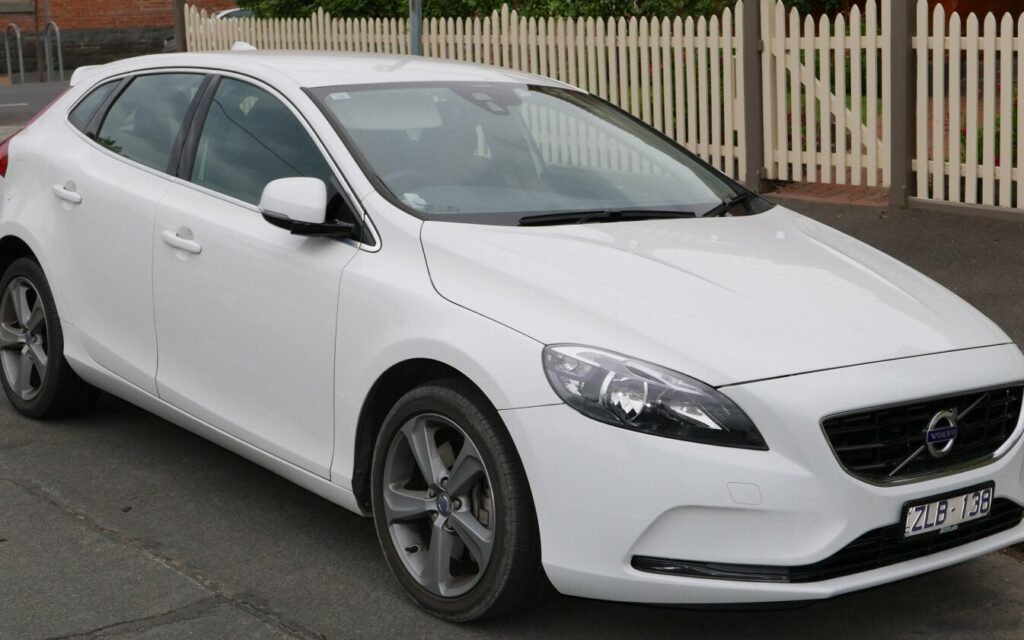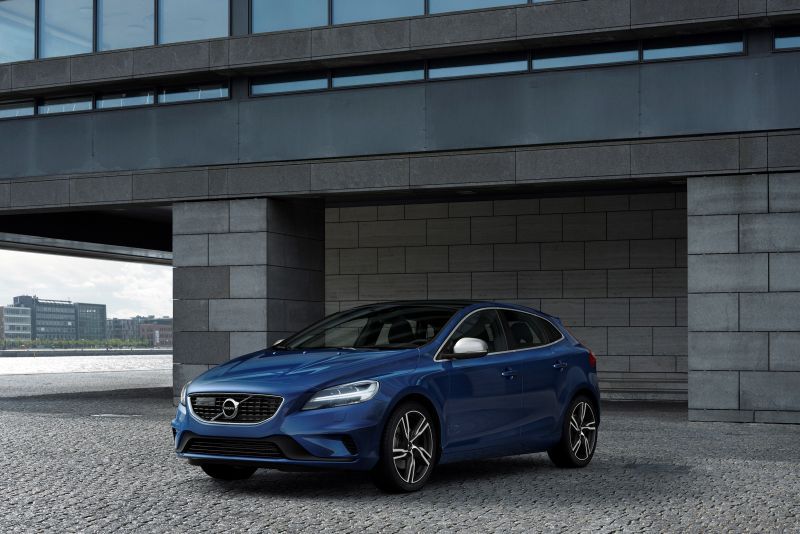
The Volvo V40 (facelift 2016) represents a significant refresh of Volvo’s premium compact hatchback, a model primarily targeted at the discerning European and international markets. First introduced in 2012, the V40 was Volvo’s compelling entry into the highly competitive C-segment, challenging established players like the BMW 1 Series, Audi A3, and Mercedes-Benz A-Class. The 2016 facelift, produced from 2016 to 2018, brought a series of aesthetic and technological updates, solidifying its position as a sophisticated and safety-conscious alternative. This particular variant, the 2.0 D3 with 150 horsepower, showcased Volvo’s prowess in developing efficient yet potent diesel powertrains, a critical factor for its success in regions where diesel remained a popular choice for its economy and torque characteristics. While never officially sold in the United States, the V40 holds an important place in Volvo’s modern history, illustrating the brand’s commitment to design, safety, and driving dynamics in a smaller, more accessible package.
Powertrain and Engine Architecture of the Volvo V40 (facelift 2016) D3
Under the hood, the Volvo V40 (facelift 2016) 2.0 D3 features Volvo’s robust D4204T9 engine, a 2.0-liter (120.16 cubic inches) inline four-cylinder diesel unit. This engine is a prime example of modern diesel engineering, incorporating a common rail fuel injection system, a turbocharger, and an intercooler to optimize both power delivery and fuel efficiency. It generates a respectable 150 horsepower at 3750 rpm, translating to a power-per-liter output of 76.2 horsepower per liter. More impressively, the engine delivers a substantial 236.02 lb.-ft. of torque across a broad range, from 1750 to 3000 rpm. This wide torque band ensures strong, responsive acceleration and excellent drivability in various conditions, from city commuting to highway cruising.
The D4204T9 utilizes a sophisticated common rail direct injection system, delivering fuel directly into the combustion chamber at extremely high pressure. This allows for precise control over the combustion process, maximizing efficiency and minimizing emissions. The turbocharger, a Garrett GT1752S unit, provides forced induction, boosting power output and improving engine responsiveness. The intercooler cools the compressed air from the turbocharger, further increasing density and enhancing performance. The engine also features four valves per cylinder, contributing to improved breathing and overall efficiency. The 6-speed manual transmission paired with this engine is a M66HW unit, known for its smooth shifting and durability. It’s a front-wheel drive configuration, typical for this class of vehicle.
Driving Characteristics
The Volvo V40 D3 with the 6-speed manual transmission offers a balanced driving experience. While not overtly sporty, the 150 horsepower and 236 lb-ft of torque provide ample power for everyday driving situations. Acceleration from 0 to 60 mph takes approximately 8 seconds, and the car feels responsive in most scenarios. The broad torque curve means that strong acceleration is available from relatively low engine speeds, making overtaking maneuvers easy and safe. Compared to higher-output versions of the V40, such as those equipped with the D4 engine, the D3 feels less urgent, but it compensates with superior fuel economy. Compared to the gasoline-powered T3 variant, the D3 offers significantly more torque, resulting in a more relaxed and effortless driving experience, particularly when carrying passengers or cargo. The gear ratios are well-chosen, providing a good balance between acceleration and fuel efficiency. First gear is relatively short for quick starts, while higher gears are geared for comfortable cruising on the highway.
Equipment & Trim Levels
The Volvo V40 (facelift 2016) D3 was positioned as a mid-range offering within the V40 lineup. Standard equipment typically included climate control, a multi-function steering wheel, power windows and mirrors, and a basic audio system with USB connectivity. Safety features were a hallmark of the V40, and even the base D3 trim came equipped with a comprehensive suite of systems, including ABS, Electronic Stability Control (ESC), and multiple airbags. Interior upholstery was typically cloth, though leather options were available as upgrades. The dashboard layout was clean and Scandinavian in design, with a focus on ergonomics and ease of use. Optional extras for the D3 trim included a premium audio system, navigation, parking sensors, heated seats, and a sunroof. Higher trim levels, such as the R-Design, added sportier styling cues, upgraded interior materials, and more advanced technology features.
Chassis & Braking
The V40 D3 utilizes a McPherson strut front suspension with coil springs and an anti-roll bar, providing a comfortable yet controlled ride. The rear suspension features an independent multi-link setup, further enhancing ride quality and handling. The chassis is designed to balance comfort and agility, offering a stable and predictable driving experience. Braking performance is provided by ventilated discs at the front and solid discs at the rear, supported by an Anti-lock Braking System (ABS) and Electronic Brakeforce Distribution (EBD). The braking system is generally considered to be effective and reliable, providing ample stopping power in most conditions. The steering is electric power-assisted, offering a light and precise feel. Stabilizer bars are fitted to both the front and rear axles to reduce body roll during cornering.
Market Reception & Comparison
Critics generally praised the Volvo V40 (facelift 2016) D3 for its stylish design, comfortable interior, and exceptional fuel economy. The diesel engine was lauded for its efficiency and strong torque output, making it a practical choice for long-distance driving. However, some reviewers noted that the V40’s interior space was somewhat limited compared to its rivals, particularly in the rear seats. In terms of fuel economy, the V40 D3 consistently outperformed its gasoline-powered counterparts, achieving a combined fuel consumption of around 65.3 US mpg. Compared to the more powerful D4 variant, the D3 offered a more affordable price point and slightly better fuel economy, making it an attractive option for budget-conscious buyers. Reliability was generally good, with the D4204T9 engine proving to be a durable and dependable unit. However, like all diesel engines, it’s important to ensure regular maintenance, including oil changes and filter replacements.
Technical Specifications: Volvo V40 (facelift 2016) 2.0 D3
| Brand | Volvo |
| Model | V40 |
| Generation | V40 (facelift 2016) |
| Type (Engine) | 2.0 D3 (150 Hp) Restricted |
| Start of production | 2016 year |
| End of production | 2018 year |
| Powertrain Architecture | Internal Combustion engine |
| Body type | Hatchback |
| Seats | 5 |
| Doors | 5 |
| Performance Specs | |
| Fuel consumption (economy) – urban | 4.2 l/100 km |
| Fuel consumption (economy) – extra urban | 3.3 l/100 km |
| Fuel consumption (economy) – combined | 3.6 l/100 km |
| CO2 emissions | 95 g/km |
| Fuel Type | Diesel |
| Acceleration 0 – 60 mph | 8 sec |
| Maximum speed | 210 km/h |
| Emission standard | Euro 6 |
| Engine Specs | |
| Power | 150 Hp @ 3750 rpm. |
| Power per liter | 76.2 Hp/l |
| Torque | 320 Nm @ 1750-3000 rpm. |
| Engine layout | Front, Transverse |
| Engine Model/Code | D4204T9 |
| Engine displacement | 1969 cm3 |
| Number of cylinders | 4 |
| Engine configuration | Inline |
| Cylinder Bore | 82 mm |
| Piston Stroke | 93.2 mm |
| Compression ratio | 16:1 |
| Number of valves per cylinder | 4 |
| Fuel injection system | Diesel Commonrail |
| Engine aspiration | Turbocharger, Intercooler |
| Engine oil capacity | 5.2 l |
| Coolant | 8 l |
| Engine systems | Particulate filter |
| Space, Volume and Weights | |
| Trunk (boot) space – minimum | 335 l |
| Trunk (boot) space – maximum | 1500 l |
| Fuel tank capacity | 40 l |
| Max. roof load | 75 kg |
| Permitted trailer load with brakes (12%) | 1500 kg |
| Dimensions | |
| Length | 4369 mm |
| Width | 1783 mm |
| Width including mirrors | 2041 mm |
| Height | 1439 mm |
| Wheelbase | 2647 mm |
| Front track | 1559 mm |
| Rear (Back) track | 1546 mm |
| Ride height (ground clearance) | 133-144 mm |
| Drag coefficient (Cd) | 0.32 |
| Minimum turning circle (turning diameter) | 10.8 m |
| Drivetrain, Brakes and Suspension Specs | |
| Drivetrain Architecture | The Internal combustion engine (ICE) drives the front wheels of the vehicle. |
| Drive wheel | Front wheel drive |
| Number of gears and type of gearbox | 6 gears, manual transmission |
| Front suspension | Independent, type McPherson with coil spring and anti-roll bar |
| Rear suspension | Independent coil spring |
| Front brakes | Ventilated discs |
| Rear brakes | Disc |
| Assisting systems | ABS (Anti-lock braking system) |
| Steering type | Steering rack and pinion |
| Power steering | Electric Steering |
Legacy
The Volvo V40 (facelift 2016), particularly the D3 variant, remains a well-regarded vehicle in the used car market. Its reputation for reliability, fuel efficiency, and safety continues to attract buyers seeking a practical and stylish compact hatchback. The D4204T9 engine, when properly maintained, is known for its longevity and durability. However, potential buyers should be aware of the typical maintenance requirements for diesel engines, including regular servicing of the fuel injection system and particulate filter. While the V40 has been discontinued, its influence can be seen in Volvo’s current lineup, particularly in the XC40, which carries forward many of the V40’s design and engineering principles. The V40 stands as a testament to Volvo’s commitment to building safe, efficient, and stylish vehicles that appeal to a wide range of drivers.