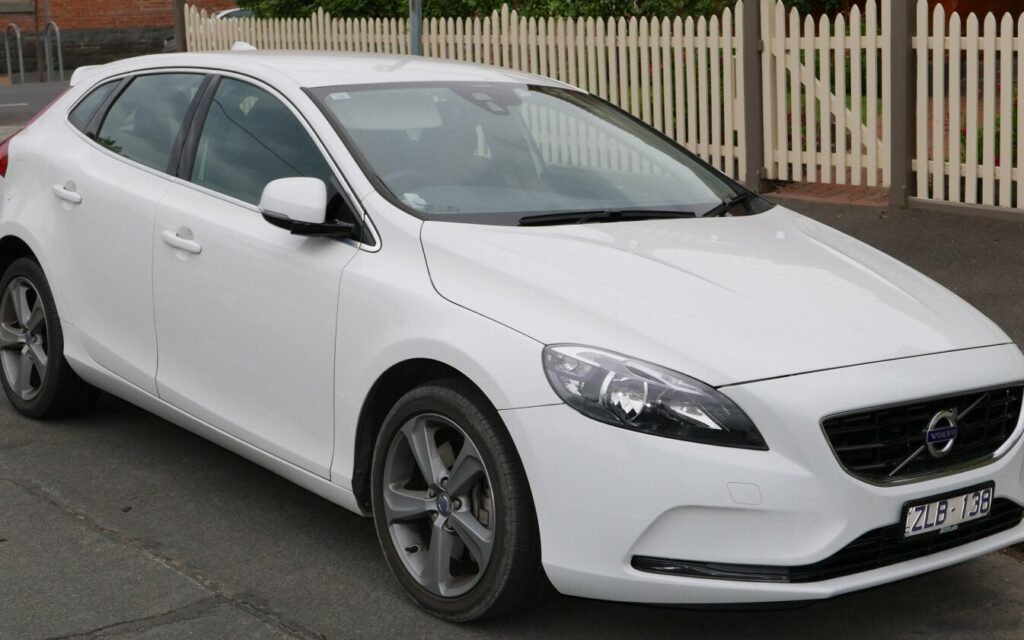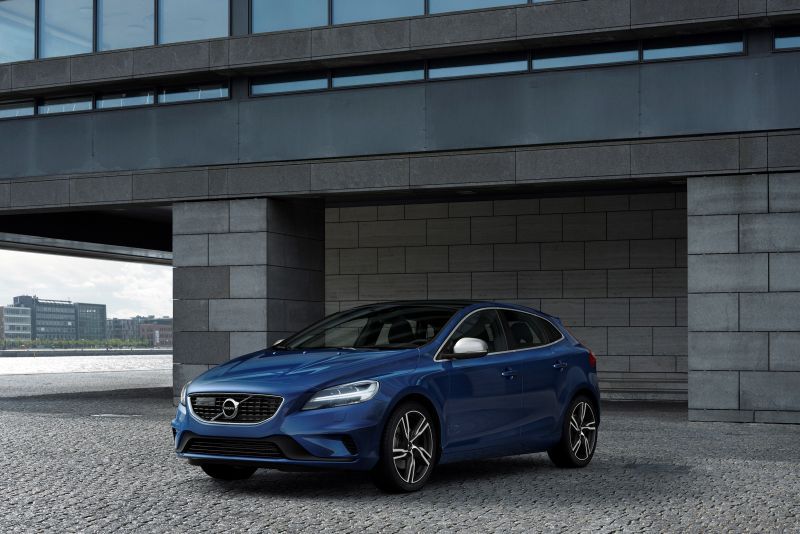
The Volvo V40 (facelift 2016) 2.0 D4 Geartronic Start/Stop represents a significant evolution of Volvo’s entry into the competitive premium compact hatchback segment. Produced from 2016 to 2018, this particular iteration showcased Volvo’s commitment to sophisticated design, advanced technology, and its renowned safety standards, all wrapped in a practical five-door package. While the V40 was a popular choice in its primary markets, particularly across Europe and parts of Asia, it was not officially sold in the United States. This decision reflected Volvo’s strategic shift in the North American market towards SUVs and larger sedans, where the compact hatchback segment, especially for diesel variants, held limited appeal.
The 2.0 D4 Geartronic: Positioning and Overview
The 2016 facelift brought several key enhancements, aligning the V40’s aesthetic with the brand’s newer design language, which had debuted with the XC90. This included the distinctive “Thor’s Hammer” LED daytime running lights, a more prominent grille, and updated interior trim options. The 2.0 D4 Geartronic trim occupied a mid-range position within the V40 lineup. It sat above the entry-level T3 and T4 gasoline variants, offering a substantial performance and efficiency upgrade, but below the more powerful D5 diesel and the performance-oriented R-Design models. It was targeted towards drivers who prioritized a balance of fuel economy, refinement, and usable power for both daily commuting and longer journeys.
Powertrain & Engine Architecture
At the heart of the Volvo V40 (facelift 2016) 2.0 D4 Geartronic Start/Stop lies Volvo’s advanced D4204T14 engine, a 2.0-liter (120.16 cubic inches) inline four-cylinder diesel unit from the brand’s modular Drive-E family. This powertrain was engineered for an impressive balance of power, refinement, and exceptional fuel economy. The engine utilizes a sophisticated twin-turbocharger setup – a low-inertia turbocharger for immediate response and a larger turbocharger for peak power – and an intercooler. This configuration produces a robust 190 horsepower at 4250 rpm, providing ample thrust for both city driving and highway cruising.
More critically for a diesel engine, the D4 delivers a formidable 295.02 lb-ft of torque, available across a broad and usable rev range from 1750 to 2500 rpm. This substantial torque output ensures strong low-end acceleration and effortless overtaking capability. Power is sent to the front wheels via Volvo’s smooth and responsive 6-speed Geartronic automatic transmission, which also incorporates a Start/Stop system to further enhance fuel efficiency and reduce emissions in urban environments. The Geartronic transmission is a conventional torque-converter automatic, known for its smooth shifts and reliability. It features selectable driving modes, allowing the driver to prioritize fuel economy or performance. The engine’s architecture features a common rail fuel injection system, a 15.8:1 compression ratio, and four valves per cylinder, contributing to its efficient combustion and overall refinement.
Driving Characteristics
The V40 2.0 D4 Geartronic offers a distinctly different driving experience compared to the gasoline-powered variants or the higher-output D5 diesel. The abundant low-end torque of the D4 engine makes it exceptionally easy to drive in urban environments, requiring minimal gear changes. The Geartronic transmission provides smooth and predictable shifts, although it isn’t as quick or sporty as a dual-clutch transmission. Acceleration from a standstill is brisk, thanks to the readily available torque, but the engine doesn’t rev as enthusiastically as the gasoline engines. On the highway, the D4 provides ample power for overtaking maneuvers, and the sixth gear helps to keep engine speeds low, contributing to fuel efficiency and reduced noise levels.
Compared to the manual transmission versions of the D4, the Geartronic offers greater convenience, particularly in stop-and-go traffic. However, it does result in a slight reduction in fuel economy and a less engaging driving experience. The gear ratios are optimized for fuel efficiency and everyday usability, rather than outright performance. The V40’s suspension tuning provides a comfortable ride, absorbing bumps and imperfections in the road surface effectively. The steering is precise and well-weighted, providing good feedback to the driver.
Equipment & Trim Levels
The 2.0 D4 Geartronic trim came standard with a comprehensive array of features. Interior upholstery typically consisted of cloth or leatherette, with leather being an optional upgrade. Standard equipment included climate control, a touchscreen infotainment system with Bluetooth connectivity, USB ports, and a multi-function steering wheel. Safety features were, as with all Volvos, a priority, and included ABS, Electronic Stability Control (ESC), and a suite of airbags. Optional extras included a sunroof, heated seats, a premium audio system, and advanced driver-assistance systems such as adaptive cruise control and lane-keeping assist. The dashboard configuration was clean and minimalist, reflecting the Scandinavian design aesthetic. Trim levels within the D4 Geartronic variant often included ‘Momentum’ and ‘Inscription’ which offered increasing levels of luxury and equipment.
Chassis & Braking
The Volvo V40 (facelift 2016) features an independent McPherson strut front suspension and an independent multi-link rear suspension, both with coil springs and anti-roll bars, providing a composed and comfortable ride with confident handling. The front suspension incorporates a stabilizer bar to reduce body roll during cornering. The rear suspension is designed to maximize space efficiency while providing a stable and controlled ride. The electric power steering system offers precise control, and the minimum turning circle of 35.43 feet aids maneuverability in urban settings.
Braking systems varied slightly depending on the specific market and optional equipment. Typically, the V40 D4 Geartronic was equipped with ventilated disc brakes at the front and solid disc brakes at the rear. ABS (Anti-lock Braking System) was standard, along with Electronic Brake-force Distribution (EBD) and Brake Assist. The kerb weight of 3313.55 lbs (1503 kg) contributes to its solid road feel and inherent safety.
Market Reception & Comparison
Critics generally viewed the V40 2.0 D4 Geartronic favorably, praising its fuel efficiency, comfortable ride, and refined interior. The diesel engine was lauded for its strong torque output and smooth operation. However, some reviewers noted that the Geartronic transmission wasn’t as engaging as some of its rivals, and the interior design, while elegant, was perhaps not as visually striking as some competitors. Compared to the gasoline-powered V40 variants, the D4 offered significantly better fuel economy and a more relaxed driving experience, particularly on long journeys. Against competitors like the Audi A3 Sportback and BMW 1 Series, the V40 offered a compelling alternative, often at a slightly lower price point, with a stronger emphasis on safety and comfort. The D4’s fuel economy, averaging around 56 US mpg (combined), was a key selling point, especially in Europe where diesel fuel was more prevalent and often cheaper than gasoline.
Technical Specifications
| Category | Specification |
| General Information | |
| Brand | Volvo |
| Model | V40 |
| Generation | V40 (facelift 2016) |
| Type (Engine) | 2.0 D4 (190 Hp) Geartronic Start/Stop |
| Start of Production | 2016 |
| End of Production | 2018 |
| Powertrain Architecture | Internal Combustion engine |
| Body Type | Hatchback |
| Seats | 5 |
| Doors | 5 |
| Performance Specifications | |
| Fuel Consumption (Urban) | 47 US mpg (5.0 l/100 km) |
| Fuel Consumption (Extra Urban) | 63.6 US mpg (3.7 l/100 km) |
| Fuel Consumption (Combined) | 56 US mpg (4.2 l/100 km) |
| CO2 Emissions | 109 g/km |
| Fuel Type | Diesel |
| Acceleration 0 – 60 mph | 6.8 sec |
| Acceleration 0 – 62 mph (0-100 km/h) | 7.2 sec |
| Maximum Speed | 142.92 mph (230 km/h) |
| Emission Standard | Euro 6 |
| Weight-to-Power Ratio | 7.9 kg/Hp, 126.4 Hp/tonne |
| Weight-to-Torque Ratio | 3.8 kg/Nm, 266.1 Nm/tonne |
| Engine Specifications | |
| Power | 190 Hp @ 4250 rpm |
| Power per Liter | 96.5 Hp/l |
| Torque | 295.02 lb.-ft. (400 Nm) @ 1750-2500 rpm |
| Engine Layout | Front, Transverse |
| Engine Model/Code | D4204T14 |
| Engine Displacement | 120.16 cu. in. (1969 cm3) |
| Number of Cylinders | 4 |
| Engine Configuration | Inline |
| Cylinder Bore | 3.23 in. (82 mm) |
| Piston Stroke | 3.67 in. (93.2 mm) |
| Compression Ratio | 15.8:1 |
| Number of Valves per Cylinder | 4 |
| Fuel Injection System | Diesel Commonrail |
| Engine Aspiration | Twin-Turbo, Intercooler |
| Engine Oil Capacity | 5.49 US qt (5.2 l) |
| Coolant Capacity | 8.45 US qt (8 l) |
| Engine Systems | Start & Stop System, Particulate filter |
| Space, Volume and Weights | |
| Kerb Weight | 3313.55 lbs (1503 kg) |
| Max. Weight | 4420.27 lbs (2005 kg) |
| Max Load | 1106.72 lbs (502 kg) |
| Trunk (Boot) Space – Minimum | 11.83 cu. ft. (335 l) |
| Trunk (Boot) Space – Maximum | 52.97 cu. ft. (1500 l) |
| Fuel Tank Capacity | 16.38 US gal (62 l) |
| Max. Roof Load | 165.35 lbs (75 kg) |
| Permitted Trailer Load with Brakes (12%) | 3306.93 lbs (1500 kg) |
| Dimensions | |
| Length | 172.01 in. (4369 mm) |
| Width | 70.2 in. (1783 mm) |
| Width including mirrors | 80.35 in. (2041 mm) |
| Height | 56.65 in. (1439 mm) |
| Wheelbase | 104.21 in. (2647 mm) |
| Front Track | 61.38 in. (1559 mm) |
| Rear (Back) Track | 60.87 in. (1546 mm) |
| Ride Height (Ground Clearance) | 5.24 – 5.67 in. (133-144 mm) |
| Drag Coefficient (Cd) | 0.32 |
| Minimum Turning Circle (Turning Diameter) | 35.43 ft. (10.8 m) |
Legacy
The Volvo V40 (facelift 2016) 2.0 D4 Geartronic Start/Stop remains a well-regarded vehicle in the used car market. The D4 engine is known for its durability and reliability, provided it has been properly maintained. Regular servicing, including oil changes and filter replacements, is crucial for ensuring long-term engine health. The Geartronic transmission is also generally reliable, although it’s important to check for smooth shifting and any signs of slippage. The V40’s strong safety credentials continue to be a major draw for buyers. While it is no longer in production, the V40 represents a high point in Volvo’s compact hatchback history, showcasing the brand’s commitment to safety, comfort, and Scandinavian design. It serves as a reminder of a time when Volvo offered a compelling alternative to the German premium compacts, and its enduring qualities continue to appeal to discerning buyers today.