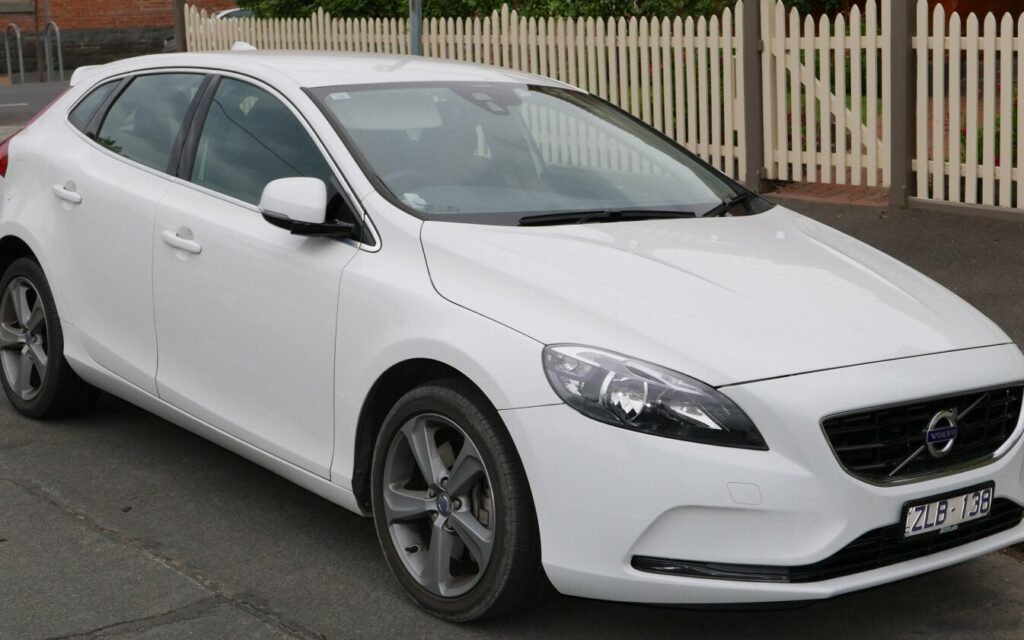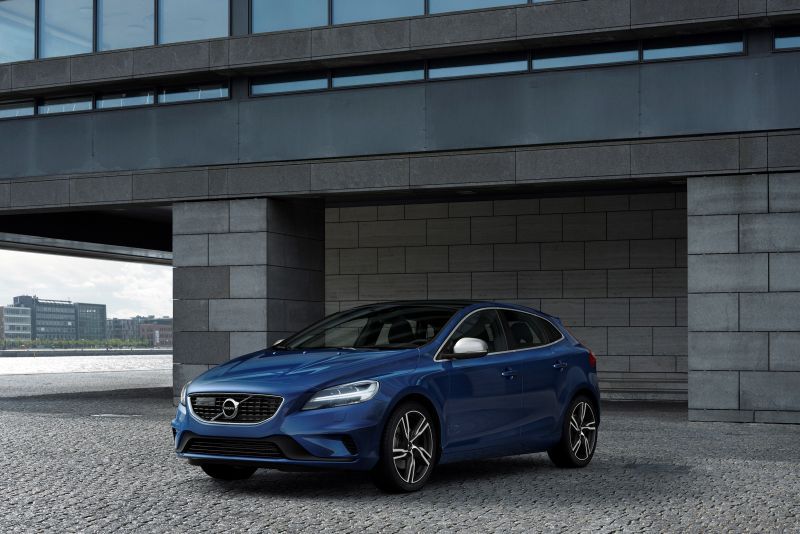
The Volvo V40 (facelift 2016), specifically the model equipped with the 2.0 T2 (122 Hp) Restricted engine, represents a significant offering from the Swedish automaker in the highly competitive European premium compact hatchback segment. Introduced in 2012, the V40 was Volvo’s answer to established rivals, combining sophisticated Scandinavian design with a focus on safety and practicality. The 2016 facelift brought a series of aesthetic and technological updates, keeping the model fresh and competitive until its production concluded in 2018. This particular variant, the 2.0 T2, was positioned as an accessible entry point into the V40 lineup, offering a balanced blend of efficiency and adequate performance for daily driving, primarily targeting markets where its specific power output might have been optimized for taxation or insurance categories.
The 2.0 T2 Variant: Positioning and Role
While the Volvo V40 was a prominent player in Europe and other global markets, it was never officially sold in the United States or Canada. Its role was to challenge premium hatchbacks like the Audi A3 Sportback, BMW 1 Series, and Mercedes-Benz A-Class on their home turf, offering a distinct alternative characterized by its unique design philosophy and Volvo’s renowned safety reputation. The 2.0 T2 variant, with its efficient four-cylinder gasoline engine and front-wheel-drive architecture, underscored Volvo’s commitment to modern powertrain technology and a refined driving experience, even in its more modest power configurations. It served as the entry-level gasoline option, sitting below the more powerful T3, T4, and T5 variants, and also below the diesel-powered D2 and D4 models. The T2 was aimed at buyers prioritizing fuel economy and lower running costs over outright performance.
Powertrain & Engine Architecture
Under the hood of the Volvo V40 (facelift 2016) 2.0 T2 (122 Hp) Restricted lies a modern 2.0-liter (1969 cm3 or 120.16 cu. in.) inline four-cylinder gasoline engine, designated B4204T38. This engine is part of Volvo’s Drive-E powertrain family, known for its modular design and efficiency-enhancing technologies. The “Restricted” designation indicates a detuned version of the standard 2.0-liter engine, likely achieved through adjustments to the engine control unit (ECU) and potentially modifications to the turbocharger. Despite this detuning, it still benefits from advanced features such as direct fuel injection and a turbocharger with an intercooler. The direct injection system, utilizing piezo injectors, allows for precise fuel delivery and improved combustion efficiency. The valvetrain employs double overhead camshafts (DOHC) with four valves per cylinder, optimizing airflow for enhanced performance.
The engine produces 122 horsepower at 5000 rpm, delivering a power output of 62 horsepower per liter. It generates 162.26 lb.-ft. (220 Nm) of torque available across a broad rev range, from a low 1100 rpm up to 3500 rpm. This wide torque band contributes significantly to the car’s drivability, making it feel more eager in everyday traffic and reducing the need for frequent downshifts. Power is transmitted to the front wheels via a six-speed automatic transmission, offering convenient operation for the driver. This transmission is a conventional torque-converter automatic, known for its smooth shifts and reliability. It features adaptive shift logic, adjusting shift points based on driving style and conditions.
Driving Characteristics
The V40 2.0 T2 Automatic delivers a comfortable and refined driving experience, prioritizing ease of use over outright performance. Acceleration from 0 to 60 mph takes approximately 9.3 seconds (0-100 km/h in 9.8 seconds), and its top speed is electronically limited to 118.06 mph (190 km/h). Compared to the six-speed manual version, the automatic transmission provides smoother acceleration, particularly from a standstill, but may result in a slight reduction in fuel economy. Compared to the more powerful T4 and T5 variants, the T2 feels noticeably less responsive, especially during overtaking maneuvers. However, the broad torque band ensures adequate power for everyday driving situations. The automatic transmission’s gear ratios are optimized for fuel efficiency, with taller gearing in higher gears to reduce engine speed at cruising speeds. The steering is light and precise, making it easy to maneuver in urban environments. The suspension provides a comfortable ride, absorbing bumps and imperfections in the road surface effectively.
Equipment & Trim Levels
The V40 (facelift 2016) 2.0 T2 typically came equipped with a respectable level of standard features. While specific trim levels varied by market, common features included air conditioning, power windows and mirrors, a basic infotainment system with Bluetooth connectivity, and a leather-wrapped steering wheel. Safety features were a hallmark of the V40, and even the base T2 model included features like City Safety (autonomous emergency braking), ABS, electronic stability control, and multiple airbags. Optional extras available for this trim included upgraded infotainment systems with navigation, premium audio systems, leather upholstery, heated front seats, parking sensors, and a sunroof. Higher trim levels, such as Momentum and Inscription, added more luxurious features and styling enhancements.
Chassis & Braking
The V40’s chassis features an independent McPherson strut front suspension with coil springs and an anti-roll bar, complemented by an independent multi-link rear suspension. This setup provides a comfortable yet engaging ride. The multi-link rear suspension, a more sophisticated design than a simple twist-beam axle, contributes to improved handling and stability. Ventilated disc brakes at the front and solid disc brakes at the rear, coupled with ABS (Anti-lock Braking System) and electronic brake-force distribution (EBD), ensure strong stopping power. The electric power steering system offers precise control and contributes to the vehicle’s maneuverability. The V40’s relatively low weight, due to its compact size and efficient engine, further enhances its handling and braking performance.
Market Reception & Comparison
Critics generally praised the Volvo V40 for its stylish design, comfortable interior, and exceptional safety features. However, the 2.0 T2 variant received mixed reviews. While its fuel efficiency and low running costs were appreciated, some critics found its performance to be underwhelming, particularly when compared to more powerful rivals. Fuel economy was a strong point, with a combined rating of 43.6 US mpg (5.4 l/100 km), and CO2 emissions of 125 g/km, adhering to the Euro 6 emission standard. In terms of reliability, the V40 generally proved to be a dependable vehicle, although some owners reported issues with the infotainment system and occasional electrical glitches. Compared to the T4 and T5 variants, the T2 offered a more affordable entry point into the V40 range, but at the expense of performance. The diesel-powered D2 and D4 models offered comparable fuel economy with slightly more torque, making them attractive alternatives for those covering long distances.
Technical Specifications
| Category | Specification |
| Brand | Volvo |
| Model | V40 |
| Generation | V40 (facelift 2016) |
| Type (Engine) | 2.0 T2 (122 Hp) Restricted |
| Start of production | 2016 year |
| End of production | 2018 year |
| Powertrain Architecture | Internal Combustion engine |
| Body type | Hatchback |
| Seats | 5 |
| Doors | 5 |
| Fuel consumption (economy) – combined | 5.4 l/100 km |
| CO2 emissions | 125 g/km |
| Fuel Type | Petrol (Gasoline) |
| Acceleration 0 – 100 km/h | 9.8 sec |
| Acceleration 0 – 62 mph | 9.8 sec |
| Acceleration 0 – 60 mph (Calculated) | 9.3 sec |
| Maximum speed | 190 km/h |
| Emission standard | Euro 6 |
| Power | 122 Hp @ 5000 rpm. |
| Torque | 220 Nm @ 1100-3500 rpm. |
| Engine layout | Front, Transverse |
| Engine Model/Code | B4204T38 |
| Engine displacement | 1969 cm3 |
| Number of cylinders | 4 |
| Engine configuration | Inline |
| Fuel injection system | Direct injection |
| Engine aspiration | Turbocharger, Intercooler |
| Trunk (boot) space – minimum | 324 l |
| Trunk (boot) space – maximum | 1500 l |
| Fuel tank capacity | 40 l |
| Length | 4369 mm |
| Width | 1783 mm |
| Height | 1439 mm |
| Wheelbase | 2647 mm |
Legacy
The Volvo V40 2.0 T2, while not the most sought-after variant, remains a viable option in the used car market. Its reputation for safety, reliability, and fuel efficiency continues to appeal to buyers seeking a practical and well-built premium hatchback. The B4204T38 engine, when properly maintained, is known for its durability. Common maintenance items include regular oil changes, timing belt replacement (depending on mileage), and inspection of the turbocharger and fuel injection system. The automatic transmission is generally reliable, but fluid changes should be performed according to the manufacturer’s recommendations. Overall, the V40 2.0 T2 represents a compelling value proposition for those seeking a comfortable, safe, and economical premium hatchback.