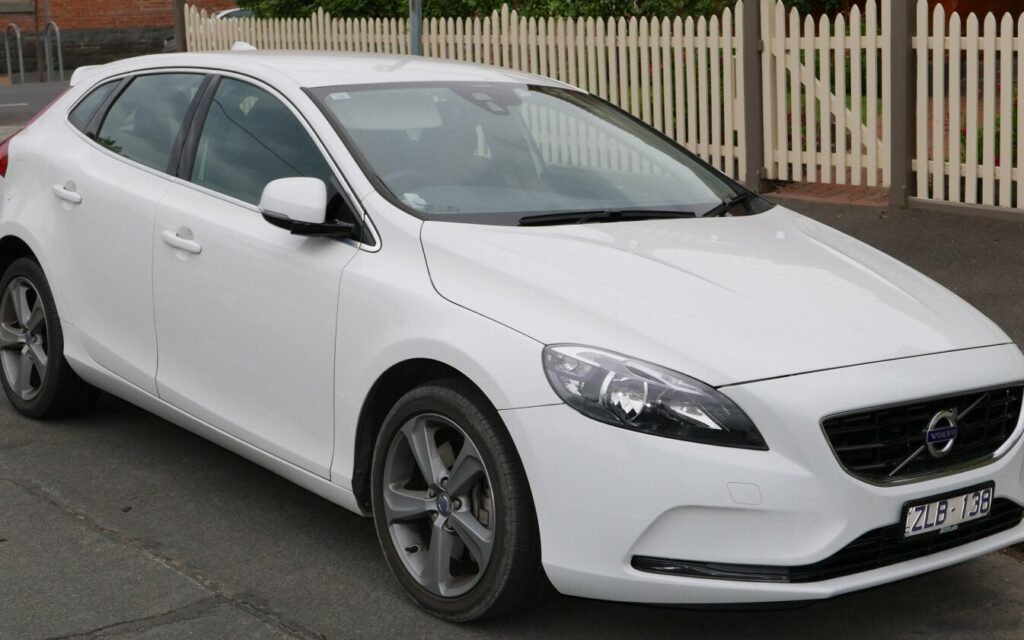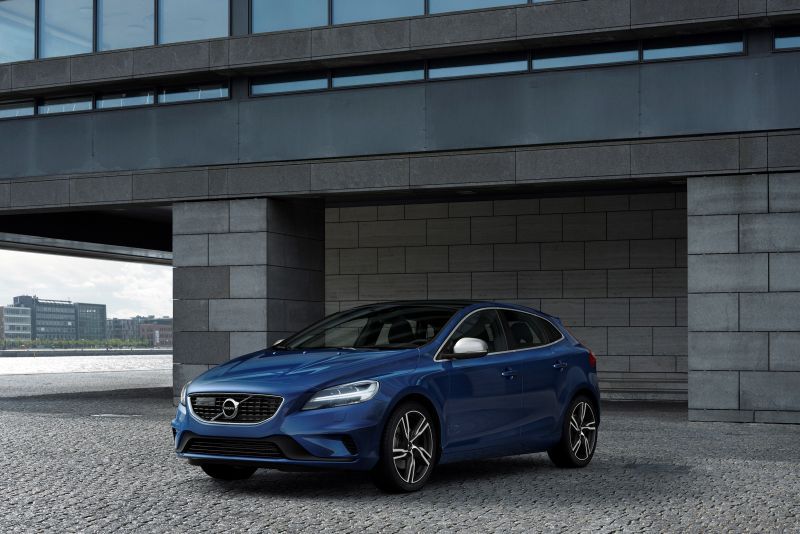
The Volvo V40 (facelift 2016) 2.0 T3 represents Volvo’s entry into the premium European compact hatchback market. Introduced as a stylish and safe alternative to established German competitors, the 2016 facelift brought updated aesthetics, improved connectivity, and refined powertrains. While never officially sold in the United States, the V40 played a vital role in Volvo’s global strategy, particularly in Europe and other international markets, demonstrating the brand’s evolving design and technology during the mid-2010s. The V40, initially launched in 2012, received a significant refresh for the 2016 model year to maintain its competitiveness.
The 2016 Facelift: Design and Enhancements
The 2016 facelift of the V40 introduced several key visual updates. The most prominent change was the adoption of the “Thor’s Hammer” LED daytime running lights, a design element that would become a signature feature across Volvo’s newer models like the XC90 and S90. These lights gave the V40 a more modern and distinctive front appearance, aligning it with the brand’s contemporary design direction. Beyond the headlights, the facelift included new wheel designs, exterior color options, and an updated interior featuring new upholstery choices and trim accents. These changes aimed to elevate the V40’s perceived quality and appeal.
Volvo V40 2.0 T3 Powertrain & Engine Architecture
The heart of the Volvo V40 (facelift 2016) 2.0 T3 is a 2.0-liter inline four-cylinder gasoline engine, internally designated as the B4204T37. This engine is part of Volvo’s Drive-E family, engineered for a balance of performance and efficiency. It features direct fuel injection and a turbocharger with an intercooler, producing 152 horsepower at 5000 rpm. The engine’s torque output is a robust 184.39 lb-ft (250 Nm) available across a broad range of 1300 to 4000 rpm. This wide torque band contributes to responsive acceleration and flexible performance in various driving scenarios.
Fuel Injection and Valvetrain
The B4204T37 utilizes direct fuel injection, a technology that improves combustion efficiency and power output. The engine also features four valves per cylinder, enhancing airflow and contributing to its overall performance characteristics. The 11.3:1 compression ratio further optimizes combustion. The engine is paired with a six-speed automatic transmission, offering smooth and efficient gear changes. This transmission was a key component in making the V40 2.0 T3 accessible to a wider range of drivers, particularly those preferring the convenience of an automatic.
Driving Characteristics: Performance and Handling
The V40 2.0 T3 with the automatic transmission delivers a comfortable and refined driving experience. While not as overtly sporty as some of its rivals, it offers adequate performance for everyday driving and highway cruising. The automatic transmission is tuned for efficiency and smoothness, prioritizing comfortable gear changes over aggressive shifts. Acceleration from 0 to 60 mph takes approximately 7.9 seconds, and the car has a top speed of 130.49 mph (210 km/h). The broad torque band ensures that the engine feels responsive in most situations, making overtaking and merging onto highways relatively effortless. Compared to the manual transmission version, the automatic offers a more relaxed driving experience, while the higher-output T5 variant provides significantly more performance.
Equipment & Trim Levels
The V40 2.0 T3, positioned as a mid-range offering in the V40 lineup, came standard with a comprehensive array of features. Standard equipment typically included climate control, power windows and mirrors, a multi-function steering wheel, and a basic audio system. Safety features were a hallmark of the V40, with standard inclusions like ABS, multiple airbags, and stability control. Optional extras included leather upholstery, a premium audio system, a navigation system, parking sensors, and various driver assistance technologies. Interior upholstery options ranged from cloth to partial leather, and dashboard trim accents could be customized to suit individual preferences. The V40 aimed to provide a premium feel without the price tag of its top-tier competitors.
Chassis & Braking
The V40 2.0 T3 utilizes an independent McPherson strut front suspension and an independent coil spring rear suspension. This suspension setup provides a comfortable ride while maintaining good handling characteristics. The front suspension incorporates an anti-roll bar to reduce body roll during cornering. The braking system features ventilated discs on the front wheels and solid discs on the rear wheels. ABS (Anti-lock Braking System) is standard, enhancing braking performance and stability. The V40’s chassis was designed to balance comfort and handling, providing a composed ride on various road surfaces. The weight of the 2.0 T3 variant, around 3243 lbs (1471 kg), influenced the selection of these components to ensure optimal performance and safety.
Market Reception & Comparison
Critics generally viewed the Volvo V40 2.0 T3 favorably, praising its stylish design, comfortable interior, and strong safety credentials. The automatic transmission was appreciated for its smoothness and ease of use, making it a popular choice for drivers seeking a relaxed driving experience. Fuel economy was also a strong point, with the 2.0 T3 achieving a combined fuel economy of 42.8 US mpg (5.5 l/100 km). Compared to other trims in the V40 lineup, the 2.0 T3 offered a good balance of performance and efficiency at a more accessible price point. The higher-output T5 variant provided more exhilarating performance, while the diesel-powered D2 and D4 models offered even greater fuel economy. Against its German rivals, the V40 2.0 T3 often stood out for its unique Scandinavian design and focus on safety.
Technical Specifications: Volvo V40 (facelift 2016) 2.0 T3 (152 Hp)
| Category | Specification |
| Brand | Volvo |
| Model | V40 |
| Generation | V40 (facelift 2016) |
| Engine Type | 2.0 T3 (152 Hp) |
| Production Start | 2016 year |
| Production End | 2018 year |
| Powertrain Architecture | Internal Combustion Engine |
| Body Type | Hatchback |
| Seats | 5 |
| Doors | 5 |
| Fuel Consumption (Combined) | 42.8 US mpg (5.5 l/100 km) |
| CO2 Emissions | 127 g/km |
| Fuel Type | Gasoline |
| Acceleration 0-60 mph | 7.9 sec |
| Acceleration 0-100 km/h | 8.3 sec |
| Maximum Speed | 130.49 mph (210 km/h) |
| Emission Standard | Euro 6 |
| Weight-to-Power Ratio | 9.7 kg/Hp, 103.3 Hp/tonne |
| Weight-to-Torque Ratio | 5.9 kg/Nm, 170 Nm/tonne |
| Power | 152 Hp @ 5000 rpm |
| Power per Liter | 77.2 Hp/l |
| Torque | 184.39 lb.-ft. (250 Nm) @ 1300-4000 rpm |
| Engine Layout | Front, Transverse |
| Engine Model/Code | B4204T37 |
| Engine Displacement | 120.16 cu. in. (1969 cm3) |
| Number of Cylinders | 4 |
| Engine Configuration | Inline |
| Cylinder Bore | 3.23 in. (82 mm) |
| Piston Stroke | 3.67 in. (93.2 mm) |
| Compression Ratio | 11.3:1 |
| Valves per Cylinder | 4 |
| Fuel Injection System | Direct injection |
| Engine Aspiration | Turbocharger, Intercooler |
| Curb Weight | 3243 lbs. (1471 kg) |
| Trunk Space (Minimum) | 11.44 cu. ft. (324 l) |
| Trunk Space (Maximum) | 52.97 cu. ft. (1500 l) |
Legacy
The Volvo V40 2.0 T3, while discontinued in 2018, remains a well-regarded vehicle in the used car market. The B4204T37 engine is known for its reliability, and with proper maintenance, it can provide years of dependable service. The automatic transmission is also generally considered robust. The V40’s strong safety record and comfortable interior continue to appeal to buyers seeking a practical and well-equipped compact hatchback. Its lasting legacy lies in its contribution to Volvo’s brand resurgence and its demonstration of the company’s commitment to safety, design, and innovation.