
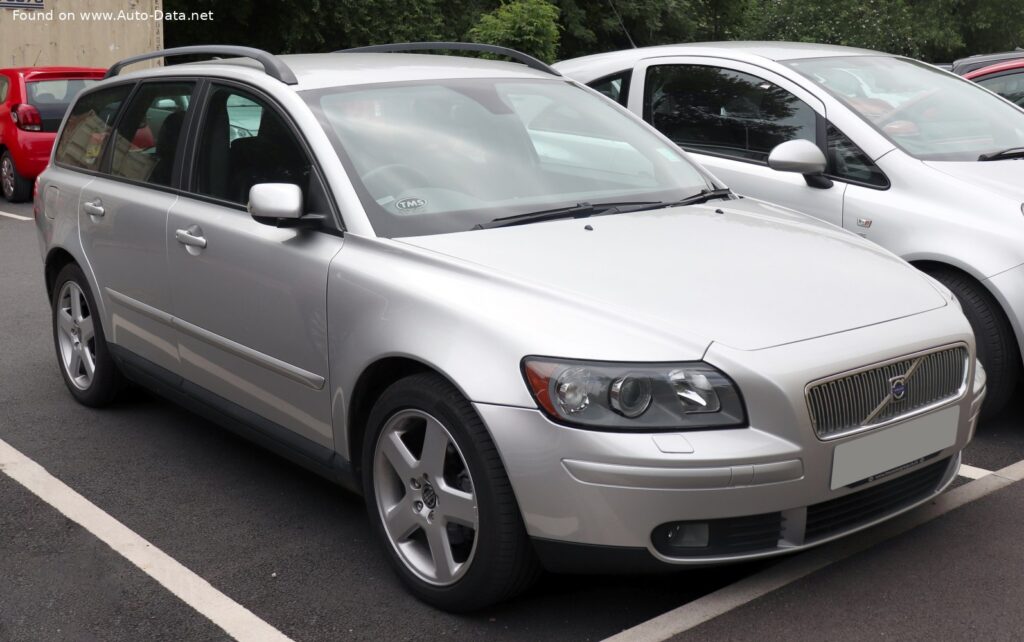
The Volvo V50 1.6 D (110 Hp) represents a significant chapter in the Swedish automaker’s history, a compact executive station wagon that offered a compelling blend of practicality, safety, and fuel efficiency. Launched in 2005 as part of the V50’s first generation, this specific diesel variant was primarily targeted at the discerning European market, where diesel powertrains held a substantial share due to their superior fuel economy and lower CO2 emissions compared to their gasoline counterparts. Based on Volvo’s P1 platform, shared with the Ford Focus and Mazda 3, the V50 was designed to inject a more dynamic driving experience into the Volvo lineup while retaining the brand’s core values of safety and Scandinavian design. The 1.6 D (110 Hp) model, produced between 2005 and 2007, quickly established itself as a popular choice for families and business users seeking a refined, versatile, and economical vehicle in the competitive compact premium segment.
Powertrain & Engine Architecture
At the heart of the Volvo V50 1.6 D (110 Hp) lies a robust and efficient 1.6-liter (1560 cm3 or 95.2 cu. in.) inline four-cylinder turbodiesel engine, identified by its D4164T engine code. This powerplant was a product of a collaboration between Ford and PSA Peugeot Citroën, widely utilized across various European models for its proven reliability and impressive fuel economy. Generating a respectable 110 horsepower at 4000 rpm, the engine delivered its power smoothly, making it well-suited for both urban commuting and long-distance highway cruising. More notably, the engine produced a healthy 177.01 lb.-ft. (240 Nm) of torque, available at a low 1750 rpm. This characteristic low-end torque was crucial for effortless acceleration and strong pulling power, especially when the vehicle was loaded with passengers or cargo.
The D4164T engine utilizes a common-rail direct fuel injection system, delivering fuel directly into the combustion chamber at extremely high pressure for optimized combustion. This system, coupled with a variable geometry turbocharger and intercooler, contributes to both power output and fuel efficiency. The engine features a double overhead camshaft (DOHC) valvetrain with four valves per cylinder, enhancing breathing and overall performance. The engine block is constructed from cast iron for durability, while the cylinder head is made of aluminum to reduce weight. The engine’s compression ratio is relatively high at 18.3:1, typical for a diesel engine, contributing to its thermal efficiency. The powertrain architecture featured a front, transverse engine layout, driving the front wheels through a precise and durable 5-speed manual transmission. This setup contributed to the vehicle’s balanced handling and efficient power delivery.
Driving Characteristics
The Volvo V50 1.6 D (110 Hp) with the 5-speed manual transmission offered a driving experience focused on efficiency and usability rather than outright performance. Acceleration from 0 to 60 mph took approximately 11.5 seconds (0-100 km/h in 12.1 seconds), and the top speed was around 118.06 mph (190 km/h). Compared to higher-output V50 variants, such as the 2.4L five-cylinder gasoline engines, the 1.6 D felt noticeably less powerful, particularly during overtaking maneuvers. However, the abundant low-end torque made it feel more responsive in everyday driving situations than its horsepower figure might suggest.
The 5-speed manual transmission was well-matched to the engine’s characteristics, with gear ratios optimized for fuel economy and relaxed cruising. First gear provided ample torque for starting from a standstill, while fifth gear allowed for comfortable highway speeds with relatively low engine revolutions. The gearshift action was generally smooth and precise, although not as sporty as some competitors. Compared to the automatic transmission options available on other V50 models, the manual transmission offered greater driver control and slightly improved fuel economy. The V50 1.6 D prioritized comfortable ride quality over sharp handling, with the suspension tuned to absorb bumps and imperfections in the road surface. This made it a pleasant companion for long journeys, although it didn’t offer the same level of agility as some sportier rivals.
Equipment & Trim Levels
The Volvo V50 1.6 D (110 Hp) typically served as the entry-level trim in the V50 lineup, offering a solid base level of equipment with options for upgrades. Standard features generally included air conditioning, power windows and mirrors, a CD stereo system, and central locking. Safety features were, as with all Volvos, comprehensive, including ABS brakes, driver and passenger airbags, and side impact protection. Interior upholstery was typically cloth, with a dark color scheme. The dashboard featured a clean and functional design, with easy-to-read gauges and intuitive controls.
Optional extras available for the 1.6 D included alloy wheels, a sunroof, leather upholstery, a premium audio system, and parking sensors. Higher trim levels, such as the SE and Executive, added more features as standard, such as automatic climate control, rain-sensing wipers, and upgraded interior trim. The “floating” center console, a signature Volvo design element, was standard across all V50 models, creating a sense of spaciousness and modern sophistication. The V50 1.6 D was often chosen by fleet buyers and company car drivers, who appreciated its low running costs and practical features.
Chassis & Braking
The Volvo V50 1.6 D (110 Hp) utilized a MacPherson strut front suspension with a multi-link rear suspension. This setup provided a good balance of ride comfort and handling stability. A transverse stabilizer bar was fitted to both the front and rear axles to reduce body roll during cornering. The steering system was a rack and pinion type, offering precise and responsive steering feel. The V50’s braking system consisted of ventilated discs at the front and solid discs at the rear. The Anti-lock Braking System (ABS) was standard, enhancing braking performance and stability, particularly on slippery surfaces.
The V50 1.6 D typically rode on 195/65 R15 tires mounted on 15-inch steel or alloy wheels. The tire size and wheel material varied depending on the trim level and optional extras selected. The suspension was tuned to prioritize comfort over sporty handling, resulting in a relatively soft ride quality. The chassis was designed to provide a stable and predictable driving experience, even when fully loaded with passengers and cargo. The weight distribution was relatively balanced, contributing to the car’s overall stability.
Market Reception & Comparison
Critics generally praised the Volvo V50 1.6 D (110 Hp) for its fuel efficiency, comfortable ride, and comprehensive safety features. However, some reviewers noted that the engine lacked the power and refinement of its competitors, particularly the German premium brands. The V50’s interior was also praised for its Scandinavian design and high-quality materials, but some found it to be slightly less spacious than rivals. Fuel economy was a major selling point, with the V50 1.6 D achieving a combined fuel consumption of around 47 US mpg (5 liters per 100 km). This made it a particularly attractive option for drivers who covered long distances or were concerned about fuel costs.
Compared to other trims in the V50 lineup, the 1.6 D was the most affordable and fuel-efficient option. The higher-output gasoline engines offered more performance but came at the cost of increased fuel consumption and higher purchase price. The 1.6 D was often seen as a sensible and practical choice for families and business users who prioritized economy and reliability over outright performance. In terms of reliability, the D4164T engine proved to be generally robust, although regular maintenance was essential to ensure long-term durability. The V50’s overall build quality was also highly regarded, contributing to its strong reputation for reliability.
Technical Specifications
| General Information | |
| Brand | Volvo |
| Model | V50 |
| Generation | V50 |
| Type (Engine) | 1.6 D (110 Hp) |
| Start of Production | 2005 year |
| End of Production | 2007 year |
| Powertrain Architecture | Internal Combustion engine |
| Body Type | Station wagon (estate) |
| Seats | 5 |
| Doors | 5 |
| Performance Specifications | |
| Fuel Consumption (economy) – Urban | 6.3 l/100 km (37.3 US mpg) |
| Fuel Consumption (economy) – Extra Urban | 4.3 l/100 km (54.7 US mpg) |
| Fuel Consumption (economy) – Combined | 5 l/100 km (47 US mpg) |
| CO2 Emissions | 132 g/km |
| Fuel Type | Diesel |
| Acceleration 0 – 60 mph | 11.5 sec |
| Acceleration 0 – 100 km/h | 12.1 sec |
| Maximum Speed | 118.06 mph (190 km/h) |
| Weight-to-Power Ratio | 12.2 kg/Hp (82.1 Hp/tonne) |
| Weight-to-Torque Ratio | 5.6 kg/Nm (179.1 Nm/tonne) |
| Engine Specifications | |
| Power | 110 Hp @ 4000 rpm |
| Power per Liter | 70.5 Hp/l |
| Torque | 177.01 lb.-ft. (240 Nm) @ 1750 rpm |
| Engine Layout | Front, Transverse |
| Engine Model/Code | D4164T |
| Engine Displacement | 1.6 liters (1560 cm3 / 95.2 cu. in.) |
| Number of Cylinders | 4 |
| Engine Configuration | Inline |
| Cylinder Bore | 2.95 in. (75 mm) |
| Piston Stroke | 3.48 in. (88.3 mm) |
| Compression Ratio | 18.3:1 |
| Number of Valves per Cylinder | 4 |
| Fuel Injection System | Diesel Commonrail |
| Engine Aspiration | Turbocharger, Intercooler |
| Valvetrain | DOHC |
| Engine Oil Capacity | 3.91 US qt (3.7 l) |
| Coolant Capacity | 7.61 US qt (7.2 l) |
| Space, Volume and Weights | |
| Kerb Weight | 2954.19 lbs. (1340 kg) |
| Max. Weight | 4188.78 lbs. (1900 kg) |
| Max Load | 1234.59 lbs. (560 kg) |
| Trunk (boot) Space – Minimum | 14.73 cu. ft. (417 l) |
| Trunk (boot) Space – Maximum | 46.16 cu. ft. (1307 l) |
| Fuel Tank Capacity | 16.38 US gal (62 l) |
| Dimensions | |
| Length | 177.72 in. (4514 mm) |
| Width | 69.69 in. (1770 mm) |
| Height | 57.17 in. (1452 mm) |
| Wheelbase | 103.94 in. (2640 mm) |
| Front Track | 60.43 in. (1535 mm) |
| Rear (Back) Track | 60.28 in. (1531 mm) |
| Drivetrain, Brakes, and Suspension Specifications | |
| Drivetrain Architecture | The Internal combustion engine (ICE) drives the front wheels of the vehicle. |
| Drive Wheel | Front wheel drive |
| Number of Gears and Type of Gearbox | 5 gears, manual transmission |
| Front Suspension | Transverse stabilizer |
| Rear Suspension | Transverse stabilizer |
| Front Brakes | Ventilated discs |
| Rear Brakes | Ventilated discs |
| Assisting Systems | ABS (Anti-lock braking system) |
| Steering Type | Steering rack and pinion |
| Tires Size | 195/65 R15 |
| Wheel Rims Size | 15 |
Legacy
The Volvo V50 1.6 D (110 Hp) has proven to be a relatively reliable vehicle in the used car market. The D4164T engine, while not without its potential issues (such as diesel particulate filter clogging and occasional turbocharger problems), is generally considered durable when properly maintained. Regular oil changes, timely replacement of filters, and careful attention to the fuel system are crucial for ensuring long-term reliability. The V50’s robust build quality and comprehensive safety features continue to appeal to buyers seeking a practical and dependable station wagon. Today, the V50 1.6 D can be found at affordable prices, making it an attractive option for budget-conscious buyers looking for a comfortable, safe, and fuel-efficient vehicle. Its enduring popularity is a testament to Volvo’s commitment to building cars that stand the test of time.
