
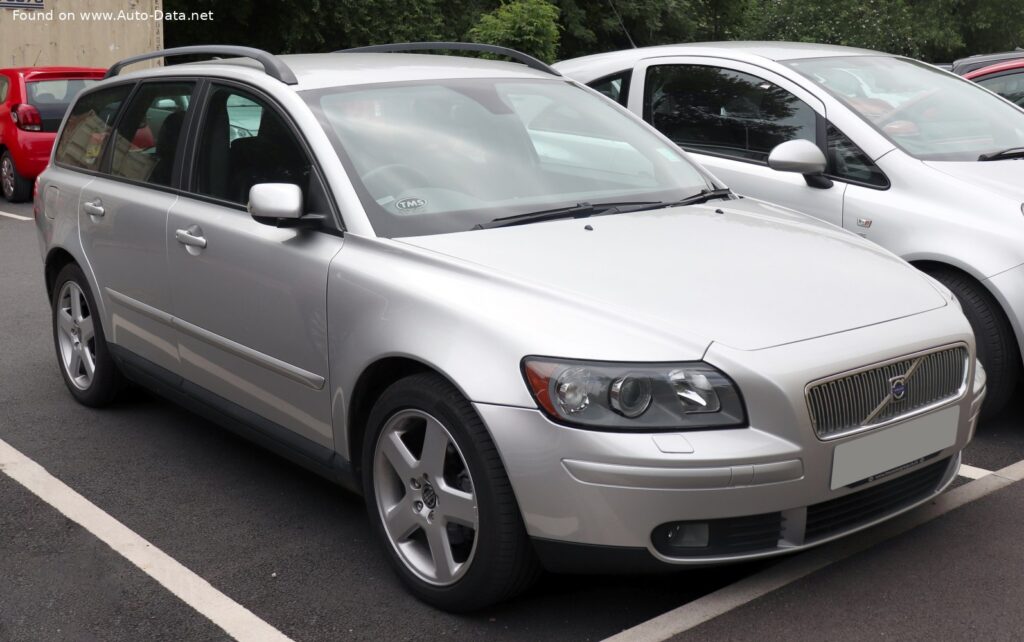
The Volvo V50 1.6 i 16V (101 Hp) represents a significant entry in Volvo’s compact wagon lineup, produced between 2005 and 2007. It was designed to appeal to European buyers seeking a blend of Volvo’s renowned safety, understated elegance, and practicality in a more accessible and fuel-efficient package. The V50, introduced in 2004, succeeded the V40 and was Volvo’s first foray into the premium compact segment. It shared its platform – the Ford C1 platform, also underpinning the second-generation Ford Focus and Mazda 3 – allowing Volvo to leverage engineering efficiencies while maintaining its distinct Scandinavian design and safety standards. This particular 1.6-liter variant served as the entry-level gasoline option, positioned below the more powerful 2.0L and diesel offerings.
Powertrain & Engine Architecture
The Volvo V50 1.6 i 16V (101 Hp) is powered by a naturally aspirated 1.6-liter (1596 cm³ or 97.39 cu. in.) inline four-cylinder gasoline engine, internally designated the B4164S3. This engine features a front, transverse engine layout, driving the front wheels. The engine utilizes a Double Overhead Camshaft (DOHC) valvetrain with four valves per cylinder, totaling 16 valves, contributing to its relatively efficient operation. Fuel delivery is managed by a multi-port fuel injection system, a common and reliable technology for the period.
The B4164S3 engine produces 101 horsepower (Hp) at 6000 revolutions per minute (rpm), with a power-to-liter ratio of 63.3 Hp/l. Torque output is rated at 150 Nm (110.63 lb.-ft.) at 4000 rpm. The engine’s compression ratio is 11:1, with a cylinder bore of 79 mm (3.11 in.) and a piston stroke of 81.4 mm (3.2 in.). The engine’s design prioritizes fuel efficiency and smooth operation over outright performance. The standard transmission paired with this engine was a 5-speed manual, though a 4-speed automatic transmission was also available, albeit less common.
Driving Characteristics
The V50 1.6 i 16V, particularly when equipped with the 4-speed automatic transmission, offered a comfortable but unhurried driving experience. Acceleration from 0 to 100 km/h (62 mph) took approximately 12 seconds, and 0-60 mph was achieved in around 11.4 seconds. Its top speed was limited to 185 km/h (114.95 mph). Compared to the more powerful 2.0L or diesel variants, the 1.6L engine felt noticeably less responsive, especially during overtaking maneuvers. The automatic transmission, while providing convenience, contributed to this slower acceleration due to its wider gear ratios and inherent efficiency losses. The manual transmission offered a more engaging driving experience and slightly improved acceleration. The gear ratios were tuned for fuel economy rather than performance, resulting in a relaxed cruising experience but requiring more frequent downshifts when climbing hills or accelerating quickly. The V50’s suspension provided a comfortable ride, absorbing bumps and imperfections in the road effectively, but didn’t offer the sporty handling characteristics of some competitors.
Equipment & Trim Levels
The V50 1.6 i 16V typically served as the base trim level, offering a solid array of standard features. Interior upholstery was generally cloth, with options for leather upgrades available at extra cost. The dashboard featured a floating center console, a distinctive design element of the S40/V50 generation, providing a minimalist and modern aesthetic. Standard equipment included power windows, power mirrors, central locking, and an audio system. Air conditioning was often included, but sometimes offered as an optional extra depending on the specific market. Optional extras included alloy wheels, a sunroof, rear parking sensors, and upgraded audio systems. Safety features were a priority, with standard equipment including a driver and passenger airbag, side airbags, and Anti-lock Braking System (ABS). Higher trim levels, such as the SE or Executive, added features like automatic climate control, leather upholstery, and premium audio systems.
Chassis & Braking
The V50 1.6 i 16V utilized a MacPherson strut front suspension and a multi-link rear suspension, providing a good balance between ride comfort and handling. The suspension was tuned to prioritize comfort, making it well-suited for everyday driving. Front and rear stabilizer bars were included to reduce body roll during cornering. The braking system consisted of ventilated discs at the front and solid discs at the rear. ABS was standard, providing enhanced braking control in emergency situations. The V50 1.6 i 16V typically rode on 195/65 R15 tires mounted on 15-inch steel or alloy wheels. The relatively modest power output of the 1.6L engine meant that the braking system was generally adequate for the vehicle’s weight and performance.
Market Reception & Comparison
Critics generally viewed the Volvo V50 1.6 i 16V as a practical and safe option, but acknowledged its lack of outright performance. The engine was considered adequate for everyday driving, but struggled when fully loaded or on steep inclines. Fuel economy was a strong point, with a combined cycle rating of 7.2 liters per 100 km (32.7 US mpg), making it competitive with other compact wagons in its class. Compared to the 2.0L gasoline and diesel variants, the 1.6L engine offered lower running costs but significantly less power. The diesel models, in particular, provided superior fuel economy and torque. The V50’s main competitors included the BMW 3 Series Touring, Audi A4 Avant, and Volkswagen Passat Variant. The V50 distinguished itself with its emphasis on safety and its distinctive Scandinavian design. Reliability was generally good, with the B4164S3 engine proving to be a durable and dependable unit.
Technical Specifications
| General Information | |
| Brand | Volvo |
| Model | V50 |
| Generation | V50 |
| Type (Engine) | 1.6 i 16V (101 Hp) |
| Start of Production | 2005 year |
| End of Production | 2007 year |
| Powertrain Architecture | Internal Combustion engine |
| Body type | Station wagon (estate) |
| Seats | 5 |
| Doors | 5 |
| Performance Specifications | |
| Fuel Consumption (Urban) | 9.5 l/100 km (24.8 US mpg) |
| Fuel Consumption (Extra Urban) | 5.8 l/100 km (40.6 US mpg) |
| Fuel Consumption (Combined) | 7.2 l/100 km (32.7 US mpg) |
| CO2 Emissions | 171 g/km |
| Fuel Type | Petrol (Gasoline) |
| Acceleration 0 – 60 mph | 11.4 sec |
| Acceleration 0 – 100 km/h | 12 sec |
| Maximum Speed | 185 km/h (114.95 mph) |
| Weight-to-Power Ratio | 12.5 kg/Hp (80.2 Hp/tonne) |
| Weight-to-Torque Ratio | 8.4 kg/Nm (119 Nm/tonne) |
| Engine Specifications | |
| Power | 101 Hp @ 6000 rpm |
| Power per Liter | 63.3 Hp/l |
| Torque | 150 Nm @ 4000 rpm (110.63 lb.-ft. @ 4000 rpm) |
| Engine Layout | Front, Transverse |
| Engine Model/Code | B4164S3 |
| Engine Displacement | 1596 cm³ (97.39 cu. in.) |
| Number of Cylinders | 4 |
| Engine Configuration | Inline |
| Cylinder Bore | 79 mm (3.11 in.) |
| Piston Stroke | 81.4 mm (3.2 in.) |
| Compression Ratio | 11:1 |
| Number of Valves per Cylinder | 4 |
| Fuel Injection System | Multi-port manifold injection |
| Engine Aspiration | Naturally aspirated engine |
| Valvetrain | DOHC |
| Engine Oil Capacity | 4 l (4.23 US qt) |
| Coolant Capacity | 6.2 l (6.55 US qt) |
| Space, Volume and Weights | |
| Kerb Weight | 1260 kg (2777.82 lbs.) |
| Maximum Weight | 1850 kg (4078.55 lbs.) |
| Maximum Load | 590 kg (1300.73 lbs.) |
| Trunk (boot) Space – Minimum | 417 l (14.73 cu. ft.) |
| Trunk (boot) Space – Maximum | 1307 l (46.16 cu. ft.) |
| Fuel Tank Capacity | 62 l (16.38 US gal) |
| Dimensions | |
| Length | 4514 mm (177.72 in.) |
| Width | 1770 mm (69.69 in.) |
| Height | 1452 mm (57.17 in.) |
| Wheelbase | 2640 mm (103.94 in.) |
| Front Track | 1535 mm (60.43 in.) |
| Rear Track | 1531 mm (60.28 in.) |
| Drivetrain, Brakes and Suspension Specifications | |
| Drivetrain Architecture | The Internal combustion engine (ICE) drives the front wheels of the vehicle. |
| Drive Wheel | Front wheel drive |
| Number of Gears and Type of Gearbox | 5 gears, manual transmission |
| Front Suspension | Transverse stabilizer |
| Rear Suspension | Transverse stabilizer |
| Front Brakes | Ventilated discs |
| Rear Brakes | Ventilated discs |
| Assisting Systems | ABS (Anti-lock braking system) |
| Steering Type | Steering rack and pinion |
| Tires Size | 195/65 R15 |
| Wheel Rims Size | 15 |
Legacy
The Volvo V50 1.6 i 16V, while not the most powerful variant, has proven to be a reliable and durable vehicle. The B4164S3 engine is known for its longevity, and with regular maintenance, can provide many years of service. On the used car market, these models are generally affordable and represent a good value for buyers seeking a safe, practical, and well-built wagon. However, potential buyers should be aware of the age-related issues common to vehicles of this era, such as wear and tear on suspension components and potential for corrosion. The V50’s reputation for safety and its comfortable ride continue to make it an appealing option for those seeking a dependable and understated family vehicle. It remains a testament to Volvo’s commitment to building cars that prioritize passenger safety and long-term reliability.
