
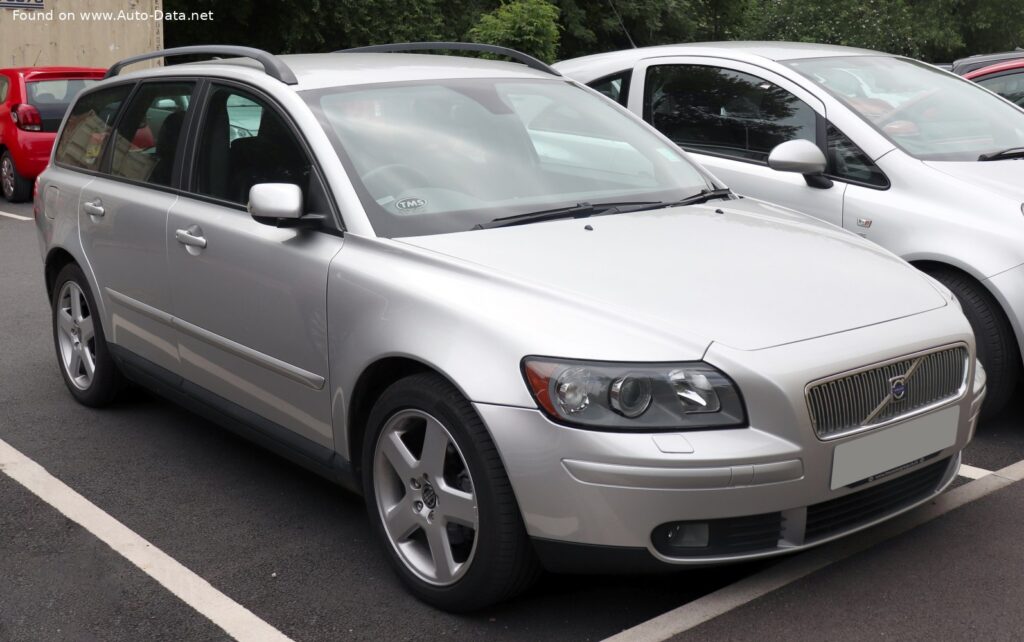
The Volvo V50 2.4 20V (140 Hp), produced from 2004 to 2007, was a key component of Volvo’s strategy to expand its presence in the premium compact wagon segment. Positioned as the wagon counterpart to the S40 sedan, the V50 succeeded the V40, aiming for a more upscale and dynamic driving experience while upholding Volvo’s renowned safety and practicality. Built on the Ford C1 platform – shared with the Ford Focus and Mazda3 – the V50 offered improved handling compared to its predecessor. This specific 2.4-liter, 20-valve, 140 horsepower variant was a core offering, particularly in European markets, providing a balanced blend of performance and efficiency for buyers seeking a refined and versatile family vehicle. It represented Volvo’s modern interpretation of the compact wagon, combining sleek design with robust engineering.
Powertrain & Engine Architecture
The Volvo V50 2.4 20V (140 Hp) is powered by a naturally aspirated 2.4-liter (2435 cm3 or 148.59 cubic inches) inline-five-cylinder engine. This engine, designated the B5244S5, is a hallmark of Volvo’s engineering heritage, known for its smooth power delivery and distinctive engine note. The engine utilizes a double overhead camshaft (DOHC) configuration with 20 valves – four valves per cylinder – optimizing airflow for improved performance. It produces 140 horsepower at 4500 rpm and 220 Nm (162.26 lb-ft) of torque at 3750 rpm. This torque output provides good low-end responsiveness, making it suitable for urban driving and overtaking maneuvers.
Power is delivered to the front wheels through a 5-speed automatic transmission. This transmission, while not known for sporting performance, was chosen for its ease of use and comfort, targeting a different demographic than the available 6-speed manual. The automatic transmission features a conventional torque converter design, prioritizing smooth shifts and drivability over outright speed. The engine employs multi-port fuel injection, contributing to its reliability and relatively straightforward maintenance requirements. The inline-five configuration, while less common than inline-four or V6 engines, provides a unique balance of smoothness and power.
Transmission Details
The 5-speed automatic transmission used in the V50 2.4 was a common unit within the Ford/Volvo portfolio at the time. Gear ratios were optimized for fuel efficiency and comfortable cruising, rather than aggressive acceleration. First gear is relatively short for quick take-off, while higher gears are spaced to reduce engine speed at highway speeds, improving fuel economy. While not offering the responsiveness of a manual transmission or a more modern automatic with more gears, it provided a convenient and user-friendly driving experience for many owners.
Driving Characteristics
The V50 2.4 with the automatic transmission delivers a comfortable and predictable driving experience. Acceleration from 0 to 60 mph takes approximately 9.5 seconds (0-100 km/h in 10 seconds), with a top speed of 127.38 mph (205 km/h). While not particularly quick, the engine provides sufficient power for everyday driving situations, including highway merging and passing. The automatic transmission contributes to a relaxed driving style, with smooth gear changes and minimal driver input required. Compared to the manual transmission version, the automatic sacrifices some responsiveness, but gains in convenience. Compared to the higher-output T5 turbocharged models, the 2.4 naturally aspirated engine offers a more linear power delivery and a less aggressive driving experience.
The V50’s suspension, tuned for comfort, absorbs bumps and imperfections in the road effectively. Steering is light and precise, making it easy to maneuver in urban environments. The front-wheel-drive configuration provides predictable handling, although it lacks the all-weather capability of Volvo’s all-wheel-drive systems. Overall, the driving experience is geared towards comfort and practicality, rather than sporty performance.
Equipment & Trim Levels
The V50 2.4 20V (140 Hp) typically came standard with a respectable level of equipment. Interior features included cloth upholstery, a leather-wrapped steering wheel, and a basic audio system. Air conditioning was standard, as were power windows and door locks. Safety features, as expected from Volvo, were comprehensive, including the Side Impact Protection System (SIPS) and Whiplash Protection System (WHIPS). Optional extras included leather upholstery, a sunroof, upgraded audio systems, and parking sensors. Trim levels varied by market, but generally offered packages that added convenience and luxury features. The V50 aimed to provide a premium feel without the high price tag of more luxurious competitors.
Chassis & Braking
The V50’s chassis utilizes independent suspension at all four wheels, with MacPherson struts at the front and multi-link suspension at the rear. This setup provides a good balance of ride comfort and handling. Front and rear stabilizer bars help to reduce body roll during cornering. The braking system consists of ventilated discs on all four wheels, providing ample stopping power. Anti-lock Braking System (ABS) is standard, enhancing safety and control during emergency braking situations. The chassis was designed to provide a stable and predictable driving experience, prioritizing safety and comfort over outright sportiness.
Market Reception & Comparison
The Volvo V50 2.4 20V (140 Hp) received generally positive reviews from automotive critics. It was praised for its safety, practicality, and comfortable ride. However, some critics noted that its performance was not as exciting as some of its competitors, particularly the turbocharged models. Fuel economy was a strong point, with a combined consumption rating of 8.5 liters per 100 km (approximately 27.7 US mpg). Compared to the T5 turbocharged version, the 2.4 offered better fuel economy and lower running costs, but at the expense of performance. Compared to rivals like the BMW 3 Series Touring and Audi A4 Avant, the V50 offered a compelling value proposition, combining Scandinavian design with Volvo’s renowned safety features.
Reliability was generally good, with the B5244S5 engine proving to be a durable and dependable unit. The automatic transmission, while not known for its sportiness, was also relatively reliable. Maintenance costs were reasonable, with readily available parts and a well-established service network.
Technical Specifications
| Category | Specification |
| General Information | |
| Brand | Volvo |
| Model | V50 |
| Generation | V50 |
| Type (Engine) | 2.4 20V (140 Hp) |
| Start of Production | 2004 |
| End of Production | 2007 |
| Powertrain Architecture | Internal Combustion engine |
| Body type | Station wagon (estate) |
| Seats | 5 |
| Doors | 5 |
| Performance Specs | |
| Fuel consumption (combined) | 8.5 l/100 km |
| CO2 emissions | 203 g/km |
| Fuel Type | Petrol (Gasoline) |
| Acceleration 0 – 60 mph | 9.5 sec |
| Acceleration 0 – 100 km/h | 10 sec |
| Maximum speed | 205 km/h (127.38 mph) |
| Weight-to-power ratio | 10.4 kg/Hp |
| Weight-to-torque ratio | 6.6 kg/Nm |
| Engine Specs | |
| Power | 140 Hp @ 4500 rpm |
| Power per liter | 57.5 Hp/l |
| Torque | 220 Nm @ 3750 rpm (162.26 lb.-ft. @ 3750 rpm) |
| Engine layout | Front, Transverse |
| Engine Model/Code | B5244S5 |
| Engine displacement | 2435 cm3 (148.59 cu. in.) |
| Number of cylinders | 5 |
| Engine configuration | Inline |
| Cylinder Bore | 83 mm (3.27 in.) |
| Piston Stroke | 90 mm (3.54 in.) |
| Compression ratio | 10.3:1 |
| Number of valves per cylinder | 4 |
| Fuel injection system | Multi-port manifold injection |
| Engine aspiration | Naturally aspirated engine |
| Valvetrain | DOHC |
| Engine oil capacity | 5.8 l (6.13 US qt) |
| Coolant | 8 l (8.45 US qt) |
| Space, Volume and Weights | |
| Kerb Weight | 1452 kg (3201.11 lbs.) |
| Trunk (boot) space – minimum | 417 l (14.73 cu. ft.) |
| Trunk (boot) space – maximum | 1307 l (46.16 cu. ft.) |
| Fuel tank capacity | 62 l (16.38 US gal) |
| Dimensions | |
| Length | 4514 mm (177.72 in.) |
| Width | 1770 mm (69.69 in.) |
| Height | 1452 mm (57.17 in.) |
| Wheelbase | 2640 mm (103.94 in.) |
| Front track | 1535 mm (60.43 in.) |
| Rear (Back) track | 1531 mm (60.28 in.) |
| Drivetrain, Brakes and Suspension Specs | |
| Drivetrain Architecture | The Internal combustion engine (ICE) drives the front wheels of the vehicle. |
| Drive wheel | Front wheel drive |
| Number of gears and type of gearbox | 5 gears, automatic transmission |
| Front suspension | Transverse stabilizer |
| Rear suspension | Transverse stabilizer |
| Front brakes | Ventilated discs |
| Rear brakes | Ventilated discs |
| Assisting systems | ABS (Anti-lock braking system) |
| Steering type | Steering rack and pinion |
Legacy
The Volvo V50 2.4 20V (140 Hp) has proven to be a reliable and durable vehicle in the used car market. The B5244S5 engine is known for its longevity, and with proper maintenance, can provide many years of service. The automatic transmission, while not the most sophisticated, is also generally reliable. The V50’s strong safety credentials continue to be a selling point for used car buyers. While not as sought-after as the turbocharged T5 models, the 2.4 offers a more affordable entry point into Volvo ownership, appealing to buyers who prioritize practicality, safety, and fuel efficiency over outright performance. Its enduring reputation as a sensible and dependable family vehicle ensures its continued presence on roads today.
