
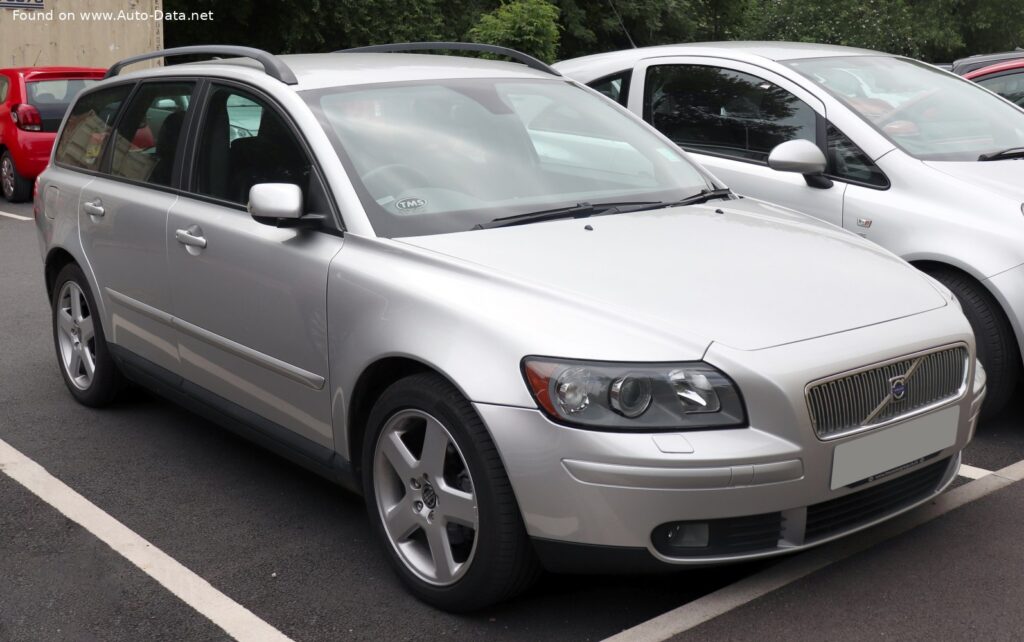
The Volvo V50, introduced in 2004, represented a significant expansion of Volvo’s presence in the premium compact segment. Positioned as a versatile and stylish station wagon (or “estate” in European markets), the V50 succeeded the V40, offering a more contemporary design, improved driving dynamics, and the brand’s renowned emphasis on safety. Built on Volvo’s P1 platform, shared with the second-generation S40 sedan and the Ford C1 platform (utilized by the Ford Focus and Mazda 3), the V50 aimed for a more engaging driving experience. The specific variant, the Volvo V50 2.4 i 20V (170 Hp) Automatic, was a well-balanced offering produced between 2004 and 2007, combining Volvo’s five-cylinder engine with a smooth automatic transmission, appealing to buyers seeking a blend of performance, practicality, and Scandinavian luxury. While primarily a European market vehicle, the V50 was also sold in North America, attracting those desiring a premium compact wagon alternative to sedans and SUVs.
Powertrain & Engine Architecture
The Volvo V50 2.4 i 20V (170 Hp) Automatic is powered by Volvo’s 2.4-liter (2435 cm3 or 148.59 cu. in.) naturally aspirated inline five-cylinder engine, designated the B5244S4. This engine exemplifies Volvo’s engineering philosophy, delivering a distinctive sound and smooth power delivery. It features a Double Overhead Camshaft (DOHC) valvetrain with 4 valves per cylinder, totaling 20 valves, optimizing intake and exhaust efficiency. Fuel is delivered via a multi-port fuel injection system, ensuring precise fuel metering and combustion control.
The B5244S4 engine produces 170 horsepower at 5900 rpm, providing sufficient power for everyday driving and highway cruising. Torque output peaks at 169.64 lb.-ft. (230 Nm) at 4500 rpm, offering strong mid-range acceleration. The inline five-cylinder configuration, known for its inherent balance and unique firing order, contributes to the engine’s refinement and aural character, differentiating it from common four-cylinder alternatives. The engine has a compression ratio of 10.3:1, designed for optimal efficiency and performance when using gasoline fuel.
Power is transmitted to the front wheels through a 5-speed automatic transmission. This gearbox is calibrated for smooth shifts, prioritizing comfort and ease of driving, aligning with the V50’s family-oriented wagon design. The automatic transmission features standard torque converter technology, providing smooth launches and efficient cruising. While not a sport-tuned transmission, it offers a ‘winter’ mode for improved traction in slippery conditions.
Driving Characteristics
The Volvo V50 2.4 i 20V (170 Hp) Automatic delivers a comfortable and refined driving experience. Compared to the available manual transmission versions of the V50, the automatic offers a more relaxed driving style, sacrificing some responsiveness for convenience. The 5-speed automatic transmission’s gear ratios are optimized for fuel efficiency and smooth acceleration, rather than outright performance. The engine’s torque curve provides adequate power for merging onto highways and overtaking, but it doesn’t offer the same level of urgency as the higher-output turbocharged engines available in other V50 trims.
The automatic transmission’s shift points are generally well-timed, but can sometimes feel hesitant during quick acceleration. The overall driving experience is characterized by a quiet cabin and a comfortable ride, thanks to the V50’s well-tuned suspension. While not a sports wagon, the V50 2.4 i Automatic provides a stable and predictable handling experience, making it a pleasant vehicle for long journeys.
Equipment & Trim Levels
The Volvo V50 2.4 i 20V (170 Hp) Automatic typically came equipped with a solid base level of standard features. These included air conditioning, power windows and locks, a CD stereo system, and alloy wheels. Interior upholstery was typically cloth, with options for leather available. The “floating” center console, a signature Volvo design element, housed intuitive controls for the audio and climate systems. Safety features were comprehensive, as expected from Volvo, including ABS brakes, electronic brake distribution, and multiple airbags.
Optional extras for this trim level included a sunroof, premium audio system, heated front seats, and automatic climate control. Many V50s were also equipped with Volvo’s optional navigation system. The dashboard configuration was clean and functional, with a focus on ergonomics and ease of use. Trim levels varied slightly depending on the market, but generally, the 2.4 i Automatic represented a mid-range offering within the V50 lineup, positioned above the base 1.8L models and below the more powerful 2.5T turbocharged variants.
Chassis & Braking
The Volvo V50 2.4 i 20V (170 Hp) Automatic utilizes a MacPherson strut front suspension and a multi-link rear suspension, providing a comfortable ride and stable handling. A transverse stabilizer bar is fitted to both the front and rear axles to reduce body roll during cornering. The chassis is designed to provide a balance between comfort and control, making it suitable for both city driving and longer highway journeys.
The braking system consists of ventilated disc brakes on all four wheels, providing ample stopping power. The Anti-lock Braking System (ABS) with Electronic Brake Distribution (EBD) enhances braking performance and stability, particularly in adverse conditions. The V50’s braking system is generally considered to be reliable and effective, offering a confident and secure feeling behind the wheel. Steering is rack-and-pinion, providing precise and responsive control.
Market Reception & Comparison
Critics generally viewed the Volvo V50 2.4 i Automatic as a practical and well-built wagon, praising its safety features, comfortable ride, and distinctive Scandinavian design. However, some reviewers noted that the 170 hp engine could feel underpowered compared to the turbocharged engines offered in competing models. Fuel economy was considered competitive for its time, but not class-leading.
Compared to other trims in the V50 lineup, the 2.4 i Automatic offered a good balance between performance and affordability. The 1.8L models were more economical but lacked the power of the 2.4 i, while the 2.5T turbocharged variants offered significantly more performance but came at a higher price. In terms of reliability, the 2.4 i Automatic powertrain proved to be generally robust, with few major issues reported. However, like all vehicles, regular maintenance is crucial to ensure long-term reliability.
Technical Specifications
| Category | Specification |
| Brand | Volvo |
| Model | V50 |
| Generation | V50 |
| Type (Engine) | 2.4 i 20V (170 Hp) Automatic |
| Production Start | 2004 |
| Production End | 2007 |
| Powertrain Architecture | Internal Combustion engine |
| Body Type | Station wagon (estate) |
| Seats | 5 |
| Doors | 5 |
| Performance Specs | |
| Fuel Consumption (Combined) | 25.6 US mpg (9.2 l/100 km) |
| CO2 Emissions | 220 g/km |
| Fuel Type | Petrol (Gasoline) |
| Acceleration 0 – 60 mph | 8.6 sec |
| Acceleration 0 – 62 mph (100 km/h) | 9 sec |
| Maximum Speed | 133.59 mph (215 km/h) |
| Weight-to-Power Ratio | 8.5 kg/Hp (117.1 Hp/tonne) |
| Weight-to-Torque Ratio | 6.3 kg/Nm (158.4 Nm/tonne) |
| Engine Specs | |
| Power | 170 Hp @ 5900 rpm |
| Power per liter | 69.8 Hp/l |
| Torque | 169.64 lb.-ft. (230 Nm) @ 4500 rpm |
| Engine Layout | Front, Transverse |
| Engine Model/Code | B5244S4 |
| Engine Displacement | 2.435 liters (148.59 cu. in. / 2435 cm3) |
| Number of Cylinders | 5 |
| Engine Configuration | Inline |
| Cylinder Bore | 3.27 in. (83 mm) |
| Piston Stroke | 3.54 in. (90 mm) |
| Compression Ratio | 10.3:1 |
| Valves per Cylinder | 4 |
| Fuel Injection System | Multi-port manifold injection |
| Engine Aspiration | Naturally aspirated engine |
| Valvetrain | DOHC |
| Engine Oil Capacity | 6.13 US qt (5.8 l) |
| Coolant Capacity | 8.98 US qt (8.5 l) |
| Space, Volume and Weights | |
| Kerb Weight | 3201.11 lbs. (1452 kg) |
| Trunk (Boot) Space – Minimum | 14.73 cu. ft. (417 l) |
| Trunk (Boot) Space – Maximum | 46.16 cu. ft. (1307 l) |
| Fuel Tank Capacity | 16.38 US gal (62 l) |
| Dimensions | |
| Length | 177.72 in. (4514 mm) |
| Width | 69.69 in. (1770 mm) |
| Height | 57.17 in. (1452 mm) |
| Wheelbase | 103.94 in. (2640 mm) |
| Front Track | 60.43 in. (1535 mm) |
| Rear Track | 60.28 in. (1531 mm) |
| Drivetrain, Brakes and Suspension Specs | |
| Drivetrain Architecture | Internal combustion engine (ICE) drives the front wheels. |
| Drive Wheel | Front wheel drive |
| Number of Gears & Type | 5 gears, automatic transmission |
| Front Suspension | Transverse stabilizer |
| Rear Suspension | Transverse stabilizer |
| Front Brakes | Ventilated discs |
| Rear Brakes | Ventilated discs |
| Assisting Systems | ABS (Anti-lock braking system) |
| Steering Type | Steering rack and pinion |
Legacy
The Volvo V50 2.4 i 20V (170 Hp) Automatic has proven to be a relatively reliable vehicle in the used car market. The B5244S4 engine is known for its durability, and with proper maintenance, can provide many years of service. Common issues are typically related to age and mileage, such as wear and tear on suspension components and potential oil leaks. The automatic transmission is generally reliable, but regular fluid changes are essential to prevent problems.
Today, the V50 2.4 i Automatic represents an affordable entry point into Volvo ownership, offering a practical and safe wagon with a comfortable driving experience. While it may not be as technologically advanced as newer vehicles, its timeless design and robust construction continue to appeal to buyers seeking a reliable and versatile vehicle. Its status as a well-regarded and relatively affordable used car ensures its continued presence on roads for years to come.
