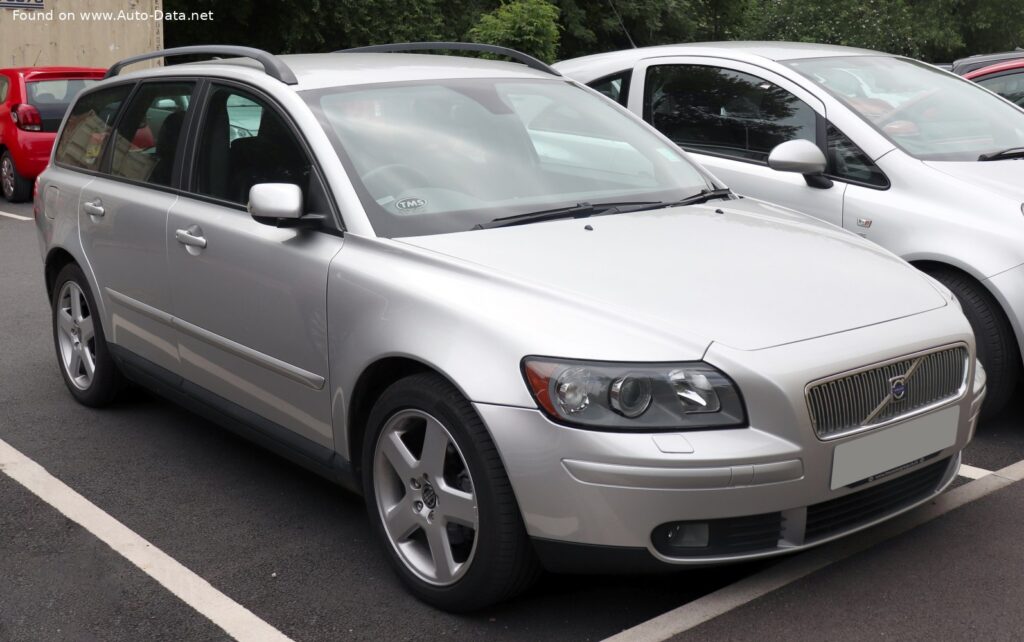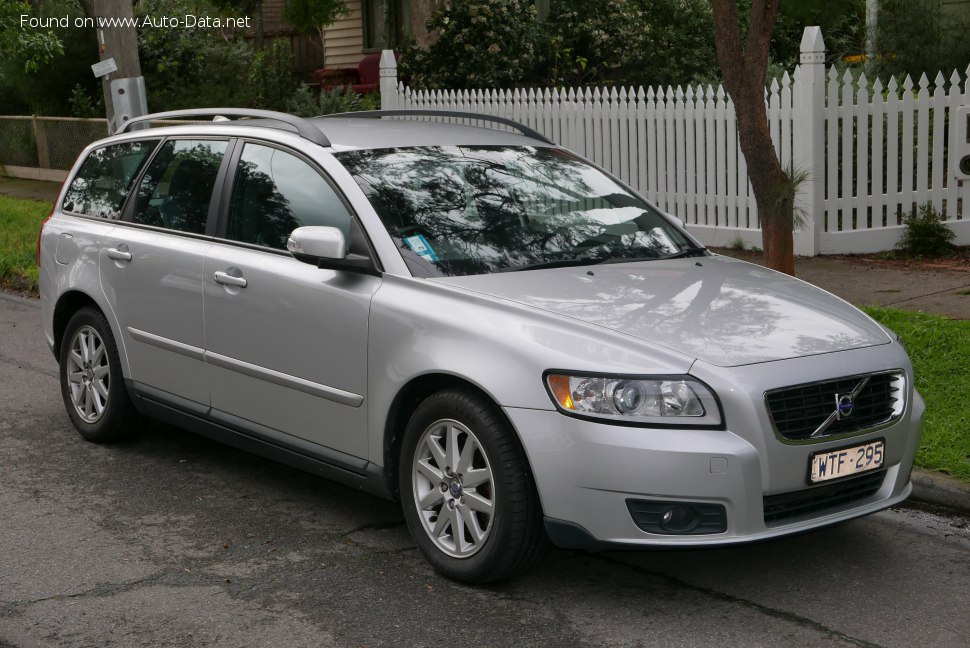
The Volvo V50 (facelift 2007) 1.8 F (125 Hp) Flex Fuel represents a significant offering in the compact premium segment, particularly within the European market. Unveiled as part of the V50’s refreshed lineup in 2007, this specific variant underscored Volvo’s commitment to both practicality and environmental responsibility through its innovative Flex Fuel technology. The V50, a stylish and versatile station wagon (or estate, as it’s known in Europe), built upon the success of its S40 sedan sibling, sharing Volvo’s P1 platform, which was also utilized by Ford and Mazda. This generation of the V50 aimed to blend Volvo’s renowned safety and Scandinavian design ethos with a more dynamic driving experience, catering to a demographic seeking a compact yet sophisticated family vehicle. The facelift introduced subtle but impactful aesthetic and functional enhancements, ensuring the V50 remained competitive and visually appealing from its 2007 launch until the end of its production run for this specific powertrain in 2009.
Powertrain & Engine Architecture
At the heart of the Volvo V50 (facelift 2007) 1.8 F (125 Hp) Flex Fuel lies a naturally aspirated 1.8-liter (1798 cm3 or 109.72 cu. in.) inline four-cylinder engine, designated with the internal code B4184S8. This powertrain was engineered to deliver a balanced combination of fuel efficiency and adequate performance for daily driving. Generating a respectable 125 horsepower at 6000 rpm and 121.7 lb.-ft. (165 Nm) of torque at 4000 rpm, the engine provided a smooth and predictable power delivery. Its DOHC (Double Overhead Camshaft) valvetrain with four valves per cylinder and multi-port manifold injection system ensured efficient combustion and responsiveness.
A key differentiator for this specific V50 variant was its Flex Fuel capability. This meant the engine was designed to run on either conventional gasoline or E85 ethanol, or any blend of the two. This technology was particularly relevant in European markets where ethanol-based fuels were gaining traction as a more sustainable alternative to fossil fuels. While E85 offers environmental benefits, it typically results in higher fuel consumption due to ethanol’s lower energy density compared to gasoline. The V50 1.8 F Flex Fuel, when running on its intended fuel, achieved a combined fuel economy of 31.8 US mpg (7.4 l/100 km), with urban figures at 22.8 US mpg (10.3 l/100 km) and extra-urban at 40.6 US mpg (5.8 l/100 km). This made it a compelling choice for environmentally conscious buyers.
The engine utilized a conventional distributorless ignition system and a closed-loop fuel injection system managed by an electronic control unit (ECU). The ECU monitored various sensors, including oxygen sensors, throttle position, and engine temperature, to optimize fuel delivery and ignition timing for maximum efficiency and performance. The B4184S8 engine was known for its relatively simple design, contributing to its overall reliability and ease of maintenance. The transmission paired with this engine was typically a 5-speed automatic transmission, offering smooth gear changes and convenient operation. This automatic transmission was designed to provide a comfortable driving experience, prioritizing fuel efficiency and ease of use over sporty performance.
Driving Characteristics
The V50 1.8 F Flex Fuel with the 5-speed automatic transmission offered a comfortable and predictable driving experience. Acceleration from 0 to 60 mph took approximately 10.5 seconds (0-100 km/h in 11 seconds), and the top speed was around 124.27 mph (200 km/h). While not particularly sporty, the powertrain provided sufficient power for everyday driving situations, including highway cruising and city commuting. The automatic transmission was tuned for smooth shifts and fuel efficiency, rather than aggressive downshifts or quick acceleration. Compared to the available 5-speed manual transmission, the automatic offered greater convenience, especially in stop-and-go traffic. However, the manual version generally provided slightly better fuel economy and a more engaging driving experience.
Compared to higher-output variants of the V50, such as those equipped with the 2.4i or T5 engines, the 1.8 F Flex Fuel offered a more economical and environmentally friendly option. The higher-powered engines delivered significantly quicker acceleration and more responsive performance, but at the cost of increased fuel consumption and emissions. The 1.8 F Flex Fuel was positioned as the entry-level engine option, appealing to buyers who prioritized fuel efficiency and affordability over outright performance. The gear ratios in the 5-speed automatic were optimized for fuel economy and smooth cruising, with a relatively tall final drive ratio. This resulted in a comfortable ride and reduced engine noise at highway speeds, but also limited the car’s acceleration capabilities.
Equipment & Trim Levels
The Volvo V50 (facelift 2007) 1.8 F (125 Hp) Flex Fuel typically served as the base trim level for the V50 range. Standard equipment included power windows, power door locks, air conditioning, and an audio system with CD player. Safety features were a hallmark of Volvo, and even the base model came equipped with ABS brakes, traction control, and multiple airbags. Interior upholstery was typically cloth, with a focus on durability and comfort. The “floating” center console, a signature Volvo design element, was standard, providing a clean and modern aesthetic.
Optional extras available for the 1.8 F Flex Fuel included leather upholstery, a sunroof, premium audio system, and parking sensors. Higher trim levels, such as the SE or Executive, added more luxurious features as standard, such as automatic climate control, heated seats, and upgraded interior trim. The dashboard configuration was consistent across all V50 models, featuring a simple and intuitive layout with easy-to-read gauges. The steering wheel was typically equipped with audio controls and cruise control. The V50 offered a range of customization options, allowing buyers to tailor the vehicle to their individual preferences.
Chassis & Braking
The Volvo V50 featured a robust chassis designed for safety and comfort. The front suspension utilized independent McPherson struts with coil springs and an anti-roll bar, providing responsive handling and a comfortable ride. The rear suspension employed a multi-link system, also with coil springs and an anti-roll bar, further enhancing ride quality and stability. The V50’s suspension was tuned to prioritize comfort over sporty handling, making it well-suited for long-distance driving and everyday commuting.
Braking duties were handled by ventilated disc brakes at the front and solid disc brakes at the rear. ABS (Anti-lock Braking System) was standard, providing enhanced braking performance and control in emergency situations. The V50’s braking system was known for its reliability and effectiveness. Steering was power-assisted, providing light and precise control. Tire sizes ranged from 195/65 R15 to 215/45 R18, depending on the trim level and optional equipment. The V50’s chassis and braking system were designed to work together to provide a safe and confident driving experience.
Market Reception & Comparison
Critics generally viewed the Volvo V50 1.8 F Flex Fuel as a practical and well-rounded compact wagon. The Flex Fuel technology was praised for its environmental benefits, while the engine was considered adequate for everyday driving. However, some reviewers noted that the 1.8-liter engine lacked the power and responsiveness of the higher-output variants. Fuel economy was generally considered good, particularly when running on gasoline. Reliability was also a strong point, with the V50 earning a reputation for its robust build quality and dependable powertrain.
Compared to other trims in the V50 lineup, the 1.8 F Flex Fuel offered the best value for money. It was more affordable than the 2.4i and T5 models, while still providing the same level of safety and practicality. However, it lacked the performance and luxury features of the higher-end trims. In terms of fuel economy, the 1.8 F Flex Fuel was comparable to the 2.4i, but slightly less efficient than the diesel variants. Overall, the V50 1.8 F Flex Fuel was a compelling choice for buyers who prioritized fuel efficiency, affordability, and environmental responsibility.
Technical Specifications
| Category | Specification |
| Brand | Volvo |
| Model | V50 |
| Generation | V50 (facelift 2007) |
| Type (Engine) | 1.8 F (125 Hp) Flex Fuel |
| Start of Production | 2007 year |
| End of Production | 2009 year |
| Powertrain Architecture | Internal Combustion engine |
| Body type | Station wagon (estate) |
| Seats | 5 |
| Doors | 5 |
| Fuel consumption (economy) – urban (NEDC) | 10.3 l/100 km (22.8 US mpg) |
| Fuel consumption (economy) – extra urban (NEDC) | 5.8 l/100 km (40.6 US mpg) |
| Fuel consumption (economy) – combined (NEDC) | 7.4 l/100 km (31.8 US mpg) |
| CO2 emissions (NEDC) | 177 g/km |
| Fuel Type | Petrol / Ethanol – E85 |
| Acceleration 0 – 60 mph | 10.5 sec |
| Acceleration 0 – 100 km/h | 11 sec |
| Maximum speed | 200 km/h (124.27 mph) |
| Emission standard | Euro 4 |
| Weight-to-power ratio | 10.4 kg/Hp (95.7 Hp/tonne) |
| Engine Specs | |
| Power | 125 Hp @ 6000 rpm |
| Torque | 165 Nm @ 4000 rpm (121.7 lb.-ft. @ 4000 rpm) |
| Engine layout | Front, Transverse |
| Engine Model/Code | B4184S8 |
| Engine displacement | 1798 cm3 (109.72 cu. in.) |
| Number of cylinders | 4 |
| Engine configuration | Inline |
Legacy
The Volvo V50, and specifically the 1.8 F Flex Fuel variant, has established a reputation as a reliable and practical compact wagon. While not as common as some of its German rivals, the V50 is appreciated by owners for its safety, comfort, and understated elegance. The B4184S8 engine is known for its durability and relatively low maintenance costs. On the used car market, the V50 1.8 F Flex Fuel represents a good value proposition, offering a well-equipped and dependable vehicle at an affordable price. However, potential buyers should be aware of the potential for age-related issues, such as worn suspension components and electrical problems. The Flex Fuel system itself is generally reliable, but it’s important to ensure that the vehicle has been properly maintained and that the fuel system is free of contaminants. Overall, the Volvo V50 (facelift 2007) 1.8 F (125 Hp) Flex Fuel remains a viable option for buyers seeking a practical and safe compact wagon with a touch of Scandinavian style.