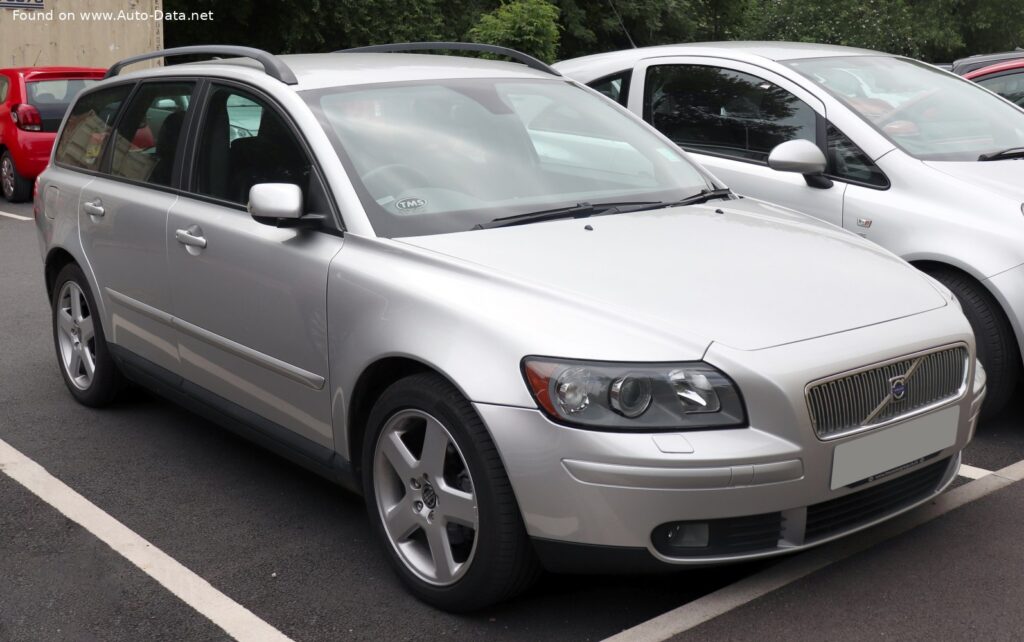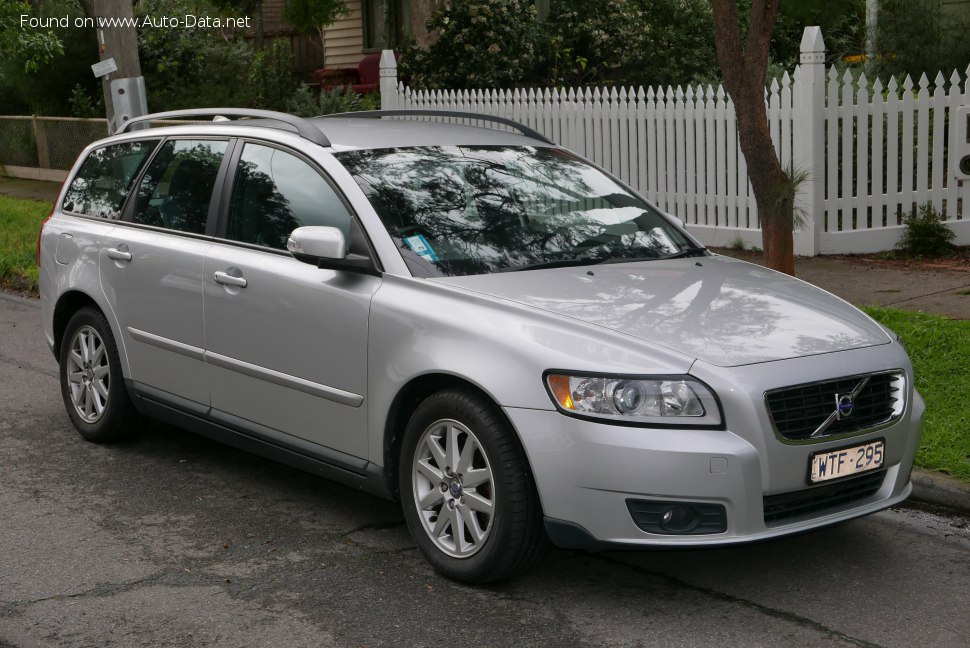
The Volvo V50 (facelift 2007) 2.0 D represents a significant iteration of Volvo’s compact executive station wagon, a model that established a niche for itself in the competitive European premium segment. Launched in 2007 as a refresh of the original V50, which debuted in 2004, this particular variant highlights Volvo’s commitment to efficiency and practicality, appealing especially to the European market where diesel powertrains were highly favored. The V50, part of Volvo’s P1 platform alongside the S40 sedan, C30 hatchback, and C70 convertible, shared its underpinnings with the Ford Focus and Mazda3, reflecting the platform-sharing strategies common within the Ford Motor Company during that era.
The 2.0 D Variant: Positioning and Overview
This facelifted model, produced from 2007 to 2010, retained Volvo’s signature Scandinavian design language while incorporating subtle updates to its exterior styling, interior ergonomics, and technological features. The 2.0 D engine, a robust and economical diesel powerplant, was a cornerstone of its appeal, offering a compelling blend of performance, fuel economy, and lower emissions. Within the V50 lineup, the 2.0 D occupied a mid-range position. It sat above the base 1.8L gasoline engine in terms of performance and torque, but below the more powerful 2.5 T5 gasoline variant. This positioning made it an attractive option for buyers prioritizing fuel efficiency and everyday usability over outright speed.
Powertrain & Engine Architecture
Under the hood of the Volvo V50 (facelift 2007) 2.0 D lies a 2.0-liter (1997 cm3 or 121.86 cu. in.) inline four-cylinder turbodiesel engine, identified by the engine code D4204T. This powerplant was a product of collaboration between Ford and PSA Peugeot Citroën, known for its reliability and efficiency. It features a DOHC (Double Overhead Camshaft) valvetrain with 4 valves per cylinder and a Diesel Commonrail fuel injection system. The system utilized high-pressure direct injection to optimize combustion and reduce emissions. The engine’s aspiration was enhanced by a turbocharger with an intercooler, ensuring optimal air intake and combustion efficiency. The turbocharger, a Garrett GT17 variable geometry turbo, provided a broad torque curve and minimized turbo lag.
The engine’s automatic transmission was a 6-speed torque converter automatic, designated as the AW55-50SN. This transmission, also used in other Volvo and Ford models, was known for its smooth shifting and reliability. It featured electronic control and adaptive learning capabilities, adjusting shift points based on driving style and conditions. The transmission’s gear ratios were optimized for fuel efficiency and comfortable cruising, with a relatively tall final drive ratio.
Driving Characteristics
The 90 hp / Automatic setup of the V50 2.0 D delivered a driving experience focused on usability and efficiency rather than outright performance. While not as quick as the higher-output gasoline variants, the 2.0 D provided ample torque for everyday driving situations. The automatic transmission contributed to a relaxed driving experience, particularly in urban traffic. The torque converter smoothed out gear changes, and the transmission generally selected the appropriate gear for the driving conditions. Compared to the 6-speed manual version of the 2.0 D, the automatic offered greater convenience but slightly reduced fuel economy and a less engaging driving experience. The gear ratios were tuned for maximizing fuel efficiency, meaning acceleration was more gradual than in the manual version or the T5 gasoline model. The automatic transmission’s shift points were programmed to prioritize fuel economy, resulting in a more relaxed and refined driving experience.
Equipment & Trim Levels
The V50 2.0 D (facelift 2007) was typically offered in a single, well-equipped trim level in many European markets. Standard features included climate control, power windows and mirrors, a CD stereo system, and alloy wheels. Safety features were comprehensive, including ABS (Anti-lock Braking System), EBD (Electronic Brakeforce Distribution), and multiple airbags. The interior upholstery was typically cloth, with options for leather upgrades. Optional extras included a sunroof, premium audio system, navigation system, and parking sensors. The “floating” center console, a signature Volvo design element, was standard on all V50 models, creating a clean and modern interior aesthetic. The dashboard layout was functional and ergonomic, with intuitive controls and clear instrumentation.
Chassis & Braking
The V50 2.0 D utilized an independent suspension system, providing a comfortable ride and good handling characteristics. The front suspension consisted of McPherson struts with coil springs and an anti-roll bar, while the rear suspension featured an independent multi-link setup. This configuration helped to minimize body roll and provide stable handling. The braking system consisted of ventilated discs at the front and solid discs at the rear. ABS (Anti-lock Braking System) and EBD (Electronic Brakeforce Distribution) were standard features, enhancing braking performance and stability. The stabilizer bar thickness was tuned to balance ride comfort and handling, providing a good compromise for everyday driving. The steering system was an electric power steering (EPS) system, offering precise feedback and reducing driver effort.
Market Reception & Comparison
Critics generally praised the Volvo V50 2.0 D for its fuel efficiency, comfortable ride, and strong safety credentials. The diesel engine was particularly well-regarded for its torque and long-distance cruising ability. However, some reviewers noted that the interior, while well-built, lacked the outright luxury of some of its German competitors. Compared to the gasoline-powered V50 variants, the 2.0 D offered significantly better fuel economy, making it a more cost-effective option for high-mileage drivers. The 2.0 D also provided more torque than the base 1.8L gasoline engine, resulting in stronger acceleration and better performance when fully loaded. In terms of reliability, the D4204T engine proved to be generally robust, although regular maintenance, including oil changes and filter replacements, was essential. The automatic transmission was also considered reliable, but required periodic fluid changes to ensure smooth operation.
Technical Specifications
| Category | Specification |
| Brand | Volvo |
| Model | V50 (facelift 2007) |
| Engine Type | 2.0 D (136 Hp) |
| Production Years | 2007 – 2010 |
| Body Type | Station wagon (estate) |
| Seats | 5 |
| Doors | 5 |
| Fuel Type | Diesel |
| Fuel Consumption (Urban NEDC) | 7.6 l/100 km (30.9 US mpg) |
| Fuel Consumption (Extra Urban NEDC) | 4.8 l/100 km (49 US mpg) |
| Fuel Consumption (Combined NEDC) | 5.7 l/100 km (41.3 US mpg) |
| CO2 Emissions (NEDC) | 153 g/km |
| Emission Standard | Euro 4 |
| Acceleration 0-60 mph | 9.1 sec |
| Maximum Speed | 127.38 mph (205 km/h) |
| Engine Model/Code | D4204T |
| Engine Layout | Front, Transverse |
| Number of Cylinders | 4, Inline |
| Engine Displacement | 1997 cm3 (121.86 cu. in.) |
| Power | 136 Hp @ 4000 rpm |
| Torque | 320 Nm (236.02 lb.-ft.) @ 2000 rpm |
| Transmission | 6-speed automatic (AW55-50SN) |
Legacy
The Volvo V50 2.0 D, particularly the facelifted models, enjoys a reputation for reliability and practicality in the used car market. The D4204T engine, when properly maintained, is known to be durable and long-lasting. The automatic transmission, while not as sporty as a manual, provides a comfortable and convenient driving experience. Today, these vehicles represent a good value proposition for buyers seeking a safe, fuel-efficient, and well-equipped compact wagon. While parts availability may be a consideration for older models, the V50’s robust construction and relatively simple design contribute to its enduring appeal. The V50 2.0 D remains a testament to Volvo’s commitment to building practical, safe, and reliable vehicles that cater to the needs of everyday drivers.