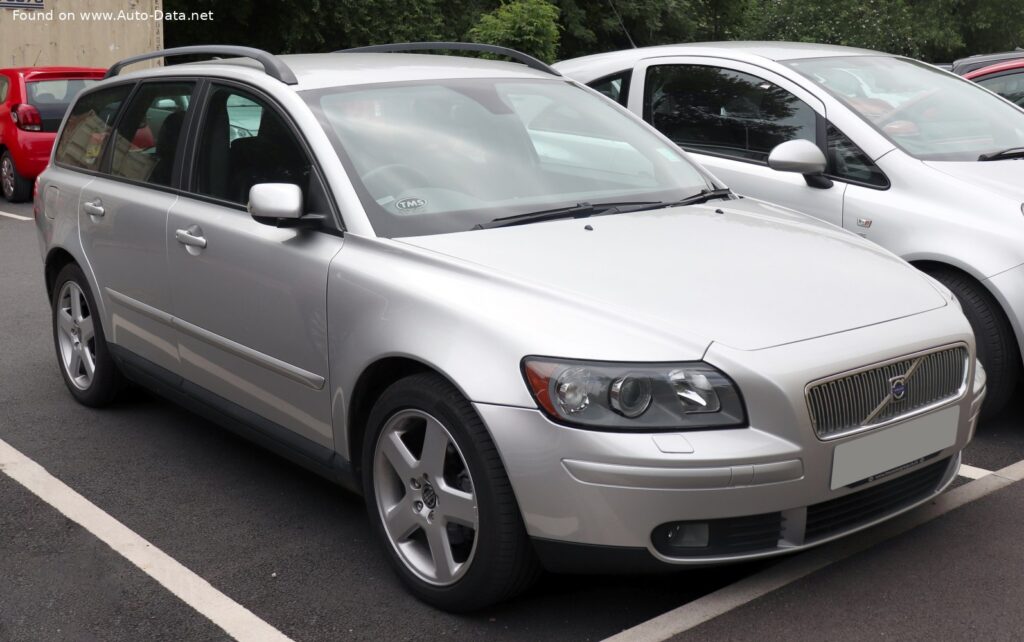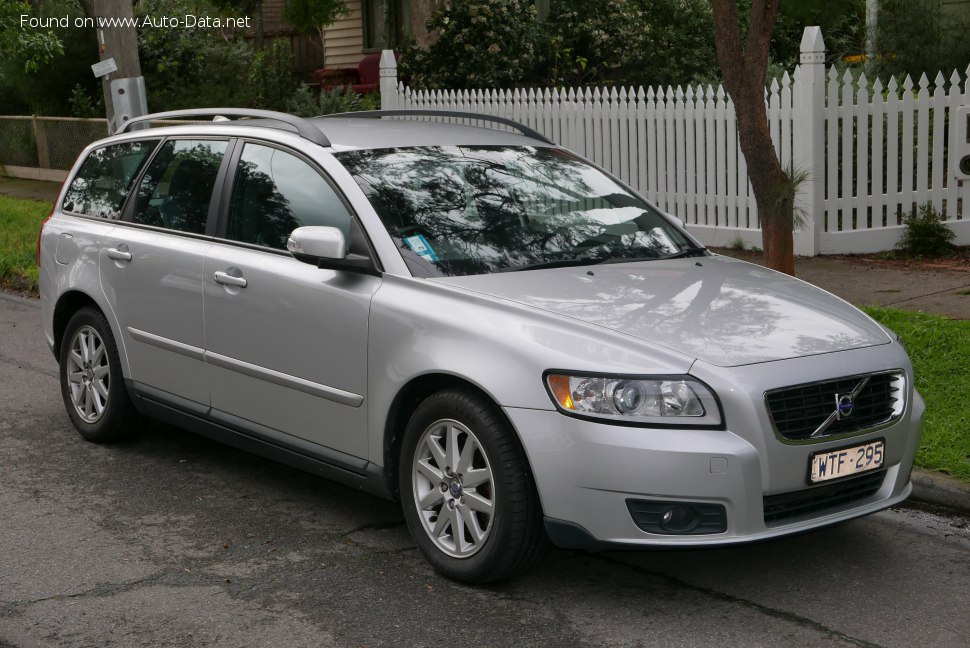
The Volvo V50 (facelift 2007) 2.4 D5 (180 Hp) represented a significant offering in the European premium compact executive station wagon segment. Positioned as a more compact and sportier alternative to Volvo’s larger V70, the V50 blended traditional Volvo attributes of safety and practicality with a more dynamic driving experience and contemporary design. While not widely available in the United States with its full range of powertrains, particularly the diesel variants, the V50 (facelift 2007) with the 2.4 D5 (180 Hp) engine was a highly regarded model in Europe, appealing to families and professionals seeking a versatile and efficient vehicle. Produced from 2007 to 2010, this iteration showcased Volvo’s commitment to sophisticated engineering and advanced diesel technology.
Powertrain & Engine Architecture
At the heart of the Volvo V50 (facelift 2007) 2.4 D5 was Volvo’s renowned 2.4-liter D5 inline five-cylinder turbodiesel engine, identified by the engine code D5244T8. This powerplant was a testament to Volvo’s engineering prowess, offering a compelling blend of power, torque, and efficiency. With a displacement of 2400 cubic centimeters (146.46 cubic inches), the engine featured a DOHC (Double Overhead Camshaft) valvetrain with four valves per cylinder, ensuring optimal airflow and combustion.
Power output for this specific variant was a robust 180 horsepower, achieved at 4000 revolutions per minute. More impressive, particularly for a family-oriented station wagon, was the torque figure: a substantial 400 Newton-meters (295.02 lb.-ft.) available across a broad rev range, from 2000 to 2750 rpm. This low-end torque was crucial for effortless acceleration and strong passing power, making the V50 D5 a confident performer on both urban streets and European highways.
The D5 engine utilized a sophisticated Diesel Commonrail fuel injection system, paired with a turbocharger and intercooler, to optimize fuel delivery and boost performance while maintaining efficiency. Its compression ratio stood at 17.3:1. This powertrain architecture, driving the front wheels, was mated to a precise 6-speed manual transmission, offering engaging control for the driver. An automatic transmission option was also available, though less common, and typically featured a 5-speed unit. This automatic, while providing convenience, did slightly diminish performance and fuel economy compared to the manual.
Driving Characteristics
The Volvo V50 (facelift 2007) 2.4 D5 with the manual transmission offered a responsive and engaging driving experience. The broad torque curve meant that strong acceleration was available in almost any gear, making overtaking maneuvers safe and effortless. The 6-speed gearbox was well-matched to the engine’s characteristics, allowing the driver to keep the engine in its optimal power band. The automatic transmission, while smooth, felt less connected to the engine and resulted in slightly slower acceleration times. Gear changes were generally well-timed, but lacked the precision and control of the manual.
Compared to other V50 variants, such as the 1.8L gasoline engine, the D5 offered significantly more torque and a more relaxed driving experience, particularly on long journeys. The 1.8L, while more affordable, required more frequent gear changes and felt less capable when fully loaded. The D5 also outperformed the 2.0L gasoline engine in terms of fuel economy and overall refinement. While not as sporty as some of its competitors like the BMW 3 Series, the V50 D5 provided a comfortable and composed ride, prioritizing practicality and driver comfort.
Equipment & Trim Levels
The Volvo V50 (facelift 2007) 2.4 D5 was typically offered in well-equipped trim levels, often positioned as a mid-range to premium offering within the V50 lineup. Standard features generally included climate control, power windows and mirrors, a CD stereo system, alloy wheels, and a comprehensive suite of safety equipment, including ABS, traction control, and multiple airbags. The interior upholstery was typically a comfortable cloth, with leather options available as an upgrade.
Optional extras included a premium audio system, navigation system, sunroof, heated front seats, and parking sensors. Higher trim levels often bundled these features together. The dashboard configuration was characterized by Volvo’s minimalist “floating” center console design, which housed the audio and climate controls. Interior color schemes were typically subdued, reflecting Volvo’s Scandinavian design aesthetic.
Chassis & Braking
The Volvo V50 (facelift 2007) was built on Volvo’s P1 platform, shared with the S40 sedan and, notably, the Ford Focus and Mazda 3, though heavily modified by Volvo for enhanced safety and rigidity. The suspension system comprised an independent McPherson strut setup with coil springs and an anti-roll bar at the front, complemented by an independent multi-link spring suspension with a stabilizer bar at the rear. This configuration provided a comfortable ride while maintaining composed handling.
Braking power came from ventilated discs at the front and solid discs at the rear. ABS (Anti-lock Braking System) was standard, ensuring effective braking performance in various conditions. The steering was a rack and pinion system with electric power assistance, offering precise control and ease of maneuverability. Stabilizer bar thickness was generally consistent across V50 models, but suspension tuning was slightly adjusted to accommodate the different engine weights and power outputs. The D5 variant benefited from slightly stiffer springs and dampers to manage the increased torque and provide a more controlled driving experience.
Market Reception & Comparison
Critics generally praised the Volvo V50 (facelift 2007) 2.4 D5 for its blend of practicality, safety, and efficiency. The D5 engine was particularly well-regarded for its smooth power delivery and strong torque. Fuel economy was a significant selling point, especially in Europe where diesel engines were highly favored. However, some critics noted that the V50’s styling was somewhat conservative compared to its rivals, and the interior, while well-built, lacked the visual flair of some German competitors.
Compared to other trims in the V50 lineup, the D5 offered superior performance and fuel economy. The 1.8L gasoline engine was more affordable but lacked the D5’s torque and refinement. The 2.0L gasoline engine offered a compromise between performance and economy, but still fell short of the D5’s overall capabilities. In terms of reliability, the D5 engine proved to be generally robust, although diesel particulate filters required periodic maintenance. Overall, the V50 D5 was considered a well-rounded and capable premium compact station wagon.
Technical Specifications: Volvo V50 (facelift 2007) 2.4 D5 (180 Hp)
| Category | Specification |
| General Information | |
| Brand | Volvo |
| Model | V50 |
| Generation | V50 (facelift 2007) |
| Type (Engine) | 2.4 D5 (180 Hp) |
| Start of Production | 2007 year |
| End of Production | 2010 year |
| Powertrain Architecture | Internal Combustion engine |
| Body type | Station wagon (estate) |
| Seats | 5 |
| Doors | 5 |
| Performance Specs | |
| Fuel Consumption (economy) – urban (NEDC) | 8.3 l/100 km (28.3 US mpg) |
| Fuel Consumption (economy) – extra urban (NEDC) | 5.1 l/100 km (46.1 US mpg) |
| Fuel Consumption (economy) – combined (NEDC) | 6.3 l/100 km (37.3 US mpg) |
| CO2 Emissions (NEDC) | 166 g/km |
| Fuel Type | Diesel |
| Acceleration 0 – 60 mph | 7.6 sec |
| Maximum Speed | 225 km/h (139.81 mph) |
| Emission Standard | Euro 4 |
| Weight-to-power ratio | 8.1 kg/Hp (123.9 Hp/tonne) |
| Weight-to-torque ratio | 3.6 kg/Nm (275.3 Nm/tonne) |
| Engine Specs | |
| Power | 180 Hp @ 4000 rpm |
| Power per liter | 75 Hp/l |
| Torque | 400 Nm @ 2000-2750 rpm (295.02 lb.-ft. @ 2000-2750 rpm) |
| Engine layout | Front, Transverse |
| Engine Model/Code | D5244T8 |
| Engine displacement | 2400 cm3 (146.46 cu. in.) |
| Number of cylinders | 5 |
| Engine configuration | Inline |
| Cylinder Bore | 81 mm (3.19 in.) |
| Piston Stroke | 93.15 mm (3.67 in.) |
| Compression ratio | 17.3:1 |
| Number of valves per cylinder | 4 |
| Fuel injection system | Diesel Commonrail |
| Engine aspiration | Turbocharger, Intercooler |
| Valvetrain | DOHC |
Legacy
The Volvo V50 (facelift 2007) 2.4 D5 has proven to be a relatively reliable vehicle, with the D5 engine generally holding up well over time. However, as with any diesel engine, proper maintenance, including regular oil changes and diesel particulate filter cleaning or replacement, is crucial. In the used car market, the V50 D5 remains a popular choice for those seeking a practical, safe, and efficient station wagon. Its strong performance and fuel economy continue to appeal to buyers, although potential buyers should be aware of the potential costs associated with diesel engine maintenance. The V50 D5 represents a high point in Volvo’s commitment to building refined and capable compact estates, and its legacy continues to influence Volvo’s design and engineering philosophy today.