
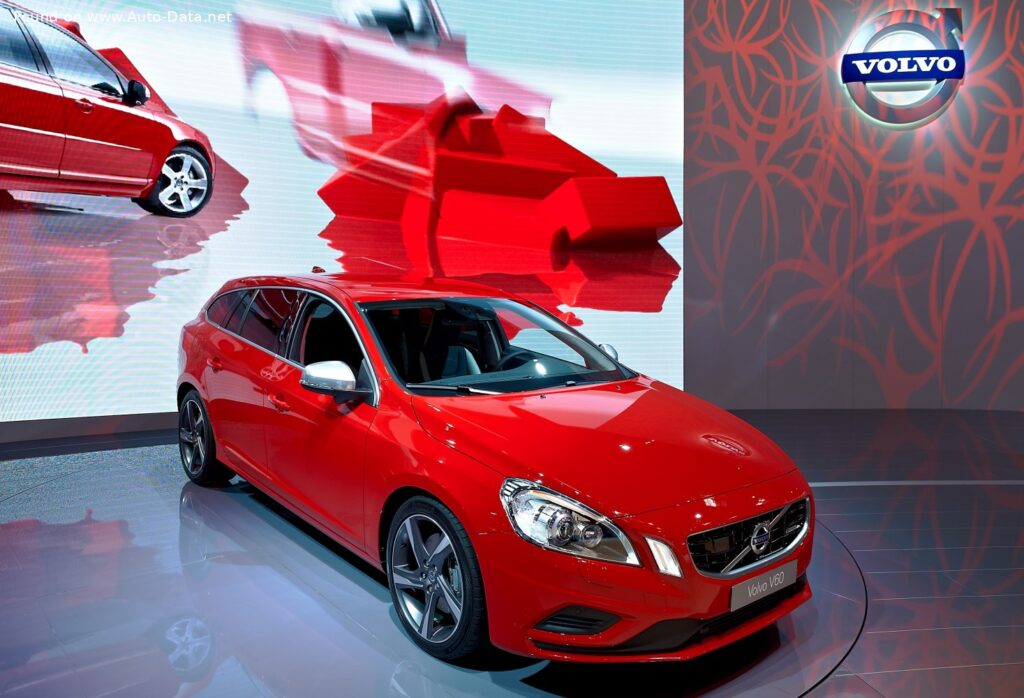
The Volvo V60 I 2.0 D3 (163 Hp) represents a pivotal moment in Volvo’s design and market strategy, launched in 2010 as the first generation of its premium compact executive station wagon. Positioned to compete directly with established German rivals in the highly competitive European market, the V60 I aimed to blend Volvo’s renowned safety credentials and practical wagon heritage with a more dynamic, coupe-like aesthetic. This particular variant, featuring the robust 2.0-liter D3 diesel engine, offered a compelling combination of performance, efficiency, and everyday usability, making it a popular choice for families and business users across Europe who valued its blend of Scandinavian sophistication and frugal running costs.
Unlike many of its predecessors that emphasized boxy utility, the V60 I adopted a sleeker, more sculpted profile, signaling Volvo’s intent to appeal to a broader, more style-conscious audience. While the V60 line eventually made its way to the North American market, this specific D3 diesel powertrain was primarily offered in regions where diesel engines dominated the premium segment, such as Europe. It underscored Volvo’s commitment to offering diverse powertrain options tailored to regional demands, all while maintaining its core brand values of safety, quality, and environmental responsibility through advanced emission control technologies like the particulate filter.
Engine & Performance of the Volvo V60 I
At the heart of the Volvo V60 I 2.0 D3 (163 Hp) lies Volvo’s innovative D5204T2 engine, a 2.0-liter (121.07 cubic inches) inline five-cylinder turbo-diesel unit. This engine was a hallmark of Volvo’s engineering prowess, offering a distinctive sound and character compared to the more common four-cylinder diesels of its era. With a power output of 163 horsepower delivered at 2900 rpm, and a substantial 295.02 lb.-ft. of torque available across a broad rev range from 1400 to 2850 rpm, the D3 engine provided impressive pulling power and excellent responsiveness for its segment.
The D3 engine utilized a common rail direct fuel injection system, paired with a turbocharger and intercooler, to optimize combustion and maximize both power and fuel efficiency. This sophisticated setup allowed the V60 D3 to achieve a respectable 0-60 mph acceleration time of 8.9 seconds, making it agile enough for daily driving and confident on the highway. Power was delivered to the front wheels via a smooth-shifting 6-speed manual transmission, offering engaging control for the driver while contributing to the vehicle’s overall efficiency.
Fuel economy was a significant strong suit for this diesel variant, crucial for its success in European markets. The V60 D3 boasted an impressive combined fuel consumption of 42.8 US mpg. In urban settings, it achieved 32.2 US mpg, while on the highway (extra-urban), it could deliver an outstanding 53.5 US mpg. These figures, combined with CO2 emissions of 144 g/km and adherence to the Euro 5 emission standard, positioned the V60 D3 as an environmentally conscious choice for its time, further enhanced by the inclusion of a particulate filter to reduce harmful emissions.
Design & Features: The Volvo V60 I’s Distinctive Appeal
The Volvo V60 I broke away from the traditional, somewhat boxy wagon aesthetic that had long defined the brand. Its design was characterized by a sleek, flowing profile, a low roofline, and pronounced shoulder lines that gave it a dynamic, almost coupe-like appearance. Despite its sporty lines, the V60 remained a highly practical 5-door, 5-seat station wagon (or “estate” as known in Europe), offering a generous trunk space of 24.44 cubic feet, expandable for larger loads. This thoughtful design ensured that functionality was not sacrificed for style.
Measuring 182.2 inches in length, 73.43 inches in width, and 58.43 inches in height, with a wheelbase of 109.29 inches, the V60 I was proportioned to offer a comfortable and stable ride. Volvo’s commitment to safety was evident throughout its design and engineering. While specific advanced driver-assistance systems (ADAS) vary by trim and region, the V60 I came standard with essential safety features such as ABS (Anti-lock Braking System) and was built upon Volvo’s robust safety cage architecture, designed to protect occupants in various collision scenarios. The interior reflected Scandinavian design principles: minimalist, ergonomic, and crafted from high-quality materials, prioritizing driver and passenger comfort and intuitive control layouts. The steering was managed by a responsive rack and pinion system, providing precise handling and a comfortable driving experience.
Safety Features
Volvo’s dedication to safety was paramount in the V60 I’s design. Beyond the standard ABS, the vehicle incorporated a reinforced body structure, side impact protection systems (SIPS), and numerous airbags to mitigate injury in the event of a collision. These features contributed to the V60 I achieving high scores in independent crash tests, solidifying Volvo’s reputation for occupant protection.
Interior Comfort and Technology
The interior of the V60 I was designed with a focus on Scandinavian minimalism and functionality. High-quality materials were used throughout the cabin, creating a comfortable and refined atmosphere. Available features included leather upholstery, a premium audio system, and a navigation system. The driver-focused layout ensured that all essential controls were within easy reach, enhancing the driving experience.
Technical Specifications
| Category | Specification |
| Brand | Volvo |
| Model | V60 |
| Generation | V60 I |
| Type (Engine) | 2.0 D3 (163 Hp) |
| Production Start | 2010 |
| Production End | 2013 |
| Powertrain Architecture | Internal Combustion Engine |
| Body Type | Station wagon (estate) |
| Seats | 5 |
| Doors | 5 |
| Fuel Consumption (Urban) | 32.2 US mpg |
| Fuel Consumption (Extra Urban) | 53.5 US mpg |
| Fuel Consumption (Combined) | 42.8 US mpg |
| CO2 Emissions | 144 g/km |
| Fuel Type | Diesel |
| Acceleration 0-60 mph | 8.9 seconds |
| Emission Standard | Euro 5 |
| Kerb Weight | 3487.71 lbs. (1582 kg) |
| Max. Weight | 4607.66 lbs. (2090 kg) |
| Max Load | 1119.95 lbs. (508 kg) |
| Engine Power | 163 Hp @ 2900 rpm |
| Engine Torque | 295.02 lb.-ft. @ 1400-2850 rpm |
| Engine Layout | Front, Transverse |
| Engine Model/Code | D5204T2 |
| Engine Displacement | 2.0 Liters (1984 cm³, 121.07 cu. in.) |
| Number of Cylinders | 5, Inline |
| Piston Stroke | 3.19 inches (81 mm) |
| Fuel Injection System | Diesel Commonrail |
| Engine Aspiration | Turbocharger, Intercooler |
| Engine Oil Capacity | 6.23 US Quarts (5.9 l) |
| Coolant Capacity | 9.4 US Quarts (8.9 l) |
| Engine Systems | Particulate filter |
| Trunk Space (Minimum) | 24.44 cu. ft. (692 l) |
| Fuel Tank Capacity | 17.83 US Gallons (67.5 l) |
| Length | 182.2 inches (4628 mm) |
| Width | 73.43 inches (1865 mm) |
| Height | 58.43 inches (1484 mm) |
| Wheelbase | 109.29 inches (2776 mm) |
| Front Track | 62.52 inches (1588 mm) |
| Rear Track | 62.4 inches (1585 mm) |
| Minimum Turning Circle | 37.73 feet (11.5 m) |
| Drivetrain Architecture | Front-wheel drive (Internal Combustion Engine drives front wheels) |
| Drive Wheel | Front-wheel drive |
| Gearbox | 6 gears, manual transmission |
| Assisting Systems | ABS (Anti-lock braking system) |
| Steering Type | Steering rack and pinion |
Legacy and Market Impact of the Volvo V60 I
The Volvo V60 I 2.0 D3 (163 Hp) played a crucial role in redefining Volvo’s image in the early 2010s. It successfully demonstrated that Volvo could produce vehicles that were not only inherently safe and practical but also stylish and engaging to drive. Its introduction signaled a significant shift in Volvo’s design philosophy, moving away from its traditional, more utilitarian aesthetic towards a modern, dynamic, and emotionally appealing form language. This change resonated well with European consumers who were looking for premium alternatives to the dominant German brands without compromising on practicality or safety.
In its primary market, the V60 I competed against formidable rivals such as the BMW 3 Series Touring, Audi A4 Avant, Mercedes-Benz C-Class Estate, and the Volkswagen Passat Estate. The D3 variant, with its efficient yet powerful diesel engine, was particularly well-suited to the European driving landscape, where diesel power was favored for its long-distance cruising ability and lower running costs. Its strong torque delivery made it an ideal choice for highway driving and towing, further solidifying its appeal as a versatile family or executive vehicle.
The V60 I’s reputation was built on Volvo’s enduring pillars of safety, reliability, and understated luxury. It offered a distinctly Scandinavian alternative, characterized by thoughtful ergonomics, high-quality interior materials, and a focus on occupant well-being. The 2.0 D3 engine, in particular, was praised for its refinement, fuel economy, and robust performance, making it one of the most popular engine choices in the V60 lineup. Its success paved the way for future Volvo models to embrace more expressive designs and advanced technologies, ultimately contributing to the brand’s revitalization and its current strong position in the global premium automotive market.
The first-generation V60, and especially well-balanced variants like the 2.0 D3, left a lasting legacy as a sophisticated and capable premium wagon that successfully blended traditional Volvo values with a new era of dynamic styling and efficient performance. It remains a testament to Volvo’s ability to innovate and adapt while staying true to its core identity.
