
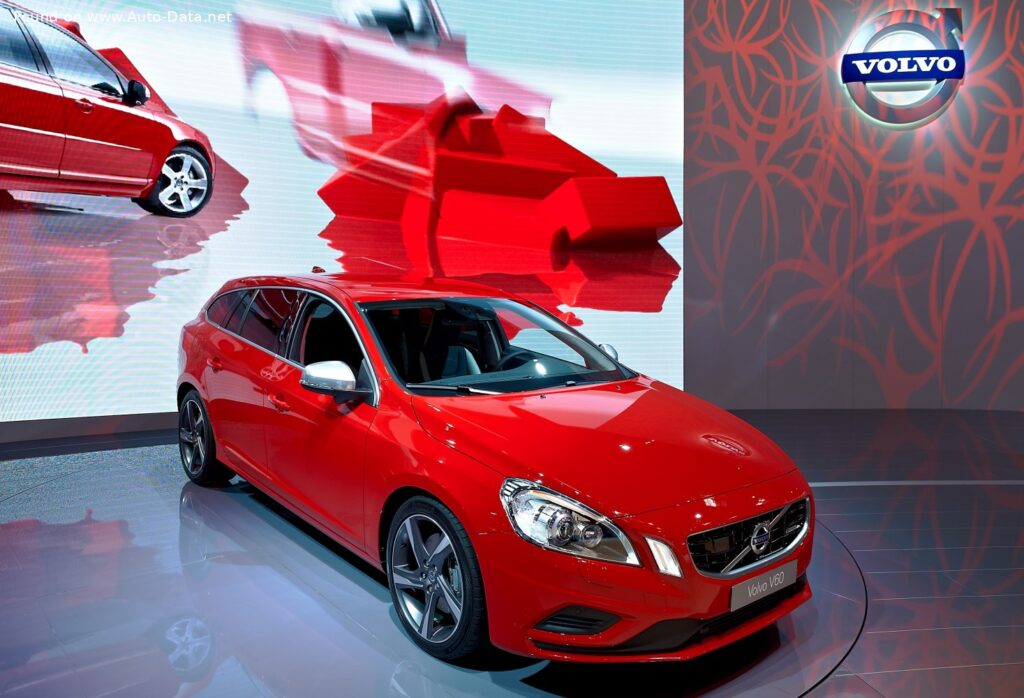
The Volvo V60 I 2.4 D5 (205 Hp) Automatic, produced for the 2010 and 2011 model years, signifies a turning point in Volvo’s design language. It marked a move away from the brand’s historically boxy, utilitarian station wagons towards a more dynamic and sporting aesthetic. This first-generation V60, equipped with the robust 2.4-liter D5 five-cylinder turbodiesel engine and a sophisticated automatic transmission, was positioned as a premium mid-size sport wagon primarily within the competitive European market. It aimed to combine Volvo’s renowned safety and practicality with a more engaging driving experience, appealing to buyers seeking versatility and a touch of performance in a family vehicle. While relatively uncommon in the United States, the V60 I played a vital role in shaping Volvo’s global identity as a provider of sophisticated, safe, and increasingly stylish automobiles.
Engine & Performance: The Heart of the Volvo V60 I
The Volvo V60 I 2.4 D5’s powertrain centers around Volvo’s well-regarded D5 engine, a 2.4-liter (2400 cm3 or 146.46 cu. in.) inline five-cylinder turbodiesel, identified by the engine code D5244T10. This engine was engineered to deliver a compelling balance of power, torque, and fuel efficiency – qualities highly valued in the European premium segment. It produces 205 horsepower at 4000 rpm, resulting in a power-per-liter output of 85.4 Hp/l, which was competitive for its time. Even more notably, the D5 engine generates 420 Nm (309.78 lb.-ft.) of torque, available across a broad rev range from 1500 to 3250 rpm. This wide torque band provides strong, effortless acceleration and excellent passing power in diverse driving conditions, a characteristic of well-engineered diesel engines.
Paired with a smooth 6-speed automatic transmission, the D5 engine directs its power to the front wheels. This drivetrain configuration, combined with the engine’s output, allows the V60 I 2.4 D5 to accelerate from 0 to 60 mph in 7.5 seconds (as calculated by Auto-Data.net), or 0 to 100 km/h in 7.9 seconds. These figures demonstrate the V60’s ability to offer a genuinely engaging driving experience, challenging the common perception of wagons as solely practical vehicles. Despite its performance capabilities, the V60 I 2.4 D5 also achieved commendable fuel economy. Combined fuel consumption is rated at 6.4 liters per 100 km, equating to an impressive 36.8 US mpg. Urban consumption is 8.9 l/100 km (26.4 US mpg), while extra-urban driving yields an economical 5 l/100 km (47 US mpg). With CO2 emissions of 169 g/km, the vehicle met the Euro 5 emission standard, aided by a particulate filter system, reflecting Volvo’s commitment to environmental responsibility even in its performance-oriented diesel offerings.
Design & Features: Scandinavian Practicality Meets Modern Style
The first-generation Volvo V60 represented a significant aesthetic departure for the brand. Moving away from the angular designs of its predecessors, the V60 I adopted a more coupé-like profile, often described as a “sport wagon.” Its sleek lines, tapered roofline, and pronounced shoulder creases gave it a dynamic and sophisticated appearance, appealing to buyers who desired the practicality of a station wagon without sacrificing style. The body type is a classic 5-door, 5-seat station wagon (estate), providing ample space for both passengers and cargo.
Measuring 182.2 inches (4628 mm) in length, 73.43 inches (1865 mm) in width, and 58.43 inches (1484 mm) in height, with a wheelbase of 109.29 inches (2776 mm), the V60 I offered a comfortable and stable ride. The interior, consistent with Volvo’s design philosophy, focused on ergonomics, high-quality materials, and intuitive controls. While specific interior features beyond seating capacity aren’t detailed in the available data, a premium Volvo from this era would have included a range of comfort and convenience features, such as advanced infotainment options, climate control, and luxurious upholstery choices.
Practicality wasn’t overlooked despite the emphasis on style. The V60 I offered a minimum trunk (boot) space of 692 liters (24.44 cu. ft.), making it highly capable for family trips or transporting gear. Volvo’s unwavering commitment to safety was, of course, paramount. While the data explicitly mentions ABS (Anti-lock Braking System) as an assisting system, the V60 I would have been equipped with a comprehensive suite of passive and active safety features, including multiple airbags, stability control, and a robust chassis engineered to protect occupants in a collision. Volvo was also a pioneer in advanced driver-assistance systems during this period, offering features like City Safety (an autonomous emergency braking system) and pedestrian detection, which would have been available on higher trims or as optional extras, further enhancing its safety credentials.
Technical Specifications
| Category | Specification |
| Brand | Volvo |
| Model | V60 |
| Generation | V60 I |
| Type (Engine) | 2.4 D5 (205 Hp) Automatic |
| Start of Production | 2010 year |
| End of Production | 2011 year |
| Powertrain Architecture | Internal Combustion engine |
| Body Type | Station wagon (estate) |
| Seats | 5 |
| Doors | 5 |
| Fuel Consumption (Urban) | 8.9 l/100 km |
| Fuel Consumption (Extra Urban) | 5 l/100 km |
| Fuel Consumption (Combined) | 6.4 l/100 km |
| CO2 Emissions | 169 g/km |
| Fuel Type | Diesel |
| Acceleration 0 – 60 mph | 7.5 sec |
| Acceleration 0 – 100 km/h | 7.9 sec |
| Emission Standard | Euro 5 |
| Weight-to-Power Ratio | 7.7 kg/Hp |
| Weight-to-Torque Ratio | 3.8 kg/Nm |
| Power | 205 Hp @ 4000 rpm |
| Power per Liter | 85.4 Hp/l |
| Torque | 420 Nm @ 1500-3250 rpm |
| Engine Layout | Front, Transverse |
| Engine Model/Code | D5244T10 |
| Engine Displacement | 2400 cm3 |
| Number of Cylinders | 5 |
| Piston Stroke | 81 mm |
| Fuel Injection System | Diesel Commonrail |
| Engine Aspiration | Turbocharger, Intercooler |
| Engine Oil Capacity | 5.9 l |
| Coolant Capacity | 8.9 l |
| Engine Systems | Particulate filter |
| Kerb Weight | 1582 kg |
| Max. Weight | 2090 kg |
| Max Load | 508 kg |
| Trunk (Boot) Space – Minimum | 692 l |
| Fuel Tank Capacity | 67.5 l |
| Length | 4628 mm |
| Width | 1865 mm |
| Height | 1484 mm |
| Wheelbase | 2776 mm |
| Drivetrain Architecture | Internal combustion engine (ICE) drives the front wheels |
| Drive Wheel | Front wheel drive |
| Number of Gears and Type of Gearbox | 6 gears, automatic transmission |
| Assisting Systems | ABS (Anti-lock braking system) |
The Volvo V60 I, particularly with the D5 engine, established a significant presence in the European premium mid-size wagon segment. It competed with models like the BMW 3 Series Touring, Audi A4 Avant, and Mercedes-Benz C-Class Estate. The V60 distinguished itself through its unique combination of Scandinavian design, uncompromising safety, and a refined driving experience. It was instrumental in repositioning Volvo as a brand offering emotional appeal alongside its traditional strengths of practicality and safety.
The D5 engine’s reputation for durability, smooth operation, and respectable fuel economy further enhanced the V60 I’s appeal. Although not widely sold in the United States, the V60 I’s impact on Volvo’s global strategy was substantial, influencing subsequent generations of Volvo vehicles. Today, the V60 I 2.4 D5 Automatic remains a desirable used vehicle, valued for its comfort, build quality, powerful diesel engine, and timeless design. It exemplifies Volvo’s ability to create vehicles that are both practical and desirable, embodying a sophisticated approach to automotive engineering and design.
