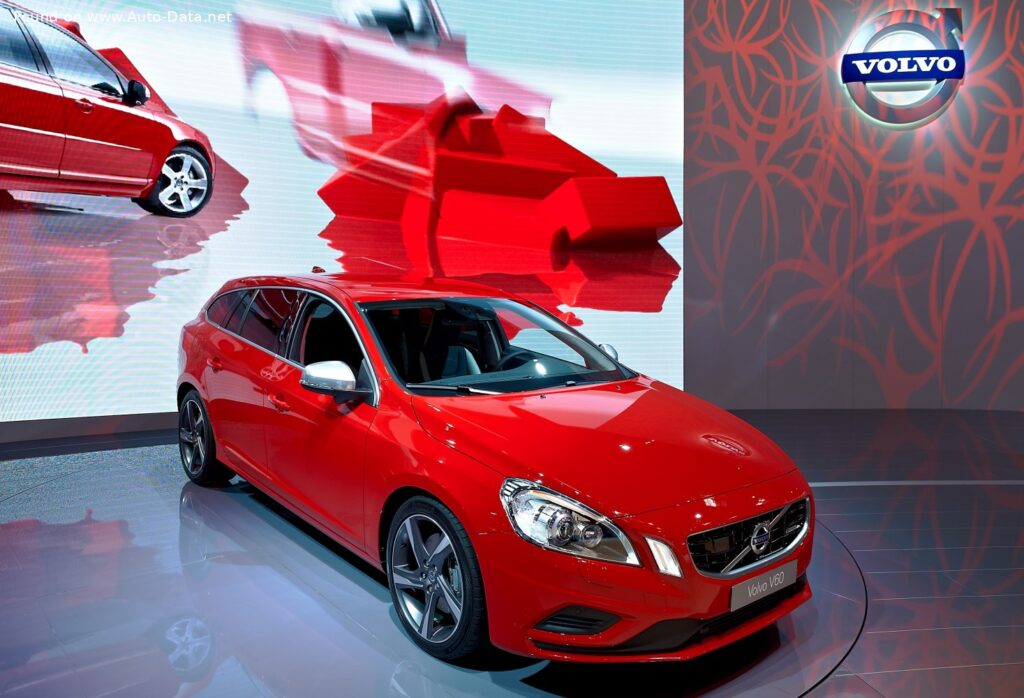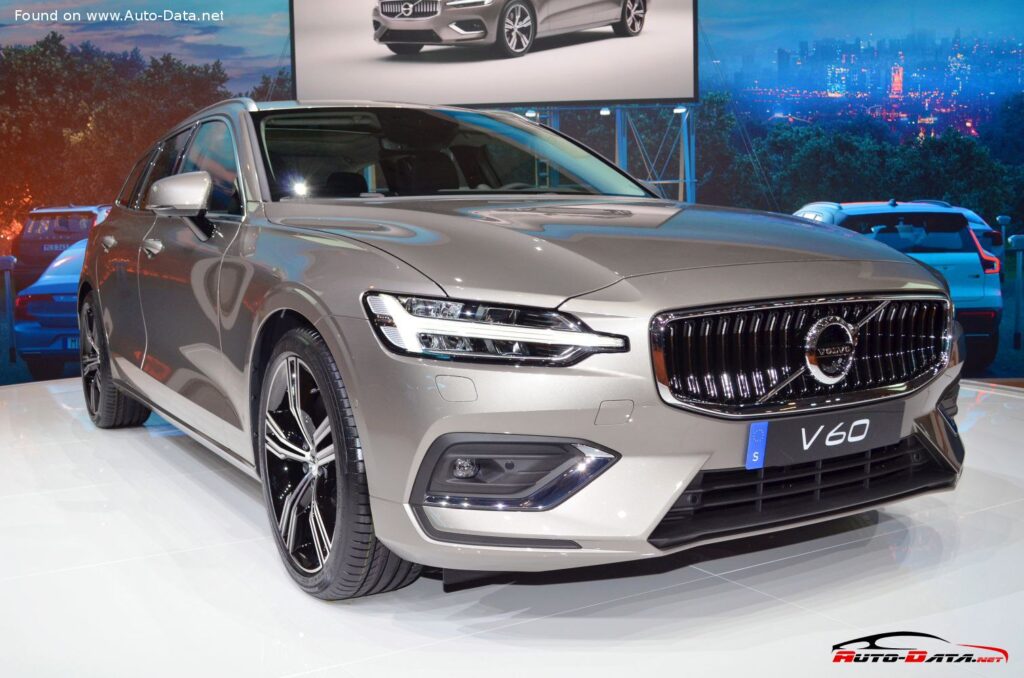
The Volvo V60 II 2.0 B5 (250 Hp) Mild Hybrid Automatic represents a sophisticated evolution of the premium mid-size station wagon, a segment where Volvo has historically excelled. Launched in March 2020, this variant exemplifies Volvo’s commitment to combining elegant design, robust safety, and efficient, electrified powertrains. This particular model, a Mild Hybrid Electric Vehicle (MHEV), seamlessly integrates a powerful gasoline engine with a 48-volt mild-hybrid system, offering a compelling blend of performance, fuel economy, and environmental responsibility. Positioned within the competitive luxury compact executive segment, the V60 II B5 Mild Hybrid caters to discerning buyers who seek the practicality of a wagon without compromising on premium features, dynamic driving characteristics, or cutting-edge technology. While inherently a European-centric model, its global appeal, including its availability in the U.S. market, underscores Volvo’s vision for a refined and sustainable automotive future.
Engine & Performance: The Electrified Heart of the Volvo V60 II B5
At the core of the Volvo V60 II 2.0 B5 (250 Hp) Mild Hybrid Automatic lies a meticulously engineered powertrain. The primary internal combustion engine is a 2.0-liter (1969 cm³, 120.16 cu. in.) turbocharged inline-four gasoline unit, designated with the engine code B420T2. This advanced engine features direct fuel injection, a turbocharger, and an intercooler, along with a DOHC (Double Overhead Camshaft) valvetrain with 4 valves per cylinder, ensuring optimal combustion and efficiency. It delivers a robust 250 horsepower at 5400-5700 rpm, translating to an impressive power output of 127 horsepower per liter. Torque is equally substantial, peaking at 258.15 lb.-ft. (350 Nm) across a broad range from 1800-4800 rpm, providing excellent responsiveness and acceleration in various driving conditions.
What truly sets the B5 apart is its Mild Hybrid Electric Vehicle (MHEV) architecture. This system incorporates a 48-volt integrated starter generator (ISG) that contributes an additional 14 horsepower and 29.5 lb.-ft. (40 Nm) of torque. While the electric motor cannot propel the car independently for extended periods, it significantly enhances efficiency and refinement. The MHEV system provides power assist during acceleration, reducing the load on the gasoline engine, and enables a smoother, quicker restart of the engine via the Start & Stop System. More critically, it recovers kinetic energy through regenerative braking, storing it in a small battery to power onboard systems and assist the engine, thereby reducing fuel consumption and emissions.
Power is channeled to the front wheels through an 8-speed Geartronic automatic transmission, known for its smooth shifts and intelligent gear selection. This drivetrain architecture, where both the internal combustion engine and electric motor drive the front wheels in a mixed mode, ensures efficient power delivery. Performance figures for the V60 II B5 are commendable for a family wagon: it accelerates from 0 to 60 mph in a swift 6.5 seconds (0-100 km/h in 6.8 seconds) and has an electronically limited top speed of 111.85 mph (180 km/h). The vehicle meets the stringent Euro 6d emission standard, further underscoring its environmental credentials, aided by a particulate filter system. Fuel economy, measured by the WLTP cycle, shows a combined consumption range of 31.4 – 36.2 US mpg (6.5-7.5 l/100 km), demonstrating the tangible benefits of the mild-hybrid technology.
Design & Features: Scandinavian Sophistication and Practicality
The Volvo V60 II continues Volvo’s legacy of producing aesthetically pleasing and highly practical station wagons. Its body type is a classic 5-door, 5-seat station wagon (or estate), characterized by its sleek, elongated profile and confident stance. The design language is distinctly Scandinavian, blending minimalism with functional elegance. Key exterior features include Volvo’s signature “Thor’s Hammer” LED daytime running lights, a prominent grille, and clean, sculpted lines that convey a sense of understated luxury. The overall length of 187.44 inches (4761 mm), width of 72.83 inches (1850 mm), and height of 56.38 inches (1432 mm) give it a balanced and athletic appearance. The wheelbase of 113.07 inches (2872 mm) contributes to both interior spaciousness and stable handling. With a drag coefficient (Cd) of 0.29, the V60 II is aerodynamically efficient, contributing to its fuel economy and reduced wind noise.
Inside, the V60 II B5 offers a sanctuary of comfort and intelligent design. The cabin reflects Volvo’s commitment to premium materials, ergonomic layouts, and intuitive technology. While specific infotainment details are not provided, modern Volvos typically feature the Sensus infotainment system, known for its large touchscreen interface and connectivity options. Comfort is paramount, with supportive seating for five occupants. Practicality is a hallmark of any Volvo wagon, and the V60 II excels here with a generous trunk space ranging from 18.68 cu. ft. (529 liters) with the rear seats up, expanding to a substantial 50.89 cu. ft. (1441 liters) when the rear seats are folded down. This versatility makes it ideal for families, adventurers, and anyone needing ample cargo capacity.
Safety, a cornerstone of the Volvo brand, is deeply integrated into the V60 II’s design and features. Beyond the fundamental ABS (Anti-lock Braking System), a 2020 Volvo like the V60 II would come equipped with a comprehensive suite of advanced safety and driver-assistance systems, including features like City Safety (automatic emergency braking), Lane Keeping Aid, Run-off Road Mitigation, and more. The robust body structure, combined with these active and passive safety technologies, ensures a high level of occupant protection. The vehicle also boasts a permitted trailer load of 3968.32 lbs (1800 kg) with brakes, and 1653.47 lbs (750 kg) without, further enhancing its utility.
Technical Specifications
| Category | Specification |
| General Information | |
| Brand | Volvo |
| Model | V60 II |
| Type (Engine) | 2.0 B5 (250 Hp) Mild Hybrid Automatic |
| Start of Production | March, 2020 |
| Powertrain Architecture | MHEV (Mild Hybrid Electric Vehicle) |
| Body Type | Station wagon (estate) |
| Performance Specifications | |
| Combined Fuel Consumption (WLTP) | 6.5-7.5 l/100 km |
| Combined Fuel Consumption (NEDC) | 6.3-6.4 l/100 km |
| CO2 Emissions (WLTP) | 146-170 g/km |
| CO2 Emissions (NEDC) | 142-146 g/km |
| Fuel Type | Petrol (Gasoline) |
| Acceleration 0-60 mph | 6.5 sec |
| Acceleration 0-100 km/h | 6.8 sec |
| Maximum Speed | 180 km/h |
| Braking 100 km/h – 0 | 35 m |
| Emission Standard | Euro 6d |
| Electric Cars and Hybrids Specs | |
| Electric Motor Power | 14 Hp |
| Electric Motor Torque | 40 Nm |
| Internal Combustion Engine Specs | |
| Power | 250 Hp @ 5400-5700 rpm |
| Power per Liter | 127 Hp/l |
| Torque | 350 Nm @ 1800-4800 rpm |
| Maximum Engine Speed | 6200 rpm |
| Engine Layout | Front, Transverse |
| Engine Model/Code | B420T2 |
| Engine Displacement | 1969 cm³ |
| Number of Cylinders | 4 |
| Cylinder Bore | 81.99 mm |
| Piston Stroke | 93.19 mm |
| Compression Ratio | 10.5:1 |
| Valves per Cylinder | 4 |
| Fuel Injection System | Direct injection |
| Engine Aspiration | Turbocharger, Intercooler |
| Valvetrain | DOHC |
| Engine Oil Capacity | 6.1 l |
| Engine Systems | Start & Stop System, Particulate filter |
| Space, Volume and Weights | |
| Trunk (boot) Space – Minimum | 529 l |
| Trunk (boot) Space – Maximum | 1441 l |
| Fuel Tank Capacity | 60 l |
| Max. Roof Load | 75 kg |
| Permitted Trailer Load with Brakes (12%) | 1800 kg |
| Permitted Trailer Load without Brakes | 750 kg |
| Dimensions | |
| Length | 4761 mm |
| Width | 1850 mm |
| Height | 1432 mm |
| Wheelbase | 2872 mm |
Legacy & Market Impact: The Enduring Appeal of the Volvo V60 II B5
The Volvo V60 II 2.0 B5 Mild Hybrid Automatic continues a proud and long-standing legacy of Volvo station wagons, a body style that has been synonymous with the brand for decades. From the iconic Amazon and 240 series to modern iterations, Volvo wagons have consistently offered a unique blend of safety, practicality, and understated style. The V60 II B5 upholds this tradition while pushing the boundaries of powertrain efficiency and technological integration.
In its primary market, Europe, the V60 II B5 competes within the highly contested premium mid-size segment against formidable rivals such as the Audi A4 Avant, BMW 3 Series Touring, and Mercedes-Benz C-Class Estate. Volvo distinguishes itself through its distinctive Scandinavian design philosophy, an unwavering focus on safety innovation, and a commitment to sustainable mobility. The mild-hybrid B5 powertrain is a crucial element in this strategy, offering a stepping stone towards full electrification and demonstrating Volvo’s proactive approach to reducing emissions without sacrificing performance. It appeals to buyers who appreciate the refinement and efficiency of hybrid technology but are not yet ready for a plug-in hybrid or full electric vehicle.
In the U.S. market, where station wagons are a niche offering compared to SUVs, the V60 II B5 caters to a specific segment of buyers who prioritize practicality, driving dynamics, and a more refined alternative to the ubiquitous crossover. It represents Volvo’s continued commitment to offering a diverse range of vehicles that cater to different lifestyles and preferences, even in a market that increasingly favors larger vehicles.