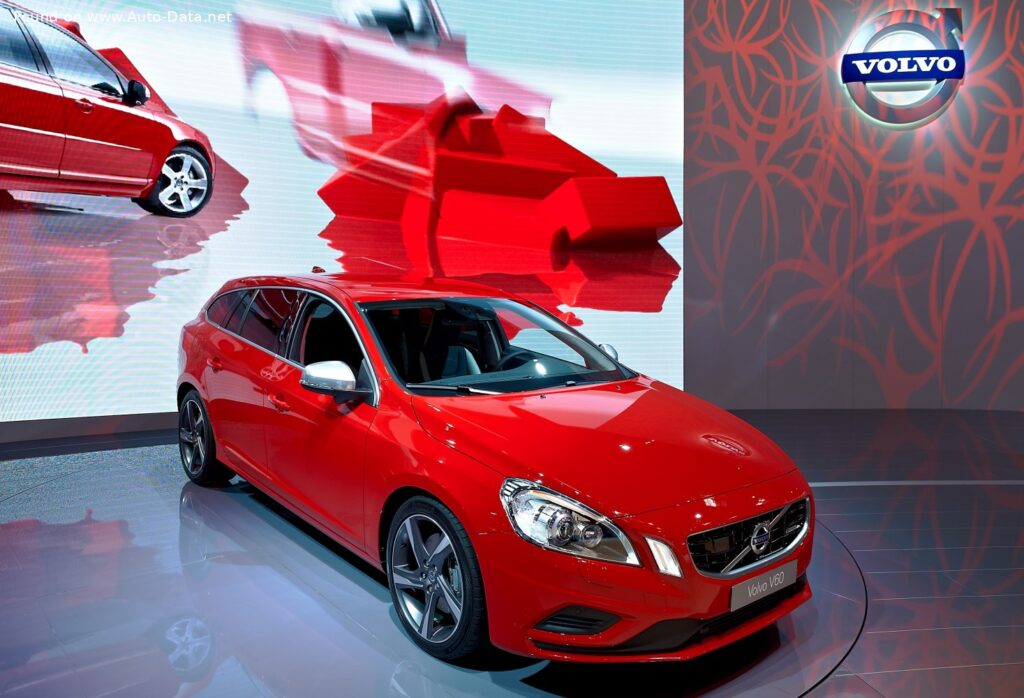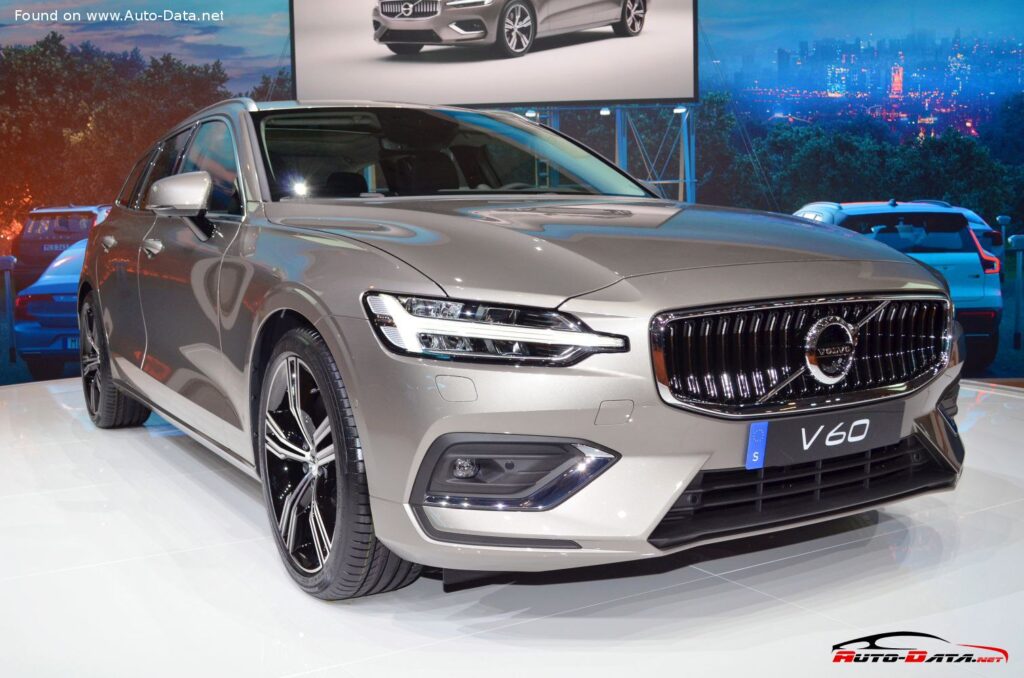
The Volvo V60 II 2.0 D4 (190 Hp) represents the second generation of Volvo’s premium mid-size station wagon, a vehicle deeply rooted in the brand’s heritage of combining practicality with sophisticated design and advanced safety. Introduced in July 2018 and produced until July 2020 in this specific powertrain configuration, the V60 II is built on Volvo’s Scalable Product Architecture (SPA) platform, shared with larger models like the S90, V90, and XC60. This platform allowed for significant advancements in technology, safety, and driving dynamics compared to its predecessor. Primarily aimed at the European market, where diesel powertrains and station wagons (or “estates” as they’re known across the Atlantic) maintain strong popularity, the V60 II 2.0 D4 offered a compelling blend of fuel efficiency, robust performance, and the quintessential Volvo experience. While the US market predominantly received gasoline and plug-in hybrid variants, this diesel model exemplifies Volvo’s engineering prowess in delivering a highly capable and economical family vehicle.
Engine & Performance of the Volvo V60 II 2.0 D4 (190 Hp)
At the heart of the Volvo V60 II 2.0 D4 (190 Hp) is Volvo’s Drive-E family engine, specifically the D4204T14 engine code. This is a 2.0-liter (1969 cm3 or 120.16 cu. in.) inline four-cylinder diesel engine, featuring a sophisticated common rail fuel injection system and boosted by a turbocharger with an intercooler. This setup is engineered to deliver a balance of power and exceptional fuel economy, a hallmark of modern diesel powertrains.
The engine produces a healthy 190 horsepower at 4250 rpm, translating to a power output of 96.5 horsepower per liter, indicating a highly efficient design. More significantly for daily driving, it generates a substantial 295.02 lb-ft (400 Nm) of torque, available across a broad rev range from 1750 to 2500 rpm. This wide torque band ensures strong, effortless acceleration and excellent passing power, even when the vehicle is fully loaded or towing. Mated to a 6-speed manual transmission, the powertrain architecture directs power to the front wheels, providing a direct and engaging driving experience.
In terms of outright performance, the V60 II 2.0 D4 is no slouch. It accelerates from 0 to 60 mph in a brisk 7.5 seconds (0-100 km/h in 7.9 seconds) and can reach a maximum speed of 136.7 mph (220 km/h). These figures demonstrate that despite its focus on efficiency and practicality, the V60 D4 offers a dynamic driving experience. Fuel efficiency is a strong suit, with combined WLTP figures ranging from 39.9 to 46.1 US mpg (5.1-5.9 l/100 km), and even better combined economy figures of 51.1-53.5 US mpg (4.4-4.6 l/100 km) under older testing cycles. CO2 emissions are kept relatively low, ranging from 134-154 g/km, reflecting its environmental consciousness.
Design & Features
The Volvo V60 II embodies Volvo’s contemporary design language, which debuted with the XC90 and subsequently flowed through the 90-series and 60-series vehicles. As a five-door, five-seat station wagon (or estate), its design masterfully blends elegance with utility. The exterior is characterized by clean lines, a long hood, short overhangs, and the distinctive “Thor’s Hammer” LED daytime running lights, giving it a purposeful yet sophisticated stance. Its dimensions—187.44 inches (4761 mm) in length, 72.83 inches (1850 mm) in width (80.31 inches or 2040 mm including mirrors), and 56.18 inches (1427 mm) in height—contribute to its balanced proportions and aerodynamic profile, evidenced by a drag coefficient (Cd) of 0.29.
Inside, the V60 II offers a cabin that is typically Volvo: minimalist, ergonomically sound, and crafted with high-quality materials. The 2872 mm (113.07 inches) wheelbase ensures ample passenger space for five adults, while the station wagon body type provides exceptional cargo versatility. The trunk space ranges from a generous 29.7 cu. ft. (841 liters) with the rear seats up, expanding to an impressive 48.17 cu. ft. (1364 liters) when the rear seats are folded down. This cavernous capacity, combined with a maximum roof load of 165.35 lbs (75 kg), makes the V60 an ideal vehicle for families, outdoor enthusiasts, or anyone requiring substantial hauling capability.
Safety, as always with Volvo, is paramount. While specific feature lists can vary by trim, the SPA platform provides a robust foundation for advanced driver-assistance systems (ADAS) and passive safety features. Standard equipment typically includes ABS (Anti-lock Braking System), and the V60 II would have been available with a suite of cutting-edge safety technologies like City Safety (autonomous emergency braking), Lane Keeping Aid, and Run-off Road Mitigation, underscoring Volvo’s commitment to protecting occupants and preventing accidents. The vehicle features ventilated disc brakes at the front and disc brakes at the rear, ensuring strong stopping power. The suspension setup, with a double wishbone front and a leaf spring rear, is tuned to provide a comfortable ride while maintaining composed handling. Steering is managed by an electric power-assisted rack and pinion system, offering precise control.
Technical Specifications: Volvo V60 II 2.0 D4 (190 Hp)
| General Information | |
| Brand | Volvo |
| Model | V60 |
| Generation | V60 II |
| Type (Engine) | 2.0 D4 (190 Hp) |
| Start of Production | July, 2018 |
| End of Production | July, 2020 |
| Powertrain Architecture | Internal Combustion Engine |
| Body Type | Station wagon (estate) |
| Seats | 5 |
| Doors | 5 |
| Performance Specifications | |
| Fuel Type | Diesel |
| Acceleration 0 – 60 mph | 7.5 sec |
| Acceleration 0 – 100 km/h | 7.9 sec |
| Maximum Speed | 136.7 mph (220 km/h) |
| Combined Fuel Consumption (WLTP) | 39.9 – 46.1 US mpg (5.1-5.9 l/100 km) |
| Combined Fuel Consumption (older cycle) | 51.1 – 53.5 US mpg (4.4-4.6 l/100 km) |
| CO2 Emissions (WLTP) | 134-154 g/km |
| Engine Specifications | |
| Power | 190 Hp @ 4250 rpm |
| Torque | 295.02 lb-ft (400 Nm) @ 1750-2500 rpm |
| Engine Layout | Front, Transverse |
| Engine Model/Code | D4204T14 |
| Engine Displacement | 120.16 cu. in. (1969 cm3) |
| Number of Cylinders | 4 |
| Engine Configuration | Inline |
| Cylinder Bore | 3.23 in. (82 mm) |
| Piston Stroke | 3.67 in. (93.2 mm) |
| Compression Ratio | 15.8:1 |
| Number of Valves per Cylinder | 4 |
| Fuel Injection System | Diesel Commonrail |
| Engine Aspiration | Turbocharger, Intercooler |
| Engine Oil Capacity | 5.49 US qt (5.2 l) |
| Coolant Capacity | 9.4 US qt (8.9 l) |
| Space, Volume and Weights | |
| Trunk (boot) Space – Minimum | 29.7 cu. ft. (841 l) |
| Trunk (boot) Space – Maximum | 48.17 cu. ft. (1364 l) |
| Fuel Tank Capacity | 14.53 US gal (55 l) |
| Max. Roof Load | 165.35 lbs (75 kg) |
| Permitted Trailer Load with Brakes (12%) | 3527.4 – 4409.25 lbs (1600-2000 kg) |
| Dimensions | |
| Length | 187.44 in. (4761 mm) |
| Width | 72.83 in. (1850 mm) |
| Width with Mirrors Folded | 75.43 in. (1916 mm) |
| Width Including Mirrors | 80.31 in. (2040 mm) |
| Height | 56.18 in. (1427 mm) |
| Wheelbase | 113.07 in. (2872 mm) |
| Front Track | 62.72 – 63.39 in. (1593-1610 mm) |
| Rear (Back) Track | 62.72 – 63.39 in. (1593-1610 mm) |
| Ride Height (Ground Clearance) | 5.04 in. (128 mm) |
| Drag Coefficient (Cd) | 0.29 |
| Minimum Turning Circle (Turning Diameter) | 36.09 – 38.39 ft (11.0-11.7 m) |
| Drivetrain, Brakes and Suspension Specifications | |
| Drivetrain Architecture | The Internal combustion engine (ICE) drives the front wheels of the vehicle. |
| Drive Wheel | Front wheel drive |
| Number of Gears and Type of Gearbox | 6 gears, manual transmission |
| Front Suspension | Double wishbone |
| Rear Suspension | Leaf spring |
| Front Brakes | Ventilated discs |
| Rear Brakes | Disc |
| Assisting Systems | ABS (Anti-lock braking system) |
| Steering Type | Steering rack and pinion |
| Power Steering | Electric Steering |
Legacy and Market Impact
The Volvo V60 II, and specifically the 2.0 D4 variant, continued Volvo’s strong tradition in the premium mid-size station wagon segment, particularly in Europe. In a market increasingly dominated by SUVs, the V60 stood out as a testament to the enduring appeal of a well-designed wagon: offering superior driving dynamics due to a lower center of gravity, better fuel economy, and often more usable cargo space than many crossovers. Its primary competitors included established players like the Audi A4 Avant, BMW 3 Series Touring, and Mercedes-Benz C-Class Estate, all vying for discerning buyers seeking a blend of luxury, performance, and practicality.
The Volvo V60 II 2.0 D4 (190 Hp) carved out a niche for itself by emphasizing Volvo’s core values: unparalleled safety, understated elegance, and a strong commitment to environmental responsibility through efficient diesel technology. While diesel powertrains faced increasing scrutiny in some markets during its production run, the D4 engine’s advanced design ensured it remained a competitive and efficient choice for long-distance driving and heavy-duty use, such as towing. Its strong torque and impressive fuel economy made it a favorite among those who valued efficiency without sacrificing capability.
The V60 II’s market impact was significant in solidifying Volvo’s position as a premium brand capable of delivering sophisticated and practical vehicles. It showcased the versatility of the SPA platform and Volvo’s ability to adapt its powertrains to meet diverse market demands. Although this particular diesel configuration was not widely available in the United States, its existence highlights Volvo’s global engineering strategy and its dedication to offering a broad range of options to suit various regional preferences and regulations. The V60 II, in all its forms, is remembered as a stylish, safe, and highly capable vehicle that continued to champion the station wagon in a rapidly changing automotive landscape.