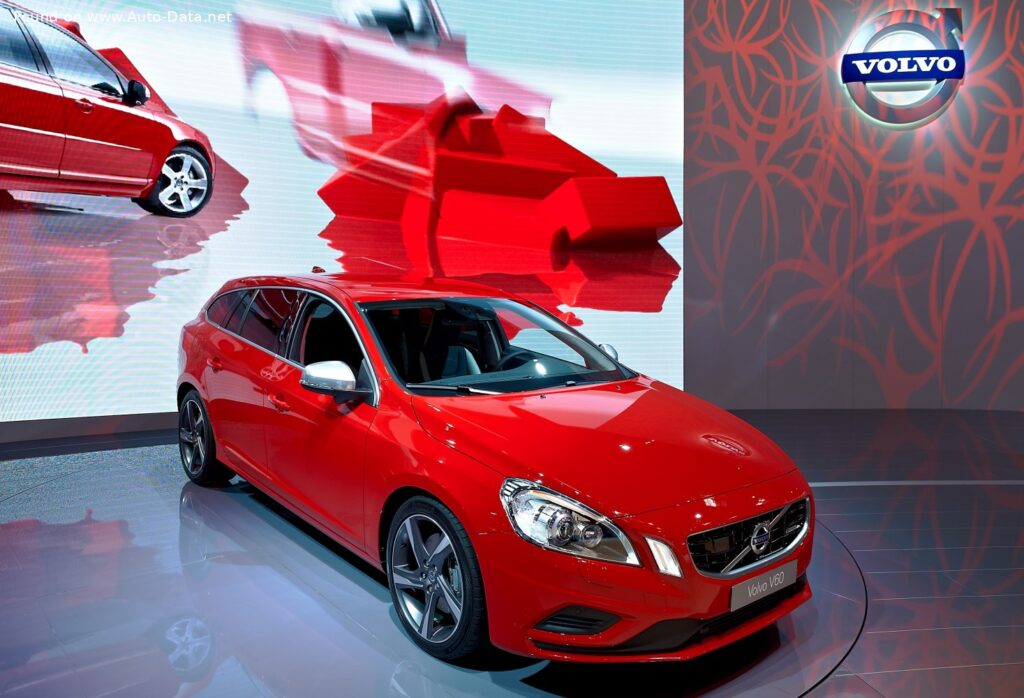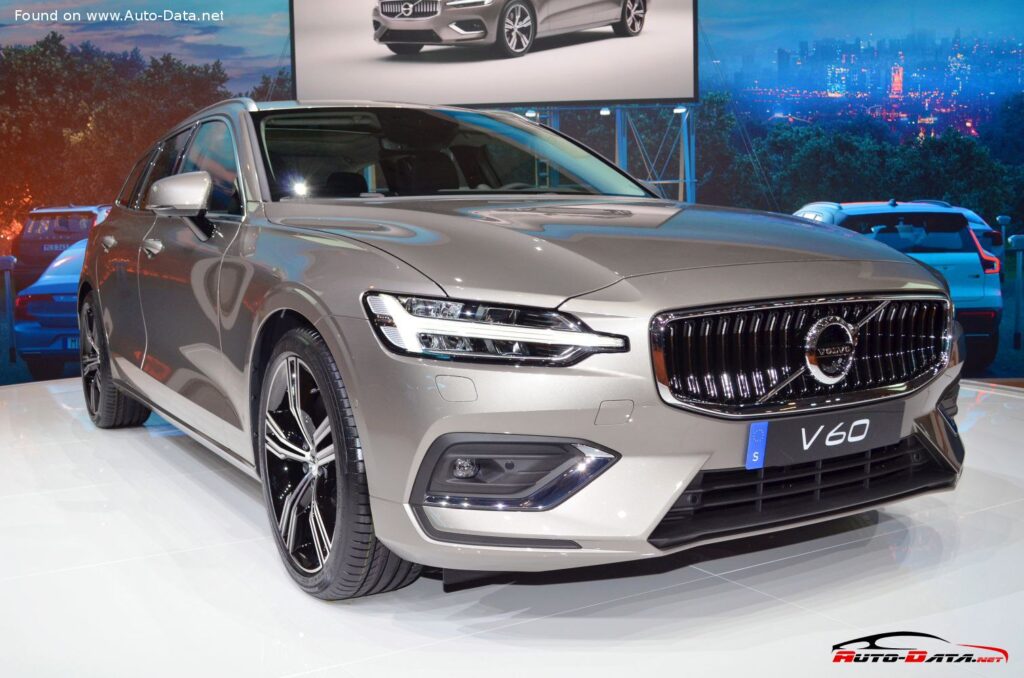
The Volvo V60 II, representing the second generation of Volvo’s mid-size premium station wagon, debuted in 2018, building upon the acclaimed Scalable Product Architecture (SPA) platform shared with larger Volvo models like the S90, V90, and XC60. This platform was instrumental in defining a new era for the Swedish automaker, emphasizing sophisticated design, advanced safety technologies, and efficient powertrains. The specific variant under review, the Volvo V60 II 2.0 T5 (250 Hp) AWD Automatic, was produced for a concentrated period from March 2019 to March 2020, showcasing a potent blend of performance, practicality, and all-weather capability. It positioned itself as a compelling option in the competitive premium mid-size segment, particularly for discerning buyers seeking the versatility of a station wagon without compromising on luxury or dynamic driving characteristics. The V60 II 2.0 T5 with all-wheel drive and an automatic transmission offered a balanced proposition, combining a spirited turbocharged engine with the inherent safety and elegance expected from the Volvo brand.
Volvo V60 II 2.0 T5 (250 Hp) AWD Automatic: An Overview
The Volvo V60 II 2.0 T5 (250 Hp) AWD Automatic is a five-door, five-seat station wagon that exemplifies Volvo’s commitment to Scandinavian design and engineering. It’s a vehicle designed for those who appreciate a blend of practicality, performance, and safety, offering a refined alternative to the increasingly popular sport utility vehicle. While station wagons have a smaller market share in the United States compared to Europe, the V60 II aimed to appeal to buyers who prioritize cargo space, driving dynamics, and a more understated aesthetic.
Engine & Performance
Powering the Volvo V60 II 2.0 T5 (250 Hp) AWD Automatic is Volvo’s advanced Drive-E powertrain. This model features a 2.0-liter (1969 cm³ or 120.16 cu. in.) inline four-cylinder engine, designated by the engine code B4204T26. The engine utilizes direct fuel injection and a sophisticated turbocharger with an intercooler to generate 250 horsepower at 5500 rpm. This results in an impressive power output of 127 Hp per liter, demonstrating the engine’s efficiency and modern design principles.
Torque output is a substantial 350 Newton-meters (258.15 lb.-ft.), available across a broad rev range of 1800 to 4800 rpm. This wide torque band provides responsive acceleration and effortless cruising, whether in urban environments or on the highway. The engine’s 10.8:1 compression ratio, combined with its DOHC valvetrain and four valves per cylinder, optimizes combustion for both power and fuel efficiency.
Power is delivered to all four wheels via an 8-speed automatic transmission, integral to the “AWD Automatic” designation. This transmission is known for its smooth shifts and intelligent programming, adapting seamlessly to driving conditions and driver input. The all-wheel-drive (AWD) system enhances traction and stability, particularly in inclement weather or on challenging road surfaces, making the V60 a versatile family vehicle.
Performance figures for the V60 II 2.0 T5 are respectable for a premium station wagon. It accelerates from 0 to 60 mph in 6.2 seconds (0-100 km/h in 6.5 seconds), with a top speed electronically limited to 146.02 mph (235 km/h). The vehicle’s weight-to-power ratio is 7.1 kg/Hp (141.1 Hp/tonne), contributing to its agile handling and spirited performance. Braking performance is also strong, with a stopping distance from 100 km/h to 0 in approximately 35 meters, supported by four-wheel disc brakes and an Anti-lock Braking System (ABS).
Design & Features
The Volvo V60 II embodies a sophisticated and understated Scandinavian design language, characterized by clean lines, elegant proportions, and a strong visual presence. As a station wagon, it successfully blends functionality with aesthetic appeal. The body style features five doors and comfortable seating for five passengers, making it an ideal choice for families or individuals needing ample cargo space.
The exterior design is instantly recognizable as a modern Volvo, featuring the distinctive “Thor’s Hammer” LED daytime running lights, a prominent grille, and sleek, vertically oriented taillights. Its dimensions – 187.44 inches in length, 72.83 inches in width (80.31 inches including mirrors), and 56.38 inches in height – contribute to its athletic stance while ensuring a spacious interior. The relatively low drag coefficient (Cd) of 0.29 enhances fuel economy and reduces wind noise.
Inside, the V60 II offers a premium cabin experience. High-quality materials, meticulous craftsmanship, and ergonomic design create a serene and luxurious environment. A typical Volvo from this era would include an advanced Sensus infotainment system with a large touchscreen display, smartphone integration (Apple CarPlay and Android Auto), and a suite of connectivity features.
Safety is paramount in the V60 II. Built on the SPA platform, it integrates advanced driver-assistance systems (ADAS) and passive safety features. These include City Safety (Volvo’s autonomous emergency braking system), Pilot Assist (a semi-autonomous driving system), lane keeping aid, road sign information, and multiple airbags. The robust body structure, combined with these systems, ensures a high level of occupant protection.
Practicality is a key strength of the V60 II. It offers a minimum trunk space of 529 liters (18.68 cu. ft.), expanding to 1441 liters (50.89 cu. ft.) with the rear seats folded. This flexibility makes it adaptable for carrying luggage, sports equipment, or larger items. The vehicle also boasts a permitted trailer load with brakes of 1800 kg (3968.32 lbs.), enhancing its utility.
Technical Specifications: Volvo V60 II 2.0 T5 (250 Hp) AWD Automatic
| Category | Specification |
| Brand | Volvo |
| Model | V60 |
| Generation | V60 II |
| Type (Engine) | 2.0 T5 (250 Hp) AWD Automatic |
| Production Start | March 2019 |
| Production End | March 2020 |
| Powertrain Architecture | Internal Combustion Engine |
| Body Type | Station Wagon (Estate) |
| Seats | 5 |
| Doors | 5 |
| Fuel Type | Petrol (Gasoline) |
| Combined Fuel Consumption (WLTP) | 7.7-8.9 l/100 km |
| CO2 Emissions (WLTP) | 175-202 g/km |
| Combined Fuel Consumption (NEDC) | 7.1-7.3 l/100 km |
| CO2 Emissions (NEDC) | 161-167 g/km |
| Acceleration 0-60 mph | 6.2 sec |
| Acceleration 0-100 km/h | 6.5 sec |
| Maximum Speed | 235 km/h (146.02 mph) |
| Braking 100 km/h – 0 | 35 m (114.83 ft) |
| Weight-to-Power Ratio | 7.1 kg/Hp (15.65 lbs/Hp) |
| Engine Power | 250 Hp @ 5500 rpm |
| Engine Torque | 350 Nm @ 1800-4800 rpm (258.15 lb.-ft.) |
| Engine Displacement | 1969 cm³ (120.16 cu. in.) |
| Trunk Space (minimum) | 529 l (18.68 cu. ft.) |
| Trunk Space (maximum) | 1441 l (50.89 cu. ft.) |
| Permitted Trailer Load (with brakes) | 1800 kg (3968.32 lbs) |
| Length | 4761 mm (187.44 in.) |
| Width | 1850 mm (72.83 in.) |
| Height | 1432 mm (56.38 in.) |
The Volvo V60 II 2.0 T5 (250 Hp) AWD Automatic represents a compelling blend of Scandinavian design, performance, and safety. While the station wagon market may be niche in some regions, the V60 II offered a sophisticated and practical alternative to the growing number of SUVs, appealing to buyers who value driving dynamics, cargo capacity, and a refined driving experience.