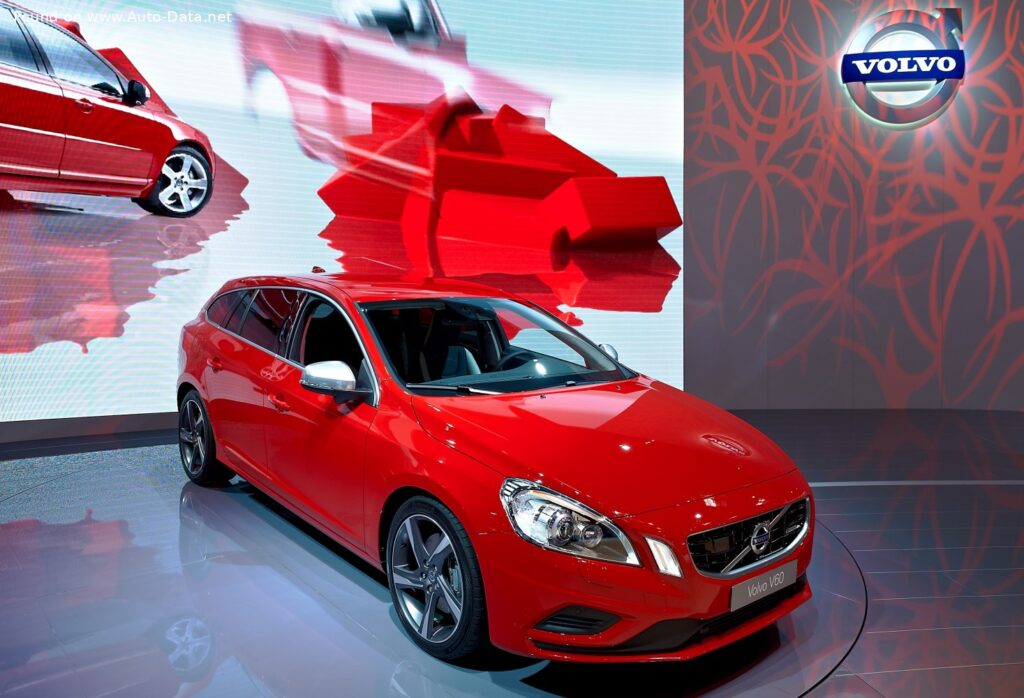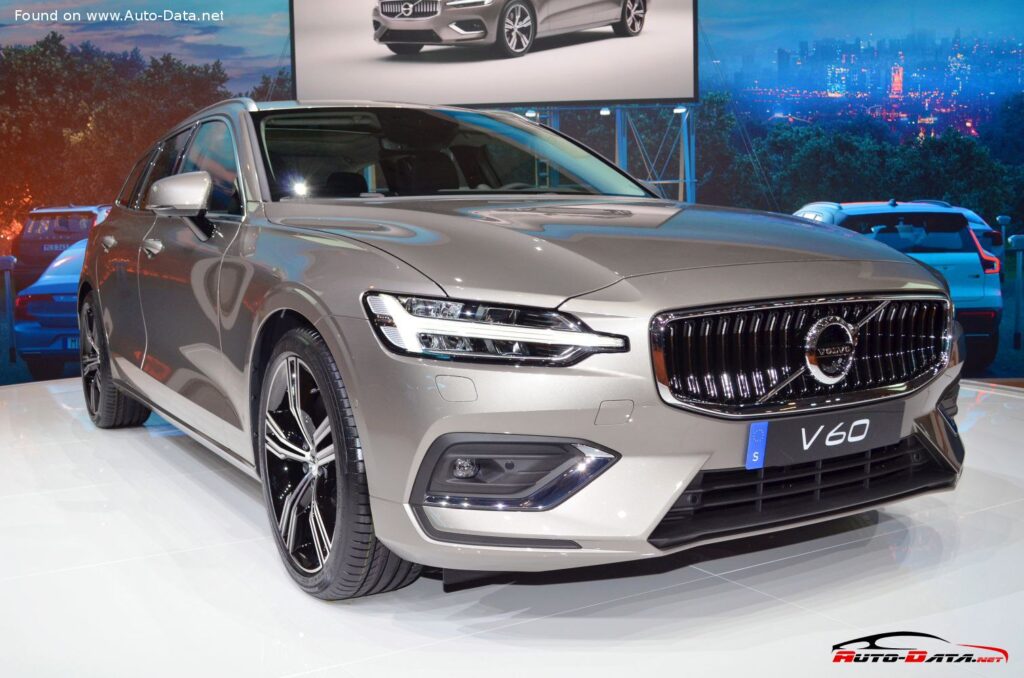
The Volvo V60 II Recharge 2.0 T8 (455 Hp) Plug-in Hybrid AWD Geartronic represents a significant evolution in Volvo’s long-standing tradition of combining Scandinavian design with innovative engineering. Launched in September 2021, this model is a key component of the second-generation V60 series, and it specifically targets the premium compact executive car segment, primarily within European markets. The V60 Recharge distinguishes itself through its advanced plug-in hybrid powertrain, offering a compelling balance of performance, efficiency, and practicality, all while embodying Volvo’s commitment to sustainability and safety.
Engine & Performance: A Hybrid Powerhouse
The core of the Volvo V60 II Recharge 2.0 T8 is its sophisticated Plug-in Hybrid Electric Vehicle (PHEV) system. The internal combustion engine (ICE) is a 2.0-liter (1969 cc) inline four-cylinder unit, designated B4204T56, which utilizes both turbocharging and supercharging technologies. This dual-boosted configuration, coupled with direct fuel injection and a Double Overhead Camshaft (DOHC) valvetrain, allows the engine to generate 310 horsepower at 6000 rpm and 295.02 lb.-ft. of torque between 3000 and 4800 rpm. The combination of turbo and supercharging provides strong, responsive acceleration across a broad range of engine speeds.
Supplementing the gasoline engine is a powerful electric motor positioned on the rear axle. This motor contributes an additional 145 horsepower at 15900 rpm and 227.91 lb.-ft. of instant torque, available from 0 to 3280 rpm. The combined output of the engine and motor reaches a substantial 455 horsepower, enabling the V60 Recharge to accelerate from 0 to 60 mph in just 4.4 seconds (0-100 km/h in 4.6 seconds). Top speed is electronically limited to 111.85 mph (180 km/h) to balance performance with efficiency and component durability.
Power is delivered through an 8-speed Geartronic automatic transmission, ensuring smooth and precise gear changes. The all-wheel-drive (AWD) system is uniquely configured: the gasoline engine drives the front wheels, while the electric motor powers the rear wheels. This setup allows for seamless transitions between electric-only, gasoline-only, or combined driving modes, optimizing both traction and fuel economy. The V60 Recharge achieves a combined WLTP fuel economy of 213.8 to 294 US mpg (0.8-1.1 l/100 km) and remarkably low CO2 emissions of 17-25 g/km, meeting stringent Euro 6d emission standards. A gross battery capacity of 18.8 kWh, with a usable capacity of 14.9 kWh, provides an all-electric range of 46.6 to 56.54 miles (75-91 km) on the WLTP cycle, and an average energy consumption of 28-32.19 kWh/100 miles.
Design & Features: Scandinavian Elegance and Practicality
The Volvo V60 II Recharge embodies the contemporary Scandinavian design aesthetic, presented in the practical station wagon (estate) body style. Its exterior is characterized by clean lines, a sleek roofline, and the signature “Thor’s Hammer” LED headlights, conveying an understated yet sophisticated appearance. The vehicle measures 187.44 inches in length, 72.83 inches in width (80.31 inches including mirrors), and 56.38 inches in height, with a wheelbase of 113.07 inches.
The interior of the V60 Recharge prioritizes Scandinavian luxury and ergonomic design. The cabin comfortably accommodates five passengers and features high-quality materials throughout. A large, vertically oriented touchscreen serves as the central control interface for navigation, media, and vehicle settings, reflecting Volvo’s minimalist design philosophy. Volvo’s renowned commitment to safety is evident in the inclusion of advanced driver-assistance systems (ADAS), such as City Safety, Pilot Assist, and various collision avoidance technologies.
As a station wagon, the V60 Recharge excels in practicality. It offers 16.99 cubic feet (481 liters) of trunk space with the rear seats up, expanding to 49.19 cubic feet (1393 liters) with the rear seats folded down. The vehicle also boasts a maximum roof load of 165.35 lbs (75 kg) and a permitted trailer load of 4409.25 lbs (2000 kg) when equipped with brakes. The V60 Recharge’s curb weight is 4384.99 lbs (1989 kg), with a maximum permissible weight of 5577.7 lbs (2530 kg). The chassis features a double wishbone front suspension with a transverse stabilizer and a transverse stabilizer with a leaf spring rear suspension, balancing comfort and handling. Ventilated disc brakes are used on all four wheels, complemented by an Anti-lock Braking System (ABS).
Technical Specifications
| Category | Specification |
| General Information | |
| Brand | Volvo |
| Model | V60 |
| Generation | V60 II |
| Type (Engine) | Recharge 2.0 T8 (455 Hp) Plug-in Hybrid AWD Geartronic |
| Start of production | September, 2021 |
| Powertrain Architecture | PHEV (Plug-in Hybrid Electric Vehicle) |
| Body type | Station wagon (estate) |
| Seats | 5 |
| Doors | 5 |
| Performance Specifications | |
| Combined Fuel Consumption (WLTP) | 0.8-1.1 l/100 km (213.8 – 294 US mpg) |
| CO2 emissions (WLTP) | 17-25 g/km |
| Fuel Type | Petrol / electricity |
| Acceleration 0 – 60 mph | 4.4 sec |
| Acceleration 0 – 100 km/h | 4.6 sec |
| Maximum speed | Electronically limited 111.85 mph (180 km/h) |
| Braking 100 km/h – 0 | 35 m |
| Emission standard | Euro 6d |
| Weight-to-power ratio | 6.4 kg/Hp (155.9 Hp/tonne) |
| Weight-to-torque ratio | 5 kg/Nm (201.1 Nm/tonne) |
| Electric Cars and Hybrids Specs | |
| Gross battery capacity | 18.8 kWh |
| Net (usable) battery capacity | 14.9 kWh |
| Battery voltage | 400 V |
| Battery technology | Lithium-ion (Li-Ion) |
| Battery location | In the central tunnel |
| All-electric range (WLTP) | 46.6 – 56.54 mi (75-91 km) |
| Average Energy consumption (WLTP) | 28 – 32.19 kWh/100 mi (17.4-20 kWh/100 km, 105-120 MPGe) |
| Max speed (electric) | 77.67 mph (125 km/h) |
| Electric motor power | 145 Hp @ 15900 rpm |
| Electric motor Torque | 227.91 lb.-ft. @ 0-3280 rpm (309 Nm) |
| Electric motor location | Rear axle, Transverse |
| Internal Combustion Engine Specs | |
| Power | 310 Hp @ 6000 rpm |
| Power per liter | 157.4 Hp/l |
| Torque | 295.02 lb.-ft. @ 3000-4800 rpm (400 Nm) |
| Maximum engine speed | 6000 rpm |
| Engine layout | Front, Transverse |
| Engine Model/Code | B4204T56 |
| Engine displacement | 120.16 cu. in. (1969 cm3) |
| Number of cylinders | 4 |
| Engine configuration | Inline |
| Cylinder Bore | 3.23 in. (82 mm) |
| Piston Stroke | 3.67 in. (93.2 mm) |
| Compression ratio | 10.3:1 |
| Number of valves per cylinder | 4 |
| Fuel injection system | Direct injection |
| Engine aspiration | Turbocharging and Supercharger, Intercooler |
| Valvetrain | DOHC |
| Engine oil capacity | 5.92 US qt (5.6 l) |
| Engine systems | Start & Stop System, Particulate filter |
| Space, Volume and Weights | |
| Kerb Weight | 4384.99 lbs. (1989 kg) |
| Max. weight | 5577.7 lbs. (2530 kg) |
| Max load | 1192.7 lbs. (541 kg) |
| Trunk (boot) space – minimum | 16.99 cu. ft. (481 l) |
| Trunk (boot) space – maximum | 49.19 cu. ft. (1393 l) |
| Fuel tank capacity | 15.85 US gal (60 l) |
| Max. roof load | 165.35 lbs. (75 kg) |
| Permitted trailer load with brakes (12%) | 4409.25 lbs. (2000 kg) |
| Permitted trailer load without brakes | 1653.47 lbs. (750 kg) |
| Permitted towbar download | 220.46 lbs. (100 kg) |
| Dimensions | |
| Length | 187.44 in. (4761 mm) |
| Width | 72.83 in. (1850 mm) |
| Width with mirrors folded | 75.43 in. (1916 mm) |
| Width including mirrors | 80.31 in. (2040 mm) |
| Height | 56.38 in. (1432 mm) |
| Wheelbase | 113.07 in. (2872 mm) |
| Front track | 63.39 in. (1610 mm) |
| Rear (Back) track | 63.39 in. (1610 mm) |
| Front overhang | 33.39 in. (848 mm) |
| Rear overhang | 40.98 in. (1041 mm) |
| Ride height (ground clearance) | 5.59 in. (142 mm) |
| Drag coefficient (Cd) | 0.29 |
| Minimum turning circle (turning diameter) | 37.07 ft. (11.3 m) |
| Drivetrain, Brakes and Suspension Specs | |
| Drivetrain Architecture | The Internal combustion engine (ICE) permanently drives the front wheels of the vehicle, the electric motor drives the rear wheels of the vehicle, capable of running in full electric mode, only |