
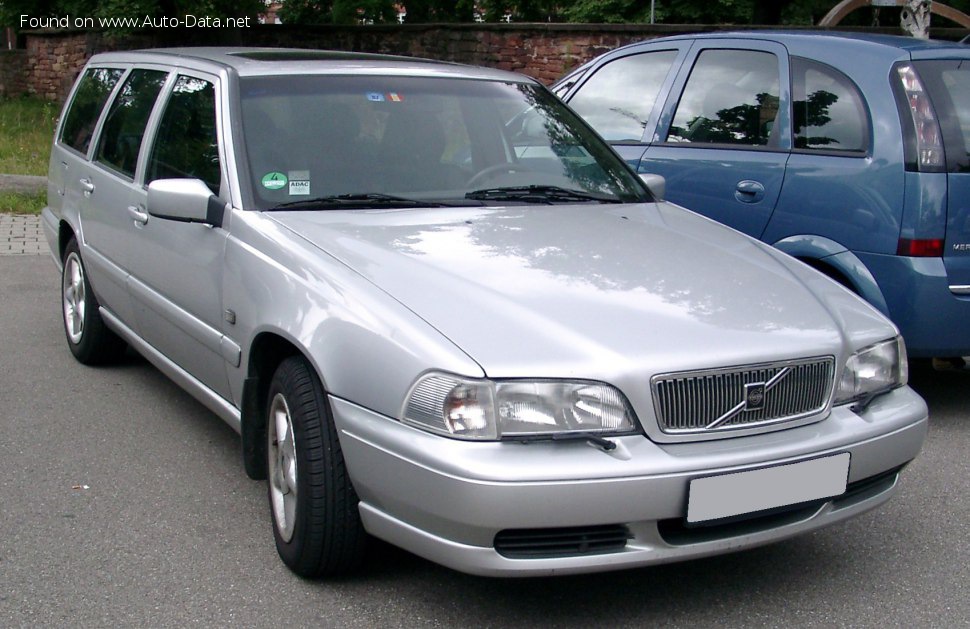
The Volvo V70 I 2.0 20V Turbo, produced between 1996 and 2000, represents Volvo’s initial foray into the premium mid-size station wagon (estate) segment. Building upon Volvo’s established reputation for safety and practicality, the V70 I aimed to offer a more dynamic and refined driving experience compared to its predecessor, the 940 series. This first generation V70 was primarily marketed in Europe, where the station wagon body style enjoys significant popularity, and served as a key model in Volvo’s lineup, showcasing their engineering prowess and commitment to family-oriented vehicles. It provided a compelling alternative to more conventional sedans and hatchbacks, offering increased cargo capacity and versatility without sacrificing comfort or style.
Volvo V70 I: A Detailed Overview
The V70 I was designed to appeal to buyers seeking a vehicle capable of handling both daily commuting and long-distance travel with ease. It combined Volvo’s traditional strengths – robust construction, comfortable interiors, and a focus on occupant protection – with a more modern aesthetic and improved performance. The 2.0 20V Turbo variant, equipped with a turbocharged four-cylinder engine, was a popular choice, offering a balance of power and fuel efficiency. The V70 I established the foundation for subsequent generations, solidifying Volvo’s position as a leader in the premium wagon market.
Engine & Performance
The heart of the V70 I 2.0 20V Turbo is a 1.984-liter (121.07 cubic inches) inline five-cylinder engine, designated the B5204T3. This engine utilizes multi-port fuel injection and a turbocharger to produce 225 horsepower at 5700 rpm and 310 Nm (228.64 lb.-ft.) of torque at 2700 rpm. This configuration delivers a respectable power-to-weight ratio of 6.5 kg/Hp and a torque-to-weight ratio of 4.7 kg/Nm. The engine’s output allows for a 0-100 km/h (0-62 mph) acceleration time of 7.8 seconds, and a 0-60 mph time of 7.4 seconds, with a maximum speed of 240 km/h (149.13 mph). Power is delivered to the front wheels via a five-speed manual transmission. The engine’s design prioritized drivability and responsiveness, making it well-suited for both urban driving and highway cruising. The 113.4 Hp/l specific output demonstrates the effectiveness of the turbocharging system in extracting performance from the relatively small displacement engine.
Design & Features
The Volvo V70 I features a classic station wagon body style, characterized by its long roofline and generous cargo area. Its design language reflects Volvo’s commitment to understated elegance and functional aesthetics. The vehicle offers seating for five passengers and provides 420 liters (14.83 cubic feet) of trunk space with the rear seats up, expanding to a substantial 1580 liters (55.8 cubic feet) when the rear seats are folded down. The interior is designed with comfort and practicality in mind, featuring supportive seats and a well-organized dashboard. Safety was a paramount concern for Volvo, and the V70 I is equipped with ABS (Anti-lock Braking System) as standard. The vehicle’s suspension utilizes a wishbone setup at the front and coil springs at the rear, providing a comfortable and controlled ride. Hydraulic power steering ensures precise and effortless maneuverability. The V70 I’s design focused on creating a versatile and family-friendly vehicle that could accommodate a variety of needs.
Technical Specifications
| Brand | Volvo |
| Model | V70 |
| Generation | V70 I |
| Type (Engine) | 2.0 20V Turbo (225 Hp) |
| Start of production | 1996 |
| End of production | 2000 |
| Powertrain Architecture | Internal Combustion engine |
| Body type | Station wagon (estate) |
| Seats | 5 |
| Doors | 5 |
| Fuel consumption (urban) | 16.2 l/100 km (14.5 US mpg, 17.4 UK mpg, 6.2 km/l) |
| Fuel consumption (extra urban) | 8.2 l/100 km (28.7 US mpg, 34.4 UK mpg, 12.2 km/l) |
| Fuel Type | Petrol (Gasoline) |
| Acceleration 0 – 100 km/h | 7.8 sec |
| Acceleration 0 – 62 mph | 7.8 sec |
| Acceleration 0 – 60 mph | 7.4 sec |
| Maximum speed | 240 km/h (149.13 mph) |
| Weight-to-power ratio | 6.5 kg/Hp |
| Weight-to-torque ratio | 4.7 kg/Nm |
| Power | 225 Hp @ 5700 rpm |
| Power per litre | 113.4 Hp/l |
| Torque | 310 Nm @ 2700 rpm (228.64 lb.-ft. @ 2700 rpm) |
| Engine layout | Front, Transverse |
| Engine Model/Code | B5204T3 |
| Engine displacement | 1984 cm3 (121.07 cu. in.) |
| Number of cylinders | 5 |
| Engine configuration | Inline |
| Cylinder Bore | 81 mm (3.19 in.) |
| Piston Stroke | 77 mm (3.03 in.) |
| Compression ratio | 8.4:1 |
| Number of valves per cylinder | 4 |
| Fuel injection system | Multi-port manifold injection |
| Engine aspiration | Turbocharger |
| Valvetrain | DOHC |
| Engine oil capacity | 5.8 l (6.13 US qt | 5.1 UK qt) |
| Coolant | 7 l (7.4 US qt | 6.16 UK qt) |
| Kerb Weight | 1470 kg (3240.8 lbs.) |
| Max. weight | 1970 kg (4343.11 lbs.) |
| Max load | 500 kg (1102.31 lbs.) |
| Trunk (boot) space – minimum | 420 l (14.83 cu. ft.) |
| Trunk (boot) space – maximum | 1580 l (55.8 cu. ft.) |
| Fuel tank capacity | 70 l (18.49 US gal | 15.4 UK gal) |
| Length | 4730 mm (186.22 in.) |
| Width | 1760 mm (69.29 in.) |
| Height | 1430 mm (56.3 in.) |
| Wheelbase | 2660 mm (104.72 in.) |
| Front track | 1520 mm (59.84 in.) |
| Rear (Back) track | 1470 mm (57.87 in.) |
| Drag coefficient (Cd) | 0.32 |
| Drivetrain Architecture | ICE, Front wheel drive |
| Drive wheel | Front wheel drive |
| Number of gears and type of gearbox | 5 gears, manual transmission |
| Front suspension | Wishbone |
| Rear suspension | Coil spring |
| Front brakes | Ventilated discs |
| Rear brakes | Disc |
| Assisting systems | ABS (Anti-lock braking system) |
| Steering type | Steering rack and pinion |
| Power steering | Hydraulic Steering |
| Tires size | 205/50 R16 |
| Wheel rims size | 16 |
The Volvo V70 I 2.0 20V Turbo remains a popular choice among enthusiasts and collectors, appreciated for its blend of practicality, performance, and Scandinavian design. It represents a significant step forward for Volvo in the premium wagon segment and laid the groundwork for the continued success of the V70 model line.
