
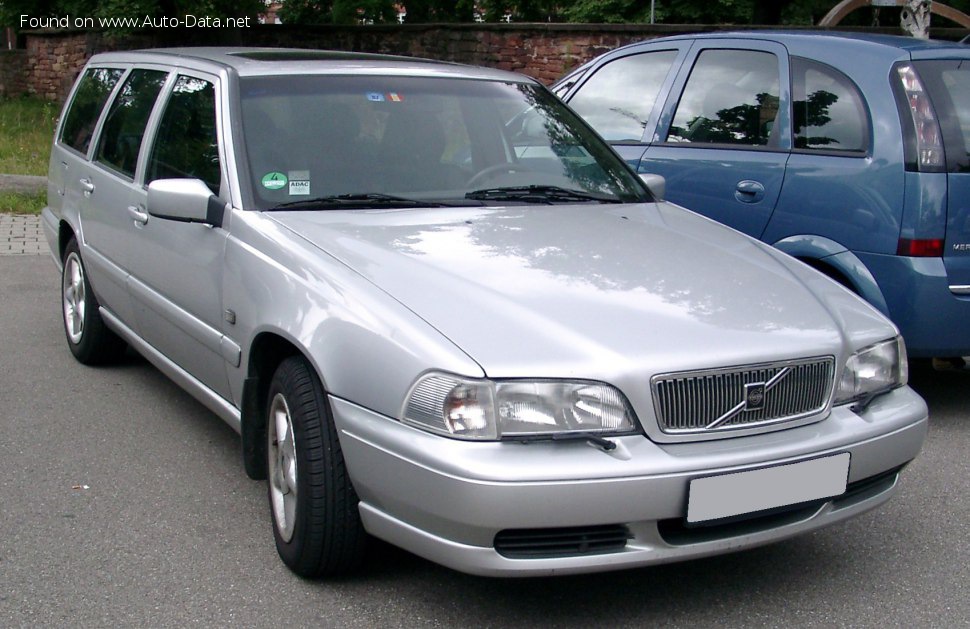
The Volvo V70 I 2.3 T (250 Hp), produced between 1996 and 2000, represents Volvo’s initial foray into the premium mid-size station wagon segment. Building upon the success of the 850 series, the V70 aimed to offer a more refined and spacious alternative to traditional sedans and smaller wagons. This first generation V70 was a key model for Volvo, solidifying their reputation for safety, practicality, and understated Scandinavian design. While not initially a high-volume seller in the United States, the V70 found a dedicated following among buyers seeking a versatile and durable vehicle. It served as a predecessor to the highly successful subsequent V70 generations.
Volvo V70 I 2.3 T: A Detailed Overview
The V70 I, internally designated as the 870 series, was a significant step forward for Volvo in terms of interior space and overall refinement. It shared its platform with the S70 sedan, but distinguished itself with its extended roofline and larger cargo area. The 2.3 T variant, equipped with a turbocharged 2.3-liter inline-five engine, was a performance-oriented option within the V70 range, offering a compelling blend of power and fuel efficiency for its time.
Engine & Performance
The heart of the V70 I 2.3 T is its 2319 cc (141.51 cu. in.) inline-five cylinder engine, designated the B5234T4. This engine utilizes a light-pressure turbocharger and multi-port fuel injection to produce 250 horsepower at 6000 rpm and 350 Nm (258.15 lb.-ft.) of torque at 2400 rpm. This output translates to a power-to-liter ratio of 107.8 hp/l. The engine’s transverse front-wheel-drive layout contributes to its balanced handling characteristics. Acceleration from 0 to 100 km/h (0-62 mph) takes 7.1 seconds, while 0-60 mph is achieved in approximately 6.7 seconds. The V70 I 2.3 T boasts a top speed of 250 km/h (155.34 mph). The weight-to-power ratio of 6.6 kg/Hp and weight-to-torque ratio of 4.7 kg/Nm further highlight the engine’s efficiency. The five-speed manual transmission provides drivers with direct control over the engine’s power delivery.
Design & Features
The Volvo V70 I is a five-door, five-seat station wagon (estate) characterized by its clean, functional design. Its long roofline maximizes cargo space, offering a minimum of 420 liters (14.83 cu. ft.) and expanding to a generous 1580 liters (55.8 cu. ft.) with the rear seats folded down. The vehicle’s dimensions are 4730 mm (186.22 in.) in length, 1760 mm (69.29 in.) in width, and 1430 mm (56.3 in.) in height, with a wheelbase of 2660 mm (104.72 in.). Volvo prioritized safety in the V70 I, equipping it with ABS (Anti-lock braking system) as standard. The vehicle’s hydraulic power steering and wishbone front suspension, coupled with a coil spring rear suspension, contribute to a comfortable and controlled ride. The 205/45 R17 tires mounted on 17-inch wheel rims provide adequate grip and handling. The drag coefficient of 0.32 is respectable for a wagon of its era, contributing to reasonable fuel economy.
Technical Specifications
| Brand | Volvo |
| Model | V70 |
| Generation | V70 I |
| Type (Engine) | 2.3 T (250 Hp) |
| Start of production | 1996 |
| End of production | 2000 |
| Powertrain Architecture | Internal Combustion engine |
| Body type | Station wagon (estate) |
| Seats | 5 |
| Doors | 5 |
| Fuel consumption (combined) | 9.3 l/100 km |
| Fuel consumption (US mpg) | 25.3 US mpg |
| Fuel consumption (UK mpg) | 30.4 UK mpg |
| Fuel consumption (km/l) | 10.8 km/l |
| Fuel Type | Petrol (Gasoline) |
| Acceleration 0 – 100 km/h | 7.1 sec |
| Acceleration 0 – 62 mph | 7.1 sec |
| Acceleration 0 – 60 mph | 6.7 sec |
| Maximum speed | 250 km/h (155.34 mph) |
| Weight-to-power ratio | 6.6 kg/Hp |
| Weight-to-torque ratio | 4.7 kg/Nm |
| Power | 250 Hp @ 6000 rpm |
| Power per litre | 107.8 Hp/l |
| Torque | 350 Nm @ 2400 rpm (258.15 lb.-ft. @ 2400 rpm) |
| Engine layout | Front, Transverse |
| Engine Model/Code | B5234T4 |
| Engine displacement | 2319 cm3 (141.51 cu. in.) |
| Number of cylinders | 5 |
| Engine configuration | Inline |
| Cylinder Bore | 81 mm (3.19 in.) |
| Piston Stroke | 90 mm (3.54 in.) |
| Compression ratio | 8.5:1 |
| Number of valves per cylinder | 4 |
| Fuel injection system | Multi-port manifold injection |
| Engine aspiration | Turbocharger |
| Valvetrain | DOHC |
| Engine oil capacity | 5.8 l (6.13 US qt | 5.1 UK qt) |
| Coolant | 7 l (7.4 US qt | 6.16 UK qt) |
| Kerb Weight | 1660 kg (3659.67 lbs.) |
| Max. weight | 2160 kg (4761.98 lbs.) |
| Max load | 500 kg (1102.31 lbs.) |
| Trunk (boot) space – minimum | 420 l (14.83 cu. ft.) |
| Trunk (boot) space – maximum | 1580 l (55.8 cu. ft.) |
| Fuel tank capacity | 70 l (18.49 US gal | 15.4 UK gal) |
| Length | 4730 mm (186.22 in.) |
| Width | 1760 mm (69.29 in.) |
| Height | 1430 mm (56.3 in.) |
| Wheelbase | 2660 mm (104.72 in.) |
| Front track | 1520 mm (59.84 in.) |
| Rear (Back) track | 1490 mm (58.66 in.) |
| Drag coefficient (Cd) | 0.32 |
| Drivetrain Architecture | ICE, Front wheel drive |
| Drive wheel | Front wheel drive |
| Number of gears and type of gearbox | 5 gears, manual transmission |
| Front suspension | Wishbone |
| Rear suspension | Coil spring |
| Front brakes | Ventilated discs |
| Rear brakes | Disc |
| Assisting systems | ABS (Anti-lock braking system) |
| Steering type | Steering rack and pinion |
| Power steering | Hydraulic Steering |
| Tires size | 205/45 R17 |
| Wheel rims size | 17 |
The Volvo V70 I 2.3 T remains a desirable vehicle for enthusiasts seeking a blend of practicality, performance, and Scandinavian design. Its robust construction and relatively simple mechanicals make it a reliable and rewarding classic, representing a high point in Volvo’s long history of wagon production.
