
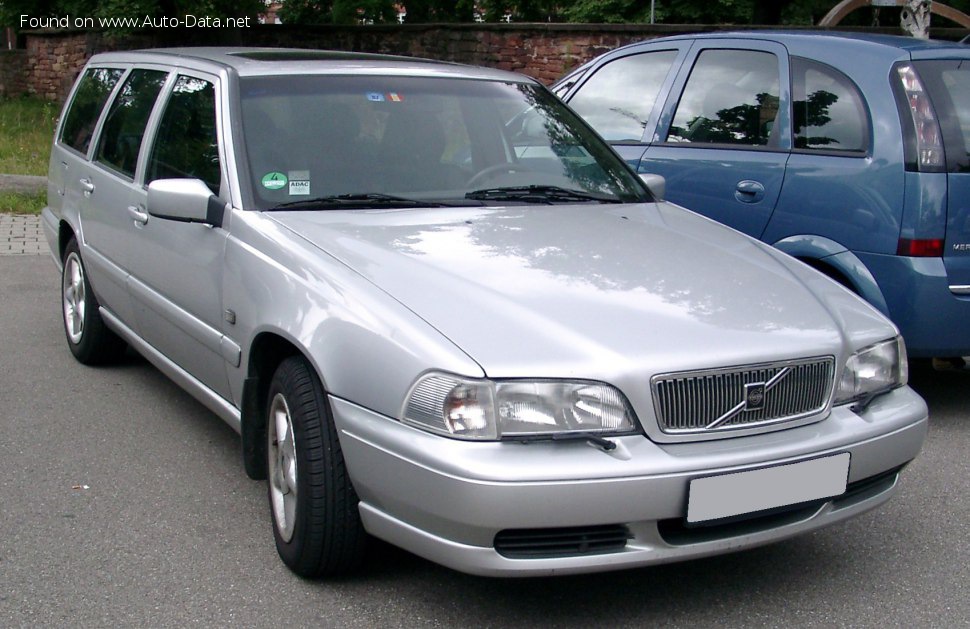
The Volvo V70 I 2.4i 20V, produced between 1996 and 2000, represents Volvo’s initial foray into the premium mid-size station wagon segment. Building upon the success of the 850 series, the V70 aimed to offer a more refined and spacious alternative to traditional sedans and smaller wagons. This first generation V70 was a key model for Volvo, particularly in Europe, where the station wagon body style enjoys significant popularity. It established many of the design and safety hallmarks that would become synonymous with the Volvo brand, and served as a platform for technological advancements in engine management and chassis design.
Volvo V70 I: A Detailed Overview
The V70 I was designed to appeal to buyers seeking a practical yet sophisticated vehicle. It offered a compelling blend of cargo capacity, passenger comfort, and Volvo’s renowned safety features. While not initially a major seller in the United States, the V70 established a loyal following among those who appreciated its unique combination of attributes. The 2.4i 20V model, equipped with a naturally aspirated 2.4-liter inline-five engine, was a popular choice, offering a balance of performance and fuel efficiency.
Engine & Performance
The heart of the V70 I 2.4i 20V is its 2.4-liter (2435 cm3) inline-five cylinder engine, designated the B5254S. This engine produces 170 horsepower at 6100 rpm and 220 Nm (162.26 lb.-ft.) of torque at 4700 rpm. The engine features multi-port fuel injection and a double overhead camshaft (DOHC) valvetrain with four valves per cylinder. This configuration contributes to a power output of 69.8 horsepower per liter. Power is delivered to the front wheels via a five-speed manual transmission.
Performance figures for the V70 I 2.4i 20V are respectable for its era. Acceleration from 0 to 100 km/h (0-62 mph) takes 9.2 seconds, while the 0 to 60 mph sprint is achieved in approximately 8.7 seconds. The vehicle has a maximum speed of 210 km/h (130.49 mph). The weight-to-power ratio of 8.6 kg/Hp and a weight-to-torque ratio of 6.7 kg/Nm indicate a reasonably efficient powertrain for a vehicle of its size and class.
Design & Features
The Volvo V70 I is a five-door, five-seat station wagon (estate). Its design emphasizes practicality and understated elegance. The body lines are clean and aerodynamic, with a drag coefficient of 0.32. The interior is spacious and well-appointed, offering comfortable seating for passengers and a generous cargo area.
Key features of the V70 I include a spacious trunk with a minimum capacity of 420 liters (14.83 cu. ft.) and a maximum capacity of 1580 liters (55.8 cu. ft.) with the rear seats folded down. Safety was a paramount concern for Volvo, and the V70 I incorporates several advanced safety features for its time, including an Anti-lock Braking System (ABS). The vehicle also features hydraulic power steering and a steering rack and pinion system for precise handling. Standard tire size is 205/55 R15, mounted on 15-inch wheel rims.
Technical Specifications
| Brand | Volvo |
| Model | V70 |
| Generation | V70 I |
| Type (Engine) | 2.4i 20V (170 Hp) |
| Start of production | 1996 |
| End of production | 2000 |
| Powertrain Architecture | Internal Combustion engine |
| Body type | Station wagon (estate) |
| Seats | 5 |
| Doors | 5 |
| Fuel consumption (urban) | 15 l/100 km (15.7 US mpg, 18.8 UK mpg, 6.7 km/l) |
| Fuel consumption (extra urban) | 7.8 l/100 km (30.2 US mpg, 36.2 UK mpg, 12.8 km/l) |
| Fuel Type | Petrol (Gasoline) |
| Acceleration 0 – 100 km/h | 9.2 sec |
| Acceleration 0 – 62 mph | 9.2 sec |
| Acceleration 0 – 60 mph | 8.7 sec |
| Maximum speed | 210 km/h (130.49 mph) |
| Weight-to-power ratio | 8.6 kg/Hp |
| Weight-to-torque ratio | 6.7 kg/Nm |
| Power | 170 Hp @ 6100 rpm |
| Torque | 220 Nm @ 4700 rpm (162.26 lb.-ft. @ 4700 rpm) |
| Engine layout | Front, Transverse |
| Engine Model/Code | B5254S |
| Engine displacement | 2435 cm3 (148.59 cu. in.) |
| Number of cylinders | 5 |
| Engine configuration | Inline |
| Cylinder Bore | 83 mm (3.27 in.) |
| Piston Stroke | 90 mm (3.54 in.) |
| Compression ratio | 10.3:1 |
| Number of valves per cylinder | 4 |
| Fuel injection system | Multi-port manifold injection |
| Engine aspiration | Naturally aspirated engine |
| Valvetrain | DOHC |
| Engine oil capacity | 5.8 l (6.13 US qt | 5.1 UK qt) |
| Coolant capacity | 7.2 l (7.61 US qt | 6.34 UK qt) |
| Kerb Weight | 1470 kg (3240.8 lbs.) |
| Max. weight | 1970 kg (4343.11 lbs.) |
| Max load | 500 kg (1102.31 lbs.) |
| Trunk (boot) space – minimum | 420 l (14.83 cu. ft.) |
| Trunk (boot) space – maximum | 1580 l (55.8 cu. ft.) |
| Fuel tank capacity | 70 l (18.49 US gal | 15.4 UK gal) |
| Length | 4730 mm (186.22 in.) |
| Width | 1760 mm (69.29 in.) |
| Height | 1430 mm (56.3 in.) |
| Wheelbase | 2660 mm (104.72 in.) |
| Front track | 1520 mm (59.84 in.) |
| Rear track | 1470 mm (57.87 in.) |
| Drag coefficient (Cd) | 0.32 |
| Drivetrain Architecture | ICE, Front wheel drive |
| Drive wheel | Front wheel drive |
| Number of gears | 5 |
| Gearbox type | Manual transmission |
| Front suspension | Wishbone |
| Rear suspension | Coil spring |
| Front brakes | Ventilated discs |
| Rear brakes | Disc |
| Assisting systems | ABS (Anti-lock braking system) |
| Steering type | Steering rack and pinion |
| Power steering | Hydraulic Steering |
| Tires size | 205/55 R15 |
| Wheel rims size | 15 |
The Volvo V70 I 2.4i 20V remains a popular choice among enthusiasts and collectors, appreciated for its blend of practicality, safety, and Scandinavian design. It represents a significant step forward in Volvo’s evolution as a premium automotive manufacturer.
