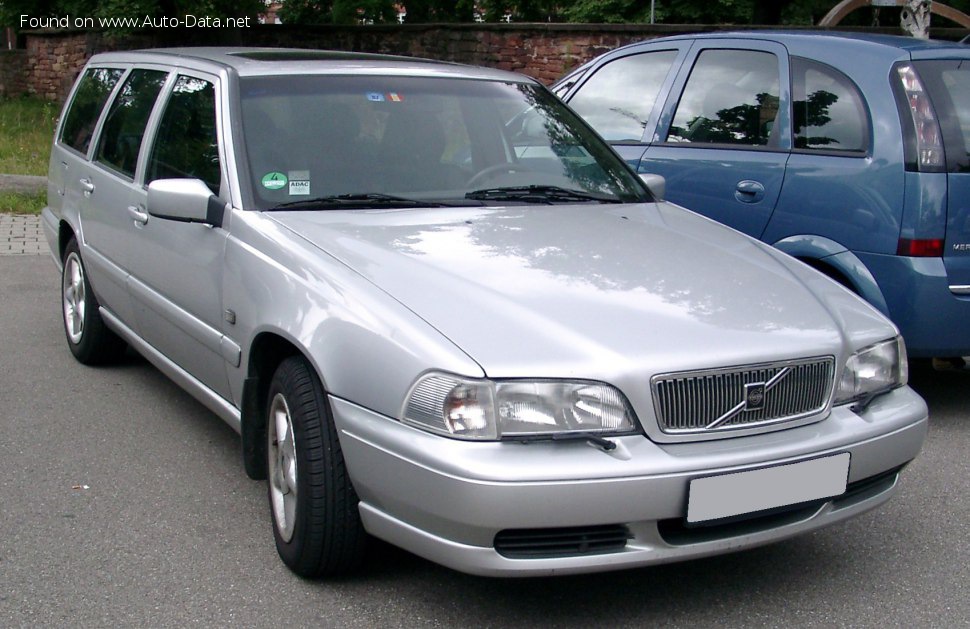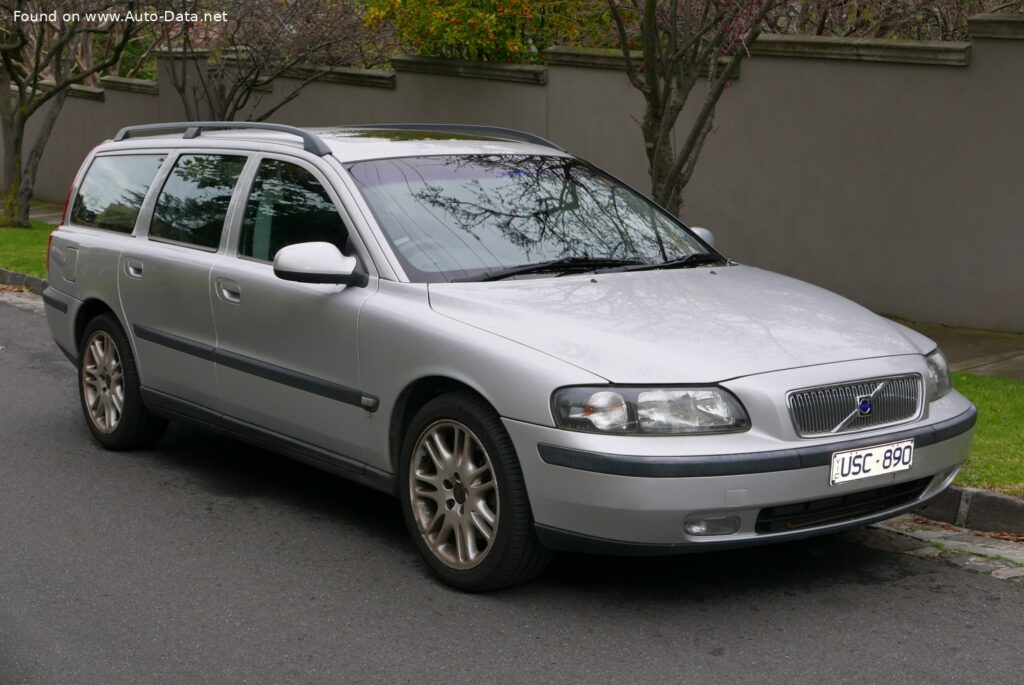
The Volvo V70 II 2.4, produced between 2000 and 2004, represents the second generation of Volvo’s popular station wagon, known as the V70. This model occupied the mid-size executive wagon segment, competing with vehicles like the Audi A6 Avant, BMW 5 Series Touring, and Mercedes-Benz E-Class Estate. While not officially sold in the United States during its production run, the V70 has always been a significant model for Volvo in Europe, renowned for its practicality, safety, and comfortable ride. The 2.4-liter variant, producing 170 horsepower, was a common engine choice, offering a balance between performance and fuel efficiency.
Volvo V70 II 2.4: An Overview
The V70 II built upon the success of its predecessor, offering increased space, improved refinement, and enhanced safety features. It was a key model in Volvo’s lineup, embodying the brand’s commitment to family-oriented vehicles. The second-generation V70 saw a shift towards more contemporary styling and a greater emphasis on interior comfort and technology. The 2.4-liter engine, a staple of Volvo’s powertrain offerings, provided reliable performance for everyday driving and long-distance journeys.
Engine & Performance
The Volvo V70 II 2.4 is powered by a 2.4-liter inline five-cylinder gasoline engine, designated the B5244S. This naturally aspirated engine produces 170 horsepower at 5900 rpm and 230 Newton-meters (169.64 lb.-ft.) of torque at 4500 rpm. The engine’s power-to-weight ratio is 8.7 kg/Hp, and it delivers 69.8 horsepower per liter of displacement. Acceleration from 0 to 100 km/h (0-62 mph) takes approximately 9 seconds, while the 0-60 mph sprint is achieved in 8.6 seconds. The vehicle has a maximum speed of 210 km/h (130.49 mph). Fuel consumption is rated at 9.1 liters per 100 kilometers (25.8 US mpg or 31 UK mpg) on a combined cycle, with 12.4 l/100 km (19 US mpg) in urban conditions and 7.2 l/100 km (32.7 US mpg) on the extra-urban cycle. Power is delivered to the front wheels via a five-speed manual transmission.
Design & Features
The V70 II is a five-door station wagon (estate) offering seating for five passengers. Its design emphasizes practicality and functionality, with a spacious interior and a large cargo area. The vehicle’s exterior styling is characterized by clean lines and a relatively understated appearance, typical of Volvo’s design philosophy at the time. A key feature of the V70 II is its generous cargo capacity, ranging from 485 liters (17.13 cu. ft.) with the rear seats up to 1641 liters (57.95 cu. ft.) with the rear seats folded down. Safety was a paramount concern for Volvo, and the V70 II incorporated numerous safety features, including Anti-lock Braking System (ABS), side impact protection system (SIPS), and a reinforced body structure. The interior is designed with comfort in mind, featuring supportive seats and a user-friendly layout. Hydraulic power steering and wishbone front suspension contribute to a comfortable and controlled driving experience. The rear suspension utilizes a coil spring setup.
Technical Specifications
| Brand | Volvo |
| Model | V70 |
| Generation | V70 II |
| Type (Engine) | 2.4 (170 Hp) |
| Start of production | 2000 |
| End of production | 2004 |
| Powertrain Architecture | Internal Combustion engine |
| Body type | Station wagon (estate) |
| Seats | 5 |
| Doors | 5 |
| Fuel consumption (urban) | 12.4 l/100 km (19 US mpg, 22.8 UK mpg) |
| Fuel consumption (extra urban) | 7.2 l/100 km (32.7 US mpg, 39.2 UK mpg) |
| Fuel consumption (combined) | 9.1 l/100 km (25.8 US mpg, 31 UK mpg) |
| Fuel Type | Petrol (Gasoline) |
| Acceleration 0 – 100 km/h | 9 sec |
| Acceleration 0 – 62 mph | 9 sec |
| Acceleration 0 – 60 mph | 8.6 sec |
| Maximum speed | 210 km/h (130.49 mph) |
| Weight-to-power ratio | 8.7 kg/Hp |
| Weight-to-torque ratio | 6.4 kg/Nm |
| Power | 170 Hp @ 5900 rpm |
| Torque | 230 Nm @ 4500 rpm (169.64 lb.-ft. @ 4500 rpm) |
| Engine layout | Front, Transverse |
| Engine Model/Code | B5244S |
| Engine displacement | 2435 cm3 (148.59 cu. in.) |
| Number of cylinders | 5 |
| Engine configuration | Inline |
| Cylinder Bore | 83 mm (3.27 in.) |
| Piston Stroke | 90 mm (3.54 in.) |
| Compression ratio | 10.3:1 |
| Number of valves per cylinder | 4 |
| Fuel injection system | Multi-port manifold injection |
| Engine aspiration | Naturally aspirated engine |
| Valvetrain | DOHC |
| Engine oil capacity | 5.5 l (5.81 US qt | 4.84 UK qt) |
| Coolant | 8.8 l (9.3 US qt | 7.74 UK qt) |
| Kerb Weight | 1483 kg (3269.46 lbs.) |
| Max. weight | 2150 kg (4739.94 lbs.) |
| Max load | 667 kg (1470.48 lbs.) |
| Trunk (boot) space – minimum | 485 l (17.13 cu. ft.) |
| Trunk (boot) space – maximum | 1641 l (57.95 cu. ft.) |
| Fuel tank capacity | 70 l (18.49 US gal | 15.4 UK gal) |
| Length | 4710 mm (185.43 in.) |
| Width | 1804 mm (71.02 in.) |
| Height | 1465 mm (57.68 in.) |
| Wheelbase | 2755 mm (108.46 in.) |
| Front track | 1563 mm (61.54 in.) |
| Rear (Back) track | 1560 mm (61.42 in.) |
| Drivetrain Architecture | Front wheel drive |
| Number of gears and type of gearbox | 5 gears, manual transmission |
| Front suspension | Wishbone |
| Rear suspension | Coil spring |
| Front brakes | Ventilated discs |
| Rear brakes | Disc |
| Assisting systems | ABS (Anti-lock braking system) |
| Steering type | Steering rack and pinion |
| Power steering | Hydraulic Steering |
| Tires size | 205/65 R15 |
| Wheel rims size | 15 |
The Volvo V70 II 2.4 remains a popular choice for those seeking a practical, safe, and comfortable station wagon. Its blend of Scandinavian design, robust engineering, and spacious interior continues to appeal to drivers who prioritize functionality and reliability.