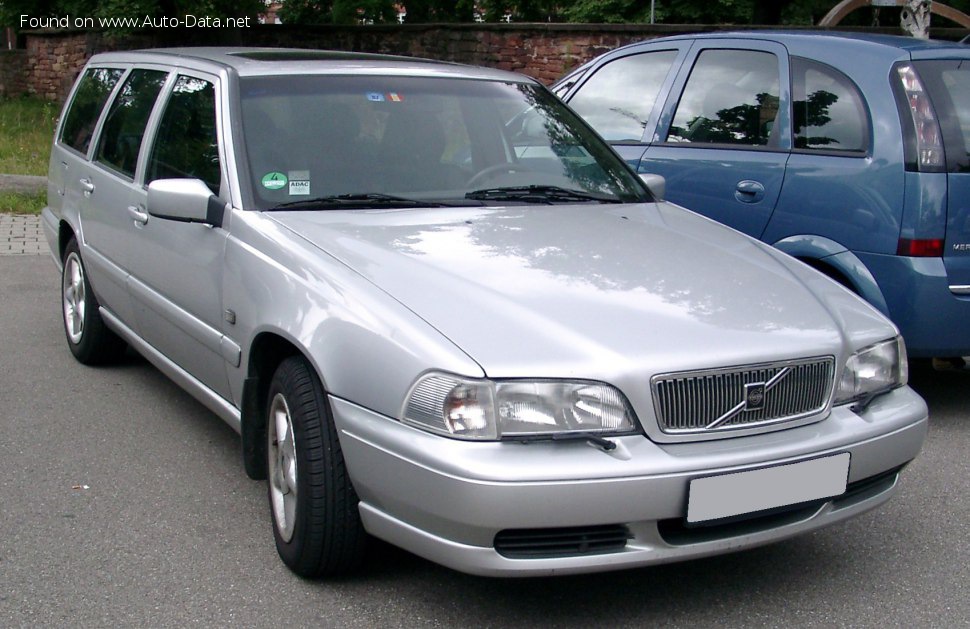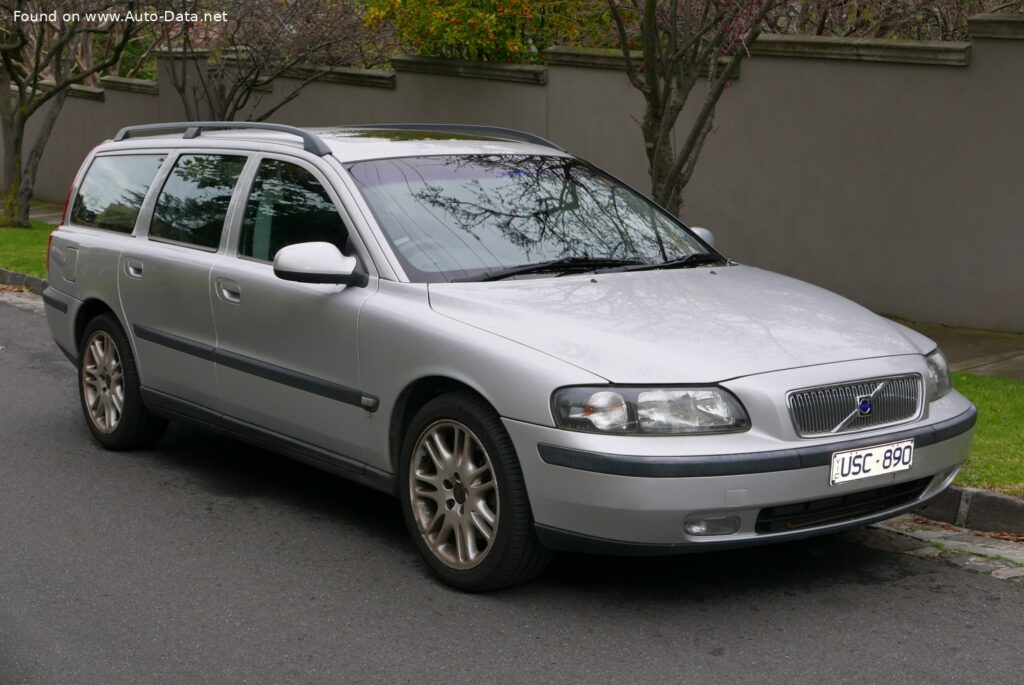
The Volvo V70 II 2.4 (170 Hp) Automatic, produced between 2000 and 2004, represents the second generation of Volvo’s popular station wagon. Positioned within the mid-size executive car segment, the V70 aimed to combine practicality, safety, and Scandinavian design. This model was primarily sold in the European market, where large wagons remained a significant portion of the automotive landscape. While not directly sold in the United States during this generation, the V70’s design philosophy and engineering influenced Volvo’s offerings in North America. The V70 II offered a compelling alternative to more conventional sedans and hatchbacks, appealing to families and individuals needing substantial cargo space and all-weather capability.
Volvo V70 II: An Overview
The V70 II built upon the success of its predecessor, offering increased refinement, improved safety features, and a more modern interior. It shared its platform with the Volvo S60 sedan, creating economies of scale for the Swedish manufacturer. The 2.4-liter engine variant, equipped with an automatic transmission, was a popular choice, balancing performance with fuel efficiency. The V70 II was known for its comfortable ride, spacious interior, and robust build quality, characteristics that cemented Volvo’s reputation for creating durable and reliable vehicles.
Engine & Performance
The Volvo V70 II 2.4 Automatic is powered by a 2.4-liter inline five-cylinder gasoline engine, designated the B5244S. This naturally aspirated engine produces 170 horsepower at 5900 rpm and 230 Newton-meters (169.64 lb.-ft.) of torque at 4500 rpm. The engine features multi-port fuel injection and a double overhead camshaft (DOHC) valvetrain, contributing to its smooth operation and reasonable power output. The engine’s power-to-liter ratio is 69.8 hp/l. Power is delivered to the front wheels via a five-speed automatic transmission. Acceleration from 0 to 100 km/h (0-62 mph) takes 9.9 seconds, while 0 to 60 mph is achieved in approximately 9.4 seconds. The vehicle has a maximum speed of 210 km/h (130.49 mph). The weight-to-power ratio is 8.7 kg/Hp, and the weight-to-torque ratio is 6.4 kg/Nm.
Design & Features
The V70 II boasts the classic Volvo station wagon profile – a long roofline extending to a near-vertical tailgate, maximizing cargo capacity. Its exterior design is characterized by clean lines and a restrained elegance, typical of Scandinavian aesthetics. Inside, the V70 II offers a spacious and comfortable cabin with seating for five passengers. The interior is well-appointed, with a focus on ergonomics and functionality. Safety was a paramount concern for Volvo, and the V70 II incorporates a range of active and passive safety features, including Anti-lock Braking System (ABS). The trunk offers a minimum of 485 liters (17.13 cu. ft.) of space, expanding to a substantial 1641 liters (57.95 cu. ft.) with the rear seats folded down. The vehicle’s dimensions are: length 4710 mm (185.43 in.), width 1804 mm (71.02 in.), and height 1465 mm (57.68 in.).
Technical Specifications
| Brand | Volvo |
| Model | V70 |
| Generation | V70 II |
| Type (Engine) | 2.4 (170 Hp) Automatic |
| Start of production | 2000 |
| End of production | 2004 |
| Powertrain Architecture | Internal Combustion engine |
| Body type | Station wagon (estate) |
| Seats | 5 |
| Doors | 5 |
| Fuel consumption (urban) | 13.6 l/100 km (17.3 US mpg, 20.8 UK mpg, 7.4 km/l) |
| Fuel consumption (extra urban) | 7.4 l/100 km (31.8 US mpg, 38.2 UK mpg, 13.5 km/l) |
| Fuel consumption (combined) | 9.7 l/100 km (24.2 US mpg, 29.1 UK mpg, 10.3 km/l) |
| Fuel Type | Petrol (Gasoline) |
| Acceleration 0 – 100 km/h | 9.9 sec |
| Acceleration 0 – 62 mph | 9.9 sec |
| Acceleration 0 – 60 mph | 9.4 sec |
| Maximum speed | 210 km/h (130.49 mph) |
| Weight-to-power ratio | 8.7 kg/Hp |
| Weight-to-torque ratio | 6.4 kg/Nm |
| Power | 170 Hp @ 5900 rpm |
| Torque | 230 Nm @ 4500 rpm (169.64 lb.-ft. @ 4500 rpm) |
| Engine layout | Front, Transverse |
| Engine Model/Code | B5244S |
| Engine displacement | 2435 cm3 (148.59 cu. in.) |
| Number of cylinders | 5 |
| Engine configuration | Inline |
| Cylinder Bore | 83 mm (3.27 in.) |
| Piston Stroke | 90 mm (3.54 in.) |
| Compression ratio | 10.3:1 |
| Number of valves per cylinder | 4 |
| Fuel injection system | Multi-port manifold injection |
| Engine aspiration | Naturally aspirated engine |
| Valvetrain | DOHC |
| Engine oil capacity | 5.5 l (5.81 US qt | 4.84 UK qt) |
| Coolant | 8.8 l (9.3 US qt | 7.74 UK qt) |
| Kerb Weight | 1483 kg (3269.46 lbs.) |
| Max. weight | 2150 kg (4739.94 lbs.) |
| Max load | 667 kg (1470.48 lbs.) |
| Trunk (boot) space – minimum | 485 l (17.13 cu. ft.) |
| Trunk (boot) space – maximum | 1641 l (57.95 cu. ft.) |
| Fuel tank capacity | 70 l (18.49 US gal | 15.4 UK gal) |
| Length | 4710 mm (185.43 in.) |
| Width | 1804 mm (71.02 in.) |
| Height | 1465 mm (57.68 in.) |
| Wheelbase | 2755 mm (108.46 in.) |
| Front track | 1563 mm (61.54 in.) |
| Rear track | 1560 mm (61.42 in.) |
| Drivetrain Architecture | Front wheel drive |
| Number of gears | 5 |
| Gearbox type | Automatic transmission |
| Front suspension | Wishbone |
| Rear suspension | Coil spring |
| Front brakes | Ventilated discs |
| Rear brakes | Disc |
| Assisting systems | ABS (Anti-lock braking system) |
| Steering type | Steering rack and pinion |
| Power steering | Hydraulic Steering |
| Tires size | 205/65 R15 |
| Wheel rims size | 15 |