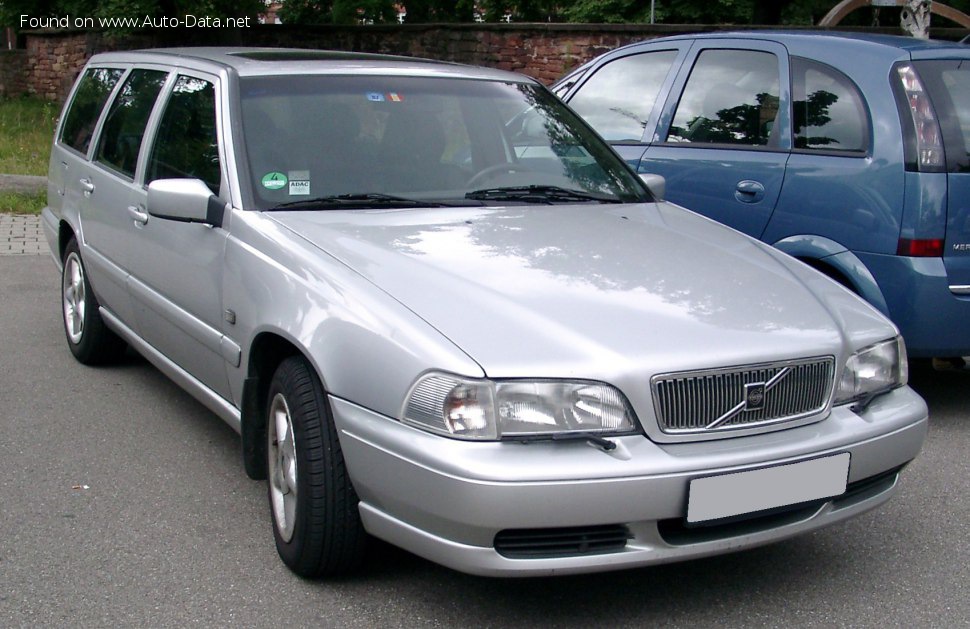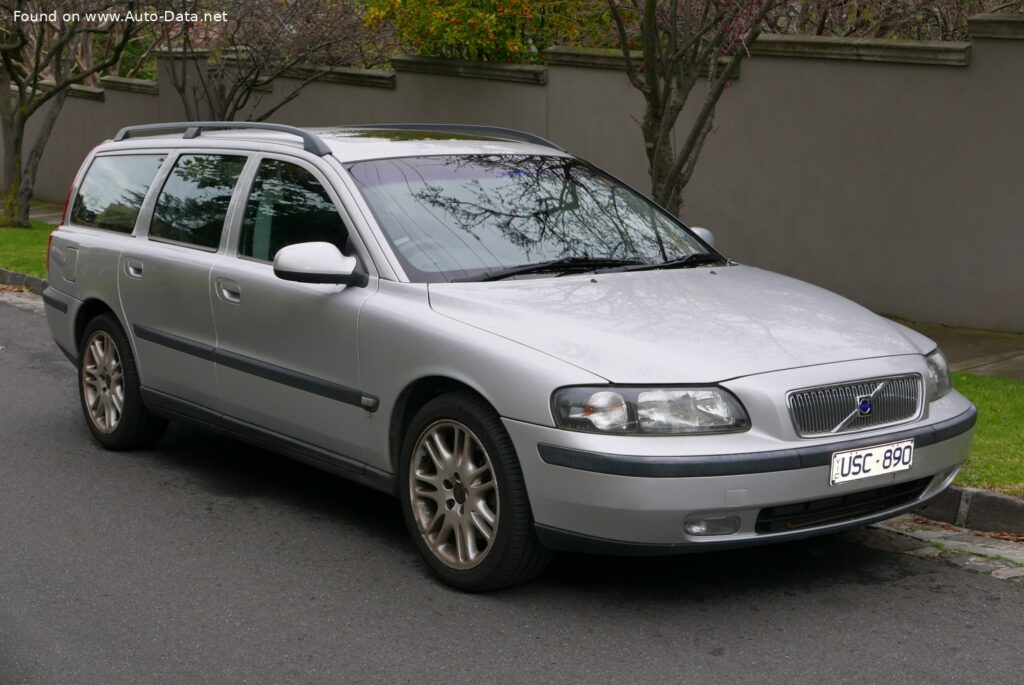
The Volvo V70 II 2.4 T (200 Hp) AWD, produced between 2000 and 2003, represents the second generation of Volvo’s popular station wagon, the V70. This model was a key offering in the mid-size executive wagon segment, primarily targeted at the European market where the demand for practical yet stylish vehicles was high. While not as prominently marketed in the United States, the V70 II offered a compelling blend of Scandinavian design, safety features, and performance, appealing to buyers seeking a versatile family vehicle. The 2.4 T designation indicates the engine type – a turbocharged 2.4-liter inline-five cylinder – and the ‘AWD’ signifies its all-wheel-drive configuration.
Volvo V70 II 2.4 T: A Detailed Overview
The V70 II built upon the success of its predecessor, offering increased refinement, improved safety technology, and a more spacious interior. It was positioned as a premium alternative to more mainstream station wagons, competing with models like the Audi A6 Avant, BMW 5 Series Touring, and Mercedes-Benz E-Class Estate. The 2.4 T model, with its 200 horsepower output, provided a balance between fuel efficiency and spirited performance, making it a popular choice for long-distance driving and everyday usability.
Engine & Performance
At the heart of the V70 II 2.4 T lies the B5244T3, a 2.4-liter inline-five cylinder engine. This engine, a hallmark of Volvo’s engineering during this period, is characterized by its smooth power delivery and distinctive sound. The engine produces 200 horsepower at 6000 rpm and 285 Nm (210.21 lb.-ft.) of torque at 1800 rpm. This torque output, available from relatively low engine speeds, contributes to strong acceleration and effortless cruising. The engine features a turbocharger, enhancing power output and providing a noticeable boost in performance. Fuel is delivered via a multi-port manifold injection system. The engine’s configuration results in a power-to-liter ratio of 82.1 hp/l.
Power is transmitted to all four wheels through a 5-speed manual transmission, providing the driver with precise control. The all-wheel-drive system enhances traction and stability, particularly in adverse weather conditions. Performance figures include a 0-100 km/h (0-62 mph) acceleration time of 8.6 seconds, and a 0-60 mph time of approximately 8.2 seconds. The V70 II 2.4 T has a maximum speed of 210 km/h (130.49 mph). The weight-to-power ratio is 7.8 kg/Hp, and the weight-to-torque ratio is 5.5 kg/Nm.
Design & Features
The Volvo V70 II boasts a classic station wagon profile, characterized by its long roofline, spacious cargo area, and elegant proportions. The design emphasizes practicality and functionality, while still maintaining a sophisticated aesthetic. The vehicle’s interior is designed with comfort and usability in mind, featuring supportive seats, a well-organized dashboard, and ample storage space. The V70 II offers seating for five passengers and provides a generous 485 liters (17.13 cu. ft.) of trunk space with the rear seats up, expanding to a substantial 1641 liters (57.95 cu. ft.) when the rear seats are folded down.
Safety was a paramount concern for Volvo, and the V70 II is equipped with a comprehensive suite of safety features, including ABS (Anti-lock Braking System). The vehicle’s robust construction and advanced safety systems contribute to a high level of occupant protection. Other notable features include hydraulic power steering, ventilated front disc brakes, and disc brakes on the rear axle. The suspension utilizes a wishbone setup at the front and coil springs at the rear, providing a comfortable and controlled ride.
Technical Specifications
| Brand | Volvo |
| Model | V70 |
| Generation | V70 II |
| Type (Engine) | 2.4 T (200 Hp) AWD |
| Start of production | 2000 |
| End of production | 2003 |
| Powertrain Architecture | Internal Combustion engine |
| Body type | Station wagon (estate) |
| Seats | 5 |
| Doors | 5 |
| Fuel consumption (urban) | 14.8 l/100 km (15.9 US mpg / 19.1 UK mpg / 6.8 km/l) |
| Fuel consumption (extra urban) | 8.4 l/100 km (28 US mpg / 33.6 UK mpg / 11.9 km/l) |
| Fuel consumption (combined) | 10.4 l/100 km (22.6 US mpg / 27.2 UK mpg / 9.6 km/l) |
| Fuel Type | Petrol (Gasoline) |
| Acceleration 0 – 100 km/h | 8.6 sec |
| Acceleration 0 – 62 mph | 8.6 sec |
| Acceleration 0 – 60 mph | 8.2 sec |
| Maximum speed | 210 km/h (130.49 mph) |
| Weight-to-power ratio | 7.8 kg/Hp |
| Weight-to-torque ratio | 5.5 kg/Nm |
| Power | 200 Hp @ 6000 rpm |
| Power per litre | 82.1 Hp/l |
| Torque | 285 Nm @ 1800 rpm (210.21 lb.-ft. @ 1800 rpm) |
| Engine layout | Front, Transverse |
| Engine Model/Code | B5244T3 |
| Engine displacement | 2435 cm3 (148.59 cu. in.) |
| Number of cylinders | 5 |
| Engine configuration | Inline |
| Cylinder Bore | 83 mm (3.27 in.) |
| Piston Stroke | 90 mm (3.54 in.) |
| Compression ratio | 9:1 |
| Number of valves per cylinder | 4 |
| Fuel injection system | Multi-port manifold injection |
| Engine aspiration | Turbocharger |
| Valvetrain | DOHC |
| Engine oil capacity | 5.5 l (5.81 US qt | 4.84 UK qt) |
| Coolant | 8 l (8.45 US qt | 7.04 UK qt) |
| Kerb Weight | 1560 kg (3439.21 lbs.) |
| Max. weight | 2150 kg (4739.94 lbs.) |
| Max load | 590 kg (1300.73 lbs.) |
| Trunk (boot) space – minimum | 485 l (17.13 cu. ft.) |
| Trunk (boot) space – maximum | 1641 l (57.95 cu. ft.) |
| Fuel tank capacity | 70 l (18.49 US gal | 15.4 UK gal) |
| Length | 4710 mm (185.43 in.) |
| Width | 1804 mm (71.02 in.) |
| Height | 1490 mm (58.66 in.) |
| Wheelbase | 2755 mm (108.46 in.) |
| Front track | 1563 mm (61.54 in.) |
| Rear (Back) track | 1560 mm (61.42 in.) |
| Drive wheel | All wheel drive (4×4) |
| Number of gears and type of gearbox | 5 gears, manual transmission |
| Front suspension | Wishbone |
| Rear suspension | Coil spring |
| Front brakes | Ventilated discs |
| Rear brakes | Disc |
| Assisting systems | ABS (Anti-lock braking system) |
| Steering type | Steering rack and pinion |
| Power steering | Hydraulic Steering |
| Tires size | 205/55 R16 |
| Wheel rims size | 16 |