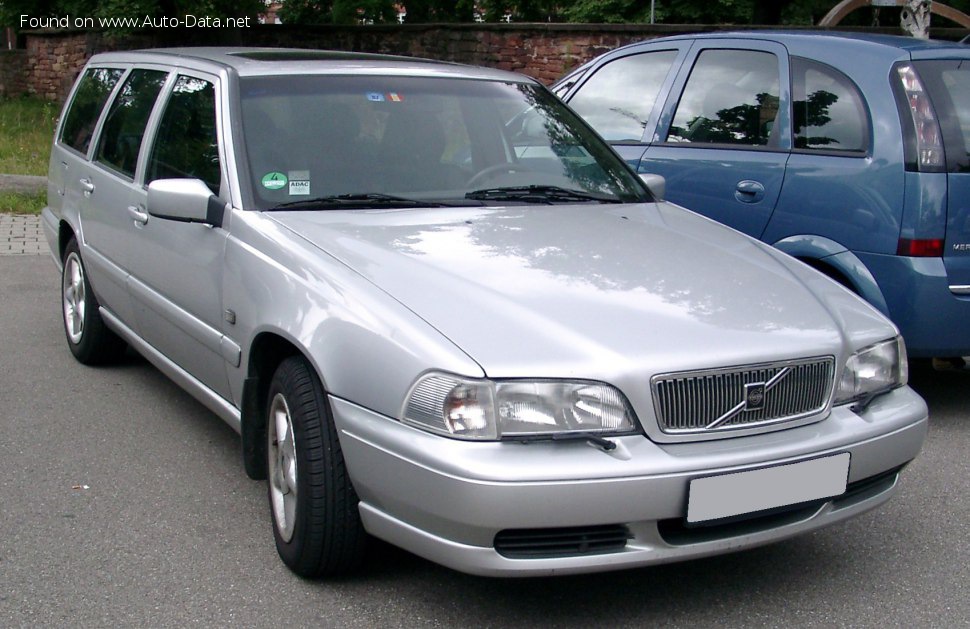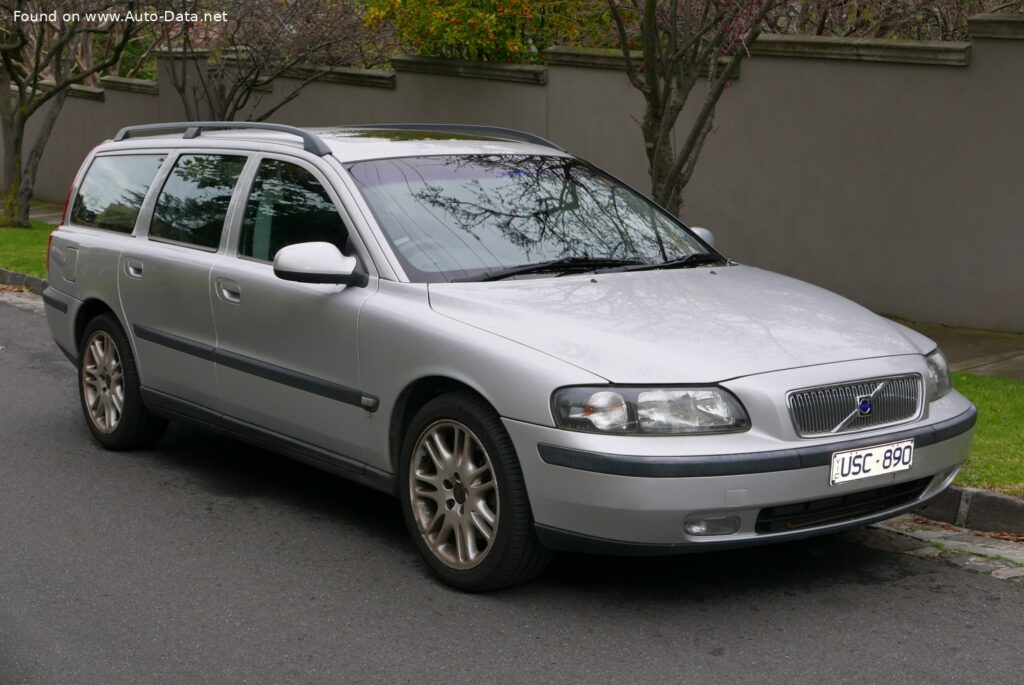
The Volvo V70 II 2.5i 20V, produced from 2003 to 2004, represents the second generation of Volvo’s popular station wagon, the V70. Positioned within the mid-size executive wagon segment, the V70 II aimed to blend practicality, safety, and Scandinavian design. While not initially a major seller in the United States – Volvo’s wagon offerings often found a niche audience – the V70 II was a significant model in Europe, competing with vehicles like the Audi A6 Avant, BMW 5 Series Touring, and Mercedes-Benz E-Class Estate. This generation built upon the success of the original V70, offering improved refinement, technology, and performance.
Volvo V70 II 2.5i 20V: A Detailed Overview
The V70 II was a key component of Volvo’s lineup during a period of transition. While maintaining the brand’s commitment to safety, it also incorporated more contemporary styling and technology. The 2.5i 20V model, equipped with a turbocharged inline-five engine and all-wheel drive (AWD), was a popular configuration, offering a balance of performance and all-weather capability. The V70 II’s design emphasized functionality and spaciousness, making it a practical choice for families and those requiring substantial cargo capacity.
Engine & Performance
The heart of the Volvo V70 II 2.5i 20V is a 2.5-liter inline-five cylinder engine, designated the B5254T2. This engine produces 210 horsepower at 5000 rpm and 320 Nm (236.02 lb.-ft.) of torque at 1500 rpm. The engine utilizes a turbocharger and intercooler to enhance power output, providing responsive acceleration. The power-to-weight ratio stands at 7.7 kg/Hp, or 130 Hp/tonne, indicating a respectable level of performance. Acceleration from 0 to 100 km/h (0-62 mph) takes 7.6 seconds, while 0-60 mph is achieved in approximately 7.2 seconds. The V70 II 2.5i 20V boasts a maximum speed of 220 km/h (136.7 mph). Fuel injection is managed by a multi-port manifold system, and the engine features a double overhead camshaft (DOHC) valvetrain with four valves per cylinder. Fuel economy is rated at 14 l/100 km (16.8 US mpg) in urban conditions and 7.9 l/100 km (29.8 US mpg) on the extra-urban cycle.
Design & Features
The Volvo V70 II is a five-door station wagon (estate) with seating for five passengers. Its exterior design is characterized by clean lines and a focus on aerodynamic efficiency. The vehicle’s long roofline maximizes cargo space, while the sloping rear window contributes to a sleek profile. Inside, the V70 II offers a comfortable and well-appointed cabin. The interior prioritizes ergonomics and functionality, with a focus on providing a relaxing driving experience. Safety was, as always with Volvo, a paramount concern. The V70 II incorporated a range of safety features, including Anti-lock Braking System (ABS), and a robust body structure designed to protect occupants in the event of a collision. The vehicle’s trunk offers a minimum capacity of 485 liters (17.13 cu. ft.), expanding to a substantial 1641 liters (57.95 cu. ft.) with the rear seats folded down. The V70 II’s dimensions are: length 4710 mm (185.43 in.), width 1804 mm (71.02 in.), and height 1465 mm (57.68 in.).
Technical Specifications
| Brand | Volvo |
| Model | V70 |
| Generation | V70 II |
| Type (Engine) | 2.5i 20V (210 Hp) AWD |
| Start of production | 2003 |
| End of production | 2004 |
| Powertrain Architecture | Internal Combustion engine |
| Body type | Station wagon (estate) |
| Seats | 5 |
| Doors | 5 |
| Fuel consumption (urban) | 14 l/100 km (16.8 US mpg) |
| Fuel consumption (extra urban) | 7.9 l/100 km (29.8 US mpg) |
| Fuel Type | Petrol (Gasoline) |
| Acceleration 0 – 100 km/h | 7.6 sec |
| Acceleration 0 – 62 mph | 7.6 sec |
| Acceleration 0 – 60 mph | 7.2 sec |
| Maximum speed | 220 km/h (136.7 mph) |
| Weight-to-power ratio | 7.7 kg/Hp |
| Weight-to-torque ratio | 5 kg/Nm |
| Power | 210 Hp @ 5000 rpm |
| Torque | 320 Nm @ 1500 rpm (236.02 lb.-ft. @ 1500 rpm) |
| Engine layout | Front, Transverse |
| Engine Model/Code | B5254T2 |
| Engine displacement | 2521 cm3 (153.84 cu. in.) |
| Number of cylinders | 5 |
| Engine configuration | Inline |
| Cylinder Bore | 83 mm (3.27 in.) |
| Piston Stroke | 93.2 mm (3.67 in.) |
| Compression ratio | 9:1 |
| Number of valves per cylinder | 4 |
| Fuel injection system | Multi-port manifold injection |
| Engine aspiration | Turbocharger, Intercooler |
| Valvetrain | DOHC |
| Engine oil capacity | 5.5 l (5.81 US qt | 4.84 UK qt) |
| Kerb Weight | 1615 kg (3560.47 lbs.) |
| Max. weight | 2200 kg (4850.17 lbs.) |
| Max load | 585 kg (1289.7 lbs.) |
| Trunk (boot) space – minimum | 485 l (17.13 cu. ft.) |
| Trunk (boot) space – maximum | 1641 l (57.95 cu. ft.) |
| Fuel tank capacity | 70 l (18.49 US gal | 15.4 UK gal) |
| Length | 4710 mm (185.43 in.) |
| Width | 1804 mm (71.02 in.) |
| Height | 1465 mm (57.68 in.) |
| Wheelbase | 2755 mm (108.46 in.) |
| Front track | 1563 mm (61.54 in.) |
| Rear (Back) track | 1560 mm (61.42 in.) |
| Drive wheel | All wheel drive (4×4) |
| Number of gears and type of gearbox | 5 gears, manual transmission |
| Front suspension | Wishbone |
| Rear suspension | Coil spring |
| Front brakes | Ventilated discs |
| Rear brakes | Disc |
| Assisting systems | ABS (Anti-lock braking system) |
| Steering type | Steering rack and pinion |
| Power steering | Hydraulic Steering |
| Tires size | 205/55 R16 |
| Wheel rims size | 16 |
The Volvo V70 II 2.5i 20V AWD offered a compelling package for buyers seeking a practical, safe, and reasonably powerful station wagon. Its blend of Scandinavian design, robust engineering, and all-weather capability made it a popular choice in its target markets.