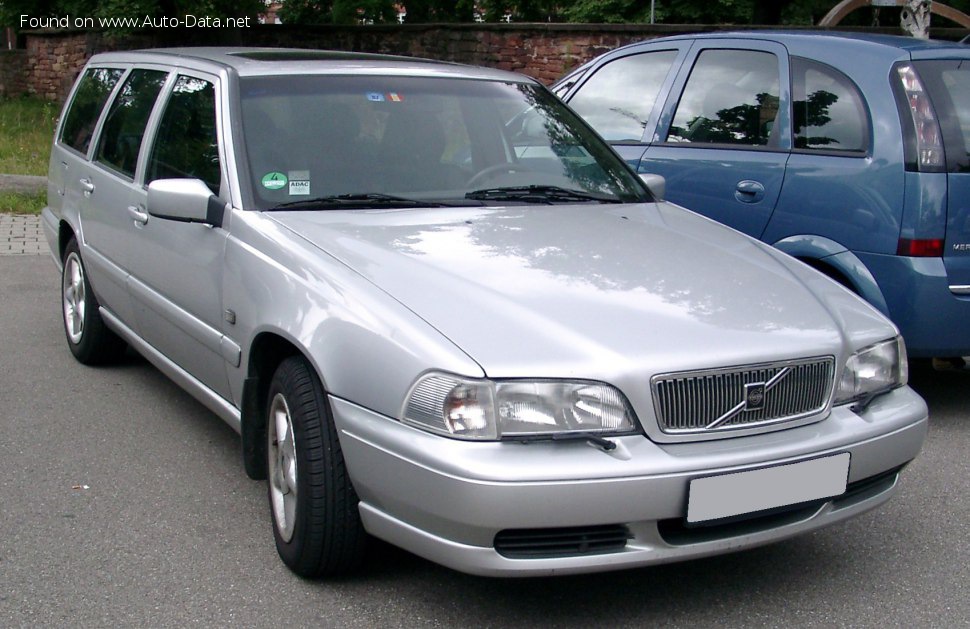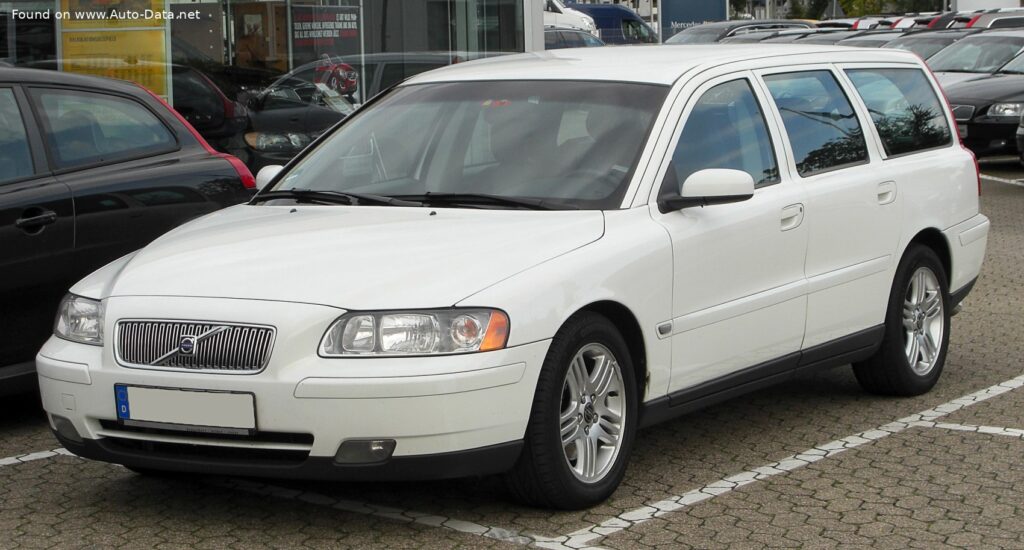
The Volvo V70 II, particularly the facelifted version introduced in 2004, represents a significant evolution in the Swedish automaker’s long-standing tradition of building practical, safe, and comfortable station wagons. Positioned within the mid-size executive car segment, the V70 aimed to provide a compelling alternative to more conventional saloons and hatchbacks, offering a blend of spaciousness, versatility, and sophisticated engineering. This generation, produced from 2000 to 2007 (with the facelift from 2004), built upon the success of its predecessor, offering improved refinement and a wider range of engine options. The 2.4 D5 variant, producing 185 horsepower, was a popular choice, particularly in European markets, offering a balance of performance and fuel efficiency.
Volvo V70 II (Facelift 2004) 2.4 D5: An Overview
The V70 II, and specifically the 2004 facelift, was never officially sold in the United States. However, it was a mainstay in the European market, competing with vehicles like the Audi A6 Avant, BMW 5 Series Touring, and Mercedes-Benz E-Class Estate. Volvo’s reputation for safety and practicality resonated strongly with European buyers, and the V70 became a common sight on the continent’s roads. The facelift brought subtle but important changes to the exterior styling, including revised headlights, grilles, and bumpers, along with interior enhancements focused on improving the overall user experience. The 2.4 D5 engine, a five-cylinder diesel, was a key component of the V70’s appeal, offering strong torque and reasonable fuel economy.
Engine & Performance
The heart of the 2005-2007 Volvo V70 II 2.4 D5 is its 2.4-liter inline five-cylinder diesel engine, designated the D5244T4. This engine produces 185 horsepower at 4000 rpm and a substantial 400 Nm (295.02 lb.-ft.) of torque at 2000 rpm. The engine features a turbocharger with an intercooler, enhancing both power and efficiency. The diesel commonrail fuel injection system ensures precise fuel delivery, contributing to smooth operation and reduced emissions. Paired with a 6-speed manual transmission, the V70 2.4 D5 delivers brisk performance, achieving a 0-60 mph (0-96 km/h) time of approximately 8.1 seconds and a 0-100 km/h (0-62 mph) time of 8.5 seconds. Its top speed is electronically limited to 225 km/h (139.81 mph). The engine’s power-to-weight ratio is 8.8 kg/Hp, and the torque-to-weight ratio is 4.1 kg/Nm, contributing to a responsive driving experience. Fuel economy is a strong point, with combined fuel consumption rated at 6.8 l/100 km (34.6 US mpg, 41.5 UK mpg), and CO2 emissions of 179 g/km.
Design & Features
The Volvo V70 II is a five-door, five-seat station wagon (estate) characterized by its clean, understated Scandinavian design. The 2004 facelift refined the exterior, giving it a more contemporary appearance. The interior is spacious and well-appointed, with a focus on comfort and practicality. The V70’s hallmark is its generous cargo capacity. With the rear seats up, it offers 485 liters (17.13 cu. ft.) of luggage space, expanding to a substantial 1641 liters (57.95 cu. ft.) with the rear seats folded down. Safety was, and remains, a core Volvo value. The V70 II incorporates a comprehensive suite of safety features, including ABS (Anti-lock Braking System), side impact protection systems (SIPS), and a robust chassis designed to protect occupants in the event of a collision. Other features include hydraulic power steering, a comfortable ride, and a well-equipped cabin, reflecting Volvo’s commitment to providing a premium driving experience.
Technical Specifications
| Brand | Volvo |
| Model | V70 |
| Generation | V70 II (facelift 2004) |
| Type (Engine) | 2.4 D5 (185 Hp) |
| Start of production | 2005 |
| End of production | 2007 |
| Powertrain Architecture | Internal Combustion engine |
| Body type | Station wagon (estate) |
| Seats | 5 |
| Doors | 5 |
| Fuel consumption (urban) | 9 l/100 km (26.1 US mpg, 31.4 UK mpg, 11.1 km/l) |
| Fuel consumption (extra urban) | 5.4 l/100 km (43.6 US mpg, 52.3 UK mpg, 18.5 km/l) |
| Fuel consumption (combined) | 6.8 l/100 km (34.6 US mpg, 41.5 UK mpg, 14.7 km/l) |
| CO2 emissions | 179 g/km |
| Fuel Type | Diesel |
| Acceleration 0 – 100 km/h | 8.5 sec |
| Acceleration 0 – 62 mph | 8.5 sec |
| Acceleration 0 – 60 mph | 8.1 sec |
| Maximum speed | 225 km/h (139.81 mph) |
| Weight-to-power ratio | 8.8 kg/Hp |
| Weight-to-torque ratio | 4.1 kg/Nm |
| Power | 185 Hp @ 4000 rpm |
| Torque | 400 Nm @ 2000 rpm (295.02 lb.-ft. @ 2000 rpm) |
| Engine layout | Front, Transverse |
| Engine Model/Code | D5244T4 |
| Engine displacement | 2401 cm3 (146.52 cu. in.) |
| Number of cylinders | 5 |
| Engine configuration | Inline |
| Cylinder Bore | 81 mm (3.19 in.) |
| Piston Stroke | 93.2 mm (3.67 in.) |
| Compression ratio | 17.3:1 |
| Number of valves per cylinder | 4 |
| Fuel injection system | Diesel Commonrail |
| Engine aspiration | Turbocharger, Intercooler |
| Valvetrain | DOHC |
| Engine oil capacity | 6.2 l (6.55 US qt | 5.46 UK qt) |
| Coolant | 12.5 l (13.21 US qt | 11 UK qt) |
| Kerb Weight | 1630 kg (3593.53 lbs.) |
| Max. weight | 2160 kg (4761.98 lbs.) |
| Max load | 530 kg (1168.45 lbs.) |
| Trunk (boot) space – minimum | 485 l (17.13 cu. ft.) |
| Trunk (boot) space – maximum | 1641 l (57.95 cu. ft.) |
| Fuel tank capacity | 70 l (18.49 US gal | 15.4 UK gal) |
| Length | 4710 mm (185.43 in.) |
| Width | 1804 mm (71.02 in.) |
| Height | 1514 mm (59.61 in.) |
| Wheelbase | 2755 mm (108.46 in.) |
| Front track | 1563 mm (61.54 in.) |
| Rear track | 1560 mm (61.42 in.) |
| Drivetrain | Front wheel drive |
| Number of gears | 6 gears, manual transmission |
| Front suspension | Wishbone |
| Rear suspension | Coil spring |
| Front brakes | Ventilated discs |
| Rear brakes | Disc |
| Assisting systems | ABS (Anti-lock braking system) |
| Steering type | Steering rack and pinion |
| Power steering | Hydraulic Steering |
| Tires size | 205/55 R16 |
| Wheel rims size | 16 |