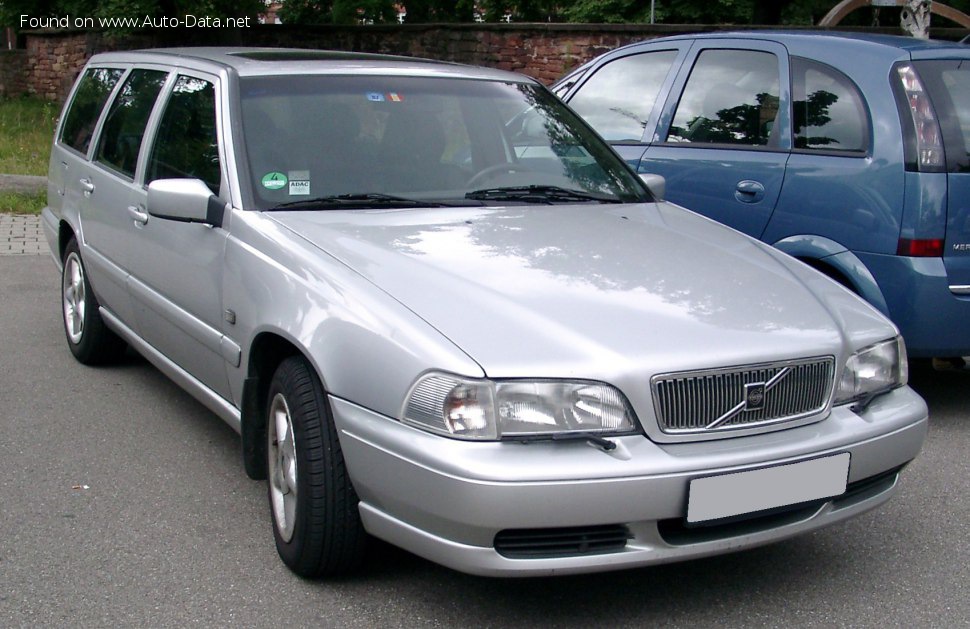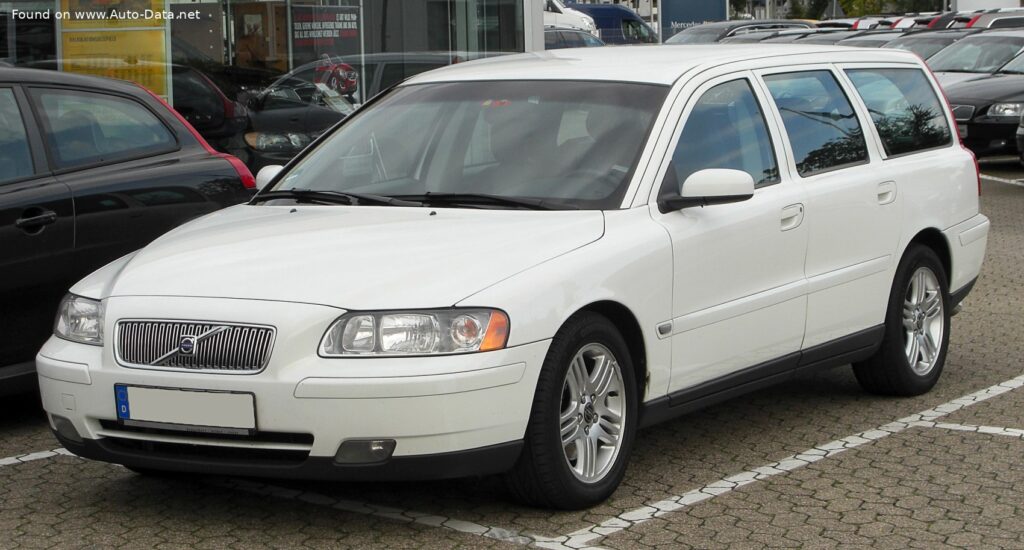
The Volvo V70 II (facelift 2004) 2.4 D5 Geartronic is a station wagon that represented Volvo’s commitment to practicality, safety, and understated luxury. Produced from 2005 to 2007, this iteration of the V70 built upon the success of the V70 II, introducing styling refinements and updated technology. Primarily sold in the European market, the V70 competed with other premium estate cars like the Audi A6 Avant, BMW 5 Series Touring, and Mercedes-Benz E-Class Estate. It offered a compelling blend of spaciousness, comfortable ride quality, and efficient diesel power, making it a popular choice for families and those requiring a versatile vehicle.
Volvo V70 II (Facelift 2004) 2.4 D5 Geartronic: An Overview
The V70 II facelift, launched in 2004, brought subtle but significant changes to Volvo’s popular estate. These included revised front and rear styling, an updated interior, and improvements to the chassis for enhanced handling. The 2.4 D5 Geartronic model specifically featured a five-cylinder diesel engine paired with a six-speed automatic transmission, offering a balance of performance and fuel economy. This model was particularly well-regarded for its smooth power delivery and comfortable cruising ability, making it ideal for long-distance journeys.
Engine & Performance
The heart of the V70 II 2.4 D5 Geartronic is a 2.4-liter inline five-cylinder diesel engine, designated the D5244T4. This engine produces 185 horsepower at 4000 rpm and a substantial 400 Nm (295.02 lb.-ft.) of torque between 2000 and 2750 rpm. The torque output provides strong acceleration and effortless overtaking capability. The engine utilizes a turbocharger and intercooler to enhance performance, and a diesel commonrail fuel injection system for efficient combustion. Paired with the six-speed Geartronic automatic transmission, the V70 II 2.4 D5 achieves a 0-100 km/h (0-62 mph) time of 9 seconds, and a 0-60 mph time of 8.6 seconds. Its top speed is electronically limited to 220 km/h (136.7 mph). Fuel economy is a strong point, with combined cycle consumption rated at 7.9 l/100 km (29.8 US mpg or 35.8 UK mpg), and CO2 emissions of 209 g/km, meeting Euro 4 emission standards.
Design & Features
The Volvo V70 II (facelift 2004) is a five-door, five-seat station wagon (estate). Its design emphasizes practicality and understated elegance. The exterior features clean lines, a sloping roofline, and a distinctive Volvo grille. The facelift brought revised headlights, taillights, and bumpers, giving the car a more modern appearance. Inside, the V70 II offers a spacious and comfortable cabin. The interior is characterized by its ergonomic design, high-quality materials, and attention to detail. Key features include comfortable seating, a well-designed dashboard, and a user-friendly infotainment system for the time. Safety was, and remains, a core Volvo value. The V70 II is equipped with a comprehensive suite of safety features, including ABS (Anti-lock Braking System), side impact protection system (SIPS), and numerous airbags. The large cargo area, with a minimum capacity of 485 liters (17.13 cu. ft.) and a maximum capacity of 1641 liters (57.95 cu. ft.) with the rear seats folded down, makes it exceptionally practical for carrying luggage, groceries, or other cargo.
Technical Specifications
| Brand | Volvo |
| Model | V70 |
| Generation | V70 II (facelift 2004) |
| Type (Engine) | 2.4 D5 (185 Hp) Geartronic |
| Start of production | 2005 |
| End of production | 2007 |
| Powertrain Architecture | Internal Combustion engine |
| Body type | Station wagon (estate) |
| Seats | 5 |
| Doors | 5 |
| Fuel consumption (urban) | 10.5 l/100 km (22.4 US mpg, 26.9 UK mpg, 9.5 km/l) |
| Fuel consumption (extra urban) | 6.4 l/100 km (36.8 US mpg, 44.1 UK mpg, 15.6 km/l) |
| Fuel consumption (combined) | 7.9 l/100 km (29.8 US mpg, 35.8 UK mpg, 12.7 km/l) |
| CO2 emissions | 209 g/km |
| Fuel Type | Diesel |
| Acceleration 0 – 100 km/h | 9 sec |
| Acceleration 0 – 62 mph | 9 sec |
| Acceleration 0 – 60 mph | 8.6 sec |
| Maximum speed | 220 km/h (136.7 mph) |
| Emission standard | Euro 4 |
| Weight-to-power ratio | 8.4 kg/Hp, 118.5 Hp/tonne |
| Weight-to-torque ratio | 3.9 kg/Nm, 256.2 Nm/tonne |
| Power | 185 Hp @ 4000 rpm |
| Power per litre | 77.1 Hp/l |
| Torque | 400 Nm @ 2000-2750 rpm (295.02 lb.-ft. @ 2000-2750 rpm) |
| Engine layout | Front, Transverse |
| Engine Model/Code | D5244T4 |
| Engine displacement | 2400 cm3 (146.46 cu. in.) |
| Number of cylinders | 5 |
| Engine configuration | Inline |
| Cylinder Bore | 81 mm (3.19 in.) |
| Piston Stroke | 93.15 mm (3.67 in.) |
| Number of valves per cylinder | 4 |
| Fuel injection system | Diesel Commonrail |
| Engine aspiration | Turbocharger, Intercooler |
| Valvetrain | DOHC |
| Engine oil capacity | 6.2 l (6.55 US qt | 5.46 UK qt) |
| Kerb Weight | 1561 kg (3441.42 lbs.) |
| Max. weight | 2160 kg (4761.98 lbs.) |
| Max load | 599 kg (1320.57 lbs.) |
| Trunk (boot) space – minimum | 485 l (17.13 cu. ft.) |
| Trunk (boot) space – maximum | 1641 l (57.95 cu. ft.) |
| Fuel tank capacity | 70 l (18.49 US gal | 15.4 UK gal) |
| Max. roof load | 100 kg (220.46 lbs.) |
| Permitted trailer load with brakes (8%) | 2000 kg (4409.25 lbs.) |
| Permitted trailer load with brakes (12%) | 1800 kg (3968.32 lbs.) |
| Permitted trailer load without brakes | 750 kg (1653.47 lbs.) |
| Permitted towbar download | 75 kg (165.35 lbs.) |
| Length | 4710 mm (185.43 in.) |
| Width | 1804 mm (71.02 in.) |
| Height | 1465 mm (57.68 in.) |
| Wheelbase | 2755 mm (108.46 in.) |
| Front track | 1551 mm (61.06 in.) |
| Rear track | 1548 mm (60.94 in.) |
| Minimum turning circle | 11.9 m (39.04 ft.) |
| Drivetrain | Front wheel drive |
| Number of gears | 6 |
| Gearbox type | Automatic transmission Geartronic |
| Front suspension | Independent, McPherson with coil spring and anti-roll bar |
| Rear suspension | Independent multi-link suspension, Transverse stabilizer |
| Front brakes | Ventilated discs |
| Rear brakes | Disc |
| Tires size | 205/55 R16 |
| Wheel rims size | 7J x 16 |
The Volvo V70 II (facelift 2004) 2.4 D5 Geartronic remains a highly regarded estate car, offering a compelling combination of practicality, comfort, safety, and efficiency. Its enduring appeal lies in its ability to meet the diverse needs of modern drivers, making it a popular choice even today.