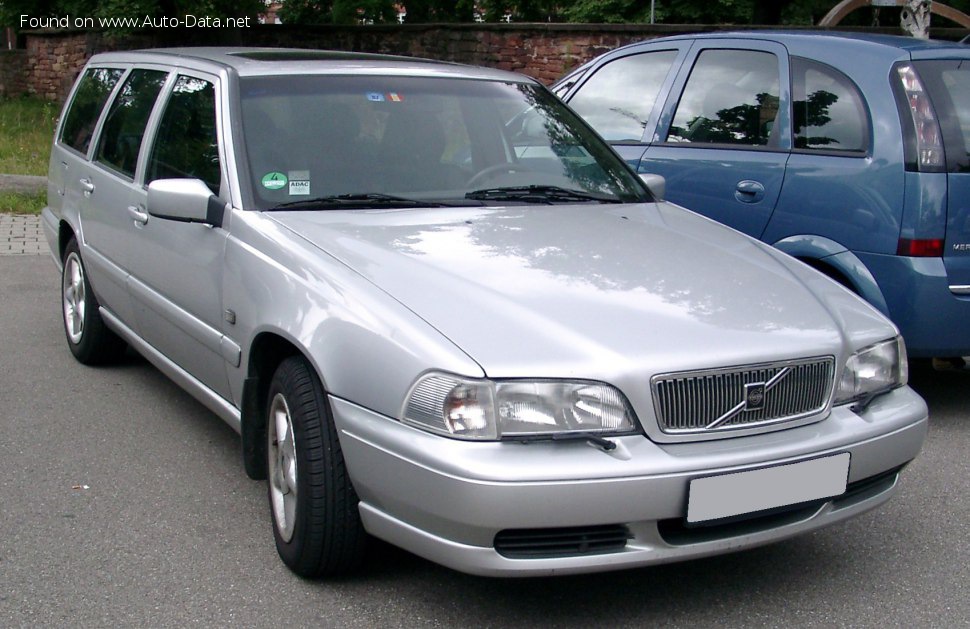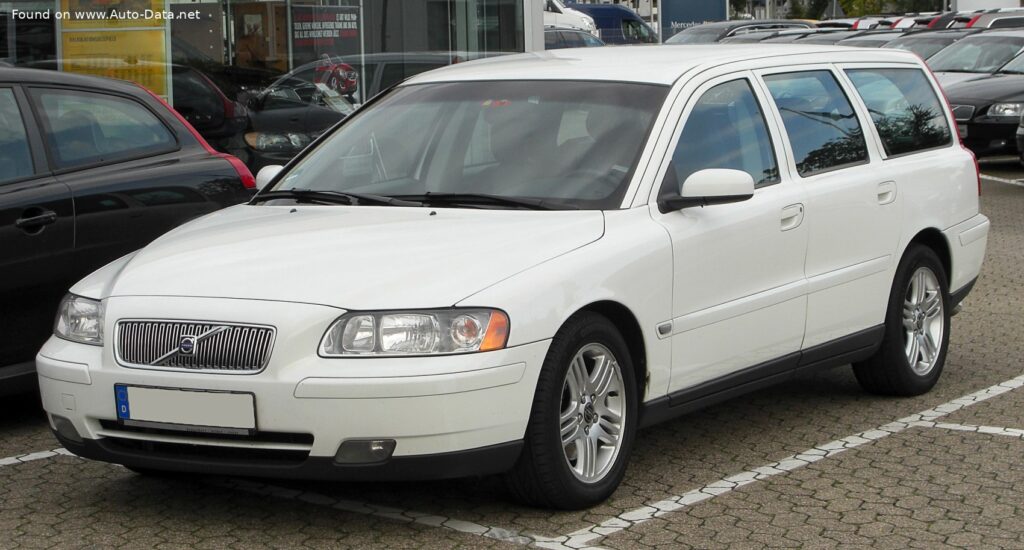
The Volvo V70 II, particularly the facelifted version introduced in 2004, represents Volvo’s commitment to the premium station wagon segment. Positioned above the S60 sedan, the V70 offered a compelling blend of practicality, safety, and Scandinavian design. This generation, produced from 2000 to 2007 (with the facelift from 2004-2007), was a key model for Volvo in Europe, where the estate car body style enjoys significant popularity. While not as widely sold in the United States as Volvo’s SUVs, the V70 appealed to buyers seeking a versatile and refined vehicle. The 2.4D variant, equipped with a diesel engine producing 126 horsepower, was a common offering, prioritizing fuel efficiency and torque for long-distance driving.
Volvo V70 II (2004-2007) 2.4D: An Overview
The V70 II facelift, launched in 2004, brought subtle but significant updates to the original model. These included revised front and rear styling, interior enhancements, and improvements to the chassis for better handling. The 2.4D model specifically targeted European markets where diesel engines were favored due to their fuel economy and lower running costs. It provided a practical alternative to larger SUVs, offering similar cargo capacity in a more manageable and efficient package. The V70’s reputation for safety, a cornerstone of the Volvo brand, was further enhanced in this generation with advanced features for the time.
Engine & Performance
The heart of the V70 II 2.4D is a 2.4-liter inline five-cylinder diesel engine, designated the D5244T7. This engine produces 126 horsepower at 4000 rpm and a substantial 300 Nm (221.27 lb.-ft.) of torque between 1750 and 2250 rpm. The engine utilizes a turbocharger and intercooler to boost performance, providing responsive acceleration despite its relatively modest horsepower figure. Power is delivered to the front wheels via a five-speed manual transmission. Acceleration from 0 to 100 km/h (0-62 mph) takes 12.3 seconds, while 0 to 60 mph is achieved in approximately 11.7 seconds. The V70 2.4D boasts a top speed of 200 km/h (124.27 mph). Fuel economy is a strong point, with combined cycle consumption rated at 6.5 l/100 km (36.2 US mpg, 43.5 UK mpg), and CO2 emissions of 172 g/km, meeting Euro 4 emission standards.
Design & Features
The Volvo V70 II is a five-door station wagon (estate) offering seating for five passengers. Its design emphasizes practicality and understated elegance, typical of Scandinavian aesthetics. The facelifted model features a more prominent grille, revised headlights, and updated taillights. Inside, the V70 offers a spacious and comfortable cabin with a focus on ergonomics. Key features include a versatile cargo area with a minimum capacity of 485 liters (17.13 cu. ft.) expanding to 1641 liters (57.95 cu. ft.) with the rear seats folded down. Safety features are comprehensive, including ABS (Anti-lock Braking System), and a robust body structure designed to protect occupants in the event of a collision. The V70 also offers a range of convenience features, such as power steering, and a well-equipped dashboard.
Technical Specifications
| Brand | Volvo |
| Model | V70 |
| Generation | V70 II (facelift 2004) |
| Type (Engine) | 2.4D (126 Hp) |
| Start of production | 2005 |
| End of production | 2007 |
| Powertrain Architecture | Internal Combustion engine |
| Body type | Station wagon (estate) |
| Seats | 5 |
| Doors | 5 |
| Fuel consumption (economy) – urban (NEDC) | 8.6 l/100 km (27.4 US mpg, 32.8 UK mpg, 11.6 km/l) |
| Fuel consumption (economy) – extra urban (NEDC) | 5.3 l/100 km (44.4 US mpg, 53.3 UK mpg, 18.9 km/l) |
| Fuel consumption (economy) – combined (NEDC) | 6.5 l/100 km (36.2 US mpg, 43.5 UK mpg, 15.4 km/l) |
| CO2 emissions (NEDC) | 172 g/km |
| Fuel Type | Diesel |
| Acceleration 0 – 100 km/h | 12.3 sec |
| Acceleration 0 – 62 mph | 12.3 sec |
| Acceleration 0 – 60 mph | 11.7 sec |
| Maximum speed | 200 km/h (124.27 mph) |
| Emission standard | Euro 4 |
| Weight-to-power ratio | 12.3 kg/Hp, 81.4 Hp/tonne |
| Weight-to-torque ratio | 5.2 kg/Nm, 193.9 Nm/tonne |
| Power | 126 Hp @ 4000 rpm |
| Power per litre | 52.5 Hp/l |
| Torque | 300 Nm @ 1750-2250 rpm (221.27 lb.-ft. @ 1750-2250 rpm) |
| Engine layout | Front, Transverse |
| Engine Model/Code | D5244T7 |
| Engine displacement | 2400 cm3 (146.46 cu. in.) |
| Number of cylinders | 5 |
| Engine configuration | Inline |
| Cylinder Bore | 81 mm (3.19 in.) |
| Piston Stroke | 93.15 mm (3.67 in.) |
| Number of valves per cylinder | 4 |
| Fuel injection system | Diesel Commonrail |
| Engine aspiration | Turbocharger, Intercooler |
| Valvetrain | DOHC |
| Engine oil capacity | 6.2 l (6.55 US qt | 5.46 UK qt) |
| Kerb Weight | 1547 kg (3410.55 lbs.) |
| Max. weight | 2160 kg (4761.98 lbs.) |
| Max load | 613 kg (1351.43 lbs.) |
| Trunk (boot) space – minimum | 485 l (17.13 cu. ft.) |
| Trunk (boot) space – maximum | 1641 l (57.95 cu. ft.) |
| Fuel tank capacity | 70 l (18.49 US gal | 15.4 UK gal) |
| Max. roof load | 100 kg (220.46 lbs.) |
| Permitted trailer load with brakes (12%) | 1800 kg (3968.32 lbs.) |
| Permitted trailer load without brakes | 750 kg (1653.47 lbs.) |
| Permitted towbar download | 75 kg (165.35 lbs.) |
| Length | 4710 mm (185.43 in.) |
| Width | 1804 mm (71.02 in.) |
| Height | 1465 mm (57.68 in.) |
| Wheelbase | 2755 mm (108.46 in.) |
| Front track | 1551 mm (61.06 in.) |
| Rear (Back) track | 1548 mm (60.94 in.) |
| Minimum turning circle (turning diameter) | 11.9 m (39.04 ft.) |
| Drivetrain Architecture | The Internal combustion engine (ICE) drives the front wheels of the vehicle. |
| Drive wheel | Front wheel drive |
| Number of gears and type of gearbox | 5 gears, manual transmission |
| Front suspension | Independent, type McPherson with coil spring and anti-roll bar |
| Rear suspension | Independent multi-link suspension, Transverse stabilizer |
| Front brakes | Ventilated discs |
| Rear brakes | Disc |
| Assisting systems | ABS (Anti-lock braking system) |
| Steering type | Steering rack and pinion |
| Power steering | Hydraulic Steering |
| Tires size | 205/55 R16 |
| Wheel rims size | 7J x 16 |
The Volvo V70 II 2.4D (2004-2007) remains a compelling choice for those seeking a practical, safe, and fuel-efficient station wagon. Its blend of Scandinavian design, comfortable interior, and robust diesel engine continues to appeal to drivers who prioritize versatility and long-distance cruising capability.