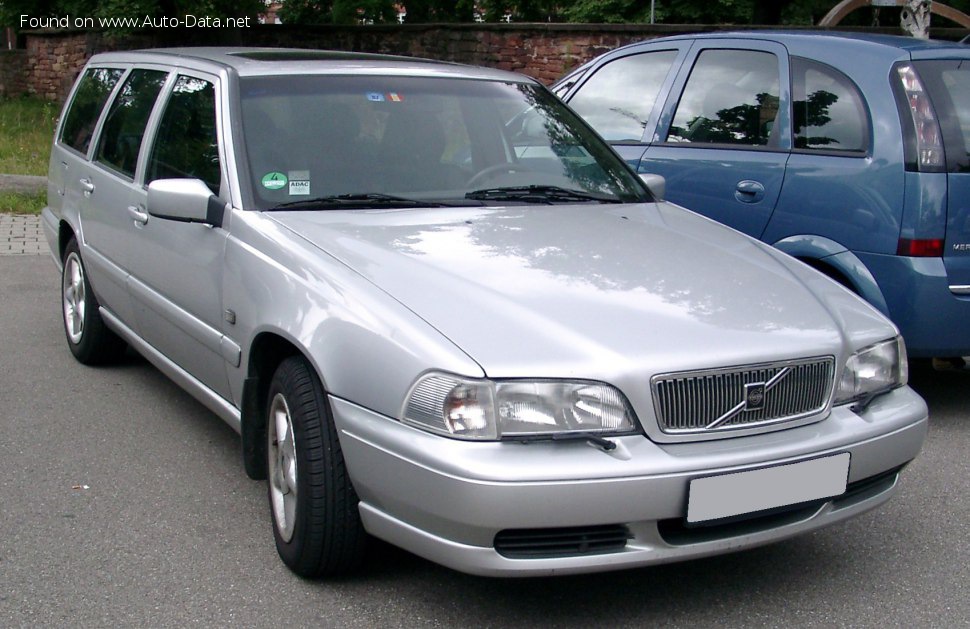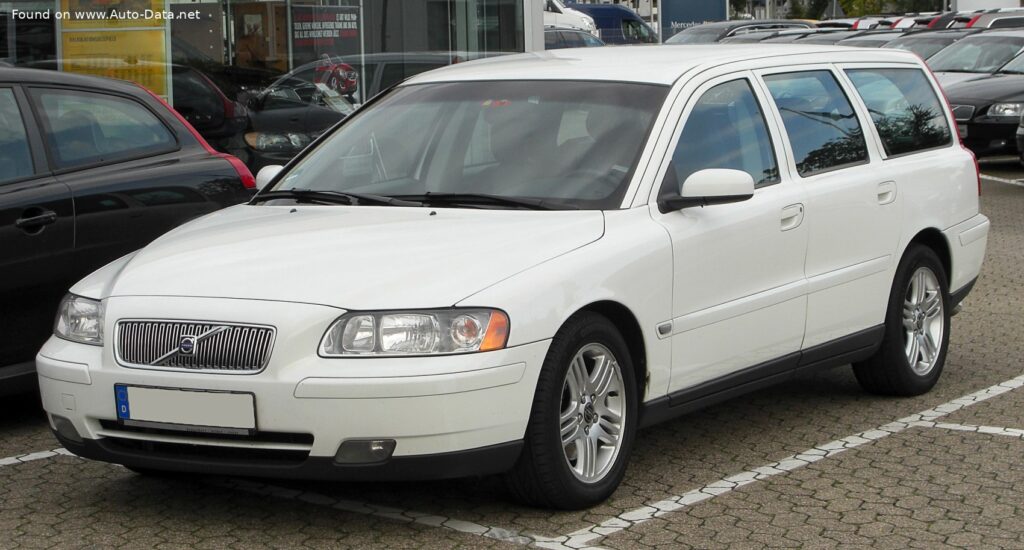
The Volvo V70 II, particularly the facelifted version introduced in 2004, represents Volvo’s commitment to the premium station wagon segment. Produced from 2005 to 2007, this iteration of the V70 built upon the success of its predecessor, offering a blend of practicality, safety, and Scandinavian design. The 2.4i 20V T5 model, equipped with a 260 horsepower turbocharged engine and automatic transmission, was a popular choice for buyers seeking a refined and capable family vehicle. While primarily sold in Europe, the V70 series, and wagons in general, held a niche but dedicated following in the North American market, appreciated for their versatility and distinct styling.
Volvo V70 II (2004-2007) 2.4i 20V T5: An Overview
The V70 II facelift brought subtle but significant updates to the original V70 II, enhancing both its aesthetics and functionality. The 2.4i 20V T5 variant specifically targeted drivers who desired a more spirited driving experience without sacrificing the comfort and space expected from a Volvo wagon. This model combined a potent turbocharged engine with a smooth-shifting automatic gearbox, making it well-suited for long journeys and everyday use. It competed with other premium wagons like the Audi A6 Avant, BMW 5 Series Touring, and Mercedes-Benz E-Class Estate.
Engine & Performance
At the heart of the V70 II 2.4i 20V T5 lies the B5244T5 engine, a 2.4-liter inline-five cylinder powerplant. This engine is notable for its robust construction and ability to be readily modified. The “20V” designation refers to the engine’s 20 valves (four valves per cylinder), contributing to its efficient breathing and power output. Boosted by a turbocharger and intercooler, the engine delivers 260 horsepower at 5500 rpm and 350 Nm (258.15 lb.-ft.) of torque at 2100 rpm. This torque curve provides strong acceleration across a wide range of engine speeds. The five-speed automatic transmission efficiently transfers power to the front wheels, enabling a 0-100 km/h (0-62 mph) acceleration time of 7.2 seconds and a 0-60 mph time of approximately 6.8 seconds. The vehicle boasts a maximum speed of 245 km/h (152.24 mph). The engine’s power-to-weight ratio is a respectable 6.3 kg/Hp, and its torque-to-weight ratio is 4.6 kg/Nm.
Design & Features
The V70 II maintains Volvo’s traditional station wagon profile – long, sleek, and practical. The facelifted model features revised front and rear styling, including updated headlights and taillights, and a redesigned grille. The interior is characterized by its clean, minimalist Scandinavian design, prioritizing comfort and functionality. The V70 II offers seating for five passengers and provides a generous 485 liters (17.13 cu. ft.) of trunk space with the rear seats up, expanding to a substantial 1641 liters (57.95 cu. ft.) when the rear seats are folded down.
Safety was, and remains, a core Volvo value. The V70 II is equipped with a comprehensive suite of safety features, including Anti-lock Braking System (ABS), side impact protection system (SIPS), and a reinforced body structure. Other notable features include hydraulic power steering, a comfortable ride, and a well-appointed interior with quality materials. The vehicle’s dimensions are: length 4710 mm (185.43 in.), width 1804 mm (71.02 in.), and height 1514 mm (59.61 in.). It has a wheelbase of 2755 mm (108.46 in.) and a kerb weight of 1625 kg (3582.51 lbs).
Technical Specifications
| Brand | Volvo |
| Model | V70 |
| Generation | V70 II (facelift 2004) |
| Type (Engine) | 2.4i 20V T5 (260 Hp) Automatic |
| Start of production | 2005 |
| End of production | 2007 |
| Powertrain Architecture | Internal Combustion engine |
| Body type | Station wagon (estate) |
| Seats | 5 |
| Doors | 5 |
| Fuel consumption (urban) | 14.6 l/100 km (16.1 US mpg, 19.3 UK mpg) |
| Fuel consumption (extra urban) | 7.6 l/100 km (30.9 US mpg, 37.2 UK mpg) |
| Fuel consumption (combined) | 10.0 l/100 km (23.5 US mpg, 28.2 UK mpg) |
| CO2 emissions | 239 g/km |
| Fuel Type | Petrol (Gasoline) |
| Acceleration 0 – 100 km/h | 7.2 sec |
| Acceleration 0 – 62 mph | 7.2 sec |
| Acceleration 0 – 60 mph | 6.8 sec |
| Maximum speed | 245 km/h (152.24 mph) |
| Weight-to-power ratio | 6.3 kg/Hp |
| Weight-to-torque ratio | 4.6 kg/Nm |
| Power | 260 Hp @ 5500 rpm |
| Power per litre | 108.3 Hp/l |
| Torque | 350 Nm @ 2100 rpm (258.15 lb.-ft. @ 2100 rpm) |
| Engine layout | Front, Transverse |
| Engine Model/Code | B5244T5 |
| Engine displacement | 2401 cm3 (146.52 cu. in.) |
| Number of cylinders | 5 |
| Engine configuration | Inline |
| Cylinder Bore | 81 mm (3.19 in.) |
| Piston Stroke | 93.2 mm (3.67 in.) |
| Compression ratio | 8.5:1 |
| Number of valves per cylinder | 4 |
| Fuel injection system | Multi-port manifold injection |
| Engine aspiration | Turbocharger, Intercooler |
| Valvetrain | DOHC |
| Engine oil capacity | 5.5 l (5.81 US qt | 4.84 UK qt) |
| Coolant | 9 l (9.51 US qt | 7.92 UK qt) |
| Kerb Weight | 1625 kg (3582.51 lbs.) |
| Max. weight | 2150 kg (4739.94 lbs.) |
| Max load | 525 kg (1157.43 lbs.) |
| Trunk (boot) space – minimum | 485 l (17.13 cu. ft.) |
| Trunk (boot) space – maximum | 1641 l (57.95 cu. ft.) |
| Fuel tank capacity | 70 l (18.49 US gal | 15.4 UK gal) |
| Length | 4710 mm (185.43 in.) |
| Width | 1804 mm (71.02 in.) |
| Height | 1514 mm (59.61 in.) |
| Wheelbase | 2755 mm (108.46 in.) |
| Front track | 1563 mm (61.54 in.) |
| Rear (Back) track | 1560 mm (61.42 in.) |
| Drivetrain Architecture | Front wheel drive |
| Number of gears and type of gearbox | 5 gears, automatic transmission |
| Front suspension | Wishbone |
| Rear suspension | Coil spring |
| Front brakes | Ventilated discs |
| Rear brakes | Disc |
| Assisting systems | ABS (Anti-lock braking system) |
| Steering type | Steering rack and pinion |
| Power steering | Hydraulic Steering |
| Tires size | 215/55 R16 |
| Wheel rims size | 16 |