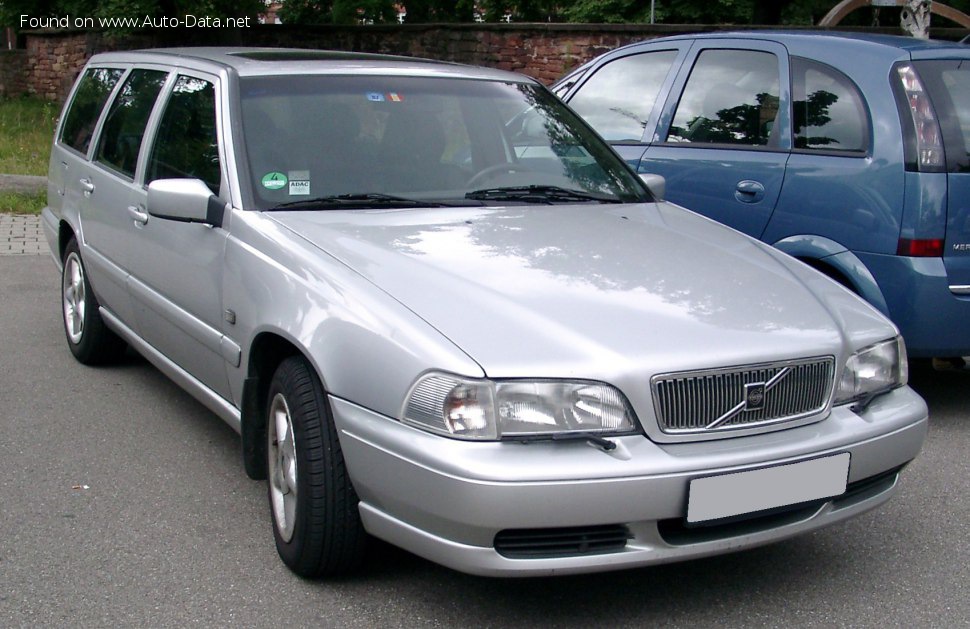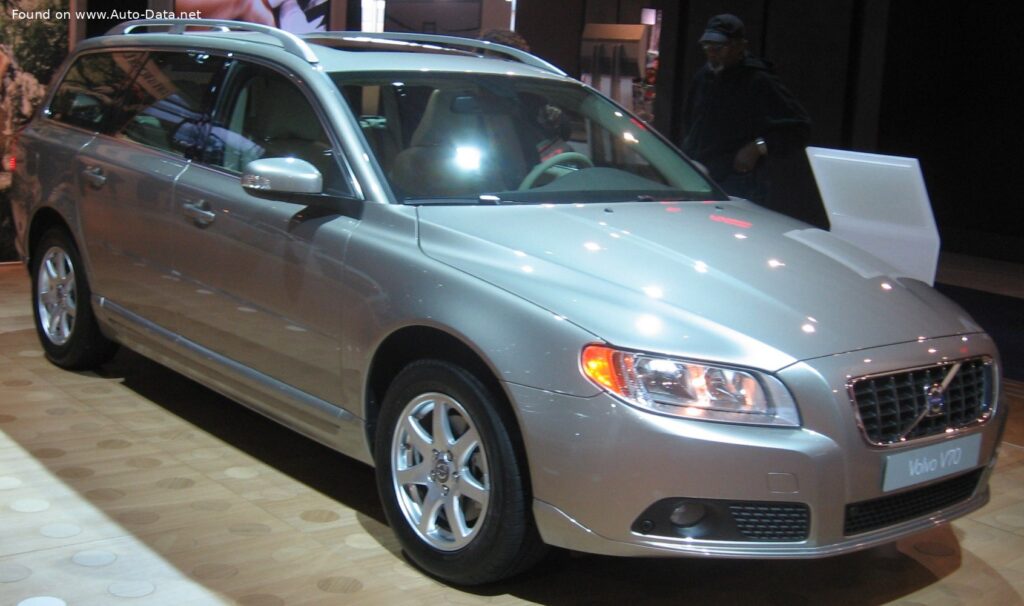
The Volvo V70 III 2.0 F (145 Hp) Ethanol is a station wagon that was produced by the Swedish manufacturer Volvo between 2009 and 2010. Representing the third generation of the V70 model line, this variant was primarily aimed at the European market, offering a blend of practicality, safety, and fuel efficiency, particularly with its flexible-fuel capability. The V70, in general, occupied the mid-size executive wagon segment, competing with vehicles like the Audi A6 Avant, BMW 5 Series Touring, and Mercedes-Benz E-Class Estate. This specific 2.0 F model distinguished itself with its ability to run on both gasoline and E85 ethanol, catering to regions with established ethanol infrastructure and incentives.
Volvo V70 III 2.0 F: An Overview
The V70 III, launched in 2007, built upon the success of its predecessors, offering a more refined and spacious interior, improved ride quality, and enhanced safety features. The 2.0 F model, while not widely available in the United States, was a significant offering in Europe, particularly in Scandinavian countries where flexible-fuel vehicles were gaining popularity. It provided a balance between performance and economy, appealing to families and individuals seeking a versatile and environmentally conscious vehicle. The model year 2009-2010 represents a refinement of the V70 III platform, with minor updates to styling and equipment.
Engine & Performance
The Volvo V70 III 2.0 F is powered by a 1.999-liter inline-four cylinder engine, designated the B4204S4. This naturally aspirated engine produces 145 horsepower at 6000 rpm and 190 Nm (140.14 lb-ft) of torque at 4500 rpm. The engine’s flexible-fuel capability allows it to run on gasoline or E85 ethanol, or any blend thereof. When running on E85, fuel consumption increases to 12.0 l/100 km, but CO2 emissions are slightly reduced to 197 g/km. The engine is transversely mounted at the front of the vehicle and delivers power to the front wheels via a six-speed manual transmission. Acceleration from 0 to 100 km/h (0-62 mph) takes 11.3 seconds, with a calculated 0-60 mph time of 10.7 seconds. The vehicle has a maximum speed of 200 km/h (124.27 mph). The power-to-weight ratio is 10.9 kg/Hp, and the torque-to-weight ratio is 8.3 kg/Nm.
Design & Features
The V70 III maintains Volvo’s traditional station wagon profile, characterized by a long roofline and a spacious cargo area. The body style is a five-door station wagon (estate) with seating for five passengers. The vehicle’s design emphasizes practicality and functionality, with a focus on maximizing interior space. Key features include a large trunk with a minimum capacity of 575 liters (20.31 cu. ft.), a comfortable and well-appointed interior, and a range of safety features typical of Volvo vehicles. These safety features include ABS (Anti-lock Braking System) and a robust chassis designed for occupant protection. The V70 III also offers a respectable level of standard equipment, including air conditioning, power windows, and a basic audio system. The drag coefficient of 0.31 contributes to reasonable aerodynamic efficiency.
Technical Specifications
| Brand | Volvo |
| Model | V70 |
| Generation | V70 III |
| Type (Engine) | 2.0 F (145 Hp) Ethanol |
| Start of production | 2009 |
| End of production | 2010 |
| Powertrain Architecture | Internal Combustion engine |
| Body type | Station wagon (estate) |
| Seats | 5 |
| Doors | 5 |
| Fuel consumption (economy) – combined | 8.6 l/100 km |
| Fuel consumption (economy) – combined (Ethanol – E85) | 12.0 l/100 km |
| CO2 emissions | 206 g/km |
| CO2 emissions (Ethanol – E85) | 197 g/km |
| Fuel Type | Petrol / Ethanol – E85 |
| Acceleration 0 – 100 km/h | 11.3 sec |
| Acceleration 0 – 62 mph | 11.3 sec |
| Acceleration 0 – 60 mph | 10.7 sec |
| Maximum speed | 200 km/h (124.27 mph) |
| Power | 145 Hp @ 6000 rpm |
| Torque | 190 Nm @ 4500 rpm (140.14 lb.-ft. @ 4500 rpm) |
| Engine layout | Front, Transverse |
| Engine Model/Code | B4204S4 |
| Engine displacement | 1999 cm3 (121.99 cu. in.) |
| Number of cylinders | 4 |
| Engine configuration | Inline |
| Cylinder Bore | 87.5 mm (3.44 in.) |
| Piston Stroke | 83.1 mm (3.27 in.) |
| Compression ratio | 10.8:1 |
| Number of valves per cylinder | 4 |
| Engine oil capacity | 4.3 l (4.54 US qt | 3.78 UK qt) |
| Coolant | 7.55 l (7.98 US qt | 6.64 UK qt) |
| Kerb Weight | 1574 kg (3470.08 lbs.) |
| Max. weight | 2260 kg (4982.45 lbs.) |
| Max load | 686 kg (1512.37 lbs.) |
| Trunk (boot) space – minimum | 575 l (20.31 cu. ft.) |
| Fuel tank capacity | 70 l (18.49 US gal | 15.4 UK gal) |
| Max. roof load | 100 kg (220.46 lbs.) |
| Permitted trailer load with brakes (12%) | 1320 kg (2910.1 lbs.) |
| Permitted trailer load without brakes | 750 kg (1653.47 lbs.) |
| Length | 4823 mm (189.88 in.) |
| Width with mirrors folded | 1907 mm (75.08 in.) |
| Width including mirrors | 2106 mm (82.91 in.) |
| Height | 1547 mm (60.91 in.) |
| Wheelbase | 2816 mm (110.87 in.) |
| Front track | 1588 mm (62.52 in.) |
| Rear (Back) track | 1586 mm (62.44 in.) |
| Ride height (ground clearance) | 143 mm (5.63 in.) |
| Drag coefficient (Cd) | 0.31 |
| Minimum turning circle (turning diameter) | 11.7 m (38.39 ft.) |
| Drivetrain Architecture | The Internal combustion engine (ICE) drives the front wheels of the vehicle. |
| Drive wheel | Front wheel drive |
| Number of gears and type of gearbox | 6 gears, manual transmission |
| Front suspension | Independent, type McPherson with coil spring and anti-roll bar |
| Rear suspension | Independent coil spring |
| Front brakes | Ventilated discs |
| Rear brakes | Disc |
| Assisting systems | ABS (Anti-lock braking system) |
| Steering type | Steering rack and pinion |
The Volvo V70 III 2.0 F (145 Hp) Ethanol represents a practical and versatile option for those seeking a mid-size station wagon with flexible-fuel capability. While not a performance-oriented vehicle, it offers a comfortable ride, ample space, and a commitment to safety, characteristic of the Volvo brand.