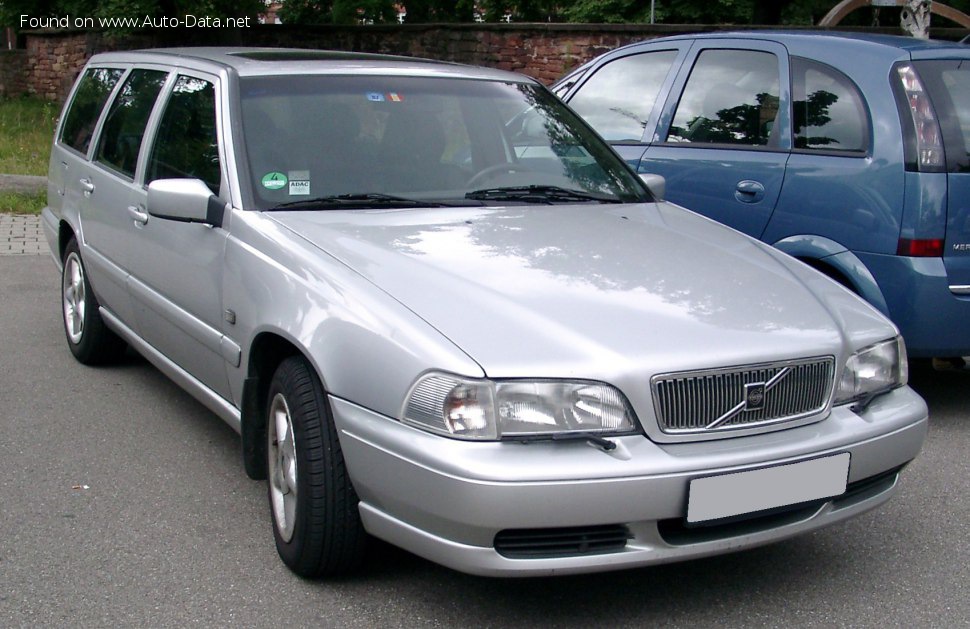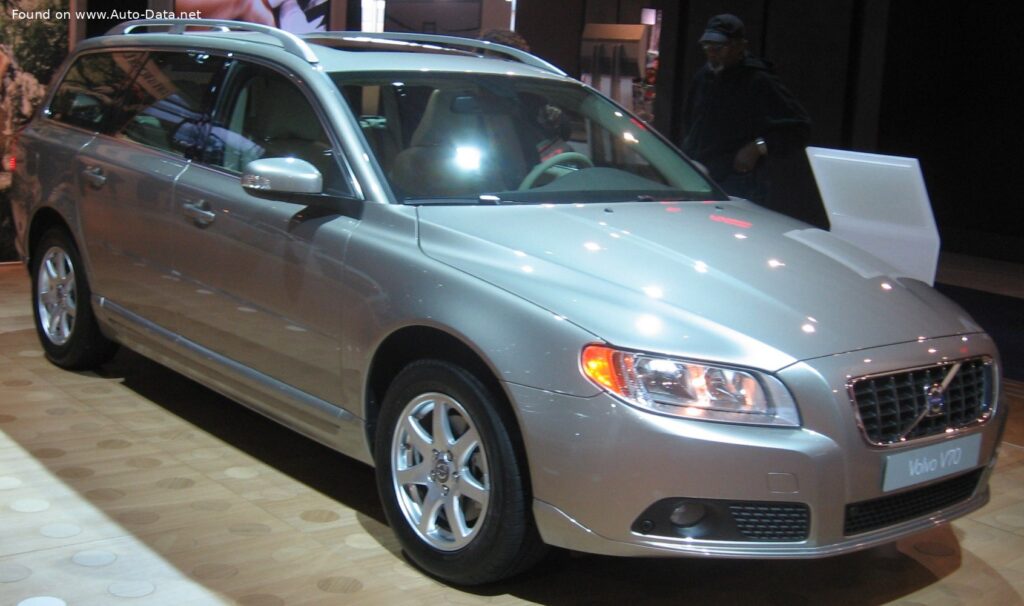
The Volvo V70 III 2.0 F (145 Hp) Ethanol Automatic is a station wagon that was produced between 2009 and 2010. Representing the third generation of the V70, this model was primarily sold in the European market, where Volvo’s wagons held a strong appeal. The V70 competed with other premium estate cars like the Audi A6 Avant, BMW 5 Series Touring, and Mercedes-Benz E-Class Estate, offering a blend of practicality, safety, and Scandinavian design. This particular variant is notable for its flexible-fuel capability, designed to run on both gasoline and E85 ethanol, reflecting a growing interest in alternative fuels during that period.
Volvo V70 III 2.0 F: Overview
The V70 III, launched in 2007, built upon the success of its predecessors, offering increased space, improved safety features, and a more refined driving experience. The 2.0 F model, powered by a 2.0-liter inline-four engine, was positioned as an entry-level option within the V70 range. While not the most powerful variant, it provided a good balance of fuel efficiency and adequate performance for everyday driving. The availability of E85 compatibility was a key selling point in markets with established ethanol infrastructure, allowing owners to reduce their carbon footprint and potentially lower fuel costs.
Engine & Performance
The Volvo V70 III 2.0 F is equipped with a 1.999-liter (121.99 cubic inches) inline-four cylinder engine, designated the B4204S4. This naturally aspirated engine produces 145 horsepower at 6000 rpm and 190 Nm (140.14 lb-ft) of torque at 4500 rpm. The engine’s power output translates to a power-to-liter ratio of 72.5 hp/l. Power is delivered to the front wheels via a six-speed automatic transmission. Acceleration from 0 to 100 km/h (0-62 mph) takes 11.6 seconds, while 0 to 60 mph is achieved in approximately 11 seconds. The vehicle has a maximum speed of 190 km/h (118.06 mph). The weight-to-power ratio is 12.5 kg/hp, and the weight-to-torque ratio is 9.5 kg/Nm. The engine is designed to operate on both gasoline and E85 ethanol, with fuel consumption figures varying depending on the fuel used. Combined fuel economy on gasoline is 8.8 l/100 km (26.7 US mpg), while on E85 it increases to 12.3 l/100 km.
Design & Features
The V70 III maintains Volvo’s traditional station wagon profile, characterized by a long roofline and a spacious cargo area. The vehicle’s exterior design is understated and elegant, reflecting Volvo’s focus on functional aesthetics. Inside, the V70 III offers a comfortable and well-appointed cabin with seating for five passengers. Key features include a spacious trunk with a minimum capacity of 575 liters (20.31 cubic feet), a 70-liter (18.49 US gallons) fuel tank, and a maximum roof load capacity of 100 kg (220.46 lbs). Safety was a paramount concern for Volvo, and the V70 III incorporates a range of active and passive safety systems, including ABS (Anti-lock Braking System). The vehicle’s dimensions are: length 4823 mm (189.88 in), width 1907 mm (75.08 in) with mirrors folded, height 1547 mm (60.91 in), and wheelbase 2816 mm (110.87 in). The drag coefficient is 0.31, contributing to aerodynamic efficiency.
Technical Specifications
| Brand | Volvo |
| Model | V70 |
| Generation | V70 III |
| Type (Engine) | 2.0 F (145 Hp) Ethanol Automatic |
| Start of production | 2009 |
| End of production | 2010 |
| Powertrain Architecture | Internal Combustion engine |
| Body type | Station wagon (estate) |
| Seats | 5 |
| Doors | 5 |
| Fuel consumption (economy) – combined | 8.8 l/100 km |
| Fuel consumption (economy) – combined (Ethanol – E85) | 12.3 l/100 km |
| CO2 emissions | 210 g/km |
| CO2 emissions (Ethanol – E85) | 202 g/km |
| Fuel Type | Petrol / Ethanol – E85 |
| Acceleration 0 – 100 km/h | 11.6 sec |
| Acceleration 0 – 62 mph | 11.6 sec |
| Acceleration 0 – 60 mph | 11 sec |
| Maximum speed | 190 km/h (118.06 mph) |
| Power | 145 Hp @ 6000 rpm |
| Power per litre | 72.5 Hp/l |
| Torque | 190 Nm @ 4500 rpm (140.14 lb.-ft. @ 4500 rpm) |
| Engine layout | Front, Transverse |
| Engine Model/Code | B4204S4 |
| Engine displacement | 1999 cm3 (121.99 cu. in.) |
| Number of cylinders | 4 |
| Engine configuration | Inline |
| Cylinder Bore | 87.5 mm (3.44 in.) |
| Piston Stroke | 83.1 mm (3.27 in.) |
| Compression ratio | 10.8:1 |
| Number of valves per cylinder | 4 |
| Engine oil capacity | 4.3 l (4.54 US qt | 3.78 UK qt) |
| Coolant | 7.55 l (7.98 US qt | 6.64 UK qt) |
| Kerb Weight | 1810 kg (3990.37 lbs.) |
| Max. weight | 2410 kg (5313.14 lbs.) |
| Max load | 600 kg (1322.77 lbs.) |
| Trunk (boot) space – minimum | 575 l (20.31 cu. ft.) |
| Fuel tank capacity | 70 l (18.49 US gal | 15.4 UK gal) |
| Max. roof load | 100 kg (220.46 lbs.) |
| Permitted trailer load with brakes (12%) | 1000 kg (2204.62 lbs.) |
| Permitted trailer load without brakes | 750 kg (1653.47 lbs.) |
| Length | 4823 mm (189.88 in.) |
| Width with mirrors folded | 1907 mm (75.08 in.) |
| Width including mirrors | 2106 mm (82.91 in.) |
| Height | 1547 mm (60.91 in.) |
| Wheelbase | 2816 mm (110.87 in.) |
| Front track | 1588 mm (62.52 in.) |
| Rear (Back) track | 1586 mm (62.44 in.) |
| Ride height (ground clearance) | 143 mm (5.63 in.) |
| Drag coefficient (Cd) | 0.31 |
| Minimum turning circle (turning diameter) | 11.7 m (38.39 ft.) |
| Drivetrain Architecture | Front wheel drive |
| Number of gears and type of gearbox | 6 gears, automatic transmission |
| Front suspension | Independent, type McPherson with coil spring and anti-roll bar |
| Rear suspension | Independent coil spring |
| Front brakes | Ventilated discs |
| Rear brakes | Disc |
| Assisting systems | ABS (Anti-lock braking system) |
| Steering type | Steering rack and pinion |
The Volvo V70 III 2.0 F Ethanol Automatic, while not a high-performance vehicle, offered a practical and versatile option for buyers seeking a comfortable, safe, and fuel-efficient station wagon. Its flexible-fuel capability and spacious interior made it a compelling choice in the European market.