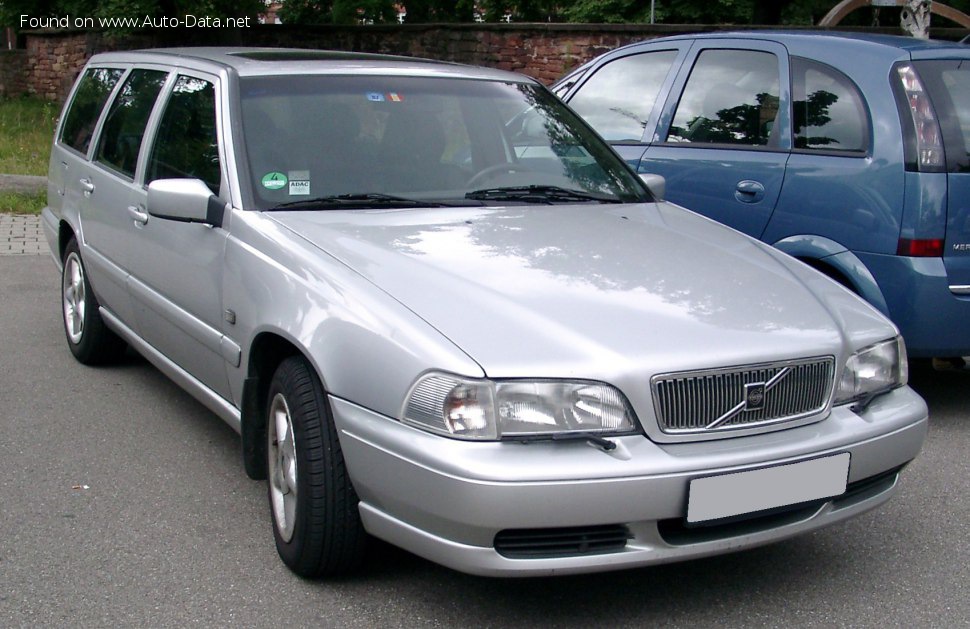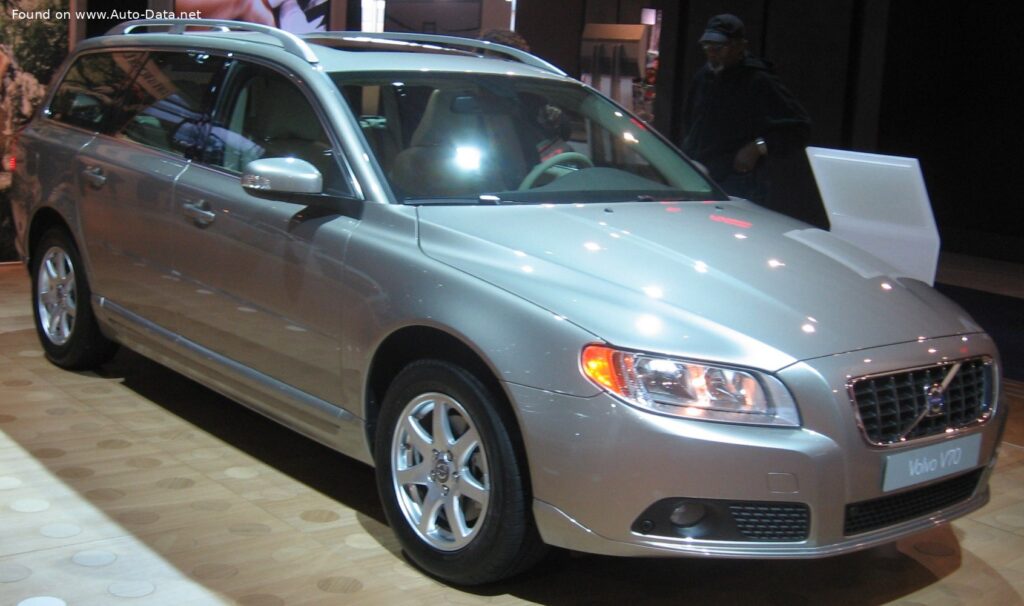
The Volvo V70 III 2.0 T, produced from 2010 to 2011, represents the third generation of Volvo’s popular station wagon, known as the V70. This model occupied the mid-size executive wagon segment, competing with vehicles like the Audi A6 Avant, BMW 5 Series Touring, and Mercedes-Benz E-Class Estate. While not officially sold in the United States during this generation, the V70 held a significant position in the European market as a practical and stylish alternative to more conventional sedans, offering a blend of comfort, safety, and cargo capacity. The 2.0 T designation indicates the engine powering this variant – a 2.0-liter turbocharged four-cylinder engine producing 203 horsepower.
Volvo V70 III 2.0 T: An Overview
The V70 III, built on Volvo’s P24 platform (shared with the S80), was a significant evolution of the V70 lineage. It focused on refining the blend of Scandinavian design, safety innovation, and driving dynamics that had become hallmarks of the Volvo brand. The 2.0 T model aimed to provide a balance between performance and fuel efficiency, appealing to buyers seeking a versatile family vehicle without sacrificing driving enjoyment. This generation saw advancements in interior technology and safety features, solidifying Volvo’s reputation as a leader in these areas.
Engine & Performance
The heart of the V70 III 2.0 T is the B4204T6, a 1.999-liter (121.99 cubic inches) inline four-cylinder engine. This engine utilizes direct fuel injection and a turbocharger with an intercooler to achieve a power output of 203 horsepower at 6000 rpm and 300 Newton-meters (221.27 lb-ft) of torque between 1740 and 4020 rpm. This configuration provides a broad torque curve, resulting in responsive acceleration and good mid-range performance. The engine boasts a compression ratio of 10:1 and a maximum engine speed of 6500 rpm. Acceleration from 0 to 100 km/h (0-62 mph) takes 8.3 seconds, while 0 to 60 mph is achieved in a calculated 7.9 seconds. The V70 III 2.0 T has a top speed of 230 km/h (142.92 mph). The weight-to-power ratio is 7.7 kg/Hp, and the weight-to-torque ratio is 5.2 kg/Nm, indicating a reasonably efficient powertrain.
Design & Features
The V70 III maintains Volvo’s classic station wagon profile – a long roofline extending from the windshield to the rear, maximizing cargo space. The body type is a five-door station wagon (estate) with seating for five passengers. The exterior design is characterized by clean lines and a sophisticated aesthetic, typical of Scandinavian design principles. Inside, the V70 III offers a comfortable and well-appointed cabin. Key features include a spacious interior, supportive seats, and a focus on user-friendly ergonomics. Safety was, as always, a paramount concern for Volvo. The V70 III 2.0 T is equipped with ABS (Anti-lock Braking System) as standard, and benefits from the robust structural design inherent in Volvo vehicles. The trunk offers a minimum capacity of 575 liters (20.31 cubic feet), expanding significantly with the rear seats folded down. The vehicle’s drag coefficient is 0.31, contributing to reasonable aerodynamic efficiency.
Technical Specifications
| Brand | Volvo |
| Model | V70 |
| Generation | V70 III |
| Type (Engine) | 2.0 T (203 Hp) |
| Start of production | 2010 |
| End of production | 2011 |
| Powertrain Architecture | Internal Combustion engine |
| Body type | Station wagon (estate) |
| Seats | 5 |
| Doors | 5 |
| Fuel consumption (combined) | 8.1 l/100 km |
| Fuel consumption (US mpg) | 29 US mpg |
| Fuel consumption (UK mpg) | 34.9 UK mpg |
| Fuel consumption (km/l) | 12.3 km/l |
| CO2 emissions | 189 g/km |
| Fuel Type | Petrol (Gasoline) |
| Acceleration 0 – 100 km/h | 8.3 sec |
| Acceleration 0 – 62 mph | 8.3 sec |
| Acceleration 0 – 60 mph | 7.9 sec |
| Maximum speed | 230 km/h (142.92 mph) |
| Power | 203 Hp @ 6000 rpm |
| Torque | 300 Nm @ 1740-4020 rpm (221.27 lb.-ft. @ 1740-4020 rpm) |
| Maximum engine speed | 6500 rpm |
| Engine layout | Front, Transverse |
| Engine Model/Code | B4204T6 |
| Engine displacement | 1999 cm3 (121.99 cu. in.) |
| Number of cylinders | 4 |
| Engine configuration | Inline |
| Cylinder Bore | 87.5 mm (3.44 in.) |
| Piston Stroke | 83.1 mm (3.27 in.) |
| Compression ratio | 10:1 |
| Number of valves per cylinder | 4 |
| Fuel injection system | Direct injection |
| Engine aspiration | Turbocharger, Intercooler |
| Valvetrain | DOHC |
| Engine oil capacity | 5.4 l (5.71 US qt | 4.75 UK qt) |
| Kerb Weight | 1567 kg (3454.64 lbs.) |
| Max. weight | 2180 kg (4806.08 lbs.) |
| Max load | 613 kg (1351.43 lbs.) |
| Trunk (boot) space – minimum | 575 l (20.31 cu. ft.) |
| Fuel tank capacity | 70 l (18.49 US gal | 15.4 UK gal) |
| Max. roof load | 100 kg (220.46 lbs.) |
| Permitted trailer load with brakes (12%) | 1800 kg (3968.32 lbs.) |
| Permitted trailer load without brakes | 750 kg (1653.47 lbs.) |
| Length | 4823 mm (189.88 in.) |
| Width with mirrors folded | 1907 mm (75.08 in.) |
| Width including mirrors | 2106 mm (82.91 in.) |
| Height | 1547 mm (60.91 in.) |
| Wheelbase | 2816 mm (110.87 in.) |
| Front track | 1588 mm (62.52 in.) |
| Rear (Back) track | 1586 mm (62.44 in.) |
| Ride height (ground clearance) | 151 mm (5.94 in.) |
| Drag coefficient (Cd) | 0.31 |
| Minimum turning circle (turning diameter) | 11.7 m (38.39 ft.) |
| Drivetrain Architecture | Front wheel drive |
| Number of gears and type of gearbox | 6 gears, manual transmission |
| Front suspension | Independent, type McPherson with coil spring and anti-roll bar |
| Rear suspension | Independent coil spring |
| Front brakes | Ventilated discs |
| Rear brakes | Disc |
The Volvo V70 III 2.0 T offered a compelling package for buyers seeking a practical, safe, and stylish station wagon. While not available in the US market, it remained a popular choice in Europe, embodying Volvo’s commitment to Scandinavian design and engineering excellence.