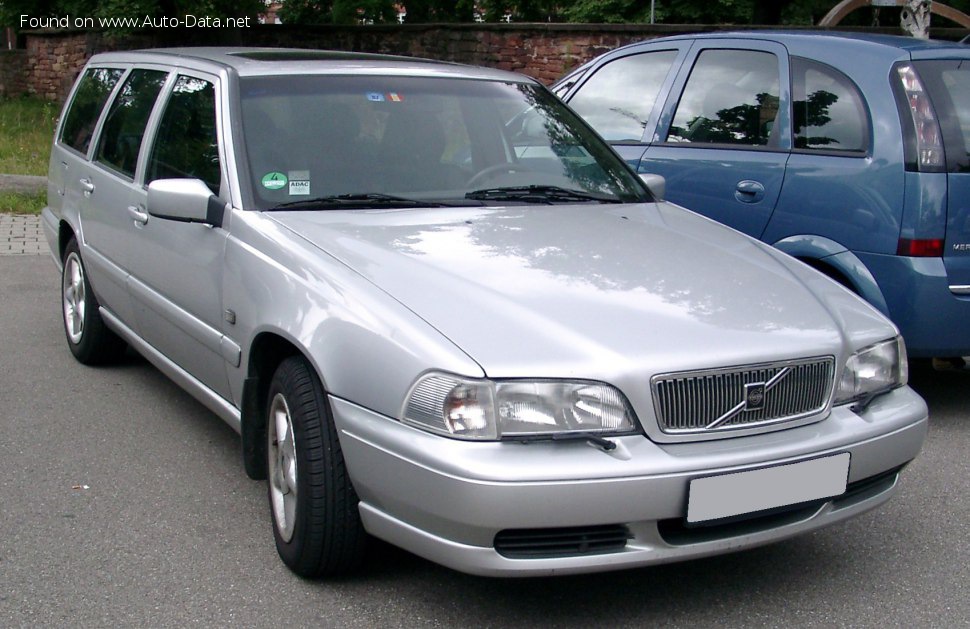
The Volvo V70 III, particularly the facelifted version introduced in 2013, represents the third generation of Volvo’s popular station wagon. Positioned within the mid-size executive car segment, the V70 aimed to combine practicality, safety, and Scandinavian design. This generation, produced from 2007 to 2016, saw significant updates in 2013, refining the exterior styling and enhancing the interior technology. The 2.0 D3 Automatic variant, powered by a five-cylinder diesel engine, was a common offering in European markets, prioritizing fuel efficiency and reasonable performance for everyday driving.
Volvo V70 III (2013 Facelift) 2.0 D3: An Overview
The V70 has long been a staple of the Volvo lineup, known for its spacious interior, comfortable ride, and reputation for safety. The third generation, and specifically the 2013 facelift, continued this tradition. While not officially sold in the United States, the V70 was a significant competitor in the European estate car market, appealing to families and individuals needing a versatile vehicle. The 2.0 D3 model offered a balance between running costs and usability, making it a popular choice for those covering long distances.
Engine & Performance
The heart of the 2013 Volvo V70 III 2.0 D3 is a 2.0-liter inline five-cylinder diesel engine, designated the D5204T7. This engine produces 136 horsepower at 3500 rpm and 350 Nm (258.15 lb.-ft.) of torque between 1500 and 2200 rpm. The engine features a turbocharger and intercooler to enhance performance and efficiency. Power is delivered to the front wheels via a six-speed automatic transmission. Acceleration from 0 to 100 km/h (0-62 mph) takes 10.6 seconds, while 0 to 60 mph is achieved in approximately 10.1 seconds. The V70 D3 has a maximum speed of 195 km/h (121.17 mph). The engine’s design prioritizes fuel economy, achieving a combined fuel consumption of 5.1 liters per 100 kilometers (46.1 US mpg or 55.4 UK mpg), with CO2 emissions of 134 g/km.
Design & Features
The Volvo V70 III is a five-door station wagon (estate) offering seating for five passengers. The 2013 facelift brought subtle but noticeable changes to the exterior, including a revised front grille, headlights, and bumper. These updates gave the V70 a more modern and sophisticated appearance. Inside, the V70 emphasizes comfort and practicality. The interior is characterized by its clean Scandinavian design, with high-quality materials and a focus on ergonomics. The trunk space is a key selling point, offering a minimum of 555 liters (19.6 cu. ft.) and expanding to 1580 liters (55.8 cu. ft.) with the rear seats folded down.
Safety is paramount in Volvo’s design philosophy, and the V70 III is no exception. It includes standard safety features such as ABS (Anti-lock Braking System), and a robust chassis designed to protect occupants in the event of a collision. While specific features vary depending on trim level and optional packages, the V70 typically includes features like stability control, multiple airbags, and advanced braking assistance systems. The vehicle’s dimensions are 4814 mm (189.53 in.) in length, 1907 mm (75.08 in.) in width, and 1547 mm (60.91 in.) in height, with a wheelbase of 2816 mm (110.87 in.).
Technical Specifications
| Brand | Volvo |
| Model | V70 |
| Generation | V70 III (facelift 2013) |
| Type (Engine) | 2.0 D3 (136 Hp) Automatic |
| Start of production | 2013 |
| End of production | 2016 |
| Powertrain Architecture | Internal Combustion engine |
| Body type | Station wagon (estate) |
| Seats | 5 |
| Doors | 5 |
| Fuel consumption (combined) | 5.1 l/100 km |
| Fuel consumption (US mpg) | 46.1 US mpg |
| Fuel consumption (UK mpg) | 55.4 UK mpg |
| CO2 emissions | 134 g/km |
| Fuel Type | Diesel |
| Acceleration 0 – 100 km/h | 10.6 sec |
| Acceleration 0 – 62 mph | 10.6 sec |
| Acceleration 0 – 60 mph | 10.1 sec |
| Maximum speed | 195 km/h (121.17 mph) |
| Power | 136 Hp @ 3500 rpm |
| Power per litre | 68.5 Hp/l |
| Torque | 350 Nm @ 1500-2200 rpm (258.15 lb.-ft. @ 1500-2200 rpm) |
| Engine layout | Front, Transverse |
| Engine Model/Code | D5204T7 |
| Engine displacement | 1984 cm3 (121.07 cu. in.) |
| Number of cylinders | 5 |
| Engine configuration | Inline |
| Cylinder Bore | 81 mm (3.19 in.) |
| Piston Stroke | 77 mm (3.03 in.) |
| Compression ratio | 16.5:1 |
| Number of valves per cylinder | 4 |
| Fuel injection system | Diesel Commonrail |
| Engine aspiration | Turbocharger, Intercooler |
| Valvetrain | DOHC |
| Engine oil capacity | 5.9 l (6.23 US qt | 5.19 UK qt) |
| Coolant | 8.9 l (9.4 US qt | 7.83 UK qt) |
| Trunk (boot) space – minimum | 555 l (19.6 cu. ft.) |
| Trunk (boot) space – maximum | 1580 l (55.8 cu. ft.) |
| Fuel tank capacity | 70 l (18.49 US gal | 15.4 UK gal) |
| Length | 4814 mm (189.53 in.) |
| Width | 1907 mm (75.08 in.) |
| Height | 1547 mm (60.91 in.) |
| Wheelbase | 2816 mm (110.87 in.) |
| Front track | 1588-1578 mm (62.52 – 62.13 in.) |
| Rear track | 1586-1576 mm (62.44 – 62.05 in.) |
| Ride height (ground clearance) | 151 mm (5.94 in.) |
| Minimum turning circle | 11.7 – 12.7 m (38.39 – 41.67 ft.) |
| Drivetrain Architecture | Front wheel drive |
| Number of gears and type of gearbox | 6 gears, automatic transmission |
| Front suspension | Independent, type McPherson with coil spring and anti-roll bar |
| Rear suspension | Independent coil spring |
| Front brakes | Ventilated discs |
| Rear brakes | Disc |
The Volvo V70 III 2.0 D3 (2013 facelift) remains a compelling option for those seeking a practical, safe, and fuel-efficient station wagon. While not available new in the US market, its enduring qualities and reputation for reliability continue to make it a desirable vehicle in the used car market, particularly in Europe.