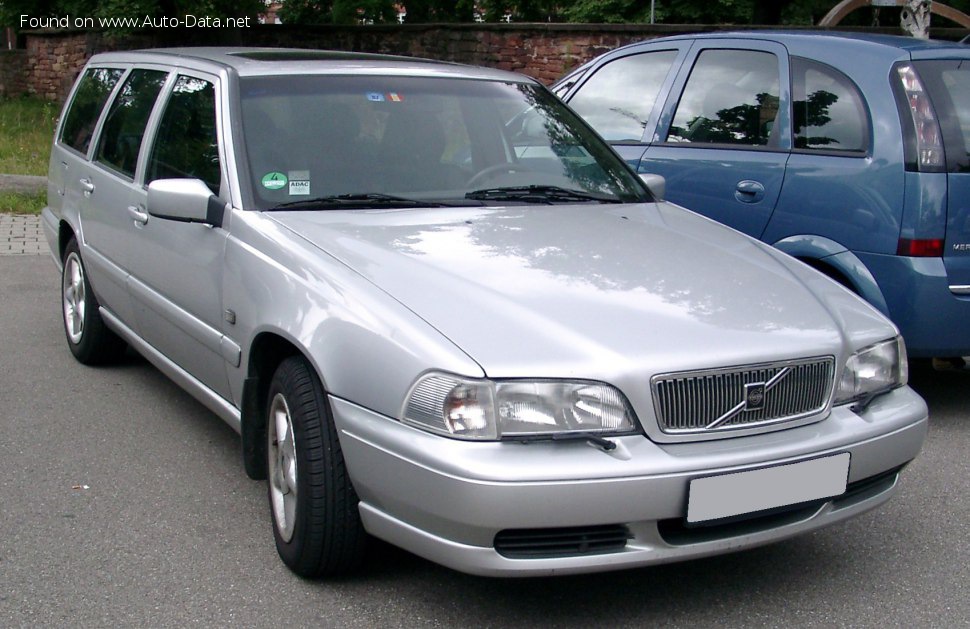
The Volvo V70 III, particularly the facelifted version introduced in 2013, represents the third generation of Volvo’s popular station wagon. Positioned within the mid-size executive car segment, the V70 aimed to combine practicality, safety, and Scandinavian design. While not officially sold in the United States during its production run (2007-2016), the V70 was a significant model in Europe, competing with vehicles like the Audi A6 Avant, BMW 5 Series Touring, and Mercedes-Benz E-Class Estate. The 2.0 D4 variant, powered by a 163 horsepower diesel engine, was a common offering, prioritizing fuel efficiency and reasonable performance for everyday use.
Volvo V70 III (2013-2016) 2.0 D4: An Overview
The facelifted V70 III, launched in 2013, brought subtle but important updates to the exterior and interior. These changes included revised front-end styling, updated interior trim, and enhancements to the infotainment system. The 2.0 D4 model specifically targeted buyers seeking a balance between running costs and usability. It was a popular choice for families and individuals needing a versatile vehicle for both commuting and longer journeys. The V70’s reputation for safety, a hallmark of the Volvo brand, remained a key selling point.
Engine & Performance
The heart of the V70 III 2.0 D4 is a 2.0-liter inline-five cylinder diesel engine, designated the D5204T3. This engine produces 163 horsepower at 3500 rpm and a substantial 400 Nm (295 lb-ft) of torque available between 1500 and 2800 rpm. This torque curve provides strong pulling power at lower engine speeds, making it well-suited for overtaking and carrying loads. The engine utilizes a turbocharger and intercooler to enhance performance and efficiency. Power is delivered to the front wheels via a six-speed manual transmission. Acceleration from 0 to 100 km/h (0-62 mph) takes 9.9 seconds, while 0-60 mph is achieved in approximately 9.4 seconds. The V70 2.0 D4 boasts a top speed of 210 km/h (130.49 mph). Fuel economy is a strong point, with a combined consumption of 4.5 liters per 100 kilometers (52.3 US mpg or 62.8 UK mpg), and CO2 emissions of 119 g/km.
Design & Features
The Volvo V70 III is a classic example of a European station wagon, emphasizing practicality and load-carrying capacity. Its body style is a five-door estate (wagon) with seating for five passengers. The design is characterized by clean lines and a relatively understated aesthetic, typical of Scandinavian design principles. The facelifted model features a more prominent Volvo grille and updated headlights. Inside, the V70 offers a spacious and comfortable cabin. The rear seats can be folded down to create a large, flat load area. Trunk space is generous, ranging from 555 liters (19.6 cu ft) with the rear seats up to 1580 liters (55.8 cu ft) with them folded. Standard features typically included climate control, power windows, and a basic audio system. Safety features, a Volvo priority, included ABS, traction control, and multiple airbags. Later models benefited from advancements in driver assistance systems, though these were often optional extras.
Technical Specifications
| Brand | Volvo |
| Model | V70 |
| Generation | V70 III (facelift 2013) |
| Type (Engine) | 2.0 D4 (163 Hp) |
| Start of production | 2013 |
| End of production | 2016 |
| Powertrain Architecture | Internal Combustion engine |
| Body type | Station wagon (estate) |
| Seats | 5 |
| Doors | 5 |
| Fuel consumption (combined) | 4.5 l/100 km (52.3 US mpg, 62.8 UK mpg, 22.2 km/l) |
| CO2 emissions | 119 g/km |
| Fuel Type | Diesel |
| Acceleration 0 – 100 km/h | 9.9 sec |
| Acceleration 0 – 62 mph | 9.9 sec |
| Acceleration 0 – 60 mph | 9.4 sec |
| Maximum speed | 210 km/h (130.49 mph) |
| Power | 163 Hp @ 3500 rpm |
| Power per litre | 82.2 Hp/l |
| Torque | 400 Nm @ 1500-2800 rpm (295.02 lb.-ft. @ 1500-2800 rpm) |
| Engine layout | Front, Transverse |
| Engine Model/Code | D5204T3 |
| Engine displacement | 1984 cm3 (121.07 cu. in.) |
| Number of cylinders | 5 |
| Engine configuration | Inline |
| Cylinder Bore | 81 mm (3.19 in.) |
| Piston Stroke | 77 mm (3.03 in.) |
| Compression ratio | 16.5:1 |
| Number of valves per cylinder | 4 |
| Fuel injection system | Diesel Commonrail |
| Engine aspiration | Turbocharger, Intercooler |
| Valvetrain | DOHC |
| Engine oil capacity | 5.9 l (6.23 US qt | 5.19 UK qt) |
| Coolant | 8.9 l (9.4 US qt | 7.83 UK qt) |
| Trunk (boot) space – minimum | 555 l (19.6 cu. ft.) |
| Trunk (boot) space – maximum | 1580 l (55.8 cu. ft.) |
| Fuel tank capacity | 70 l (18.49 US gal | 15.4 UK gal) |
| Length | 4814 mm (189.53 in.) |
| Width | 1907 mm (75.08 in.) |
| Height | 1547 mm (60.91 in.) |
| Wheelbase | 2816 mm (110.87 in.) |
| Front track | 1588-1578 mm (62.52 – 62.13 in.) |
| Rear track | 1586-1576 mm (62.44 – 62.05 in.) |
| Ride height (ground clearance) | 151 mm (5.94 in.) |
| Minimum turning circle | 11.7 – 12.7 m (38.39 – 41.67 ft.) |
| Drivetrain Architecture | Front wheel drive |
| Number of gears and type of gearbox | 6 gears, manual transmission |
| Front suspension | Independent, type McPherson with coil spring and anti-roll bar |
| Rear suspension | Independent coil spring |
| Front brakes | Ventilated discs |
| Rear brakes | Disc |
| Assisting systems | ABS (Anti-lock braking system) |
| Steering type | Steering rack and pinion |
The Volvo V70 III 2.0 D4 (2013-2016) remains a compelling option in the used car market, particularly for those prioritizing practicality, fuel efficiency, and safety. Its blend of Scandinavian design and robust engineering ensures a comfortable and reliable driving experience.