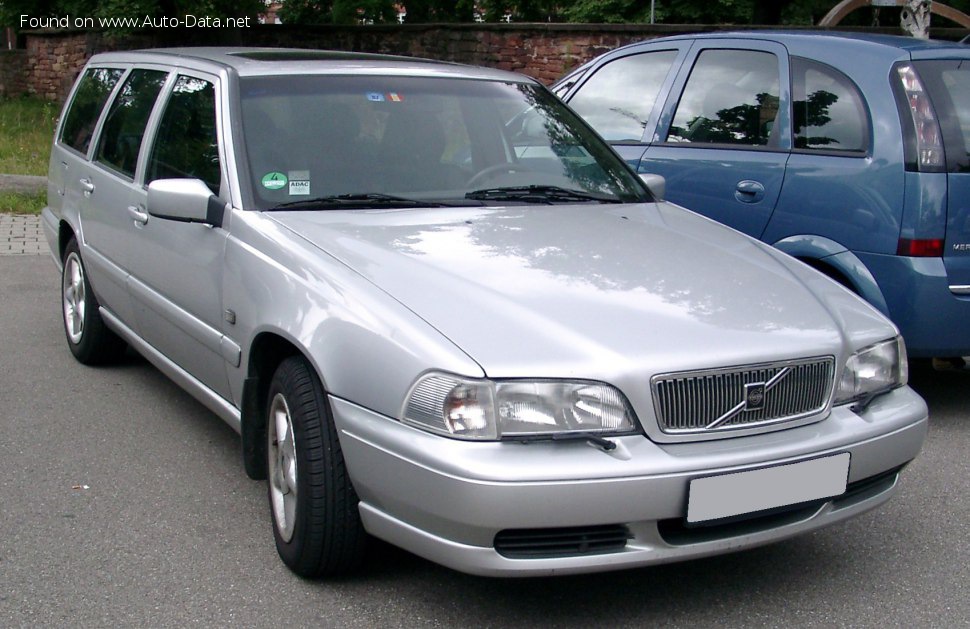
The Volvo V70 III, particularly the facelifted version introduced in 2013, represents the third generation of Volvo’s popular station wagon. Positioned within the mid-size executive car segment, the V70 aimed to blend practicality, safety, and Scandinavian design. While not officially sold in the United States during this generation, the V70 was a significant model in Europe, competing with vehicles like the Audi A6 Avant, BMW 5 Series Touring, and Mercedes-Benz E-Class Estate. The 2.0 D4 Automatic variant, producing 181 horsepower, was a common offering, focusing on fuel efficiency and reasonable performance for everyday driving.
Volvo V70 III (2013-2016) 2.0 D4: An Overview
The V70 III, produced from 2007 to 2016, underwent a substantial facelift in 2013, bringing updated styling, improved technology, and refined engine options. The 2.0 D4 model, powered by a four-cylinder diesel engine, was a key component of the lineup, appealing to buyers prioritizing fuel economy and lower running costs. This version combined a relatively compact engine with Volvo’s commitment to safety and comfort, making it a popular choice for families and long-distance travelers in Europe.
Engine & Performance
The heart of the 2013-2016 Volvo V70 III 2.0 D4 is a 1.969-liter (120.16 cubic inches) inline-four cylinder diesel engine, designated the D4204T5. This engine produces 181 horsepower at 4250 rpm and a substantial 400 Nm (295.02 lb.-ft.) of torque between 1800 and 2500 rpm. The engine features a turbocharger and intercooler to enhance performance and efficiency. Power is delivered to the front wheels via an eight-speed automatic transmission. This combination allows for a 0-100 km/h (0-62 mph) acceleration time of 8.6 seconds, and a 0-60 mph time of approximately 8.2 seconds. The V70 D4 achieves a maximum speed of 220 km/h (136.7 mph). Fuel economy is a strong point, with a combined consumption of 4.5 liters per 100 kilometers (52.3 US mpg or 62.8 UK mpg), and CO2 emissions of 119 g/km.
Design & Features
The Volvo V70 III is a five-door, five-seat station wagon (estate). The 2013 facelift brought a revised front fascia with a new grille, headlights, and bumper, along with updated interior trim and technology. The V70’s design emphasizes clean lines and a practical, yet elegant aesthetic. Inside, the focus is on comfort and functionality. The interior offers a spacious cabin with comfortable seating and a well-designed dashboard. Key features include a user-friendly infotainment system, climate control, and a range of safety technologies. The V70’s cargo area is particularly noteworthy, offering a minimum of 555 liters (19.6 cubic feet) of space with the rear seats up, expanding to a generous 1580 liters (55.8 cubic feet) with the seats folded down. Safety was, and remains, a core Volvo value. The V70 III incorporates a comprehensive suite of safety features, including ABS (Anti-lock Braking System), and a robust chassis designed to protect occupants in the event of a collision.
Technology and Efficiency
The 2013 facelift brought improvements to the V70’s technology, including enhancements to the infotainment system and the introduction of driver assistance features. The diesel commonrail fuel injection system and the turbocharger contribute to the engine’s efficiency and performance. The eight-speed automatic transmission helps optimize fuel consumption and provides smooth gear changes. The V70’s suspension system, featuring independent McPherson struts at the front and independent coil springs at the rear, provides a comfortable ride and good handling characteristics.
Technical Specifications
| Brand | Volvo |
| Model | V70 |
| Generation | V70 III (facelift 2013) |
| Type (Engine) | 2.0 D4 (181 Hp) Automatic |
| Start of production | 2013 |
| End of production | 2016 |
| Powertrain Architecture | Internal Combustion engine |
| Body type | Station wagon (estate) |
| Seats | 5 |
| Doors | 5 |
| Fuel consumption (combined) | 4.5 l/100 km |
| Fuel consumption (US mpg) | 52.3 US mpg |
| Fuel consumption (UK mpg) | 62.8 UK mpg |
| Fuel consumption (km/l) | 22.2 km/l |
| CO2 emissions | 119 g/km |
| Fuel Type | Diesel |
| Acceleration 0 – 100 km/h | 8.6 sec |
| Acceleration 0 – 62 mph | 8.6 sec |
| Acceleration 0 – 60 mph | 8.2 sec |
| Maximum speed | 220 km/h (136.7 mph) |
| Power | 181 Hp @ 4250 rpm |
| Power per litre | 91.9 Hp/l |
| Torque | 400 Nm @ 1800-2500 rpm (295.02 lb.-ft. @ 1800-2500 rpm) |
| Engine layout | Front, Transverse |
| Engine Model/Code | D4204T5 |
| Engine displacement | 1969 cm3 (120.16 cu. in.) |
| Number of cylinders | 4 |
| Engine configuration | Inline |
| Cylinder Bore | 82 mm (3.23 in.) |
| Piston Stroke | 93.2 mm (3.67 in.) |
| Compression ratio | 15.8:1 |
| Number of valves per cylinder | 4 |
| Fuel injection system | Diesel Commonrail |
| Engine aspiration | Turbocharger, Intercooler |
| Valvetrain | DOHC |
| Engine oil capacity | 5.2 l (5.49 US qt | 4.58 UK qt) |
| Trunk (boot) space – minimum | 555 l (19.6 cu. ft.) |
| Trunk (boot) space – maximum | 1580 l (55.8 cu. ft.) |
| Fuel tank capacity | 70 l (18.49 US gal | 15.4 UK gal) |
| Length | 4814 mm (189.53 in.) |
| Width | 1907 mm (75.08 in.) |
| Height | 1547 mm (60.91 in.) |
| Wheelbase | 2816 mm (110.87 in.) |
| Front track | 1588-1578 mm (62.52 – 62.13 in.) |
| Rear track | 1586-1576 mm (62.44 – 62.05 in.) |
| Ride height (ground clearance) | 151 mm (5.94 in.) |
| Minimum turning circle | 11.7 – 12.7 m (38.39 – 41.67 ft.) |
| Drivetrain Architecture | Front wheel drive |
| Number of gears | 8 |
| Type of gearbox | automatic transmission |
| Front suspension | Independent, type McPherson with coil spring and anti-roll bar |
| Rear suspension | Independent coil spring |
| Front brakes | Ventilated discs |
| Rear brakes | Disc |