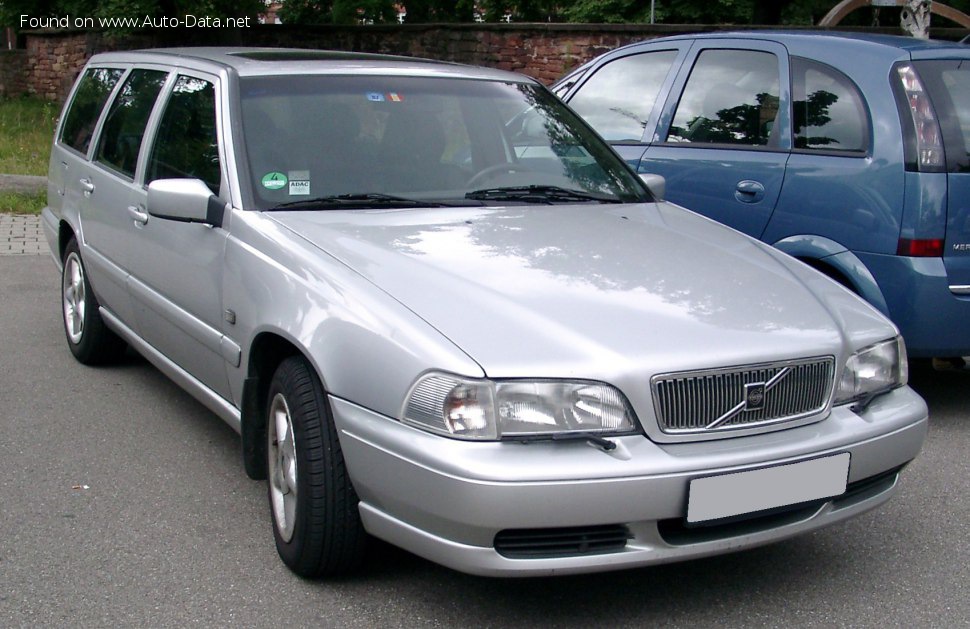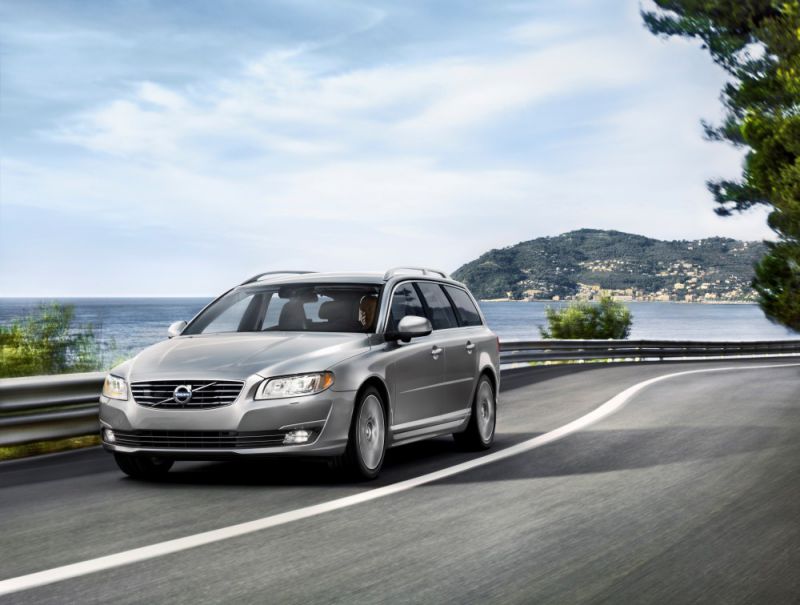
The Volvo V70 III, particularly the facelifted version introduced in 2013, represents the third generation of Volvo’s popular station wagon. Positioned within the mid-size executive car segment, the V70 aimed to combine practicality, safety, and Scandinavian design. While not officially sold in the United States during this generation, the V70 was a significant model in Europe, competing with vehicles like the Audi A6 Avant, BMW 5 Series Touring, and Mercedes-Benz E-Class Estate. The 2.4 D5 variant, producing 215 horsepower, was a common engine choice, offering a balance of performance and fuel efficiency.
Volvo V70 III (2013-2016) 2.4 D5: An Overview
The V70 III, produced from 2007 to 2016, underwent a substantial facelift in 2013, bringing updated styling, improved technology, and refined engine options. This facelift included changes to the front fascia, headlights, and interior trim. The 2.4 D5 engine, a mainstay of the Volvo lineup, was further optimized for improved fuel economy and reduced emissions. The V70’s core appeal lay in its spacious interior, large cargo capacity, and reputation for safety – hallmarks of the Volvo brand.
Engine & Performance
The 2013-2016 Volvo V70 2.4 D5 is powered by a 2.4-liter inline-five cylinder diesel engine, designated the D5244T11. This engine produces 215 horsepower at 4000 rpm and a substantial 420 Nm (309.78 lb.-ft.) of torque available between 1500 and 3200 rpm. This broad torque curve provides strong acceleration and effortless cruising. The engine features a turbocharger and intercooler to enhance performance, along with a diesel commonrail fuel injection system for efficient combustion. Acceleration from 0 to 100 km/h (0-62 mph) takes 7.8 seconds, while 0-60 mph is achieved in approximately 7.4 seconds. The V70 2.4 D5 boasts a maximum speed of 225 km/h (139.81 mph). Fuel consumption is rated at 4.8 liters per 100 kilometers (49 US mpg / 58.9 UK mpg), and CO2 emissions are 126 g/km, making it a relatively efficient option for a vehicle of its size and capability.
Design & Features
The Volvo V70 III is a five-door, five-seat station wagon (estate). Its design emphasizes practicality and understated elegance, typical of Scandinavian aesthetics. The long roofline maximizes cargo space, while the clean lines and minimalist detailing contribute to a sophisticated appearance. The 2013 facelift brought a more modern front end with redesigned headlights and a revised grille. Inside, the V70 offers a comfortable and spacious cabin with high-quality materials. Key features include a user-friendly infotainment system, comfortable seating, and a focus on safety. Volvo was renowned for its safety innovations, and the V70 III incorporates features like ABS (Anti-lock Braking System), side impact protection, and a robust chassis structure. The trunk offers a minimum of 555 liters (19.6 cu. ft.) of space, expanding to 1580 liters (55.8 cu. ft.) with the rear seats folded down. The vehicle’s dimensions are 4814 mm (189.53 in.) in length, 1907 mm (75.08 in.) in width, and 1547 mm (60.91 in.) in height.
Safety and Technology
The V70 III, and particularly the 2013 facelift, benefited from Volvo’s ongoing commitment to safety technology. Beyond the standard ABS, the vehicle incorporated advanced stability control systems and a reinforced body structure designed to absorb impact energy. While not featuring the latest autonomous driving features found in modern vehicles, the V70 offered a comprehensive suite of safety equipment for its time. The interior was designed with driver comfort and ergonomics in mind, featuring intuitive controls and a clear instrument panel. The infotainment system, while not as advanced as contemporary systems, provided access to navigation, audio, and vehicle information.
Technical Specifications
| Brand | Volvo |
| Model | V70 |
| Generation | V70 III (facelift 2013) |
| Type (Engine) | 2.4 D5 (215 Hp) |
| Start of production | 2013 |
| End of production | 2016 |
| Powertrain Architecture | Internal Combustion engine |
| Body type | Station wagon (estate) |
| Seats | 5 |
| Doors | 5 |
| Fuel consumption (combined) | 4.8 l/100 km |
| Fuel consumption (US mpg) | 49 US mpg |
| Fuel consumption (UK mpg) | 58.9 UK mpg |
| CO2 emissions | 126 g/km |
| Fuel Type | Diesel |
| Acceleration 0 – 100 km/h | 7.8 sec |
| Acceleration 0 – 62 mph | 7.8 sec |
| Acceleration 0 – 60 mph | 7.4 sec |
| Maximum speed | 225 km/h (139.81 mph) |
| Power | 215 Hp @ 4000 rpm |
| Power per litre | 89.6 Hp/l |
| Torque | 420 Nm @ 1500-3200 rpm (309.78 lb.-ft. @ 1500-3200 rpm) |
| Engine layout | Front, Transverse |
| Engine Model/Code | D5244T11 |
| Engine displacement | 2400 cm3 (146.46 cu. in.) |
| Number of cylinders | 5 |
| Engine configuration | Inline |
| Cylinder Bore | 81 mm (3.19 in.) |
| Piston Stroke | 93.15 mm (3.67 in.) |
| Compression ratio | 16.5:1 |
| Number of valves per cylinder | 4 |
| Fuel injection system | Diesel Commonrail |
| Engine aspiration | Turbocharger, Intercooler |
| Valvetrain | DOHC |
| Engine oil capacity | 5.9 l (6.23 US qt | 5.19 UK qt) |
| Coolant | 8.9 l (9.4 US qt | 7.83 UK qt) |
| Trunk (boot) space – minimum | 555 l (19.6 cu. ft.) |
| Trunk (boot) space – maximum | 1580 l (55.8 cu. ft.) |
| Fuel tank capacity | 70 l (18.49 US gal | 15.4 UK gal) |
| Length | 4814 mm (189.53 in.) |
| Width | 1907 mm (75.08 in.) |
| Height | 1547 mm (60.91 in.) |
| Wheelbase | 2816 mm (110.87 in.) |
| Front track | 1588-1578 mm (62.52 – 62.13 in.) |
| Rear track | 1586-1576 mm (62.44 – 62.05 in.) |
| Ride height (ground clearance) | 151 mm (5.94 in.) |
| Minimum turning circle | 11.7 – 12.7 m (38.39 – 41.67 ft.) |
| Drivetrain | Front wheel drive |
| Number of gears | 6 gears, manual transmission |
| Front suspension | Independent, type McPherson with coil spring and anti-roll bar |
| Rear suspension | Independent coil spring |
| Front brakes | Ventilated discs |
| Rear brakes | Disc |