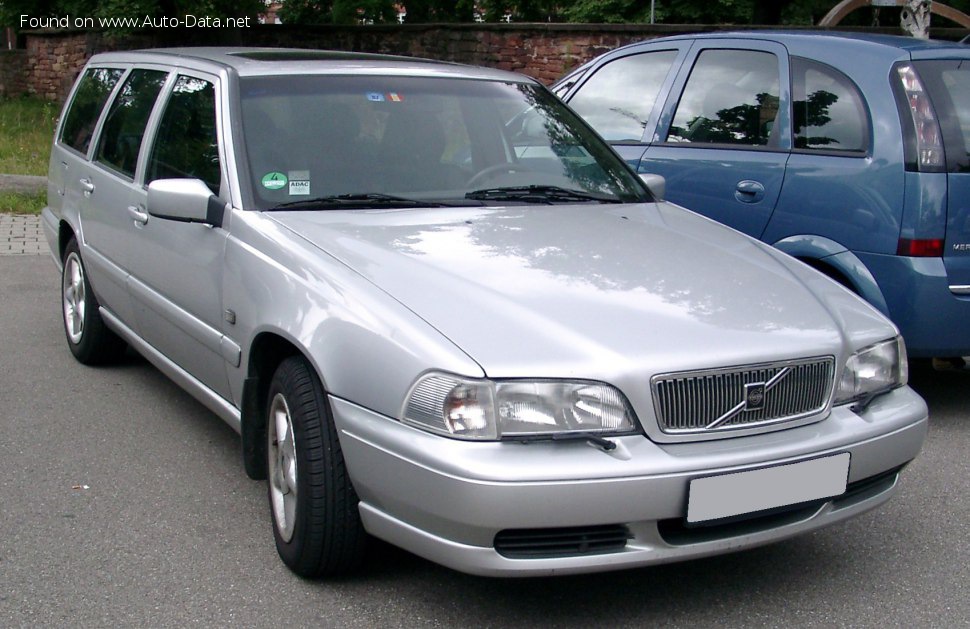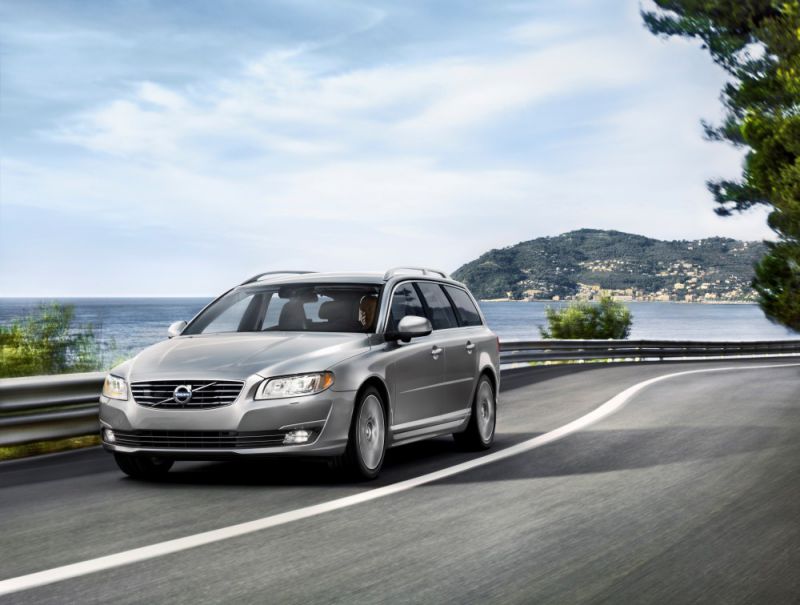
The Volvo V70 III, particularly the facelifted version introduced in 2013, represents the third generation of Volvo’s popular station wagon. Positioned within the mid-size executive car segment, the V70 aimed to blend practicality, safety, and Scandinavian design. This generation, produced from 2007 to 2016, saw significant updates in 2013, refining the exterior styling and enhancing the interior technology. The 2.4 D5 Automatic model, generating 215 horsepower, was a common offering in European markets, prized for its fuel efficiency and comfortable driving experience. While not officially sold in the United States, the V70 held a strong position as a premium wagon alternative to more mainstream offerings in Europe.
Volvo V70 III (2013 Facelift) 2.4 D5: A Detailed Overview
The V70 III facelift built upon the strengths of its predecessor, focusing on improving the overall driving experience and modernizing the vehicle’s aesthetics. The 2013 refresh included revised front-end styling, updated interior materials, and enhanced safety features. The 2.4 D5 engine, a mainstay of Volvo’s diesel lineup, provided a balance of performance and economy, making it a popular choice for long-distance travel and everyday use. The automatic transmission further enhanced the vehicle’s usability, particularly in urban environments.
Engine & Performance
The heart of the 2013 Volvo V70 III 2.4 D5 is a 2.4-liter inline-five cylinder diesel engine, designated the D5244T15. This engine produces 215 horsepower at 4000 rpm and a substantial 440 Nm (324.53 lb.-ft.) of torque between 1500 and 3000 rpm. The turbocharger and intercooler work in concert to deliver responsive performance across a broad rev range. The engine’s transverse mounting and front-wheel-drive configuration contribute to efficient packaging and balanced handling. Acceleration from 0 to 100 km/h (0-62 mph) takes approximately 8 seconds, while the 0-60 mph sprint is achieved in 7.6 seconds. The V70 III 2.4 D5 boasts a maximum speed of 220 km/h (136.7 mph). Fuel economy is a strong point, achieving a combined consumption of 6.2 liters per 100 kilometers (37.9 US mpg), with CO2 emissions of 164 g/km.
Design & Features
The Volvo V70 III is a five-door station wagon (estate) designed with a focus on practicality and Scandinavian aesthetics. Its long roofline and generous cargo area provide ample space for passengers and luggage. The 2013 facelift brought subtle but noticeable changes to the exterior, including a redesigned grille, headlights, and taillights. Inside, the V70 III offers a comfortable and well-appointed cabin with seating for five. Key features include a spacious trunk with a minimum capacity of 555 liters (19.6 cu. ft.) expanding to 1580 liters (55.8 cu. ft.) with the rear seats folded down. Volvo’s commitment to safety is evident in the V70 III, which incorporates features like ABS (Anti-lock Braking System) and a robust chassis design. The vehicle’s McPherson strut front suspension and independent coil spring rear suspension contribute to a comfortable ride and predictable handling. The steering utilizes a rack and pinion system for precise control.
Safety and Technology
Volvo has long been synonymous with safety, and the V70 III is no exception. While specific safety features varied depending on the trim level and market, the 2013 facelift incorporated advancements in driver assistance systems. The V70 III’s structure is designed to absorb and distribute impact forces, protecting occupants in the event of a collision. Beyond safety, the V70 III offered a range of convenience features, including a modern infotainment system (for its time), climate control, and comfortable seating. The automatic transmission, coupled with the diesel engine’s torque, made the V70 III a relaxed and easy vehicle to drive on long journeys.
Technical Specifications
| Brand | Volvo |
| Model | V70 |
| Generation | V70 III (facelift 2013) |
| Type (Engine) | 2.4 D5 (215 Hp) Automatic |
| Start of production | 2013 |
| End of production | 2016 |
| Powertrain Architecture | Internal Combustion engine |
| Body type | Station wagon (estate) |
| Seats | 5 |
| Doors | 5 |
| Fuel consumption (combined) | 6.2 l/100 km |
| Fuel consumption (US mpg) | 37.9 US mpg |
| Fuel consumption (UK mpg) | 45.6 UK mpg |
| Fuel consumption (km/l) | 16.1 km/l |
| CO2 emissions | 164 g/km |
| Fuel Type | Diesel |
| Acceleration 0 – 100 km/h | 8 sec |
| Acceleration 0 – 62 mph | 8 sec |
| Acceleration 0 – 60 mph | 7.6 sec |
| Maximum speed | 220 km/h (136.7 mph) |
| Power | 215 Hp @ 4000 rpm |
| Power per litre | 89.6 Hp/l |
| Torque | 440 Nm @ 1500-3000 rpm (324.53 lb.-ft. @ 1500-3000 rpm) |
| Engine layout | Front, Transverse |
| Engine Model/Code | D5244T15 |
| Engine displacement | 2400 cm3 (146.46 cu. in.) |
| Number of cylinders | 5 |
| Engine configuration | Inline |
| Cylinder Bore | 81 mm (3.19 in.) |
| Piston Stroke | 93.15 mm (3.67 in.) |
| Compression ratio | 16.5:1 |
| Number of valves per cylinder | 4 |
| Fuel injection system | Diesel Commonrail |
| Engine aspiration | Turbocharger, Intercooler |
| Valvetrain | DOHC |
| Engine oil capacity | 5.9 l (6.23 US qt | 5.19 UK qt) |
| Coolant | 8.9 l (9.4 US qt | 7.83 UK qt) |
| Trunk (boot) space – minimum | 555 l (19.6 cu. ft.) |
| Trunk (boot) space – maximum | 1580 l (55.8 cu. ft.) |
| Fuel tank capacity | 70 l (18.49 US gal | 15.4 UK gal) |
| Length | 4814 mm (189.53 in.) |
| Width | 1907 mm (75.08 in.) |
| Height | 1547 mm (60.91 in.) |
| Wheelbase | 2816 mm (110.87 in.) |
| Front track | 1588-1578 mm (62.52 – 62.13 in.) |
| Rear track | 1586-1576 mm (62.44 – 62.05 in.) |
| Ride height (ground clearance) | 151 mm (5.94 in.) |
| Minimum turning circle | 11.7 – 12.7 m (38.39 – 41.67 ft.) |
| Drivetrain Architecture | Front wheel drive |
| Number of gears | 6 |
| Gearbox type | Automatic transmission |
| Front suspension | Independent, McPherson with coil spring and anti-roll bar |
| Rear suspension | Independent coil spring |
| Front brakes | Ventilated discs |
| Rear brakes | Disc |