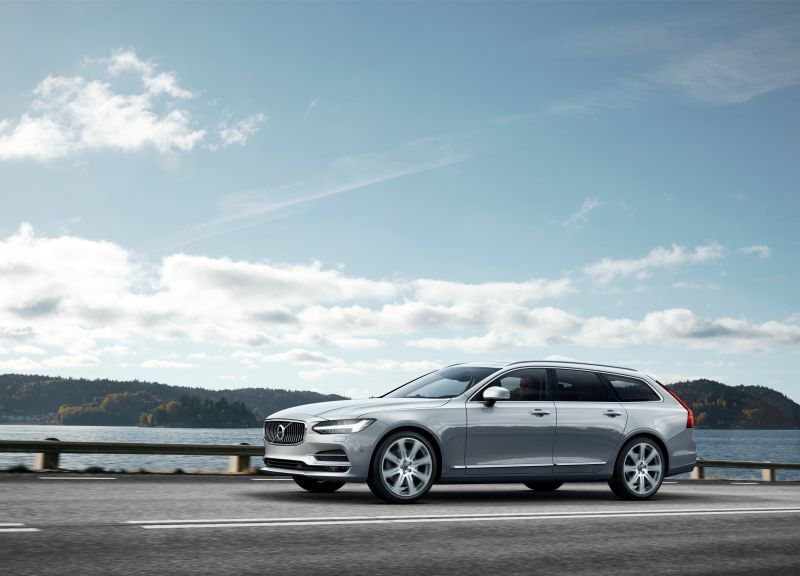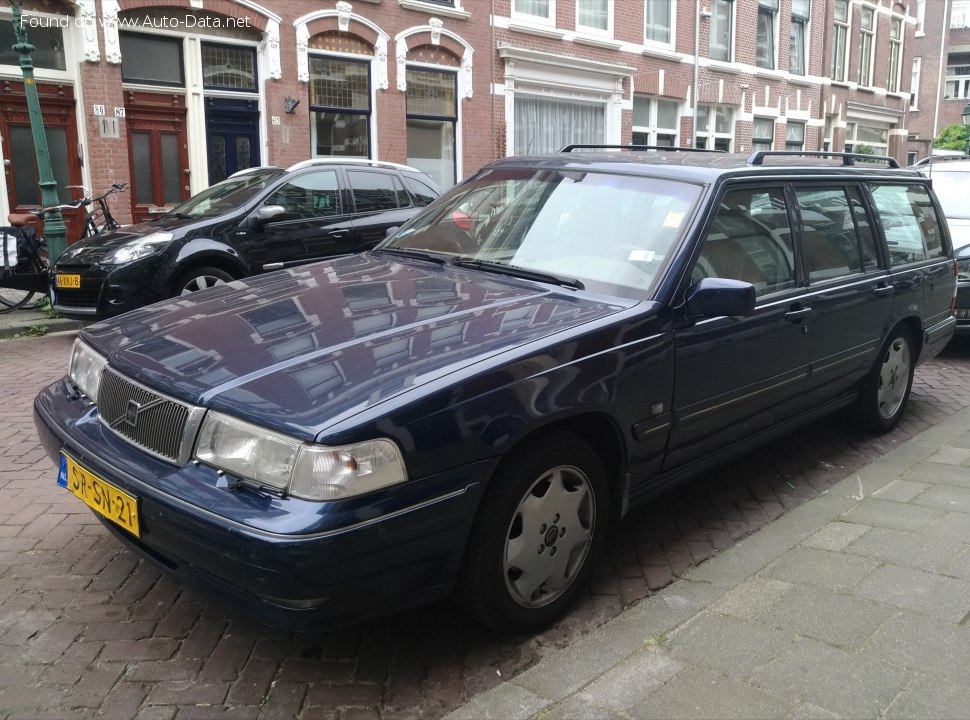
The Volvo V90 3.0 24V, produced between 1997 and 1998, represents a refined iteration of Volvo’s long-running estate car tradition. Positioned as a premium station wagon, the V90 aimed to combine practicality with Scandinavian luxury and safety. While not officially sold in the United States during its production run, the V90 was a popular choice in Europe as a versatile family vehicle, offering a compelling alternative to more mainstream offerings. It served as a flagship model, showcasing Volvo’s engineering prowess and commitment to passenger comfort. This generation of the V90 built upon the foundations laid by its predecessors, offering improved performance and a more sophisticated interior.
Volvo V90 3.0 24V: An Overview
The V90 3.0 24V falls into the executive station wagon segment, competing with vehicles like the Audi A6 Avant and BMW 5 Series Touring. Its key appeal lay in its spacious interior, robust build quality, and focus on safety – hallmarks of the Volvo brand. The “24V” designation refers to the engine’s 24-valve cylinder head, a feature that contributed to its improved power output compared to earlier Volvo models. The V90 was designed to appeal to buyers who needed a practical vehicle but weren’t willing to compromise on style or driving experience.
Engine & Performance
The heart of the V90 3.0 24V is a naturally aspirated 3.0-liter inline-six cylinder engine, designated the B6304S1. This engine produces 204 horsepower at 6000 rpm and 267 Nm (196.93 lb.-ft.) of torque at 4300 rpm. The engine’s configuration results in a power-to-liter ratio of 69.8 hp/l. Power is delivered to the rear wheels via a four-speed automatic transmission. Acceleration from 0 to 100 km/h (0-62 mph) takes 9.3 seconds, while 0 to 60 mph is achieved in a calculated 8.8 seconds. The V90 3.0 24V boasts a top speed of 210 km/h (130.49 mph). The weight-to-power ratio is 8.4 kg/Hp, and the weight-to-torque ratio is 6.4 kg/Nm, indicating a reasonably balanced performance profile for its time. Fuel consumption, as measured by the NEDC standard, is 16.5 l/100 km (14.3 US mpg, 17.1 UK mpg) in urban conditions, 8.4 l/100 km (28 US mpg, 33.6 UK mpg) extra-urban, and 11.4 l/100 km (20.6 US mpg, 24.8 UK mpg) combined.
Design & Features
The Volvo V90 3.0 24V is a five-door, five-seat station wagon (estate). Its exterior design is characterized by clean lines and a classic Volvo aesthetic. The body measures 4861 mm (191.38 in) in length, 1750 mm (68.9 in) in width, and 1450 mm (57.09 in) in height, with a wheelbase of 2770 mm (109.06 in). The V90 offers a substantial amount of cargo space, ranging from a minimum of 602 liters (21.26 cu. ft.) to a maximum of 1702 liters (60.11 cu. ft.) with the rear seats folded down. Safety features, a Volvo hallmark, include an Anti-lock Braking System (ABS). The vehicle’s kerb weight is 1707 kg (3763.29 lbs), with a maximum permissible weight of 2100 kg (4629.71 lbs). The interior is designed with comfort and practicality in mind, featuring supportive seats and a well-appointed dashboard. The steering utilizes a rack and pinion system, and the vehicle rides on 15-inch wheels with 195/65 R15 tires.
Technical Specifications
| Brand | Volvo |
| Model | V90 |
| Generation | V90 |
| Type (Engine) | 3.0 24V (204 Hp) |
| Start of production | 1997 |
| End of production | 1998 |
| Powertrain Architecture | Internal Combustion engine |
| Body type | Station wagon (estate) |
| Seats | 5 |
| Doors | 5 |
| Fuel consumption (economy) – urban (NEDC) | 16.5 l/100 km (14.3 US mpg, 17.1 UK mpg) |
| Fuel consumption (economy) – extra urban (NEDC) | 8.4 l/100 km (28 US mpg, 33.6 UK mpg) |
| Fuel consumption (economy) – combined (NEDC) | 11.4 l/100 km (20.6 US mpg, 24.8 UK mpg) |
| Fuel Type | Petrol (Gasoline) |
| Acceleration 0 – 100 km/h | 9.3 sec |
| Acceleration 0 – 62 mph | 9.3 sec |
| Acceleration 0 – 60 mph | 8.8 sec |
| Maximum speed | 210 km/h (130.49 mph) |
| Weight-to-power ratio | 8.4 kg/Hp |
| Weight-to-torque ratio | 6.4 kg/Nm |
| Power | 204 Hp @ 6000 rpm |
| Torque | 267 Nm @ 4300 rpm (196.93 lb.-ft. @ 4300 rpm) |
| Engine layout | Front, Longitudinal |
| Engine Model/Code | B6304S1 |
| Engine displacement | 2922 cm3 (178.31 cu. in.) |
| Number of cylinders | 6 |
| Engine configuration | Inline |
| Cylinder Bore | 83 mm (3.27 in.) |
| Piston Stroke | 90 mm (3.54 in.) |
| Compression ratio | 10.7:1 |
| Number of valves per cylinder | 4 |
| Fuel injection system | Multi-port manifold injection |
| Engine aspiration | Naturally aspirated engine |
| Valvetrain | DOHC |
| Engine oil capacity | 5.75 l (6.08 US qt | 5.06 UK qt) |
| Coolant | 10.7 l (11.31 US qt | 9.41 UK qt) |
| Kerb Weight | 1707 kg (3763.29 lbs.) |
| Max. weight | 2100 kg (4629.71 lbs.) |
| Max load | 393 kg (866.42 lbs.) |
| Trunk (boot) space – minimum | 602 l (21.26 cu. ft.) |
| Trunk (boot) space – maximum | 1702 l (60.11 cu. ft.) |
| Fuel tank capacity | 80 l (21.13 US gal | 17.6 UK gal) |
| Max. roof load | 100 kg (220.46 lbs.) |
| Permitted trailer load with brakes (12%) | 1800 kg (3968.32 lbs.) |
| Permitted trailer load without brakes | 500 kg (1102.31 lbs.) |
| Length | 4861 mm (191.38 in.) |
| Width | 1750 mm (68.9 in.) |
| Height | 1450 mm (57.09 in.) |
| Wheelbase | 2770 mm (109.06 in.) |
| Minimum turning circle (turning diameter) | 9.7 m (31.82 ft.) |
| Drivetrain Architecture | Rear wheel drive |
| Number of gears and type of gearbox | 4 gears, automatic transmission |
| Rear suspension | Independent multi-link suspension |
| Front brakes | Ventilated discs |
| Rear brakes | Disc |
| Assisting systems | ABS (Anti-lock braking system) |
| Steering type | Steering rack and pinion |
| Tires size | 195/65 R15 |
| Wheel rims size | 15 |