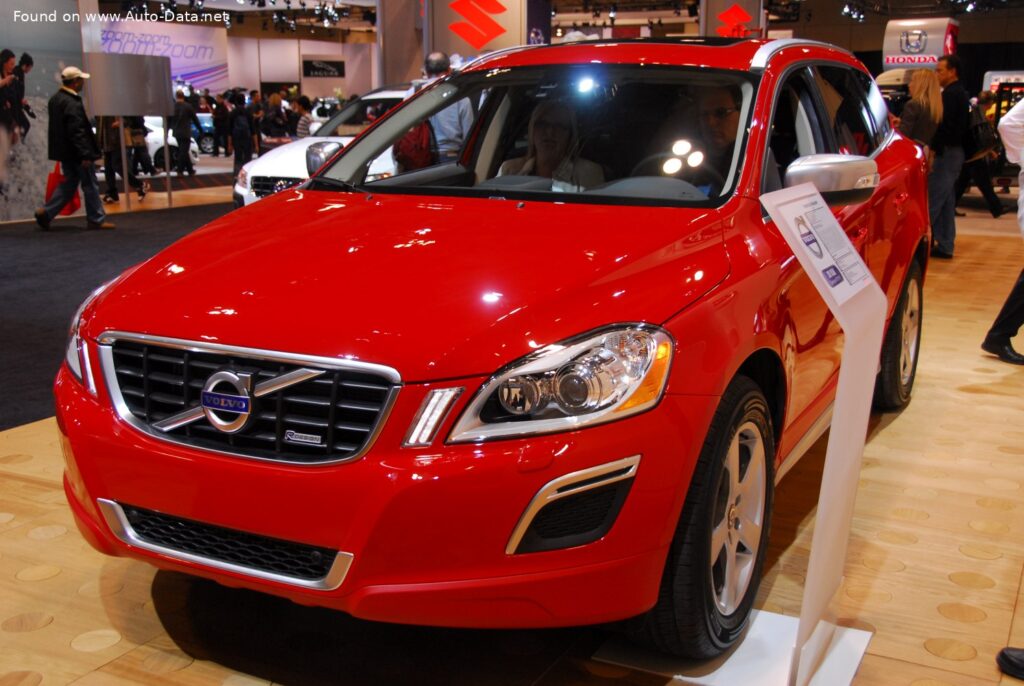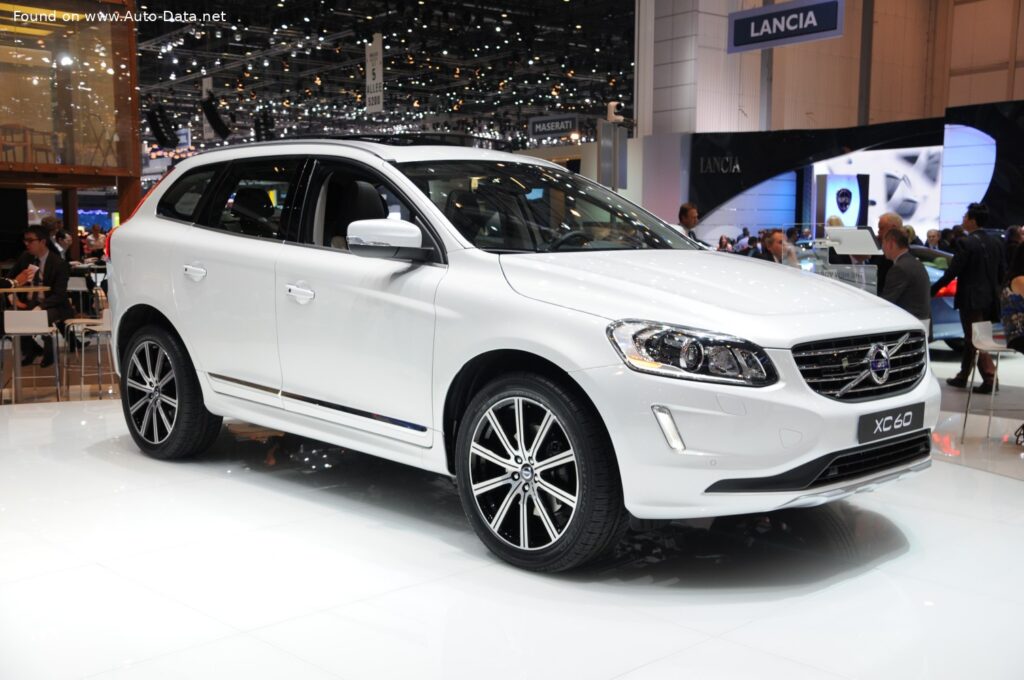
The Volvo XC60 I (2013 facelift) 2.0 D4 Bi-Turbo represents Volvo’s entry into the increasingly popular compact luxury crossover SUV segment. Introduced as part of the first-generation XC60 lineup, this facelifted version, produced from 2015 to 2017, offered a refined blend of Scandinavian design, safety features, and efficient diesel power. While not initially a major seller in the United States – Volvo’s US market focused more on gasoline engines and larger models – the XC60 found considerable success in Europe and other markets where diesel-powered SUVs were highly favored. The 2.0 D4 Bi-Turbo variant specifically targeted buyers seeking a balance between performance and fuel economy.
Volvo XC60 I (2013 Facelift) 2.0 D4 Bi-Turbo: An Overview
The XC60, launched in 2008, was a pivotal model for Volvo, establishing a new design language and broadening the brand’s appeal. The 2013 facelift brought updated styling, improved interior materials, and enhanced technology. The 2.0 D4 Bi-Turbo engine, a key component of the European lineup, utilized twin turbochargers to deliver a responsive driving experience while maintaining impressive fuel efficiency. This model competed with vehicles like the Audi Q5, BMW X3, and Mercedes-Benz GLK, offering a distinctive Scandinavian alternative.
Engine & Performance
The heart of the XC60 I 2.0 D4 Bi-Turbo is a 2.0-liter inline-four cylinder diesel engine, designated D4204T14. This engine employs a sophisticated bi-turbocharging system – a low-inertia turbocharger for quick response and a larger turbocharger for increased peak power. This configuration generates 190 horsepower at 4,250 rpm and a substantial 400 Nm (295.02 lb.-ft.) of torque between 1,750 and 2,500 rpm. The engine features a diesel commonrail fuel injection system and a double overhead camshaft (DOHC) valvetrain with four valves per cylinder. The engine’s 15.8:1 compression ratio contributes to its efficiency. Power is delivered to the front wheels via a six-speed manual transmission. Performance figures include a 0-100 km/h (0-62 mph) acceleration time of 8.1 seconds and a 0-60 mph time of 7.7 seconds. The maximum speed is electronically limited to 210 km/h (130.49 mph). The engine’s power-to-weight ratio is 9.7 kg/Hp, and the torque-to-weight ratio is 4.6 kg/Nm.
Design & Features
The XC60 I (2013 facelift) boasts Volvo’s signature Scandinavian design aesthetic, characterized by clean lines, a strong shoulder line, and a focus on understated elegance. The crossover body style provides a practical and versatile package, offering ample space for passengers and cargo. The vehicle seats five occupants and features five doors for easy access. Key design elements include the distinctive grille with the Volvo iron mark, sculpted headlights, and a sloping roofline. Inside, the cabin is designed with a focus on comfort and functionality. The dashboard features a clean layout with intuitive controls. Standard features typically included climate control, a premium audio system, and a range of safety technologies. The trunk offers 495 liters (17.48 cu. ft.) of space with the rear seats up, expanding to 1455 liters (51.38 cu. ft.) when folded down. Safety was a paramount concern for Volvo, and the XC60 I incorporated numerous advanced safety systems, including ABS, and a robust chassis designed to protect occupants in the event of a collision.
Technical Specifications
| Brand | Volvo |
| Model | XC60 |
| Generation | XC60 I (2013 facelift) |
| Type (Engine) | 2.0 D4 Bi-Turbo (190 Hp) |
| Start of production | 2015 |
| End of production | 2017 |
| Powertrain Architecture | Internal Combustion engine |
| Body type | SUV, Crossover |
| Seats | 5 |
| Doors | 5 |
| Fuel consumption (combined) | 4.5 l/100 km (52.3 US mpg, 62.8 UK mpg, 22.2 km/l) |
| CO2 emissions | 117 g/km |
| Fuel Type | Diesel |
| Acceleration 0 – 100 km/h | 8.1 sec |
| Acceleration 0 – 62 mph | 8.1 sec |
| Acceleration 0 – 60 mph | 7.7 sec |
| Maximum speed | 210 km/h (130.49 mph) |
| Power | 190 Hp @ 4250 rpm |
| Torque | 400 Nm @ 1750-2500 rpm (295.02 lb.-ft. @ 1750-2500 rpm) |
| Maximum engine speed | 5000 rpm |
| Engine layout | Front, Transverse |
| Engine Model/Code | D4204T14 |
| Engine displacement | 1969 cm3 (120.16 cu. in.) |
| Number of cylinders | 4 |
| Engine configuration | Inline |
| Cylinder Bore | 82 mm (3.23 in.) |
| Piston Stroke | 93.2 mm (3.67 in.) |
| Compression ratio | 15.8:1 |
| Number of valves per cylinder | 4 |
| Fuel injection system | Diesel Commonrail |
| Engine aspiration | BiTurbo, Intercooler |
| Valvetrain | DOHC |
| Engine oil capacity | 5.2 l (5.49 US qt | 4.58 UK qt) |
| Kerb Weight | 1834-1921 kg (4043.28 – 4235.08 lbs.) |
| Max. weight | 2390-2505 kg (5269.05 – 5522.58 lbs.) |
| Max load | 556-584 kg (1225.77 – 1287.5 lbs.) |
| Trunk (boot) space – minimum | 495 l (17.48 cu. ft.) |
| Trunk (boot) space – maximum | 1455 l (51.38 cu. ft.) |
| Fuel tank capacity | 70 l (18.49 US gal | 15.4 UK gal) |
| Max. roof load | 100 kg (220.46 lbs.) |
| Permitted trailer load with brakes (8%) | 1800 kg (3968.32 lbs.) |
| Permitted trailer load without brakes | 750 kg (1653.47 lbs.) |
| Length | 4644 mm (182.83 in.) |
| Width | 1891 mm (74.45 in.) |
| Width including mirrors | 2120 mm (83.46 in.) |
| Height | 1713 mm (67.44 in.) |
| Wheelbase | 2774 mm (109.21 in.) |
| Front track | 1632 mm (64.25 in.) |
| Rear (Back) track | 1586 mm (62.44 in.) |
| Ride height (ground clearance) | 230 mm (9.06 in.) |
| Drag coefficient (Cd) | 0.35 |
| Minimum turning circle (turning diameter) | 12.1-12.6 m (39.7 – 41.34 ft.) |
| Drivetrain Architecture | The Internal combustion engine (ICE) drives the front wheels of the vehicle. |
| Drive wheel | Front wheel drive |
| Number of gears and type of gearbox | 6 gears, manual transmission |
| Front suspension | Independent, type McPherson with coil spring and anti-roll bar |
| Rear suspension | Independent coil spring |
| Front brakes | Ventilated discs |
| Rear brakes | Disc |
| Assisting systems | ABS (Anti-lock braking system) |
| Steering type | Steering rack and pinion |