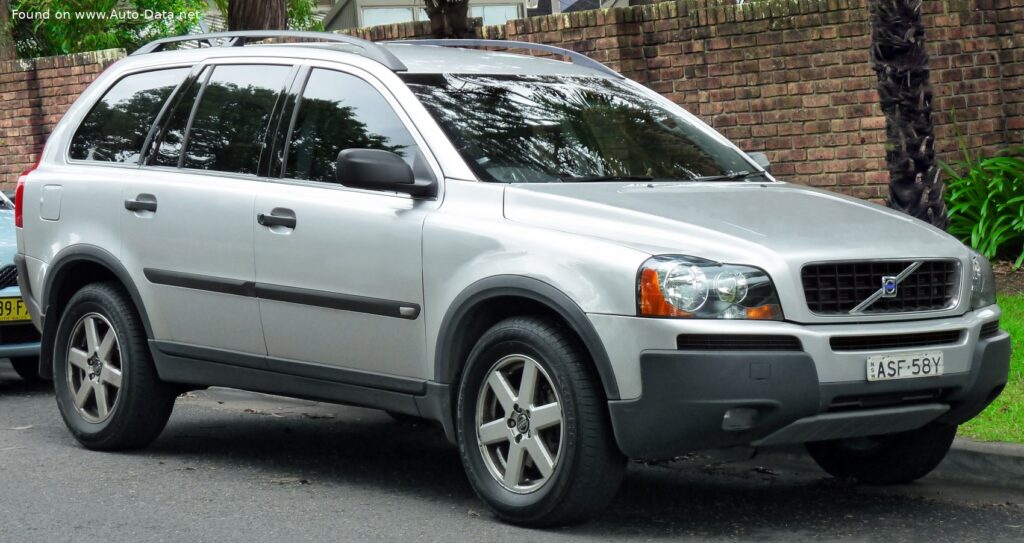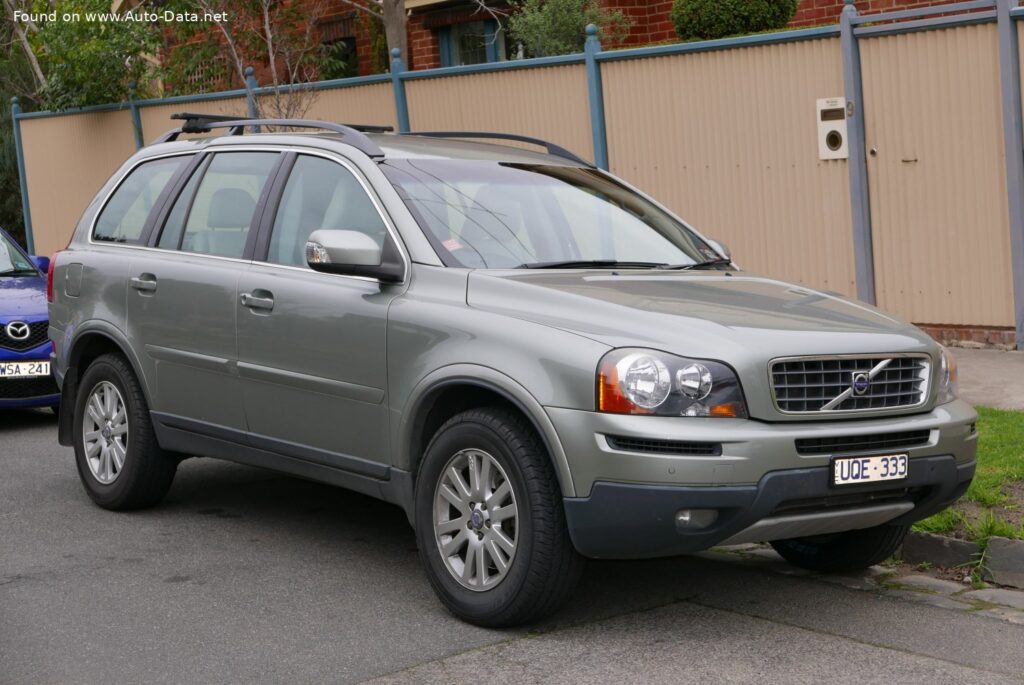
The Volvo XC90, particularly the facelifted version introduced in 2007, represents a significant entry for the Swedish automaker into the burgeoning luxury SUV market. Positioned as a premium seven-seater, the XC90 aimed to combine Volvo’s renowned safety with a degree of Scandinavian luxury and practicality. This generation, produced from 2007 to 2010, offered a refined experience compared to the original XC90, with styling updates and a focus on improving the overall driving experience. The 3.2i model, equipped with a 3.2-liter inline-six engine and all-wheel drive, was a popular configuration, offering a balance of performance and fuel efficiency for its class.
Volvo XC90 (Facelift 2007) 3.2i: A Detailed Overview
The 2007 facelift brought subtle but important changes to the XC90. These included a revised front fascia with a new grille and bumper, updated interior trim, and enhancements to the available technology. While the core structure and dimensions remained largely unchanged, these updates helped to keep the XC90 competitive in a rapidly evolving segment. The XC90 was never a high-volume seller in the United States compared to some of its German and Japanese rivals, but it established Volvo as a credible player in the luxury SUV space, appealing to buyers who prioritized safety, practicality, and a distinct Scandinavian aesthetic.
Engine & Performance
The heart of the XC90 3.2i is a 3.2-liter inline-six cylinder engine, designated the B6324S. This naturally aspirated engine produces 238 horsepower at 6200 rpm and 320 Nm of torque (approximately 236 lb-ft) at 3200 rpm. The engine features multi-port fuel injection and a double overhead camshaft (DOHC) valvetrain with four valves per cylinder. This configuration delivers a relatively smooth and refined power delivery, suitable for both everyday driving and longer journeys. Power is transmitted to all four wheels via a six-speed automatic transmission, providing responsive shifts and contributing to the vehicle’s all-weather capability. Acceleration from 0 to 100 km/h (0-62 mph) takes approximately 9.5 seconds, while 0-60 mph is achieved in around 9 seconds. The XC90 3.2i has a maximum speed of 210 km/h (130.49 mph). The engine’s power-to-weight ratio is 8.7 kg/Hp, and the torque-to-weight ratio is 6.5 kg/Nm.
Design & Features
The Volvo XC90 is a five-door sport utility vehicle (SUV) designed to accommodate up to seven passengers across three rows of seating. Its exterior styling is characterized by clean lines and a relatively understated elegance, typical of Volvo’s design philosophy. The 2007 facelift refined the front end, giving it a more contemporary appearance. Inside, the XC90 offers a comfortable and spacious cabin, with a focus on practicality and functionality. The interior materials are of good quality, and the layout is intuitive and user-friendly. Key features include a spacious trunk offering between 249 liters (8.79 cu ft) with all seats up and 1837 liters (64.87 cu ft) with the rear seats folded down. Safety was, and remains, a core Volvo value, and the XC90 is equipped with a comprehensive suite of safety features, including ABS (Anti-lock Braking System) and a robust chassis designed to protect occupants in the event of a collision. The vehicle’s dimensions are substantial, with a length of 4798 mm (188.9 in), a width of 1898 mm (74.72 in), and a height of 1743 mm (68.62 in). The wheelbase measures 2857 mm (112.48 in), contributing to a stable and comfortable ride.
Technical Specifications
| Brand | Volvo |
| Model | XC90 |
| Generation | XC90 (facelift 2007) |
| Type (Engine) | 3.2i (238 Hp) AWD Automatic |
| Start of production | 2007 |
| End of production | 2010 |
| Powertrain Architecture | Internal Combustion engine |
| Body type | SUV |
| Seats | 7 |
| Doors | 5 |
| Fuel consumption (urban) | 17.2 l/100 km (13.7 US mpg, 16.4 UK mpg, 5.8 km/l) |
| Fuel consumption (extra urban) | 9.2 l/100 km (25.6 US mpg, 30.7 UK mpg, 10.9 km/l) |
| Fuel consumption (combined) | 12.1 l/100 km (19.4 US mpg, 23.3 UK mpg, 8.3 km/l) |
| CO2 emissions | 289 g/km |
| Fuel Type | Petrol (Gasoline) |
| Acceleration 0 – 100 km/h | 9.5 sec |
| Acceleration 0 – 62 mph | 9.5 sec |
| Acceleration 0 – 60 mph | 9 sec |
| Maximum speed | 210 km/h (130.49 mph) |
| Emission standard | Euro 4 |
| Weight-to-power ratio | 8.7 kg/Hp |
| Weight-to-torque ratio | 6.5 kg/Nm |
| Power | 238 Hp @ 6200 rpm |
| Torque | 320 Nm @ 3200 rpm (236.02 lb.-ft. @ 3200 rpm) |
| Engine layout | Front, Transverse |
| Engine Model/Code | B6324S |
| Engine displacement | 3192 cm3 (194.79 cu. in.) |
| Number of cylinders | 6 |
| Engine configuration | Inline |
| Cylinder Bore | 84 mm (3.31 in.) |
| Piston Stroke | 96 mm (3.78 in.) |
| Compression ratio | 10.8:1 |
| Number of valves per cylinder | 4 |
| Fuel injection system | Multi-port manifold injection |
| Engine aspiration | Naturally aspirated engine |
| Valvetrain | DOHC |
| Engine oil capacity | 7.3 l (7.71 US qt | 6.42 UK qt) |
| Coolant | 9.7 l (10.25 US qt | 8.53 UK qt) |
| Kerb Weight | 2080 kg (4585.62 lbs.) |
| Max. weight | 2590 kg (5709.97 lbs.) |
| Max load | 510 kg (1124.36 lbs.) |
| Trunk (boot) space – minimum | 249 l (8.79 cu. ft.) |
| Trunk (boot) space – maximum | 1837 l (64.87 cu. ft.) |
| Fuel tank capacity | 80 l (21.13 US gal | 17.6 UK gal) |
| Length | 4798 mm (188.9 in.) |
| Width | 1898 mm (74.72 in.) |
| Height | 1743 mm (68.62 in.) |
| Wheelbase | 2857 mm (112.48 in.) |
| Front track | 1634 mm (64.33 in.) |
| Rear (Back) track | 1624 mm (63.94 in.) |
| Ride height (ground clearance) | 218 mm (8.58 in.) |
| Minimum turning circle (turning diameter) | 11.9 m (39.04 ft.) |
| Approach angle | 25° |
| Departure angle | 28° |
| Drive wheel | All wheel drive (4×4) |
| Number of gears and type of gearbox | 6 gears, automatic transmission |
| Front suspension | Independent, type McPherson with coil spring and anti-roll bar |
| Rear suspension | Independent coil spring |
| Front brakes | Ventilated discs |
| Rear brakes | Ventilated discs |
| Assisting systems | ABS (Anti-lock braking system) |
| Steering type | Steering rack and pinion |