
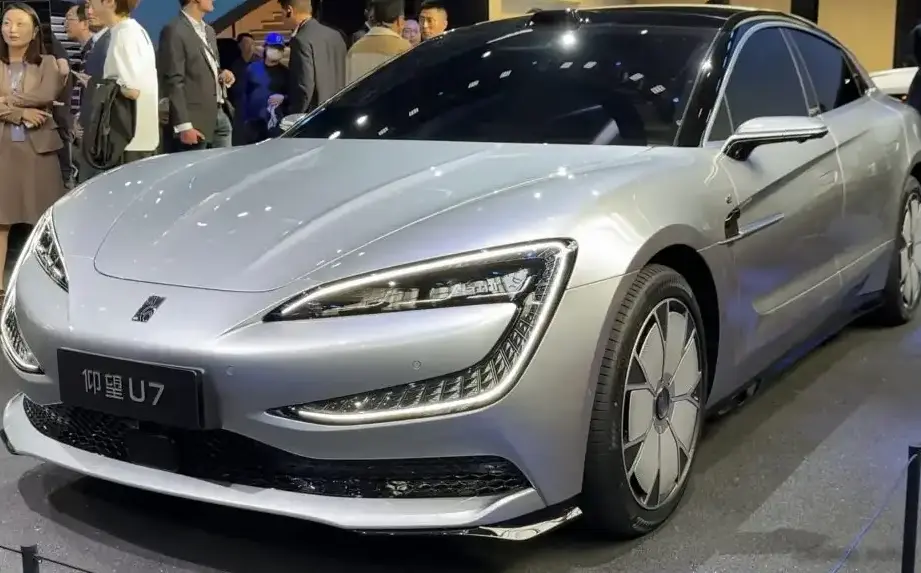
The Yangwang U7 2.0T (1306 Hp) Plug-in Hybrid e4, launched in March 2025, represents a significant entry into the burgeoning high-performance electric vehicle market, specifically within China. Positioned as a flagship sedan, the U7 showcases Yangwang’s commitment to advanced technology and exhilarating performance. It’s built upon a dedicated electric vehicle architecture, emphasizing a seamless integration of a gasoline engine used solely for range extension and a sophisticated four-motor all-wheel-drive system. The U7 aims to compete with established luxury and performance brands, offering a unique blend of electric efficiency and internal combustion range. This variant, with its substantial combined horsepower, is the top-tier offering in the U7 lineup.
Technical Specifications
| Brand | Yangwang |
| Model | U7 |
| Generation | U7 |
| Type (Engine) | 2.0T (1306 Hp) Plug-in Hybrid e4 |
| Start of production | March, 2025 |
| Powertrain Architecture | PHEV (Plug-in Hybrid Electric Vehicle) |
| Body type | Sedan |
| Seats | 4-5 |
| Doors | 4 |
| Fuel Type | Petrol / electricity |
| Acceleration 0 – 100 km/h | 2.9 sec |
| Acceleration 0 – 62 mph | 2.9 sec |
| Acceleration 0 – 60 mph | 2.8 sec |
| Maximum speed | 270 km/h (167.77 mph) |
| 100 km/h – 0 | 33 m |
| Emission standard | China VI B |
| Weight-to-power ratio | 2.5 kg/Hp, 405.2 Hp/tonne |
| Weight-to-torque ratio | 1.9 kg/Nm, 521.3 Nm/tonne |
| Gross battery capacity | 52.4 kWh |
| Battery technology | Lithium iron phosphate (LiFePO4) |
| Battery location | Below the floor |
| All-electric range (CLTC) | 200 km (124.27 mi) |
| Electric motor power (x4) | 326 Hp |
| Electric motor Torque (x4) | 420 Nm (309.78 lb.-ft.) |
| Electric motor location | Front axle (x2), Rear axle (x2), Transverse |
| Electric motor type | Synchronous |
| System power | 1306 Hp |
| System torque | 1680 Nm (1239.1 lb.-ft.) |
| Engine layout | Front, Longitudinal |
| Engine Model/Code | BYD4H20 |
| Engine displacement | 1999 cm3 (121.99 cu. in.) |
| Number of cylinders | 4 |
| Engine configuration | Boxer |
| Number of valves per cylinder | 4 |
| Fuel injection system | Direct injection |
| Engine aspiration | Turbocharger, Intercooler |
| Engine systems | Start & Stop System |
| Kerb Weight | 3223 kg (7105.5 lbs.) |
| Max. weight | 3598 kg (7932.23 lbs.) |
| Max load | 375 kg (826.73 lbs.) |
| Fuel tank capacity | 60 l (15.85 US gal | 13.2 UK gal) |
| Length | 5360 mm (211.02 in.) |
| Width | 2000 mm (78.74 in.) |
| Height | 1515 mm (59.65 in.) |
| Wheelbase | 3200 mm (125.98 in.) |
| Ride height (ground clearance) | 150 mm (5.91 in.) |
| Drag coefficient (Cd) | 0.195 |
| Drivetrain Architecture | Four electric motors drive each wheel individually. The Internal combustion engine (ICE) drives the generator only, with no mechanical connection to the drive. |
| Drive wheel | All wheel drive (4×4) |
| Number of gears and type of gearbox | 1 gears, automatic transmission |
| Front suspension | Double wishbone |
| Rear suspension | Independent multi-link suspension |
| Front brakes | Ventilated discs |
| Rear brakes | Ventilated discs |
| Assisting systems | ABS (Anti-lock braking system), 4-wheel steering (4WS, active rear steering) |
| Steering type | Steering rack and pinion |
| Power steering | Electric Steering |
| Tires size | 275/40 R21 |
| Wheel rims size | 21 |
Powertrain & Engine Architecture
The Yangwang U7 2.0T e4 utilizes a highly complex powertrain. At its core is a 2.0-liter turbocharged four-cylinder engine (BYD4H20) configured in a boxer layout. However, unlike traditional hybrid systems, this engine doesn’t directly power the wheels. Instead, it functions solely as a generator to recharge the 52.4 kWh Lithium Iron Phosphate (LiFePO4) battery pack. This allows for a consistently optimized engine operating point for maximum efficiency. The real driving force comes from four independent electric motors – one for each wheel. Each motor produces 326 horsepower and 420 Nm (309.78 lb.-ft.) of torque, resulting in a combined system output of 1306 horsepower and a staggering 1680 Nm (1239.1 lb.-ft.) of torque. The single-speed automatic transmission manages power delivery to the wheels, optimized for instant torque and acceleration. The use of a LiFePO4 battery offers improved thermal stability and a longer lifespan compared to traditional lithium-ion batteries.
Driving Characteristics
The U7’s driving experience is defined by its instantaneous acceleration. The 0-60 mph time of 2.8 seconds is indicative of its immense power. The four-motor all-wheel-drive system provides exceptional traction and control, allowing for precise handling and confident cornering. The lack of a direct mechanical link between the engine and the wheels results in a remarkably smooth and quiet driving experience, especially in all-electric mode. While the single-speed transmission simplifies operation, it doesn’t offer the gear ratios found in traditional performance cars. However, the sheer torque output mitigates this, providing strong acceleration across the speed range. Compared to potential future variants with different engine configurations or lower power outputs, the 2.0T e4 prioritizes outright performance over fuel economy, though the plug-in hybrid system still offers a respectable all-electric range of 200 km (124.27 miles) under CLTC testing conditions.
Equipment & Trim Levels
As the flagship trim, the U7 2.0T e4 comes standard with a comprehensive suite of features. Interior appointments include premium leather upholstery, ventilated and massaging front seats, and a large panoramic sunroof. A sophisticated infotainment system with a high-resolution touchscreen display provides access to navigation, entertainment, and vehicle settings. Advanced driver-assistance systems (ADAS) are also standard, including adaptive cruise control, lane-keeping assist, and automatic emergency braking. Optional extras include a premium sound system, upgraded interior trim materials, and a rear-seat entertainment system. The overall interior design emphasizes luxury and technological sophistication.
Chassis & Braking
The U7 features a double-wishbone front suspension and an independent multi-link rear suspension, tuned for both comfort and handling. Ventilated disc brakes are used on all four wheels, providing ample stopping power. The vehicle also incorporates an Anti-lock Braking System (ABS) and a sophisticated 4-wheel steering system (4WS) that enhances maneuverability at low speeds and stability at high speeds. The relatively low ride height (150 mm / 5.91 in.) contributes to improved aerodynamics and handling. The chassis is designed to manage the substantial weight of the battery pack and powertrain components, ensuring a balanced and controlled driving experience.
Market Reception & Comparison
Initial reception of the Yangwang U7 has been positive, particularly within the Chinese market. Critics have praised its exceptional performance, advanced technology, and luxurious interior. However, the high price point positions it firmly in the premium segment, competing with established brands like Porsche and Mercedes-Benz. Compared to other plug-in hybrid vehicles, the U7 stands out due to its unique four-motor all-wheel-drive system and its focus on outright performance. While fuel economy is respectable for a vehicle of this size and power, it’s not the primary focus. Reliability data is still emerging, but Yangwang’s parent company, BYD, has a strong reputation for battery technology and electric vehicle engineering.
Legacy
The Yangwang U7 2.0T e4 represents a bold step forward for Yangwang and for the Chinese automotive industry. Its innovative powertrain architecture and exceptional performance capabilities set a new benchmark for electric vehicles. The long-term reliability of the powertrain remains to be seen, but the use of LiFePO4 batteries and BYD’s expertise in electric vehicle technology suggest a promising outlook. In the used car market, the U7 is likely to be sought after by enthusiasts who appreciate its unique combination of performance, luxury, and technology. It’s a vehicle that signals a shift towards more sophisticated and powerful electric vehicles, and its impact on the automotive landscape is likely to be significant.
