
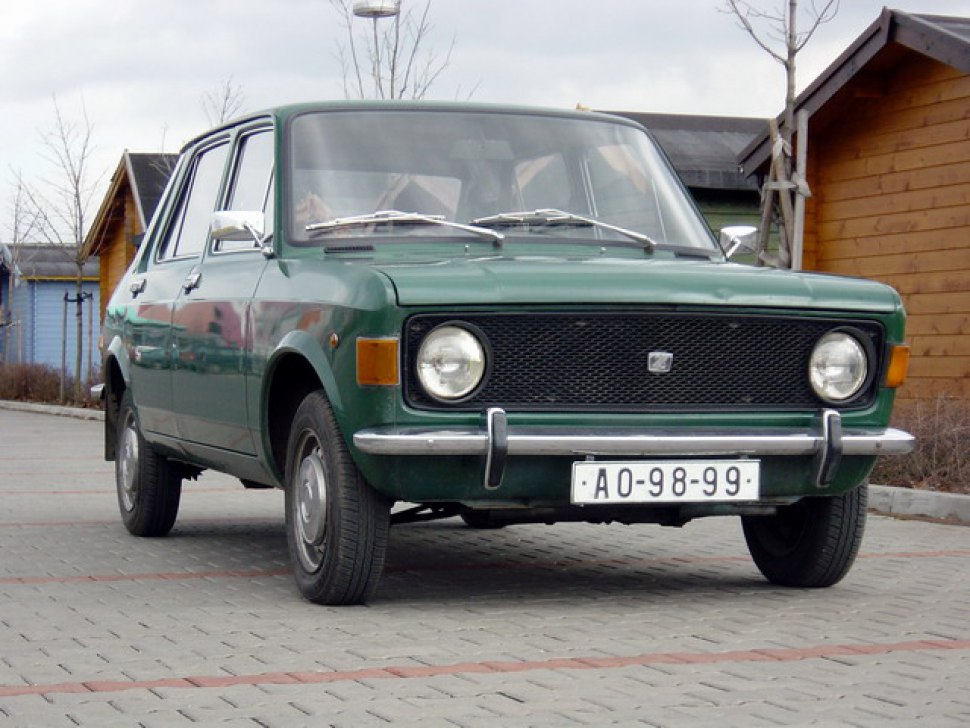
The Zastava 101, often referred to as the “Stojadin” (meaning “hundred” in Serbian, referencing its initial 1000cc engine), was a small family car produced by the Serbian manufacturer Zastava from 1975 to 1980. It represented a significant step forward for the Yugoslavian automotive industry, offering a modern, albeit license-built, alternative to the domestically produced vehicles of the time. The 101 was based on the Fiat 128, a popular European hatchback, and was intended to provide affordable transportation for the growing Yugoslavian middle class. While relatively simple in its design and execution, the Zastava 101 played a crucial role in motorizing the country and remained in production, with various updates, for a considerable period, becoming a ubiquitous sight on Yugoslavian roads. The 1.1-liter, 50 horsepower version represents an early iteration of the model, establishing the 101 as a practical and economical choice.
Zastava 101: A Yugoslavian Automotive Icon
The Zastava 101 wasn’t merely a car; it was a symbol of post-war Yugoslavian industrial ambition. Zastava, originally a firearms manufacturer, transitioned to vehicle production in the 1950s, initially assembling vehicles under license from Western European manufacturers. The 101 marked a move towards greater independence, although it remained heavily reliant on Fiat technology. The car’s design reflected the prevailing trends in European automotive engineering of the 1970s – a focus on practicality, fuel efficiency, and compact dimensions. It filled a niche in the market for a small, reliable, and affordable hatchback, competing with other European economy cars of the era. The 101’s longevity is a testament to its robust construction and ease of maintenance, qualities highly valued in the Yugoslavian context.
Engine & Performance
The Zastava 101 1.1 featured a naturally aspirated, inline-four cylinder gasoline engine displacing 1.1 liters (approximately 67 cubic inches). This engine produced 50 horsepower, providing adequate, though not exhilarating, performance for its intended purpose. The engine was a derivative of the Fiat 128’s engine, adapted for local production. It utilized a single overhead camshaft and a two-barrel carburetor. The engine’s relatively low compression ratio and simple design contributed to its reliability and tolerance for lower-quality fuel, a significant advantage in Yugoslavia at the time. Power was delivered to the front wheels via a four-speed manual transmission. Acceleration was modest, with a 0-60 mph time estimated to be around 18-20 seconds, and a top speed of approximately 85 mph. The focus was not on outright speed, but on providing dependable transportation for everyday use. Fuel economy was a key selling point, offering a reasonable range on a single tank of gasoline.
Design & Features
The Zastava 101 was a three-door hatchback, characterized by its boxy, utilitarian design. The body style was typical of European small cars of the 1970s, prioritizing interior space and practicality over aerodynamic styling. The car’s relatively short wheelbase and compact dimensions made it easy to maneuver in urban environments. The interior was simple and functional, with basic instrumentation and durable, though not luxurious, materials. Seats were typically upholstered in vinyl or cloth. Safety features were limited by the standards of the time, consisting primarily of seatbelts and a steering column designed to collapse in the event of a collision. The 101’s suspension utilized independent front suspension with MacPherson struts and a trailing arm rear suspension, providing a reasonably comfortable ride. Brakes were disc brakes at the front and drum brakes at the rear. The car’s design emphasized ease of maintenance and repair, with readily accessible components and a relatively simple mechanical layout. The hatchback configuration provided a useful amount of cargo space, further enhancing its practicality.
Technical Specifications
| Brand | Zastava |
| Model | 101 (1100) |
| Generation | 101 (1100) |
| Type (Engine) | 1.1 (50 Hp) |
| Start of production | 1975 |
| End of production | 1980 |
| Powertrain Architecture | Internal Combustion engine |
| Body type | Hatchback |
| Fuel Type | Petrol (Gasoline) |
| Engine specs Power | 50 Hp |
| Engine aspiration | Naturally aspirated engine |
The Zastava 101, despite its humble origins and relatively modest specifications, holds a significant place in the automotive history of Yugoslavia. It provided affordable and reliable transportation to a generation of Yugoslavians, contributing to the country’s economic and social development. While it may not have been a technological marvel, its simplicity, durability, and practicality made it a beloved and enduring vehicle. The 101’s legacy extends beyond its production run, as it remains a popular classic car among enthusiasts and a nostalgic reminder of a bygone era. Later iterations of the 101 would see improvements in engine performance, styling, and features, but the core principles of affordability and reliability remained central to its appeal. The car’s story is a compelling example of how automotive technology, even when adapted and localized, can have a profound impact on a nation’s mobility and identity.
The Zastava 101’s influence can also be seen in the subsequent models produced by Zastava, which continued to build upon the foundations laid by the 101. The car’s success demonstrated the potential for domestic automotive production in Yugoslavia and paved the way for further investment in the industry. Although Zastava ultimately faced challenges in competing with global automakers, the 101 remains a symbol of the company’s early achievements and its contribution to the Yugoslavian economy. Today, surviving examples of the Zastava 101 are increasingly sought after by collectors and enthusiasts, who appreciate its historical significance and its enduring charm.
