
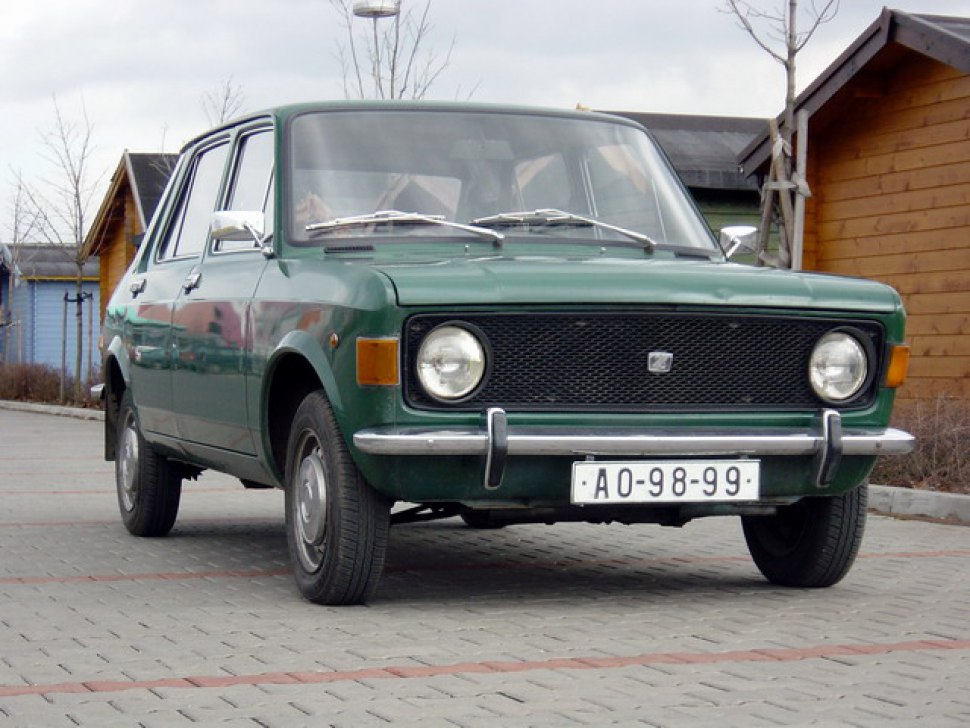
The Zastava 101, often referred to as the “Stojadin” (meaning “hundred” in Serbian, referencing its initial 1000cc engine), was a small family car produced by the Serbian manufacturer Zastava from 1971 to 1980. It represented a significant step forward for the Yugoslavian automotive industry, offering a modern, albeit license-built, vehicle to a market previously dominated by more basic transportation options. The 101 was based on the Fiat 128, a revolutionary design for its time, and served as Yugoslavia’s primary entry into the compact hatchback segment for nearly a decade. While not directly sold in the United States, understanding its context requires recognizing its importance as a symbol of post-war industrialization and a relatively affordable means of personal transportation within the Eastern Bloc and broader European market.
Zastava 101: A Yugoslavian Automotive Icon
The Zastava 101 wasn’t merely a car; it was a product of a specific geopolitical and economic landscape. Yugoslavia, under Josip Broz Tito, pursued a path of independence from both the Soviet Union and the West. This “third way” involved limited market economics and the development of domestic industries. The licensing agreement with Fiat allowed Zastava to produce a contemporary vehicle using existing technology, reducing reliance on imports and fostering local manufacturing expertise. The 101 quickly became a common sight on Yugoslavian roads, and was also exported in limited numbers to other countries, including some Western European markets. The model underwent minor revisions during its production run, with the 1.1-liter, 55 horsepower version representing a common configuration.
Engine & Performance
The Zastava 101 was powered by a 1.1-liter, naturally aspirated inline-four cylinder gasoline engine. This engine, derived from the Fiat 128’s unit, produced 55 horsepower. While this output may seem modest by modern standards, it was adequate for the vehicle’s weight and intended purpose. The engine featured a single overhead camshaft and a two-barrel carburetor. The powertrain was coupled with a four-speed manual transmission, driving the front wheels – a relatively uncommon configuration for the era, particularly outside of Western Europe.
Performance figures reflected the car’s modest power plant. Acceleration from 0 to 60 mph was achieved in approximately 12.4 seconds, while 0-62 mph took 13 seconds, and 0-100 km/h (62 mph) also took 13 seconds. The top speed was recorded at 90.1 mph (145 km/h). The 101 wasn’t designed for outright speed, but rather for fuel efficiency and practicality. Its front-wheel-drive layout contributed to relatively good handling for a car of its class, and the engine’s simplicity made it reasonably reliable, although maintenance requirements were typical for vehicles of the period.
Design & Features
The Zastava 101 was a five-door hatchback, a body style gaining popularity in Europe during the 1970s. Its design, largely inherited from the Fiat 128, was characterized by clean lines and a relatively compact footprint. The car’s styling was functional rather than flamboyant, reflecting the pragmatic priorities of its target market. The interior was similarly straightforward, prioritizing practicality and durability over luxury.
Features were basic by today’s standards. The 101 typically included cloth upholstery, simple instrumentation, and manually operated windows and door locks. Safety features were limited, reflecting the prevailing standards of the time. Seatbelts were available, but airbags and anti-lock brakes were not offered. The car’s strength lay in its affordability and ease of maintenance. Its relatively spacious interior, for a car of its size, and the convenience of the hatchback configuration made it a practical choice for families and urban dwellers. The 101’s design, while not groundbreaking, proved to be durable and adaptable, contributing to its long production run.
Technical Specifications
| Brand | Zastava |
| Model | 101 (1100) |
| Generation | 101 (1100) |
| Type (Engine) | 1.1 (55 Hp) |
| Start of production | October, 1971 |
| End of production | 1980 |
| Powertrain Architecture | Internal Combustion engine |
| Body type | Hatchback |
| Doors | 5 |
| Fuel Type | Petrol (Gasoline) |
| Acceleration 0 – 100 km/h | 13 sec |
| Acceleration 0 – 62 mph | 13 sec |
| Acceleration 0 – 60 mph | 12.4 sec |
| Maximum speed | 145 km/h / 90.1 mph |
| Power | 55 Hp |
| Engine aspiration | Naturally aspirated engine |
The Zastava 101, despite its relatively short production run and limited international recognition, holds a significant place in the automotive history of Yugoslavia and the broader Eastern European region. It represented a period of industrial development and a desire for greater economic independence. While it may not have been a technological marvel, the 101 provided affordable and reliable transportation to a generation of Yugoslavians, and remains a fondly remembered vehicle for many who grew up with it. Its legacy extends beyond its mechanical specifications, embodying a specific cultural and historical context.
