
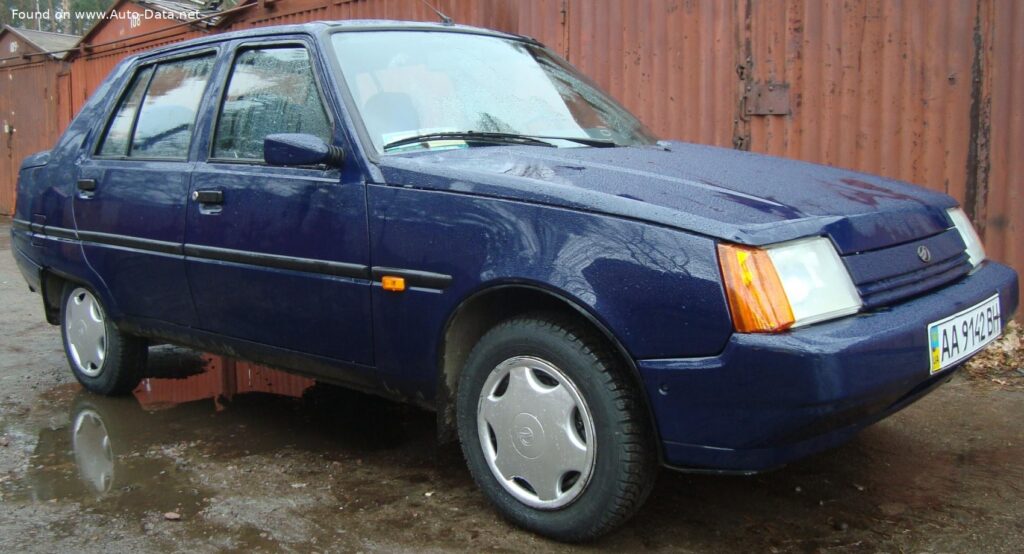
The ZAZ 1103, specifically the 1.3-liter 60 horsepower variant, was a mainstay of Ukrainian automotive production from 1999 to 2011. This model represented a significant continuation of ZAZ’s commitment to affordable, practical transportation, building upon the legacy of the earlier ZAZ-1102 “Danubiana” and serving as a modernized iteration of the original ZAZ 968 “Zaporozhets” design. The 1.3L engine option positioned itself as the entry-level trim within the 1103 range, offering a balance between cost and usability for a broad segment of the Ukrainian market. It was primarily intended for urban commuting and shorter journeys, prioritizing fuel efficiency over outright performance.
ZAZ 1103 1.3: A Detailed Overview
The ZAZ 1103, often referred to simply as the “1103,” was a five-door hatchback designed to provide basic, reliable transportation. Its production spanned over a decade, during which it underwent minor revisions and updates. The 1.3L variant was the most commonly produced version, catering to buyers seeking an economical vehicle. The car’s design, while rooted in the 1960s Zaporozhets, incorporated modern elements to improve comfort and safety, albeit within the constraints of its budget-oriented positioning.
Powertrain & Engine Architecture
The heart of the ZAZ 1103 1.3 was the MeMZ-245 engine, a 1.3-liter (1254 cc) inline-four cylinder petrol engine. This engine produced 60 horsepower at 5000 rpm and 94 Nm (69.33 lb-ft) of torque at 3500 rpm. The engine featured a relatively low compression ratio of 9.5:1 and utilized a two-valve per cylinder configuration. Critically, the 1.3L engine employed a carburetor fuel injection system, a cost-saving measure that distinguished it from more modern fuel-injected engines. This carburetor setup, while simple and reliable, contributed to the engine’s lower power output and comparatively higher fuel consumption compared to later, fuel-injected ZAZ models.
The engine was transversely mounted at the front of the vehicle, driving the front wheels. The transmission was a five-speed manual gearbox, chosen for its affordability and efficiency. The gearbox ratios were geared towards maximizing fuel economy and providing adequate acceleration for urban driving conditions. The drivetrain layout was a typical front-wheel-drive configuration, common in small European cars of the era.
Driving Characteristics
The ZAZ 1103 1.3’s driving experience was characterized by its modest performance. Acceleration from 0 to 100 km/h (0 to 62 mph) took approximately 17 seconds, and top speed was limited to around 153 km/h (95 mph). The carburetor engine delivered power in a relatively linear fashion, but lacked the responsiveness of more modern engines. The five-speed manual transmission allowed drivers to optimize engine speed for fuel efficiency or to extract the maximum available power. Compared to potential higher-output variants (which were not widely produced), the 1.3L version prioritized fuel economy and ease of driving over sporty performance. The car’s relatively light weight (790 kg / 1741.65 lbs) helped to mitigate the effects of the low horsepower output.
Equipment & Trim Levels
The ZAZ 1103 1.3 was typically equipped with basic, functional features. Standard equipment included cloth upholstery, a simple dashboard layout, and manually operated windows and door locks. Heating and ventilation were standard, but air conditioning was not typically offered, even as an option. The interior was designed for practicality and durability rather than luxury. Optional extras were limited, but could include upgraded seat covers, a radio, and occasionally, improved sound insulation. The trim level was largely consistent across the 1.3L models, with minimal variations in standard features.
Chassis & Braking
The ZAZ 1103 1.3 featured a relatively simple chassis design. The front suspension utilized coil springs, while the rear suspension also employed coil springs. The front brakes were disc brakes, providing adequate stopping power for the vehicle’s weight and performance. However, the rear brakes were drum brakes, a cost-saving measure that limited overall braking effectiveness. An Anti-lock Braking System (ABS) was included as a standard safety feature. The steering system was a rack and pinion setup, providing reasonably precise steering control. The car rode on 155/70 R13 tires, which were chosen for their balance of affordability and grip.
Market Reception & Comparison
The ZAZ 1103 1.3 was generally well-received in the Ukrainian market as an affordable and reliable means of transportation. Critics acknowledged its basic nature but praised its practicality and low running costs. Compared to other vehicles available in Ukraine at the time, the 1103 offered a compelling value proposition, particularly for first-time car buyers and those on a limited budget. Fuel economy was a key selling point, and the car’s simple mechanical design made it relatively easy to maintain and repair. However, the 1.3L engine’s lack of power and the carburetor fuel system were often cited as drawbacks. Compared to potential alternatives, such as used foreign cars, the ZAZ 1103 offered the advantage of readily available spare parts and a well-established service network within Ukraine.
Technical Specifications
| Body Type | Hatchback, 5 Doors, 5 Seats |
| Engine Displacement | 1.3 l (1254 cm3 / 76.52 cu. in.) |
| Engine Configuration | Inline-4 |
| Number of Cylinders | 4 |
| Fuel Type | Petrol (Gasoline) |
| Power Output | 60 Hp @ 5000 rpm |
| Torque | 94 Nm @ 3500 rpm (69.33 lb.-ft. @ 3500 rpm) |
| Compression Ratio | 9.5:1 |
| Fuel Injection System | Carburetor |
| Transmission | 5-speed Manual |
| Drive Wheels | Front Wheel Drive |
| Kerb Weight | 790 kg (1741.65 lbs) |
| Maximum Weight | 1190 kg (2623.5 lbs) |
| Maximum Speed | 153 km/h (95.07 mph) |
| 0-100 km/h Acceleration | 17 sec |
| Trunk (Boot) Space | 270 l (9.53 cu. ft.) |
| Fuel Tank Capacity | 38 l (10.04 US gal | 8.36 UK gal) |
| Length | 3980 mm (156.69 in) |
| Width | 1564 mm (61.57 in) |
| Height | 1410 mm (55.51 in) |
Legacy
The ZAZ 1103 1.3, while not a technologically advanced vehicle, holds a significant place in Ukrainian automotive history. Its simple, robust design and affordability made it a popular choice for many years. Today, the 1103 is increasingly sought after by collectors and enthusiasts, particularly well-maintained examples. The MeMZ-245 engine, while prone to carburetor-related issues, is generally considered reliable and relatively easy to repair. The availability of spare parts remains good within Ukraine, making it feasible to keep these cars on the road. The ZAZ 1103 1.3 represents a bygone era of automotive simplicity and affordability, and continues to evoke nostalgia for many Ukrainians.
