
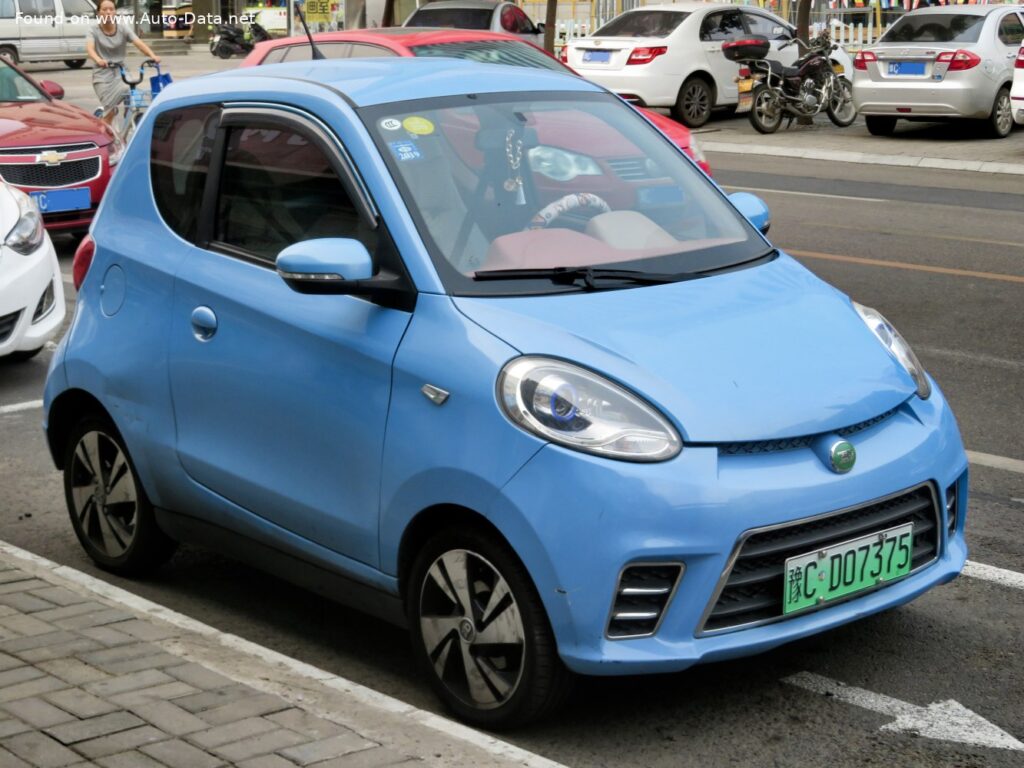
The Zhidou D2 18 kWh (41 hp) is a small, all-electric city car produced by the Chinese manufacturer Zhidou from April 2017 onwards. Positioned as an entry-level electric vehicle, the D2 aimed to provide an affordable and practical transportation solution for urban environments. It represents Zhidou’s early foray into the burgeoning electric vehicle market, capitalizing on government incentives for electric vehicle adoption in China. The D2 falls into the microcar category, prioritizing compactness and efficiency over outright performance. It is based on a dedicated electric vehicle platform, designed from the outset to accommodate an all-electric powertrain.
Zhidou D2 18 kWh: Powertrain and Electric Architecture
The Zhidou D2 18 kWh is powered by a single electric motor producing 41 horsepower (30.6 kW) between 4200 and 5000 rpm. This motor delivers 90 Nm (66.38 lb-ft) of torque. The powertrain is a fully Battery Electric Vehicle (BEV) system, meaning it relies entirely on electricity stored in its 18 kWh gross battery capacity. The electric motor is front-wheel drive, and is coupled to a single-speed automatic transmission. This simplified transmission is typical of electric vehicles, as electric motors provide instant torque across a wide range of speeds, negating the need for multiple gears. The battery pack is lithium-ion based, though specific chemistry details are not widely publicized. The vehicle utilizes a standard charging port compatible with common EV charging infrastructure available in China at the time of its release. The motor controller manages the flow of energy from the battery to the motor, regulating speed and torque output based on driver input.
Electric Motor and Battery Details
The electric motor itself is a permanent magnet synchronous motor, chosen for its efficiency and power density. The 18 kWh battery pack provides an all-electric range of 257 kilometers (159.69 miles) under optimal driving conditions, as measured by the New European Driving Cycle (NEDC) standard. Real-world range will vary depending on factors such as driving style, ambient temperature, and use of auxiliary systems like air conditioning. The battery pack is located under the floor of the vehicle, contributing to a low center of gravity and improved stability. The charging time varies depending on the charging level used. A standard household outlet will take considerably longer to charge the battery than a dedicated EV charging station.
Driving Characteristics
The Zhidou D2 18 kWh offers modest performance, geared towards city driving rather than highway cruising. Its maximum speed is limited to 85 km/h (52.82 mph). Acceleration is adequate for navigating urban traffic, but it is not designed for rapid acceleration or overtaking maneuvers. The single-speed automatic transmission provides seamless power delivery, making it easy to drive. The low curb weight of 704 kg (1552.05 lbs) contributes to its nimble handling. The electric motor provides instant torque, allowing for quick starts from a standstill. The regenerative braking system helps to recapture energy during deceleration, extending the vehicle’s range. The steering is light and responsive, making it easy to maneuver in tight spaces. Overall, the driving experience is characterized by its simplicity and ease of use, prioritizing practicality and efficiency over sporty performance.
Equipment and Trim Levels
The Zhidou D2 18 kWh is a basic, no-frills vehicle, reflecting its affordable price point. Standard equipment typically includes power windows, central locking, and a basic audio system. Air conditioning was often an optional extra. The interior is functional and utilitarian, with durable plastic materials used throughout. Seating is for two occupants, and the cabin is relatively cramped. The dashboard is simple and straightforward, with essential gauges and controls. Safety features are limited, typically including airbags and anti-lock brakes. Higher trim levels, if available, may have included features such as a more advanced audio system, upgraded interior trim, and alloy wheels. The focus of the D2 was on providing a basic, reliable, and affordable electric vehicle for urban commuting.
Chassis and Braking
The Zhidou D2 utilizes an independent McPherson strut suspension system at the front, providing a comfortable ride and responsive handling. The rear suspension is a dependent spring suspension, which is a simpler and more cost-effective design. The front brakes are disc brakes, while the rear brakes are also disc brakes. The tires are typically 145/60 R13 or 155/50 R14, depending on the trim level. The wheel rims are either 13 or 14 inches in diameter. The steering system is a rack and pinion system, providing precise and responsive steering. The vehicle’s compact size and low weight contribute to its agility and maneuverability. The braking system is adequate for its intended use, providing sufficient stopping power for city driving.
Market Reception and Comparison
The Zhidou D2 18 kWh was generally well-received in the Chinese market as an affordable and practical electric vehicle. Critics praised its low price, compact size, and decent range for city driving. However, it was also criticized for its limited performance, basic interior, and lack of advanced safety features. Compared to other electric vehicles available in China at the time, the D2 was one of the most affordable options. It competed with other micro-electric vehicles and entry-level EVs from domestic manufacturers. Its fuel economy, being an electric vehicle, is significantly better than comparable gasoline-powered cars. Reliability reports are limited, but the D2 is generally considered to be a relatively reliable vehicle, given its simple design and robust construction. The D2’s primary target audience was urban commuters and individuals seeking a cost-effective and environmentally friendly transportation solution.
Technical Specifications
| Brand | Zhidou |
| Model | D2 |
| Generation | D2 |
| Type (Engine) | 18 kWh (41 Hp) |
| Start of production | April, 2017 |
| Powertrain Architecture | BEV (Electric Vehicle) |
| Body type | Hatchback |
| Seats | 2 |
| Doors | 3 |
| Fuel Type | Electricity |
| Maximum speed | 85 km/h (52.82 mph) |
| Weight-to-power ratio | 17.2 kg/Hp, 58.2 Hp/tonne |
| Gross battery capacity | 18 kWh |
| All-electric range | 257 km (159.69 mi) |
| Electric motor power | 41 Hp @ 4200-5000 rpm |
| Electric motor Torque | 90 Nm (66.38 lb.-ft.) |
| System power | 41 Hp @ 4200-5000 rpm |
| Kerb Weight | 704 kg (1552.05 lbs) |
| Length | 2806 mm (110.47 in) |
| Width | 1540 mm (60.63 in) |
| Height | 1555 mm (61.22 in) |
| Wheelbase | 1765 mm (69.49 in) |
| Minimum turning circle | 8 m (26.25 ft) |
| Drive wheel | Front wheel drive |
| Number of gears | 1 |
| Gearbox type | Automatic transmission |
| Front suspension | Independent type McPherson |
| Rear suspension | Dependent spring suspension |
| Front brakes | Disc |
| Rear brakes | Disc |
| Tires size | 145/60 R13; 155/50 R14 |
| Wheel rims size | 13; 14 |
Legacy
The Zhidou D2 18 kWh played a role in popularizing electric vehicles in China, particularly in the microcar segment. While it is no longer in production, it remains a relatively common sight on Chinese city streets. The powertrain, while simple, proved to be reasonably reliable. On the used car market, the D2 is an affordable option for those seeking a basic electric vehicle for short-distance commuting. Its low running costs and environmental benefits make it an attractive choice for budget-conscious buyers. The D2 paved the way for Zhidou’s subsequent electric vehicle models and contributed to the growth of the electric vehicle industry in China. Its legacy lies in its affordability, practicality, and contribution to the wider adoption of electric mobility.
